
Browse "Business & Economics"
-
Article
Canada Energy Regulator (Formerly National Energy Board)
The National Energy Board (NEB) was established 1959. The NEB was responsible for the import and export of energy, international and interprovincial pipelines and international power lines (see Electric-Power Transmission). In 2019, the NEB was replaced by the Canada Energy Regulator (CER). Regulations made under the NEB remain in effect under the CER.
"https://d3d0lqu00lnqvz.cloudfront.net/media/media/d582fdd1-da33-4f4e-bb6a-d3573745bd88.jpg" // resources/views/front/categories/view.blade.php
https://d3d0lqu00lnqvz.cloudfront.net/media/media/d582fdd1-da33-4f4e-bb6a-d3573745bd88.jpg
-
Article
National Energy Program
The National Energy Program (NEP) was an energy policy of the government of Canada from 1980 through 1985. Its goal was to ensure that Canada could supply its own oil and gas needs by 1990. The NEP was initially popular with consumers and as a symbol of Canadian economic nationalism. However, private industry and some provincial governments opposed it. A federal-provincial deal resolved controversial parts of the NEP in 1981. Starting the next year, however, the program was dismantled in phases. Global economic conditions had changed such that the NEP was no longer considered necessary or useful. The development of the oil sands and offshore drilling, as well as the rise in Western alienation and the development of the modern Conservative Party of Canada, are all aspects of the NEP’s complicated legacy.
"https://d3d0lqu00lnqvz.cloudfront.net/media/single_use_images/Trudeau_Lougheed.jpg" // resources/views/front/categories/view.blade.php
https://d3d0lqu00lnqvz.cloudfront.net/media/single_use_images/Trudeau_Lougheed.jpg
-
Article
National Farmers Union
The National Farmers Union, founded 1969, was a voluntary organization of farm families. The NFU is democratically structured to assure members full control at all levels.
"https://thecanadianencyclopedia.ca/images/tce_placeholder.jpg?v=e9dca980c9bdb3aa11e832e7ea94f5d9" // resources/views/front/categories/view.blade.php
https://thecanadianencyclopedia.ca/images/tce_placeholder.jpg?v=e9dca980c9bdb3aa11e832e7ea94f5d9
-
Article
National Income
National income, strictly, is a money measure of the incomes received or accruing to residents of a country as owners of the agents of production, during a specified period of time.
"https://thecanadianencyclopedia.ca/images/tce_placeholder.jpg?v=e9dca980c9bdb3aa11e832e7ea94f5d9" // resources/views/front/categories/view.blade.php
https://thecanadianencyclopedia.ca/images/tce_placeholder.jpg?v=e9dca980c9bdb3aa11e832e7ea94f5d9
-
Article
Nationalization
Nationalization is the takeover of ownership and control of a privately owned enterprise by the STATE.
"https://thecanadianencyclopedia.ca/images/tce_placeholder.jpg?v=e9dca980c9bdb3aa11e832e7ea94f5d9" // resources/views/front/categories/view.blade.php
https://thecanadianencyclopedia.ca/images/tce_placeholder.jpg?v=e9dca980c9bdb3aa11e832e7ea94f5d9
-
Article
Navigation Acts
The Navigation Acts were a complex set of British laws dating from 1651 and 1660, regulating British and later imperial shipping and trade to foster economic and naval power.
"https://thecanadianencyclopedia.ca/images/tce_placeholder.jpg?v=e9dca980c9bdb3aa11e832e7ea94f5d9" // resources/views/front/categories/view.blade.php
https://thecanadianencyclopedia.ca/images/tce_placeholder.jpg?v=e9dca980c9bdb3aa11e832e7ea94f5d9
-
Article
Neoliberalism
Neoliberalism is a political and economic philosophy. It calls for free markets, limited government intervention, privatization, deregulation and free trade. The philosophy emerged following the Second World War through such economists as Friedrich Hayek and Milton Friedman. After the economic crises of the 1970s, confidence in Keynesian economics was undermined. This allowed neoliberalism to gain prominence. It became mainstream under Margaret Thatcher in the UK, Ronald Reagan in the US and Brian Mulroney in Canada. Globalization boomed with free trade agreements such as NAFTA. However, recent crises have prompted governments to adopt more interventionist approaches.
"https://d3d0lqu00lnqvz.cloudfront.net/Friedrich_Hayek_portrait.jpg" // resources/views/front/categories/view.blade.php
https://d3d0lqu00lnqvz.cloudfront.net/Friedrich_Hayek_portrait.jpg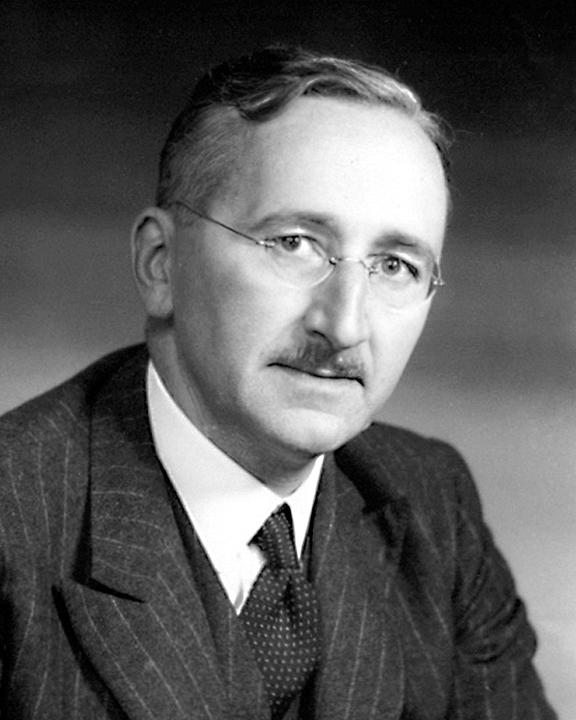
-
Macleans
Newcourt Credit
This article was originally published in Maclean’s magazine on February 23, 1998. Partner content is not updated. Steven Hudson learned early about the power of performance-based compensation. As a teenager in Scarborough, Ont., he took a job at a bingo hall for seniors, pushing a refreshment cart up and down the aisles. The more chips and popcorn he sold, the more money he took home.
"https://thecanadianencyclopedia.ca/images/tce_placeholder.jpg?v=e9dca980c9bdb3aa11e832e7ea94f5d9" // resources/views/front/categories/view.blade.php
https://thecanadianencyclopedia.ca/images/tce_placeholder.jpg?v=e9dca980c9bdb3aa11e832e7ea94f5d9
-
Macleans
Newcourt Merges with CIT
This article was originally published in Maclean’s magazine on November 8, 1999. Partner content is not updated. On May 5, hundreds turned up in their finest for the première of the National Ballet of Canada's revamped production of Swan Lake. Yet, as fabulous as artistic director James Kudelka's $1.6-million production was, an equally remarkable performance had taken place before the dancing ever started.
"https://thecanadianencyclopedia.ca/images/tce_placeholder.jpg?v=e9dca980c9bdb3aa11e832e7ea94f5d9" // resources/views/front/categories/view.blade.php
https://thecanadianencyclopedia.ca/images/tce_placeholder.jpg?v=e9dca980c9bdb3aa11e832e7ea94f5d9
-
Article
News Agencies
Canadian newspapers and broadcast stations depend heavily on news agencies for a regular supply of news from outside their immediate geographical area. One-third to one-half of news and editorial content comes from news agencies, also called wire services or press associations.
"https://thecanadianencyclopedia.ca/images/tce_placeholder.jpg?v=e9dca980c9bdb3aa11e832e7ea94f5d9" // resources/views/front/categories/view.blade.php
https://thecanadianencyclopedia.ca/images/tce_placeholder.jpg?v=e9dca980c9bdb3aa11e832e7ea94f5d9
-
Macleans
Newspaper War Hurts Globe
PHILLIP CRAWLEY came to Canada in 1998 with a simple mission: kill the upstart National Post.This article was originally published in Maclean's Magazine on November 1, 2004
"https://thecanadianencyclopedia.ca/images/tce_placeholder.jpg?v=e9dca980c9bdb3aa11e832e7ea94f5d9" // resources/views/front/categories/view.blade.php
https://thecanadianencyclopedia.ca/images/tce_placeholder.jpg?v=e9dca980c9bdb3aa11e832e7ea94f5d9
-
Article
Nine Hour Movement
The Nine Hour Movement was an international phenomenon, taking place in Canada between January and June 1872. The movement’s goal was to standardize shorter working days. Though this particular mandate was unsuccessful, the movement did have an impact, including setting the foundation for the Canadian Labor Union.
"https://d3d0lqu00lnqvz.cloudfront.net/media/media/74917b1f-8a36-49c3-99fd-4cf328a0bfa3.jpg" // resources/views/front/categories/view.blade.php
https://d3d0lqu00lnqvz.cloudfront.net/media/media/74917b1f-8a36-49c3-99fd-4cf328a0bfa3.jpg
-
Article
Noranda Inc
Its principal activities are in mining, manufacturing, forest products and oil and gas exploration, with its subsidiary, Noranda Sales Corporation Ltd, handling worldwide sales. Noranda has properties in Canada, the US and overseas, including South America and Australia.
"https://thecanadianencyclopedia.ca/images/tce_placeholder.jpg?v=e9dca980c9bdb3aa11e832e7ea94f5d9" // resources/views/front/categories/view.blade.php
https://thecanadianencyclopedia.ca/images/tce_placeholder.jpg?v=e9dca980c9bdb3aa11e832e7ea94f5d9
-
Article
Nortel
Nortel Networks Corporation, or simply Nortel, was a public telecommunications and data networking equipment manufacturer. Founded in 1895 as the Northern Electric and Manufacturing Company, it was one of Canada’s oldest technology companies. Nortel expanded rapidly during the dot-com boom (1997–2001), purchasing many Internet technology companies in a drive to remain competitive in the expanding information technology (IT) market. At its height in 2000, the company represented over 35 per cent of the value of Toronto’s TSE 300 index. It was the ninth most valuable corporation in the world and employed about 94,000 people worldwide at its peak. But Nortel soon entered an extended and painful period of corporate downsizing, and in 2009, the company filed for bankruptcy protection in the largest corporate failure in Canadian history. Shareholders, employees and pensioners suffered losses as a result. Company executives, however, were paid a total US$190 million in retention bonuses between 2009 and 2016. Nortel sold off its assets for a total US$7.3 billion. Those assets were scheduled to be distributed to Nortel’s bondholders, suppliers and former employees in 2017.
"https://d3d0lqu00lnqvz.cloudfront.net/media/media/2a1c9dbe-a2f4-4bee-b158-c7cb5e7633d3.png" // resources/views/front/categories/view.blade.php
https://d3d0lqu00lnqvz.cloudfront.net/media/media/2a1c9dbe-a2f4-4bee-b158-c7cb5e7633d3.png
-
Macleans
Nortel Struggles to Recover Its Worth
WHEN NORTEL Networks Corp.'s share price was $92 two years ago, Ray Puhalski bought 300 shares, investing $27,600. A month later, the stock was trading at $71.40. Puhalski invested again: $32,130 for 450 shares; and the following week, when Nortel was at $65.50, he bought another 250 shares.This article was originally published in Maclean's Magazine on November 11, 2002
"https://thecanadianencyclopedia.ca/images/tce_placeholder.jpg?v=e9dca980c9bdb3aa11e832e7ea94f5d9" // resources/views/front/categories/view.blade.php
https://thecanadianencyclopedia.ca/images/tce_placeholder.jpg?v=e9dca980c9bdb3aa11e832e7ea94f5d9