
Browse "Business & Economics"
-
Article
Industrial Strategy
Industrial strategy is a term that generally refers to any attempt by government to apply a coherent and consistent set of policies that are designed to improve the performance of the ECONOMY.
"https://thecanadianencyclopedia.ca/images/tce_placeholder.jpg?v=e9dca980c9bdb3aa11e832e7ea94f5d9" // resources/views/front/categories/view.blade.php
https://thecanadianencyclopedia.ca/images/tce_placeholder.jpg?v=e9dca980c9bdb3aa11e832e7ea94f5d9
-
Article
Industry in Canada
Industry, in its broadest sense, includes all economic activity, but for convenience commentators divide it into three sectors: primary, secondary and tertiary. Primary manufacturing involves harvesting natural resources; secondary, manufacturing; and tertiary, the service industries. All these elements make up Canada's industrial system, which has become increasingly complex over time. Canada is considered a “developed” country in that it has, as part of its economy, a developed industrial base. (See also Economic History; Regionalism; Regional Economics; Technology.) Click here for definitions of key terms used in this article.
"https://d3d0lqu00lnqvz.cloudfront.net/media/media/804ad87a-c2a5-4d29-814e-542e786b1778.jpg" // resources/views/front/categories/view.blade.php
https://d3d0lqu00lnqvz.cloudfront.net/media/media/804ad87a-c2a5-4d29-814e-542e786b1778.jpg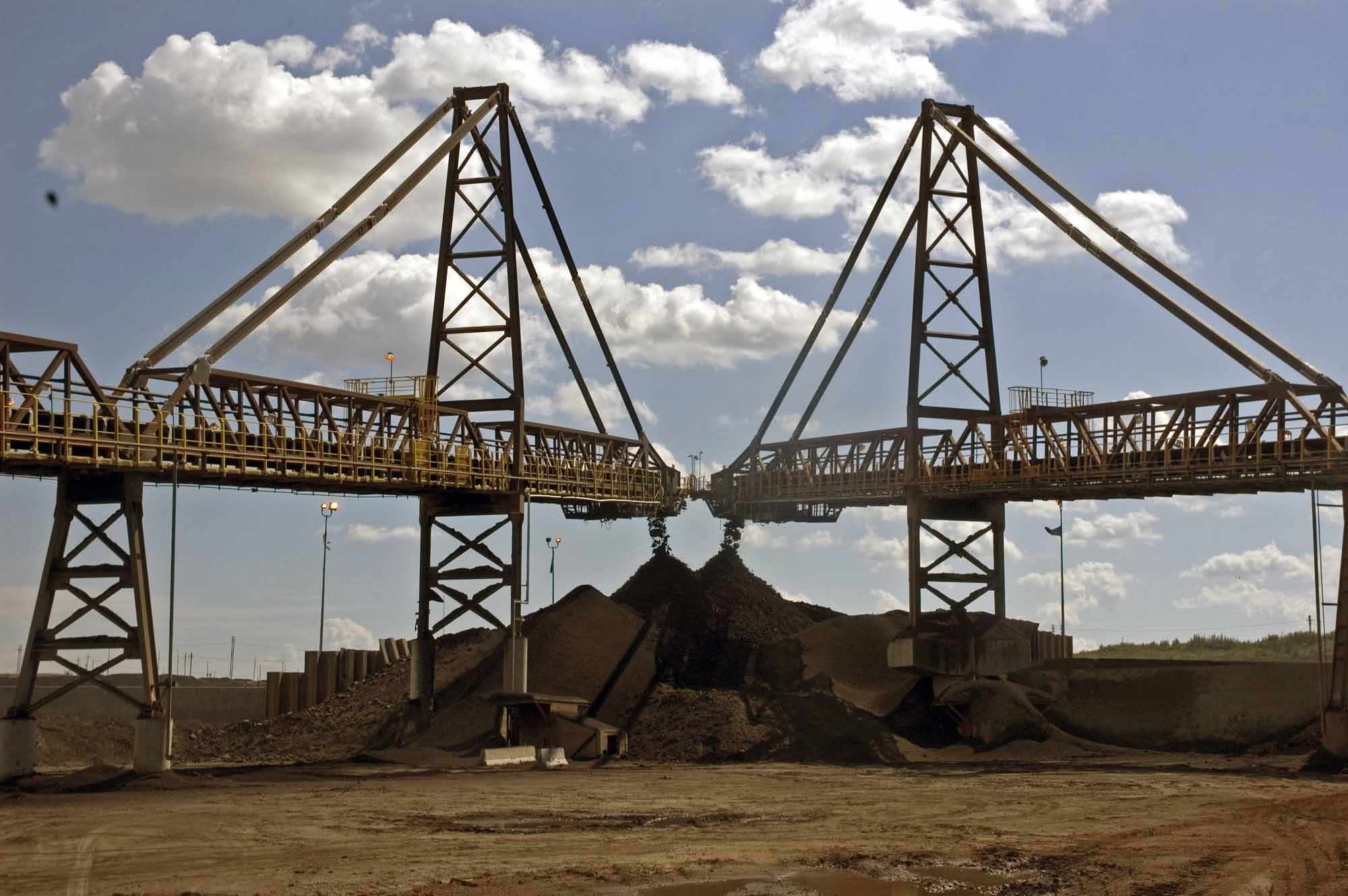
-
Article
Inflation in Canada
Inflation popularly means rising general prices, most frequently calculated by the consumer price index (CPI) — a measure of the cost of a basket of commodities purchased by a typical family.
"https://thecanadianencyclopedia.ca/images/tce_placeholder.jpg?v=e9dca980c9bdb3aa11e832e7ea94f5d9" // resources/views/front/categories/view.blade.php
https://thecanadianencyclopedia.ca/images/tce_placeholder.jpg?v=e9dca980c9bdb3aa11e832e7ea94f5d9
-
Macleans
Inside the Rig
This article was originally published in Maclean’s magazine on March 3, 1997. Partner content is not updated. On this crisp, clear mid-February afternoon, the mechanical colossus - the so-called topsides of the Hibernia drilling rig - towers over the shimmering waters of Newfoundland's Bull Arm.
"https://thecanadianencyclopedia.ca/images/tce_placeholder.jpg?v=e9dca980c9bdb3aa11e832e7ea94f5d9" // resources/views/front/categories/view.blade.php
https://thecanadianencyclopedia.ca/images/tce_placeholder.jpg?v=e9dca980c9bdb3aa11e832e7ea94f5d9
-
Article
Insolvency in Canada
Insolvency is a financial state defined by either of two situations. One is when a person, business or country cannot meet their obligations as they become due. The other is when the value of a person’s liabilities exceeds their assets.
"https://thecanadianencyclopedia.ca/images/tce_placeholder.jpg?v=e9dca980c9bdb3aa11e832e7ea94f5d9" // resources/views/front/categories/view.blade.php
https://thecanadianencyclopedia.ca/images/tce_placeholder.jpg?v=e9dca980c9bdb3aa11e832e7ea94f5d9
-
Article
Insurance
Insurance can be defined as an agreement under which some or all economic losses are transferred to an insurer who, for a premium, promises to compensate the insured for the losses resulting from specified risks (see INJURY AND PREVENTION) during the term of the agreement.
"https://thecanadianencyclopedia.ca/images/tce_placeholder.jpg?v=e9dca980c9bdb3aa11e832e7ea94f5d9" // resources/views/front/categories/view.blade.php
https://thecanadianencyclopedia.ca/images/tce_placeholder.jpg?v=e9dca980c9bdb3aa11e832e7ea94f5d9
-
Article
Interest Rates in Canada
Interest is the price charged to borrow money. Expressed as a rate, interest is a percentage of the amount of money borrowed (the principal amount) that is to be paid for an agreed period of time. Interest can be paid by a borrower to a lender (e.g., to a bank), but it can also be paid by a bank to individuals whose money the bank uses to lend money to other borrowers. In Canada, interest rates are determined by the policy of the Bank of Canada, the demand for loans, the supply of available lending capital, interest rates in the United States, inflation rates and other economic factors. The Bank of Canada helps the Canadian government manage the economy by setting the bank rate and controlling the money supply.
"https://d3d0lqu00lnqvz.cloudfront.net/media/media/99bc4ccc-b5e1-4256-af4b-ddd34d545346.jpg" // resources/views/front/categories/view.blade.php
https://d3d0lqu00lnqvz.cloudfront.net/media/media/99bc4ccc-b5e1-4256-af4b-ddd34d545346.jpg
-
Article
Intergovernmental Finance
The term "intergovernmental finance" refers to the web of financial flows linking governments in a constantly evolving federal system (see FEDERALISM).
"https://thecanadianencyclopedia.ca/images/tce_placeholder.jpg?v=e9dca980c9bdb3aa11e832e7ea94f5d9" // resources/views/front/categories/view.blade.php
https://thecanadianencyclopedia.ca/images/tce_placeholder.jpg?v=e9dca980c9bdb3aa11e832e7ea94f5d9
-
Article
International Business Machines Corporation (IBM)
The oldest of the Canadian software labs - situated in Toronto - is the only facility in North America to house development for all five major software brands for IBM.
"https://d3d0lqu00lnqvz.cloudfront.net/media/media/e4cfa5c2-8493-44cb-9c9a-033a5646f62b.jpg" // resources/views/front/categories/view.blade.php
https://d3d0lqu00lnqvz.cloudfront.net/media/media/e4cfa5c2-8493-44cb-9c9a-033a5646f62b.jpg
-
Article
International Economics
International economics studies the economic interactions of countries. International economics consists of two main parts. The first is international trade theory and commercial policy (see International Trade). The second is international finance and balance of payments theory and policy (see Balance of Payments).
"https://d3d0lqu00lnqvz.cloudfront.net/media/new_article_images/CUSMA/CUSMA_signing.jpg" // resources/views/front/categories/view.blade.php
https://d3d0lqu00lnqvz.cloudfront.net/media/new_article_images/CUSMA/CUSMA_signing.jpg
-
Article
International Monetary Fund
International Monetary Fund (IMF) is the principal independent international financial agency concerned with the management of the international monetary system.
"https://thecanadianencyclopedia.ca/images/tce_placeholder.jpg?v=e9dca980c9bdb3aa11e832e7ea94f5d9" // resources/views/front/categories/view.blade.php
https://thecanadianencyclopedia.ca/images/tce_placeholder.jpg?v=e9dca980c9bdb3aa11e832e7ea94f5d9
-
Article
International Trade
International trade is the buying and selling of goods and services between members of different countries. This exchange has been a key part of the Canadian economy since the first settlers came. Canadian settlers depended on exports of resources such as timber and grain (see Timber Trade History; Wheat). In the 20th century, Canada’s exports shifted to services, manufactured goods and commodities such as oil and metals. Since the 1980s, Canada has signed free trade agreements with dozens of countries to increase global trade and investment. Canada’s three biggest trading partners are the United States, the European Union and China. The United States is Canada largest trading partner by far. However, trade with China grew quickly in the 2010s, and this trend will likely continue. Click here for definitions of key terms used in this article.
"https://d3d0lqu00lnqvz.cloudfront.net/International Trade.jpg" // resources/views/front/categories/view.blade.php
https://d3d0lqu00lnqvz.cloudfront.net/International Trade.jpg
-
Article
International Woodworkers of America-Canada
International Woodworkers of America (now IWA Canada), formed in 1937 as part of a drive towards industrial unionization mounted by the Committee for Industrial Organization (later Congress of Industrial Organizations).
"https://thecanadianencyclopedia.ca/images/tce_placeholder.jpg?v=e9dca980c9bdb3aa11e832e7ea94f5d9" // resources/views/front/categories/view.blade.php
https://thecanadianencyclopedia.ca/images/tce_placeholder.jpg?v=e9dca980c9bdb3aa11e832e7ea94f5d9
-
Article
Inuit Co-operatives
Beginning in the mid-1950s, Inuit were encouraged to move into the trading posts to be near schools and medical services.
"https://d3d0lqu00lnqvz.cloudfront.net/media/media/57a518c7-0e95-4505-b0ca-fd75cda6b879.jpg" // resources/views/front/categories/view.blade.php
https://d3d0lqu00lnqvz.cloudfront.net/media/media/57a518c7-0e95-4505-b0ca-fd75cda6b879.jpg
-
Article
Iron Ore Company of Canada
Iron Ore Company of Canada, incorporated 1949 by Labrador Mining and Exploration and Hanna Mining interests to exploit the some 400 million t of open-pit IRON ORE reserves proved in central Québec and Labrador in the late 1940s.
"https://thecanadianencyclopedia.ca/images/tce_placeholder.jpg?v=e9dca980c9bdb3aa11e832e7ea94f5d9" // resources/views/front/categories/view.blade.php
https://thecanadianencyclopedia.ca/images/tce_placeholder.jpg?v=e9dca980c9bdb3aa11e832e7ea94f5d9