
Browse "Places"
-
Article
Mount St. Elias
Mount St. Elias, with an elevation of 5,489 m, is the second-highest mountain in Canada and is a boundary peak between Alaska and the Yukon. Mount St. Elias is located in the St. Elias Range, 43 km southwest of Mount Logan, Canada’s highest mountain. The mountain’s Tlingit name is Was’eitushaa, which means “mountain at the head of Icy Bay” or “mountain inland of Was’ei.”
"https://d3d0lqu00lnqvz.cloudfront.net/mountstelias/mount-st-elias.jpg" // resources/views/front/categories/view.blade.php
https://d3d0lqu00lnqvz.cloudfront.net/mountstelias/mount-st-elias.jpg
-
Article
Mount Vancouver
Mount Vancouver, elevation 4785 m, situated in the Yukon Territory's St Elias Mountains, rises southeast of Mount Logan between 2 immense glacier systems, Hubbard and Seward.
"https://thecanadianencyclopedia.ca/images/tce_placeholder.jpg?v=e9dca980c9bdb3aa11e832e7ea94f5d9" // resources/views/front/categories/view.blade.php
https://thecanadianencyclopedia.ca/images/tce_placeholder.jpg?v=e9dca980c9bdb3aa11e832e7ea94f5d9
-
Article
Mount Waddington
Mount Waddington, elev 4016 m, the highest mountain in BC's Coast Mountains, rises near the head of Knight Inlet, 282 km NW of Vancouver.
"https://thecanadianencyclopedia.ca/images/tce_placeholder.jpg?v=e9dca980c9bdb3aa11e832e7ea94f5d9" // resources/views/front/categories/view.blade.php
https://thecanadianencyclopedia.ca/images/tce_placeholder.jpg?v=e9dca980c9bdb3aa11e832e7ea94f5d9
-
Article
Mountains in Canada
Mountains are prominent landforms which jut out above the surrounding landscape. Often known for their natural beauty, mountains can be popular destinations for hikers and tourists. In Canada, the Rocky Mountains of British Columbia and Alberta are especially beloved. Further north, Yukon’s Mount Logan is the tallest peak in Canada, reaching 5,959 m in altitude.
"https://d3d0lqu00lnqvz.cloudfront.net/mountstelias/mount-st-elias.jpg" // resources/views/front/categories/view.blade.php
https://d3d0lqu00lnqvz.cloudfront.net/mountstelias/mount-st-elias.jpg
-
Article
Mountain Ranges in Canada
Mountain ranges generally belong to the same geological structure, and consist of a series of peaks and ridges surrounded by lowlands and valleys. There are many mountain ranges in Canada, including the Rocky Mountain, the St. Elias Mountains and the Laurentian Mountains.
"https://d3d0lqu00lnqvz.cloudfront.net/mountstelias/mount-st-elias.jpg" // resources/views/front/categories/view.blade.php
https://d3d0lqu00lnqvz.cloudfront.net/mountstelias/mount-st-elias.jpg
-
Article
Mountains in Canadian Music
Mountains. As an inspiration for Canadian music, mountains have enjoyed limited popularity. Not unexpectedly the mountains most often referred to are the Rockies of Alberta and British Columbia.
"https://thecanadianencyclopedia.ca/images/tce_placeholder.jpg?v=e9dca980c9bdb3aa11e832e7ea94f5d9" // resources/views/front/categories/view.blade.php
https://thecanadianencyclopedia.ca/images/tce_placeholder.jpg?v=e9dca980c9bdb3aa11e832e7ea94f5d9
-
Memory Project Archive
Bessie Aileen Red Heaslip Strathdee (Primary Source)
Bessie Aileen Red Heaslip Strathdee served in the Royal Canadian Air Force during the Second World War. Read and listen to her testimony below. Please be advised that Memory Project primary sources may deal with personal testimony that reflect the speaker’s recollections and interpretations of events. Individual testimony does not necessarily reflect the views of the Memory Project and Historica Canada.
"https://d3d0lqu00lnqvz.cloudfront.net/The-Memory-Project/image/3191_original.jpg" // resources/views/front/categories/view.blade.php
https://d3d0lqu00lnqvz.cloudfront.net/The-Memory-Project/image/3191_original.jpg
-
Memory Project Archive
Douglas Storey (Primary Source)
Well, it was 1942. There was a little bit happening other than joining the army or working in the steel company. So I elected to join the army. And that was the beginning of things to come. We landed I believe we were told, 12 days after D-Day. We landed and the first action we saw was Bourgebus. That’s not the proper pronunciation but it was right next door to Tilly-la-Campagne. And we went from...
"https://thecanadianencyclopedia.ca/images/tce_placeholder.jpg?v=e9dca980c9bdb3aa11e832e7ea94f5d9" // resources/views/front/categories/view.blade.php
https://thecanadianencyclopedia.ca/images/tce_placeholder.jpg?v=e9dca980c9bdb3aa11e832e7ea94f5d9
-
Memory Project Archive
Edith Marion Garden (née Greenly) (Primary Source)
In 2010, The Memory Project interviewed Edith Marion Garden (née Greenly), a veteran of the Second World War. The following recording (and transcript) is an excerpt from this interview. From 1942 to 1945, Garden served with the Royal Canadian Air Force, Women’s Division. Born in Jarvie, Alberta, on 22 October 1923, Garden enlisted in the Canadian armed forces at the age of 19. She served at RCAF stations in Canada, including training schools in Claresholm and Fort MacLeod, Alberta. In this testimony, Garden describes her service with the RCAF WD, particularly her work at the station canteen on the Queen Charlotte Islands [Haida Gwaii]. In 1945, she married William “Buster” Garden, who served in the Canadian army during the war. She died on 10 October 2011 in Edmonton, Alberta. Please be advised that Memory Project primary sources may deal with personal testimony that reflect the speaker’s recollections and interpretations of events. Individual testimony does not necessarily reflect the views of the Memory Project and Historica Canada.
"https://d3d0lqu00lnqvz.cloudfront.net/mpsb/vimy/EdithMarionGarden/5386_resize.jpg" // resources/views/front/categories/view.blade.php
https://d3d0lqu00lnqvz.cloudfront.net/mpsb/vimy/EdithMarionGarden/5386_resize.jpg
-
Memory Project Archive
George Knowles (Primary Source)
George Knowles served in the Royal Air Force during the Second World War. Read and listen to his veteran's testimony below.Please be advised that Memory Project primary sources may deal with personal testimony that reflect the speaker’s recollections and interpretations of events. Individual testimony does not necessarily reflect the views of the Memory Project and Historica Canada.
"https://d3d0lqu00lnqvz.cloudfront.net/The-Memory-Project/image/6266_original.jpg" // resources/views/front/categories/view.blade.php
https://d3d0lqu00lnqvz.cloudfront.net/The-Memory-Project/image/6266_original.jpg
-
Memory Project Archive
Ian Inglis (Primary Source)
Ian Inglis joined the Royal Navy in 1941 on the Y Scheme. While still in training, he was sent on a convoy to Murmansk, Russia. Following his return he was immediately sent to North Africa to support the landings at Tripoli. He received his commission, and was transferred to a motor gunboat. While serving on the gunboat, he escorted landing craft into Juno Beach on D-Day. After the landings, the gunboat was tasked with patrolling the mouth of the Seine River. It was during one of these patrols that they captured a German explosive gunboat; Mr. Inglis was awarded the Distinguished Service Cross for his actions. Mr. Inglis was then transferred to the Far East, where he served on motor gunboats in Burma until he returned to England in 1946.Please be advised that Memory Project primary sources may deal with personal testimony that reflect the speaker’s recollections and interpretations of events. Individual testimony does not necessarily reflect the views of the Memory Project and Historica Canada.
"https://d3d0lqu00lnqvz.cloudfront.net/The-Memory-Project/image/14136_original.jpg" // resources/views/front/categories/view.blade.php
https://d3d0lqu00lnqvz.cloudfront.net/The-Memory-Project/image/14136_original.jpg
-
Memory Project Archive
Jack Mussellam (Primary Source)
Read and listen to M. Mussellam's veteran's testimony below.Please be advised that Memory Project primary sources may deal with personal testimony that reflect the speaker’s recollections and interpretations of events. Individual testimony does not necessarily reflect the views of the Memory Project and Historica Canada.
"https://d3d0lqu00lnqvz.cloudfront.net/The-Memory-Project/image/7394_original.jpg" // resources/views/front/categories/view.blade.php
https://d3d0lqu00lnqvz.cloudfront.net/The-Memory-Project/image/7394_original.jpg
-
Memory Project Archive
John Liss (Primary Source)
See below for John Liss's entire testimony. Please be advised that Memory Project primary sources may deal with personal testimony that reflect the speaker’s recollections and interpretations of events. Individual testimony does not necessarily reflect the views of the Memory Project and Historica Canada.
"https://d3d0lqu00lnqvz.cloudfront.net/The-Memory-Project/image/14960_600.jpg" // resources/views/front/categories/view.blade.php
https://d3d0lqu00lnqvz.cloudfront.net/The-Memory-Project/image/14960_600.jpg
-
Memory Project Archive
Kenneth McClure Asham (Primary Source)
See below for Mr. Asham's entire testimony. Please be advised that Memory Project primary sources may deal with personal testimony that reflect the speaker’s recollections and interpretations of events. Individual testimony does not necessarily reflect the views of the Memory Project and Historica Canada.
"https://d3d0lqu00lnqvz.cloudfront.net/MemoryProject/KennethMcClureAsham/15631_538.jpg" // resources/views/front/categories/view.blade.php
https://d3d0lqu00lnqvz.cloudfront.net/MemoryProject/KennethMcClureAsham/15631_538.jpg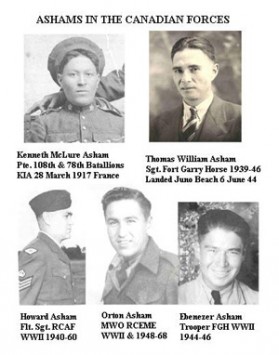
-
Memory Project Archive
Leon Katz (Primary Source)
"By the time I arrived in Bad Oeynhausen these laws were already in place or being put in place and I was assigned to implement and control and manage several of these laws." See below for Mr. Katz's entire testimony. Please be advised that Memory Project primary sources may deal with personal testimony that reflect the speaker’s recollections and interpretations of events. Individual testimony does not necessarily reflect the views of the Memory Project and Historica Canada.
"https://d3d0lqu00lnqvz.cloudfront.net/MemoryProject/LeonKatz/15900_538.jpg" // resources/views/front/categories/view.blade.php
https://d3d0lqu00lnqvz.cloudfront.net/MemoryProject/LeonKatz/15900_538.jpg