
Browse "People"
-
Article
Seán Cullen
Cullen, Seán Seán Cullen, actor, singer, comedian (b at Peterborough, Ont 1965). Seán Cullen graduated from Peterborough Collegiate and Vocational School and began honing his knife-edged, wacky sense of humour at the University of Windsor, where he hosted a regular show on CJAM campus radio station. By the late 1980s, Cullen was part of the musical threesome Corky and the Juice Pigs, making audiences laugh all over the world, most notably in Canada at Montréal's...
"https://d3d0lqu00lnqvz.cloudfront.net/media/media/f6393d05-a04a-4614-abd1-164c446fee3d.jpg" // resources/views/front/categories/view.blade.php
https://d3d0lqu00lnqvz.cloudfront.net/media/media/f6393d05-a04a-4614-abd1-164c446fee3d.jpg
-
Article
Sean Fraser
Sean Fraser, minister of Justice and attorney general of Canada and minister Responsible for the Atlantic Canada Opportunities Agency 2025–present, Member of Parliament 2015–present, parliamentary secretary, Cabinet minister, politician, lawyer (born 1 June 1984 in Antigonish, NS). Before entering politics, Sean Fraser was a lawyer and an engaged citizen. In 2015, he was elected as the Liberal Party candidate in the Nova Scotia riding of Central Nova — a longtime Conservative stronghold. Fraser was a parliamentary secretary for various ministries before being appointed minister of Immigration, Refugees and Citizenship in 2021. Fraser also served as the minister of Housing, Infrastructure and Communities. He has been minister Responsible for the Atlantic Canada Opportunities Agency as well as Canada’s attorney general and minister of Justice since May 2025.
"https://d3d0lqu00lnqvz.cloudfront.net/Sean_Fraser_-_Collision_2023_-_Centre_Stage_VR3_8228.jpg" // resources/views/front/categories/view.blade.php
https://d3d0lqu00lnqvz.cloudfront.net/Sean_Fraser_-_Collision_2023_-_Centre_Stage_VR3_8228.jpg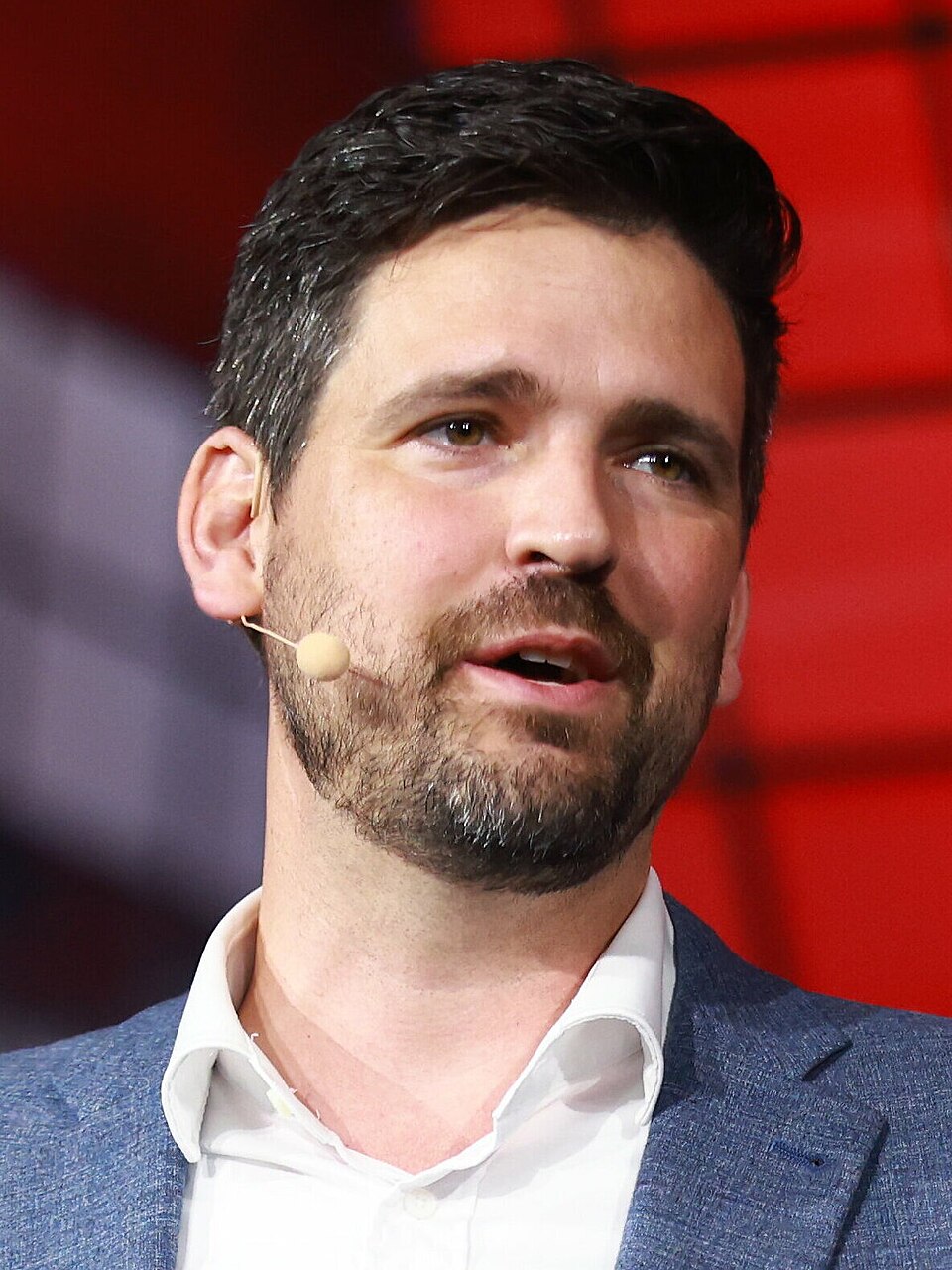
-
Article
Sean McCann
Sean McCann, actor (born 24 September 1935 in Windsor, ON; died 13 June 2019 in Toronto, ON). Character actor Sean McCann appeared in more than 150 films and television shows in Canada and the United States. He received the Earle Grey Award, the lifetime achievement award for television acting from the Academy of Canadian Cinema and Television, in 1989 and won a Gemini Awardin 1999. He also worked for the Toronto Blue Jays as a baseball scout and an amateur baseball ambassador and served on the board of directors for the Canadian Baseball Hall of Fame.
"https://thecanadianencyclopedia.ca/images/tce_placeholder.jpg?v=e9dca980c9bdb3aa11e832e7ea94f5d9" // resources/views/front/categories/view.blade.php
https://thecanadianencyclopedia.ca/images/tce_placeholder.jpg?v=e9dca980c9bdb3aa11e832e7ea94f5d9
-
Article
Sean Michaels
Sean Michaels, novelist, journalist, music critic (born 1982 in Stirling, Scotland).
"https://thecanadianencyclopedia.ca/images/tce_placeholder.jpg?v=e9dca980c9bdb3aa11e832e7ea94f5d9" // resources/views/front/categories/view.blade.php
https://thecanadianencyclopedia.ca/images/tce_placeholder.jpg?v=e9dca980c9bdb3aa11e832e7ea94f5d9
-
Article
Seana McKenna
Seana McKenna made her Toronto debut in 1980 in The Mac Paps at Toronto Workshop Productions, and in 1981 appeared in the Toronto Free Theatre production of Bertolt Brecht's In the Jungle of Cities.
"https://d3d0lqu00lnqvz.cloudfront.net/media/media/058db39a-d754-4498-8c7e-2eac9d1f196f.jpg" // resources/views/front/categories/view.blade.php
https://d3d0lqu00lnqvz.cloudfront.net/media/media/058db39a-d754-4498-8c7e-2eac9d1f196f.jpg
-
Article
Sébastien Lareau
In 1999 Sébastien Laureau had one of the most memorable professional tennis seasons ever for a Canadian tennis player.
"https://d3d0lqu00lnqvz.cloudfront.net/media/media/fc6543d4-8163-432a-b524-b3a1aa3935f2.jpg" // resources/views/front/categories/view.blade.php
https://d3d0lqu00lnqvz.cloudfront.net/media/media/fc6543d4-8163-432a-b524-b3a1aa3935f2.jpg
-
Article
Second World War Refugees in Canada
Canada accepted relatively few refugees during the Second World War because of restrictive immigration policies and public resistance. Yet nearly one-quarter of a million refugees emigrated to Canada between 1947 and 1962 in the aftermath of the Second World War. The displacement of people during and after the Second World War and their resettlement in Canada transformed the country’s previously restrictive refugee policy, contributing to the development of the Department of Citizenship and Immigration in 1950 and the emergence of modern multicultural Canadian society.
"https://d3d0lqu00lnqvz.cloudfront.net/SWW-Refugees/Pier21-children-1952.jpg" // resources/views/front/categories/view.blade.php
https://d3d0lqu00lnqvz.cloudfront.net/SWW-Refugees/Pier21-children-1952.jpg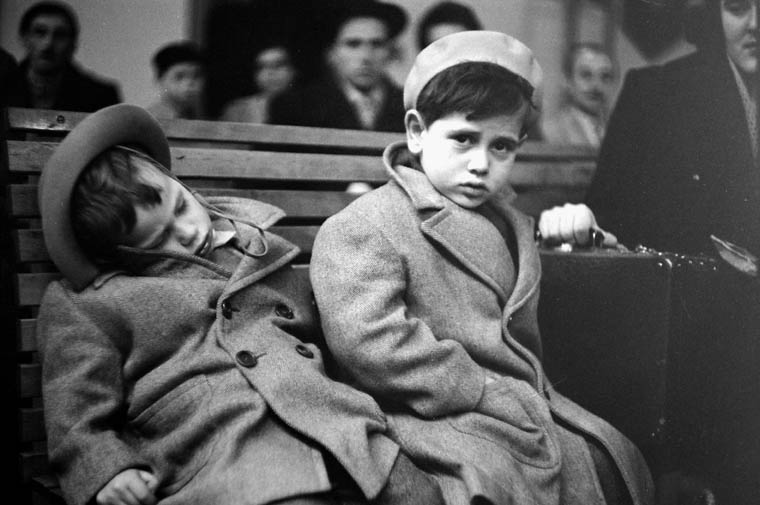
-
Article
Racial Segregation of Asian Canadians
The beginning of Chinese immigration to present-day British Columbia in the 1850s sparked a vociferous and sustained opposition from Euro-Canadian residents. This opposition intensified with the arrival of Japanese immigrants in the 1870s and South Asians in the early 1900s. To counter the supposed racial and economic dangers presented by these groups, labour leaders and others in the province successfully lobbied for legal and social restrictions on Asian employment, housing, education and civic participation in the province. These formed the basis for Asian segregation in British Columbia and Canada generally, which continued until the end of Japanese internment and the removal of all Asian voting restrictions in 1949. While it never attained the level of racial separation seen during the US South’s Jim Crow era, Asian segregation from whites in 19th and early 20th century Canada defined many aspects of everyday life in Canada.
"https://d3d0lqu00lnqvz.cloudfront.net/media/media/0cf92f4d-b2fe-43d7-90b4-4d520d9659b6.jpg" // resources/views/front/categories/view.blade.php
https://d3d0lqu00lnqvz.cloudfront.net/media/media/0cf92f4d-b2fe-43d7-90b4-4d520d9659b6.jpg
-
Article
Sekani
Sekani are an Indigenous people from central and north-eastern British Columbia. They are also known as the Tsek'ehne, which means "people of the rocks or mountains."In the past, they consisted of several family groups or bands, each of 30-40 persons, who hunted and traded along the Finlay and Parsnip tributaries of the Peace River. Each group had a name indicating its territory, but the term Sekani applied to the people of the Parsnip-Finlay area in central and north-eastern British Columbia. Sekani and Dane-zaa are mutually intelligible dialects of a single Athapaskan language. They were first contacted by Alexander Mackenzie in 1793. In the 2021 census, 650 people claimed to be of Tse’khene (Sekani) ancestry.
"https://thecanadianencyclopedia.ca/images/tce_placeholder.jpg?v=e9dca980c9bdb3aa11e832e7ea94f5d9" // resources/views/front/categories/view.blade.php
https://thecanadianencyclopedia.ca/images/tce_placeholder.jpg?v=e9dca980c9bdb3aa11e832e7ea94f5d9
-
Article
Self-Governing First Nations in Yukon
There are 14 First Nations in Yukon. Eleven of these nations are self-governing, while the remaining three are governed under the Indian Act. The 11 self-governing First Nations have legislative and executive powers much like a province or territory. In 1993, they signed the Umbrella Final Agreement (UFA) with the governments of Canada and Yukon. The UFA served as the foundation for individual self-governing agreements made between each First Nation and the territorial and federal governments. These individual agreements were signed between 1993 and 2006. (See also Comprehensive Land Claims.) While the focus of this article is the 11 self-governing First Nations, the remaining three First Nations in Yukon are White River, Liard and Ross River.
"https://d3d0lqu00lnqvz.cloudfront.net/media/new_article_images/YukonFNs/UFAsigning.jpg" // resources/views/front/categories/view.blade.php
https://d3d0lqu00lnqvz.cloudfront.net/media/new_article_images/YukonFNs/UFAsigning.jpg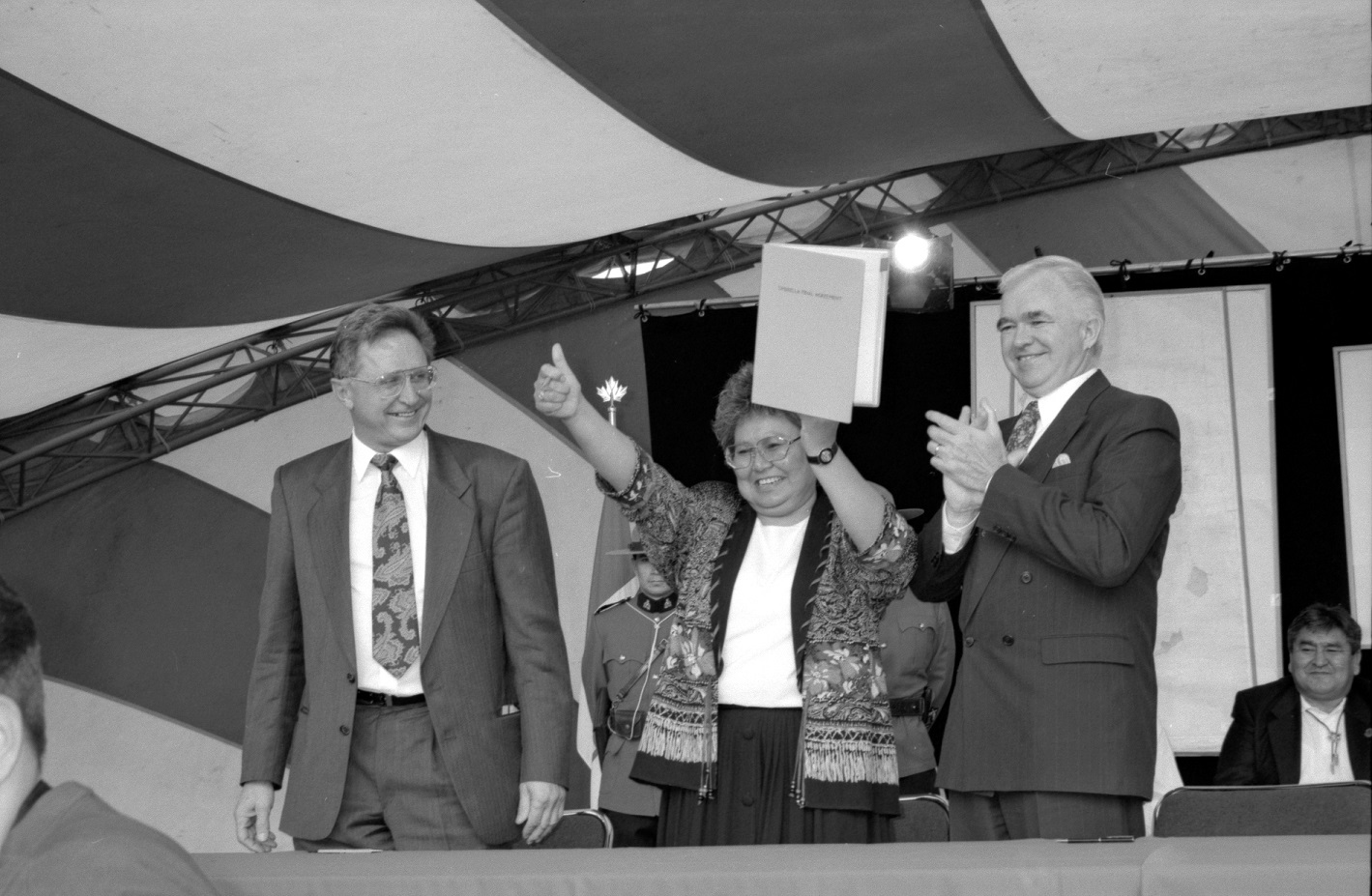
-
Article
Selma Barkham
Selma Barkham (née Huxley), CM, ONL, historian, geographer (born 8 March 1927 in London, England; died 3 May 2020 in Chichester, England). Selma Barkham uncovered the history of Basque cod-fishing and whaling industries in Atlantic Canada (referred to by the Basques as Terra Nova), especially in the 16th century. This research filled a gap in the history of European activity in Canada between the time of Jacques Cartier and Samuel de Champlain. Her work led to the establishment of Red Bay, Labrador as a national historic site and a UNESCO world heritage site.
"https://d3d0lqu00lnqvz.cloudfront.net/SelmaBarkham/SelmaBarkhamBoat2.jpg" // resources/views/front/categories/view.blade.php
https://d3d0lqu00lnqvz.cloudfront.net/SelmaBarkham/SelmaBarkhamBoat2.jpg
-
Article
Seneca
The Seneca (Onöndowa’ga, “People of the Great Hills”) are an Indigenous nation. Known as the “Keepers of the Western Door,” they are the western-most member of the Haudenosaunee Confederacy with ancestral lands located south of Lake Ontario. Today, some Seneca people also live on Six Nations territory near Brantford, Ontario. (See also First Nations.)
"https://d3d0lqu00lnqvz.cloudfront.net/media/media/6c0023ab-b0fd-42d7-84e8-3ee0b717d091.jpg" // resources/views/front/categories/view.blade.php
https://d3d0lqu00lnqvz.cloudfront.net/media/media/6c0023ab-b0fd-42d7-84e8-3ee0b717d091.jpg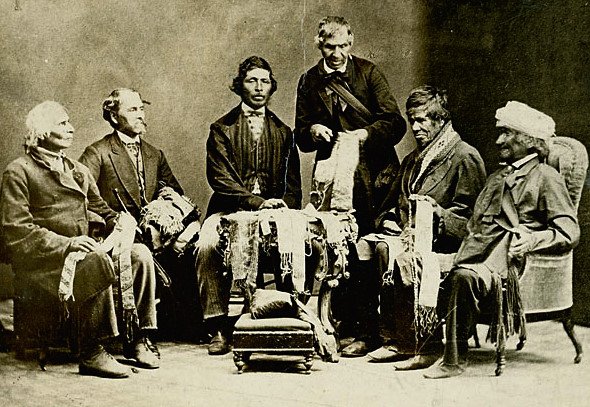
-
Article
Septuor Haydn
Septuor Haydn. Founded in Quebec City in 1871 by Arthur Lavigne (first violin), Nazaire LeVasseur (second violin), Alfred Paré (viola), Narcisse Hamel (cello), Édouard Gauvreau (contrabass), Octave Chavigny de Lachevrotière or Cyrille Duquet (flute), and J.-A. Defoy (piano).
"https://thecanadianencyclopedia.ca/images/tce_placeholder.jpg?v=e9dca980c9bdb3aa11e832e7ea94f5d9" // resources/views/front/categories/view.blade.php
https://thecanadianencyclopedia.ca/images/tce_placeholder.jpg?v=e9dca980c9bdb3aa11e832e7ea94f5d9
-
Article
Séraphin Vachon
Séraphin (Dominique) Vachon. Violinist, conductor, composer, teacher, b Quebec City 15 Dec 1841, d Baltimore, Md, 3 Jan 1875. But for the recollections of Nazaire LeVasseur, Vachon's life and career would be all but forgotten today.
"https://thecanadianencyclopedia.ca/images/tce_placeholder.jpg?v=e9dca980c9bdb3aa11e832e7ea94f5d9" // resources/views/front/categories/view.blade.php
https://thecanadianencyclopedia.ca/images/tce_placeholder.jpg?v=e9dca980c9bdb3aa11e832e7ea94f5d9
-
Article
Serbian Music in Canada
Immigration to Canada by the peoples of this eastern portion of modern Yugoslavia began in significant numbers after World War II, and by 1986 some 12,970 Serbian-Canadians lived and worked in the industrial areas of southern Ontario. Others lived in Ottawa, Montreal, and Vancouver.
"https://thecanadianencyclopedia.ca/images/tce_placeholder.jpg?v=e9dca980c9bdb3aa11e832e7ea94f5d9" // resources/views/front/categories/view.blade.php
https://thecanadianencyclopedia.ca/images/tce_placeholder.jpg?v=e9dca980c9bdb3aa11e832e7ea94f5d9