
Browse "Military"
-
Article
Cadets
Public interest in the military training of young Canadians has waxed in time of wars and threat of wars, and waned in peacetime.
"https://thecanadianencyclopedia.ca/images/tce_placeholder.jpg?v=e9dca980c9bdb3aa11e832e7ea94f5d9" // resources/views/front/categories/view.blade.php
https://thecanadianencyclopedia.ca/images/tce_placeholder.jpg?v=e9dca980c9bdb3aa11e832e7ea94f5d9
-
Article
Calixa Lavallée
Callixte Lavallée, composer, pianist, conductor, teacher, administrator, soldier (born 28 December 1842 in Verchères, Canada East; died 21 January 1891 in Boston, Massachusetts). A pioneer in music both in Canada and the United States, Calixa Lavallée was considered one of the “national glories” of Quebec. He is best known for composing the music for “O Canada” and was twice president of the Académie de musique de Québec. Despite this vaunted stature, he spent much of his life outside Canada, served with the Union Army during the American Civil War and called for Canada to be annexed by the United States. The Prix de musique Calixa-Lavallée, awarded by the St-Jean-Baptiste Society of Montreal for outstanding contributions to the music of Quebec, is named in his honour.
"https://d3d0lqu00lnqvz.cloudfront.net/media/media/8dd0c868-a5c7-46f8-ad85-813efc1f6bb8.jpg" // resources/views/front/categories/view.blade.php
https://d3d0lqu00lnqvz.cloudfront.net/media/media/8dd0c868-a5c7-46f8-ad85-813efc1f6bb8.jpg
-
Article
Campbell Mellis Douglas
Campbell Mellis Douglas, surgeon, soldier, writer, inventor and sportsman (b at Grosse Ile, Qué 5 Aug 1840; d at Wells, Somerset, Eng 31 Dec 1909).
"https://d3d0lqu00lnqvz.cloudfront.net/Campbell_Douglas_VC.jpg" // resources/views/front/categories/view.blade.php
https://d3d0lqu00lnqvz.cloudfront.net/Campbell_Douglas_VC.jpg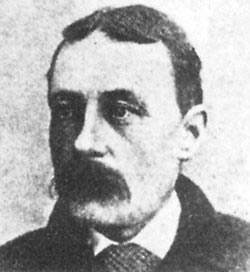
-
Collection
Canada in the 1930s
From the Great Depression to the outbreak of the Second World War, Canadians faced hardship and disruption. Government responses included work camps, economic and social legislation, and limits to immigration. By 1940, Canada had a national bank, broadcaster, film board and unemployment insurance scheme. But government help was limited and many people struggled in the “Dirty Thirties.” Canadians staged strikes and protests and joined populist political movements. Some embraced radical alternatives like fascism or communism,...
"https://d3d0lqu00lnqvz.cloudfront.net/media/media/4b5beb76-524c-45d8-81fb-a0228fb51abf.jpg" // resources/views/front/categories/view.blade.php
https://d3d0lqu00lnqvz.cloudfront.net/media/media/4b5beb76-524c-45d8-81fb-a0228fb51abf.jpg
-
Article
Canadian Army Medical Corps Nursing Sisters
More than 2,800 trained civilian nurses enlisted with the Canadian army during the First World War, becoming the first women in the modern world to hold military commissions as officers. As members of the Canadian Army Medical Corps (CAMC), the nursing sisters treated and cared for wounded soldiers overseas and at home. At least 58 died from disease or enemy action during the war.
"https://d3d0lqu00lnqvz.cloudfront.net/media/media/271eb18d-51cb-46d8-b660-42a54e9557c5.jpg" // resources/views/front/categories/view.blade.php
https://d3d0lqu00lnqvz.cloudfront.net/media/media/271eb18d-51cb-46d8-b660-42a54e9557c5.jpg
-
Article
Canadian Command during the Great War
The Canadian Expeditionary Force (CEF), of some 630,000 men during the Great War of 1914–18, consisted almost entirely of civilian soldiers. Pre-war farmers, clerks, students, and workers voluntarily enlisted to serve King and Country, although close to 100,000 were conscripted for service in the last year of the war. Most of the Canadian senior officers were drawn from the middle class — lawyers, engineers, professional soldiers, businessmen, farmers, and even a dentist.
"https://d3d0lqu00lnqvz.cloudfront.net/media/media/9a0a96ba-10cb-49e8-98bc-20c7dbecd49d.jpg" // resources/views/front/categories/view.blade.php
https://d3d0lqu00lnqvz.cloudfront.net/media/media/9a0a96ba-10cb-49e8-98bc-20c7dbecd49d.jpg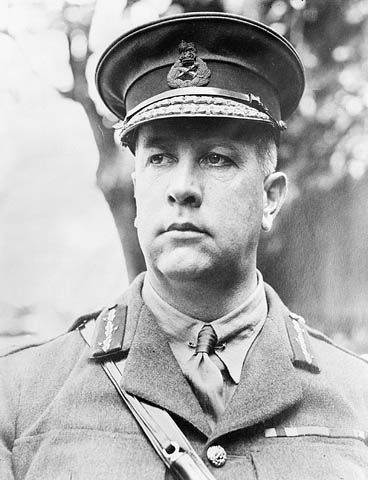
-
Article
Canadian Forces in Europe During the Cold War
During the Cold War, Canada stationed army and air force units abroad for the first time during peacetime. Soldiers and airmen began to arrive in the early 1950s, shortly after the Cold War began, and remained until 1993, after it ended. In total, more than 100,000 Canadian military personnel served in France and West Germany in that period.
"https://d3d0lqu00lnqvz.cloudfront.net/media/media/e011169341-v8.jpg" // resources/views/front/categories/view.blade.php
https://d3d0lqu00lnqvz.cloudfront.net/media/media/e011169341-v8.jpg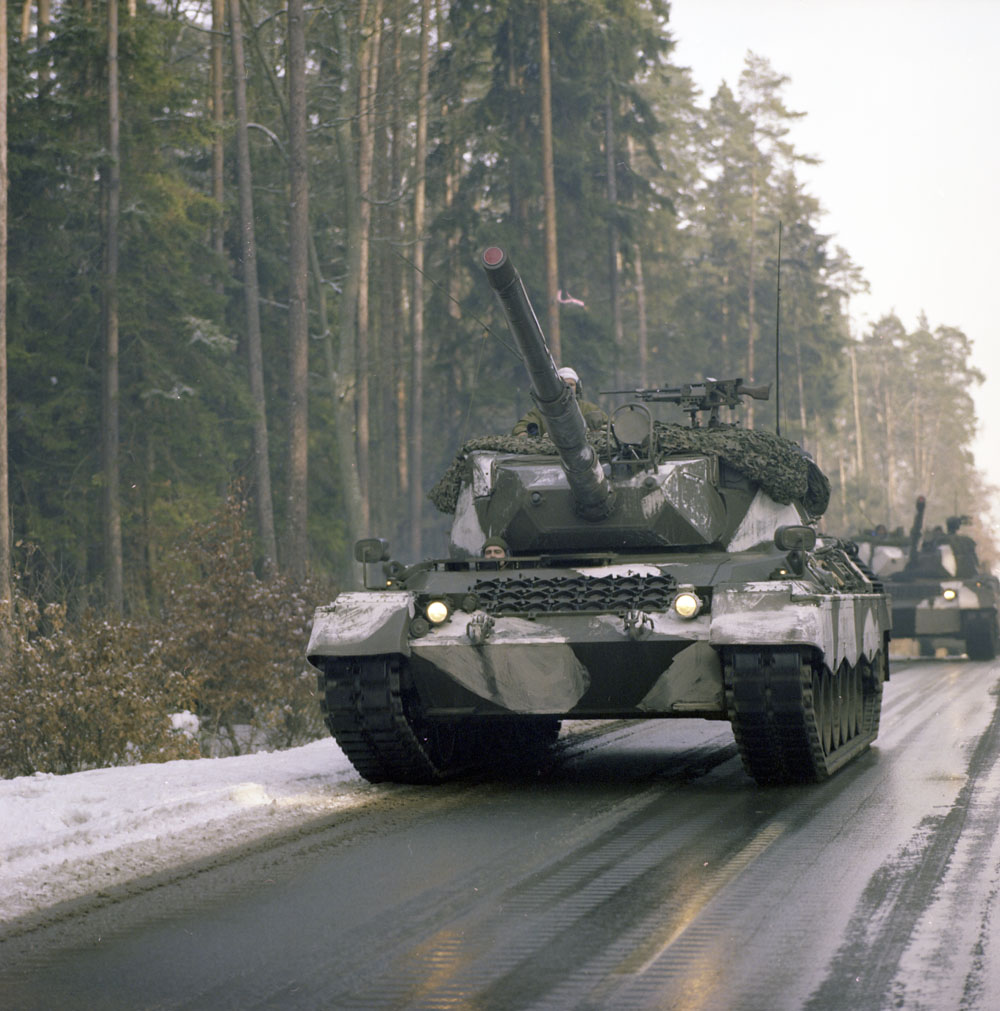
-
Article
Canadian Peacekeepers in Rwanda
From 1993 to 1995, Canada was a leading contributor to a series of United Nations peacekeeping missions in the African nation of Rwanda. However, the United Nations Assistance Mission for Rwanda (UNAMIR), led by Canadian Major-General Roméo Dallaire, was powerless to prevent the slaughter of 800,000 Rwandans in 1994. Following the genocide, a new contingent of Canadian troops returned to Rwanda as part of UNAMIR II, tasked with restoring order and bringing aid to the devastated population. Hundreds of Canadian soldiers, including Dallaire, returned from their service in Rwanda deeply scarred by what they had witnessed.
"https://d3d0lqu00lnqvz.cloudfront.net/media/new_article_images/Peacekeeping/Peacekeepers in Rwanda.jpg" // resources/views/front/categories/view.blade.php
https://d3d0lqu00lnqvz.cloudfront.net/media/new_article_images/Peacekeeping/Peacekeepers in Rwanda.jpg
-
Article
Canadian Peacekeepers in Somalia
In 1992–93, Canada contributed military forces to UNITAF, a United Nations–backed humanitarian mission in the African nation of Somalia. The mission was hampered by the fact that some of the warring factions in the Somalia conflict attacked the international forces that were trying to restore order and deliver food to a starving population. The Canadian effort was also clouded by the murder of a Somali teenager by Canadian troops. The crime — and alleged cover-up by Defence officials in Ottawa — became one of the most infamous scandals in Canadian history.
"https://d3d0lqu00lnqvz.cloudfront.net/media/new_article_images/e002280232.jpg" // resources/views/front/categories/view.blade.php
https://d3d0lqu00lnqvz.cloudfront.net/media/new_article_images/e002280232.jpg
-
Article
Canadian Rangers
The Canadian Rangers are a unique organization within the Armed Forces, created to provide a paramilitary presence in the North and in other remote areas made up of mainly local Indigenous populations. The number of Canadian Rangers in 2024 is roughly 5,000.
"https://d3d0lqu00lnqvz.cloudfront.net/media/media/4314765e-22dd-4b91-8f51-38c79ed95f9a.jpg" // resources/views/front/categories/view.blade.php
https://d3d0lqu00lnqvz.cloudfront.net/media/media/4314765e-22dd-4b91-8f51-38c79ed95f9a.jpg
-
Macleans
Canadian Soldiers in Afghanistan
This article was originally published in Maclean’s magazine on October 13, 2003. Partner content is not updated. DON'T EXPECT MUCH sympathy from Sgt. Paul Coppicus. For the rugged soldier from Moosomin, Sask., tackling challenges on your own initiative is the only way to prove your worth.
"https://thecanadianencyclopedia.ca/images/tce_placeholder.jpg?v=e9dca980c9bdb3aa11e832e7ea94f5d9" // resources/views/front/categories/view.blade.php
https://thecanadianencyclopedia.ca/images/tce_placeholder.jpg?v=e9dca980c9bdb3aa11e832e7ea94f5d9
-
Macleans
Canadian Troops Dig in for a Long Battle with the Taliban
Just a few days before he and Prime Minister Stephen Harper made their surprise March trip to visit Canadian troops in Afghanistan, Defence Minister Gordon O'Connor tried to calm growing anxiety about the combat role Canada appeared to be taking on in Kandahar.This article was originally published in Maclean's Magazine on June 26, 2006
"https://thecanadianencyclopedia.ca/images/tce_placeholder.jpg?v=e9dca980c9bdb3aa11e832e7ea94f5d9" // resources/views/front/categories/view.blade.php
https://thecanadianencyclopedia.ca/images/tce_placeholder.jpg?v=e9dca980c9bdb3aa11e832e7ea94f5d9
-
Macleans
Canadian Troops Killed in Afghanistan
The road they died on could hardly even be called one.This article was originally published in Maclean's Magazine on October 13, 2003
"https://thecanadianencyclopedia.ca/images/tce_placeholder.jpg?v=e9dca980c9bdb3aa11e832e7ea94f5d9" // resources/views/front/categories/view.blade.php
https://thecanadianencyclopedia.ca/images/tce_placeholder.jpg?v=e9dca980c9bdb3aa11e832e7ea94f5d9
-
Macleans
Canadian Troops to Stay in Afghanistan
Their widows wept. A bagpiper played an old, sad song. The faces of comrades were ashen. Memorial services for fallen soldiers are, of course, painfully unique to the families and friends of the dead; but what they offer the nation is familiar ritual, perhaps a feeling of closure.This article was originally published in Maclean's Magazine on October 20, 2003
"https://thecanadianencyclopedia.ca/images/tce_placeholder.jpg?v=e9dca980c9bdb3aa11e832e7ea94f5d9" // resources/views/front/categories/view.blade.php
https://thecanadianencyclopedia.ca/images/tce_placeholder.jpg?v=e9dca980c9bdb3aa11e832e7ea94f5d9
-
Article
Canadian Volunteers in the War of 1812
A band of Americans and pro-American Canadians living in Upper Canada, the Canadian Volunteers were a company-sized regiment that fought on the American side during the WAR OF 1812.
"https://thecanadianencyclopedia.ca/images/tce_placeholder.jpg?v=e9dca980c9bdb3aa11e832e7ea94f5d9" // resources/views/front/categories/view.blade.php
https://thecanadianencyclopedia.ca/images/tce_placeholder.jpg?v=e9dca980c9bdb3aa11e832e7ea94f5d9