
Browse "History/Historical Figures"
-
Editorial
Benjamin Lett: Early Canadian Terrorist
The following article is an editorial written by The Canadian Encyclopedia staff. Editorials are not usually updated.
"https://d3d0lqu00lnqvz.cloudfront.net/media/media/49ba20fd-6d57-4ea4-9659-791941b8dd61.jpg" // resources/views/front/categories/view.blade.php
https://d3d0lqu00lnqvz.cloudfront.net/media/media/49ba20fd-6d57-4ea4-9659-791941b8dd61.jpg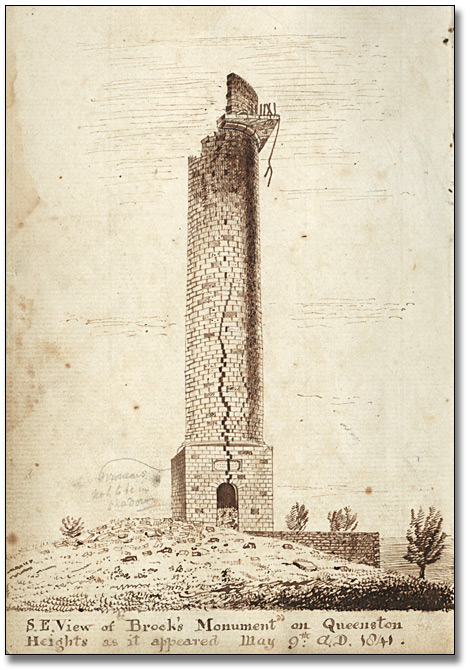
-
Article
Bennett's New Deal
In the mid-1930s, at the height of the Great Depression, Prime Minister R.B. Bennett’s political demise seemed inevitable. He sought to reverse the tide running against his Conservative Party. In January 1935, he began a series of live radio speeches outlining a “New Deal” for Canada. He promised a more progressive taxation system; a maximum work week; a minimum wage; closer regulation of working conditions; unemployment insurance; health and accident insurance; a revised old-age pension; and agricultural support programs. But Bennett’s 11th-hour proposals were seen as too-little, too-late. He lost the 1935 election to William Lyon Mackenzie King and the Liberals.
"https://d3d0lqu00lnqvz.cloudfront.net/media/media/b31ca29f-26f7-4622-a011-31d66b4c1d33.jpg" // resources/views/front/categories/view.blade.php
https://d3d0lqu00lnqvz.cloudfront.net/media/media/b31ca29f-26f7-4622-a011-31d66b4c1d33.jpg
-
Article
Bernard Donald Macdonald
Bernard Donald Macdonald, Roman Catholic bishop of Charlottetown (b at Allisary, PEI 25 Dec 1797; d at St Dunstan's College, near Charlottetown, 30 Dec 1859). In 1812 Macdonald was one of the first 2 Island boys sent to study for the priesthood at the Grand Seminary of Québec.
"https://thecanadianencyclopedia.ca/images/tce_placeholder.jpg?v=e9dca980c9bdb3aa11e832e7ea94f5d9" // resources/views/front/categories/view.blade.php
https://thecanadianencyclopedia.ca/images/tce_placeholder.jpg?v=e9dca980c9bdb3aa11e832e7ea94f5d9
-
Article
Mistahimaskwa (Big Bear)
Mistahimaskwa (Big Bear), Plains Cree chief (born near Fort Carlton, SK; died 17 January 1888 on the Little Pine Reserve, SK). Mistahimaskwa is best known for his refusal to sign Treaty 6 in 1876 and for his band’s involvement in violent conflicts associated with the 1885 North-West Resistance.
"https://d3d0lqu00lnqvz.cloudfront.net/media/media/d3f8c588-0cfa-414d-b360-98aa3449b9e1.jpg" // resources/views/front/categories/view.blade.php
https://d3d0lqu00lnqvz.cloudfront.net/media/media/d3f8c588-0cfa-414d-b360-98aa3449b9e1.jpg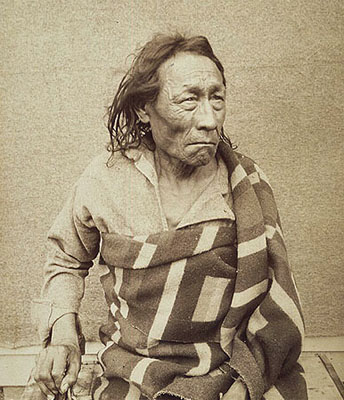
-
Article
Bjarni Herjolfsson
Bjarni Herjolfsson, Norse explorer (dates of birth and death unknown; lived in the 10th century). Herjolfsson was likely the first European to sight the east coast of North America. While sailing from Iceland to Greenland in 986 CE, Herjolfsson sighted lands that were later determined to be Baffin Island, Labrador and Newfoundland. Although Herjolfsson never set foot in North America, Leif Eriksson later retraced his voyage, establishing a settlement at what he called Vinland.
"https://d3d0lqu00lnqvz.cloudfront.net/media/media/67bd8e2c-dd2e-4e06-8cb1-542f09e45cd5.jpg" // resources/views/front/categories/view.blade.php
https://d3d0lqu00lnqvz.cloudfront.net/media/media/67bd8e2c-dd2e-4e06-8cb1-542f09e45cd5.jpg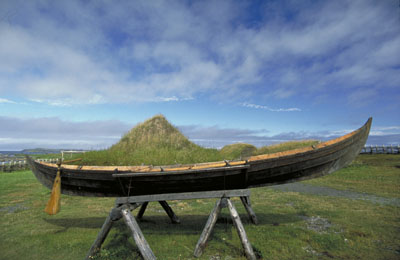
-
Article
Black Fur Traders in Canada
The role of Black people within the history of the fur trade is rarely considered. Black people were rarely in a position to write their own stories, so often those stories went untold. This owes to a complex set of factors including racism and limited access to literacy. Black people are also not the focus of many historical documents. However, historians have identified several Black fur traders working in different roles, and even an entire family of Black fur traders who left their mark on history.
"https://d3d0lqu00lnqvz.cloudfront.net/media/home-page-images/por-1261-r1.jpg" // resources/views/front/categories/view.blade.php
https://d3d0lqu00lnqvz.cloudfront.net/media/home-page-images/por-1261-r1.jpg
-
Article
Black Hawk
Black Hawk (Black Sparrow Hawk, Makataimeshekiakiak), Sauk War Chief (b at Saukenuk, near Rock Island, Ill, 1767; d near Des Moines, Iowa, 3 Oct 1838).
"https://d3d0lqu00lnqvz.cloudfront.net/media/media/10141ccd-3d95-4eca-96ba-3362cbca9249.jpg" // resources/views/front/categories/view.blade.php
https://d3d0lqu00lnqvz.cloudfront.net/media/media/10141ccd-3d95-4eca-96ba-3362cbca9249.jpg
-
Article
Black History in Canada until 1900
Black people have lived in Canada since the beginnings of transatlantic settlement. Although historically very few arrived directly from their ancestral homeland in Africa, the term "African Canadian" is used to identify all descendants of Africa regardless of their place of birth. “Black Canadian” is also used as a more general term. The earliest arrivals were enslaved people brought from New England or the West Indies. Between 1763 and 1900, most Black migrants to Canada were fleeing enslavement in the US. (See also Black Enslavement in Canada.) See also Black History in Canada: 1900–1960 and Black History in Canada: 1960 to Present.
"https://d3d0lqu00lnqvz.cloudfront.net/media/media/917b145c-c991-4838-92ef-ab33000e1bdc.jpg" // resources/views/front/categories/view.blade.php
https://d3d0lqu00lnqvz.cloudfront.net/media/media/917b145c-c991-4838-92ef-ab33000e1bdc.jpg
-
Editorial
Editorial: The Arrival of Black Loyalists in Nova Scotia
The following article is an editorial written by The Canadian Encyclopedia staff. Editorials are not usually updated. “Freedom and a Farm.” The promise was exciting to the thousands of African Americans, most seeking to escape enslavement, who fought in British regiments during the American Revolutionary War (1775–83). Following the war, they joined tens of thousands of Loyalists — American refugees who had sided with the British. Between 80,000 and 100,000 Loyalists eventually fled the United States. About half came to British North America. The main waves arrived in 1783 and 1784. The territory that now includes the Maritime provinces became home to more than 30,000 Loyalists. Most of coastal Nova Scotia received Loyalist settlers, as did Cape Breton and Prince Edward Island (then called St. John’s Island).
"https://d3d0lqu00lnqvz.cloudfront.net/media/media/be13527b-b76d-408a-afca-30acbd4f7bfc.png" // resources/views/front/categories/view.blade.php
https://d3d0lqu00lnqvz.cloudfront.net/media/media/be13527b-b76d-408a-afca-30acbd4f7bfc.png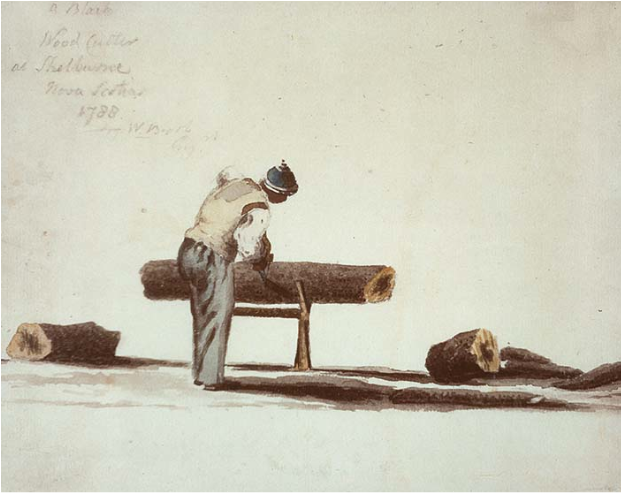
-
Article
Blair Fraser
Blair Fraser, journalist (b at Sydney, NS 17 Apr 1909; d on the Petawawa R, Ont 12 May 1968). Fraser was one of the leading journalists of the 1950s and 1960s, and as Ottawa editor of Maclean's from 1943-60 he had a unique opportunity to influence a national audience.
"https://thecanadianencyclopedia.ca/images/tce_placeholder.jpg?v=e9dca980c9bdb3aa11e832e7ea94f5d9" // resources/views/front/categories/view.blade.php
https://thecanadianencyclopedia.ca/images/tce_placeholder.jpg?v=e9dca980c9bdb3aa11e832e7ea94f5d9
-
"https://thecanadianencyclopedia.ca/images/tce_placeholder.jpg?v=e9dca980c9bdb3aa11e832e7ea94f5d9" // resources/views/front/categories/view.blade.php
https://thecanadianencyclopedia.ca/images/tce_placeholder.jpg?v=e9dca980c9bdb3aa11e832e7ea94f5d9
-
Macleans
Book Review: The Secret Voyage of Sir Francis Drake
This article was originally published in Maclean’s magazine on July 28, 2003. Partner content is not updated.
"https://thecanadianencyclopedia.ca/images/tce_placeholder.jpg?v=e9dca980c9bdb3aa11e832e7ea94f5d9" // resources/views/front/categories/view.blade.php
https://thecanadianencyclopedia.ca/images/tce_placeholder.jpg?v=e9dca980c9bdb3aa11e832e7ea94f5d9
-
Article
Brother XII (Edward Arthur Wilson)
Brother XII (Brother Twelve) was one of Canada’s most notorious cult leaders. A mystic figure who dreamed of transforming humanity, he left behind a failed utopia and deep mystery.
"https://d3d0lqu00lnqvz.cloudfront.net/media/new_article_images/BrotherXIIEdwardArthurWilson/85745nanaimoBrotherxii.jpg" // resources/views/front/categories/view.blade.php
https://d3d0lqu00lnqvz.cloudfront.net/media/new_article_images/BrotherXIIEdwardArthurWilson/85745nanaimoBrotherxii.jpg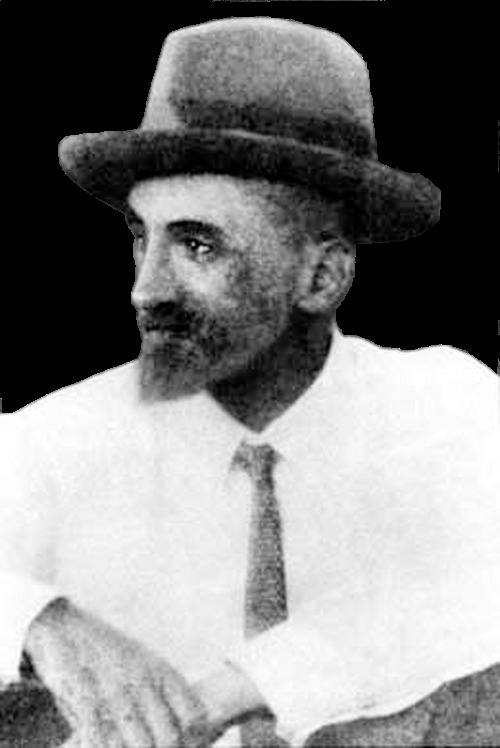
-
Article
Bunkhouse Men
Partly as a result of this, but primarily because jobs moved around, bunkhouse men were highly mobile, tramping within regions and sometimes across the country to find work. They were also often at the forefront of labour radicalism.
"https://d3d0lqu00lnqvz.cloudfront.net/media/media/6d29ce94-952e-4576-b683-b58d2866e20c.jpg" // resources/views/front/categories/view.blade.php
https://d3d0lqu00lnqvz.cloudfront.net/media/media/6d29ce94-952e-4576-b683-b58d2866e20c.jpg
-
Article
Calixa Lavallée
Callixte Lavallée, composer, pianist, conductor, teacher, administrator, soldier (born 28 December 1842 in Verchères, Canada East; died 21 January 1891 in Boston, Massachusetts). A pioneer in music both in Canada and the United States, Calixa Lavallée was considered one of the “national glories” of Quebec. He is best known for composing the music for “O Canada” and was twice president of the Académie de musique de Québec. Despite this vaunted stature, he spent much of his life outside Canada, served with the Union Army during the American Civil War and called for Canada to be annexed by the United States. The Prix de musique Calixa-Lavallée, awarded by the St-Jean-Baptiste Society of Montreal for outstanding contributions to the music of Quebec, is named in his honour.
"https://d3d0lqu00lnqvz.cloudfront.net/media/media/8dd0c868-a5c7-46f8-ad85-813efc1f6bb8.jpg" // resources/views/front/categories/view.blade.php
https://d3d0lqu00lnqvz.cloudfront.net/media/media/8dd0c868-a5c7-46f8-ad85-813efc1f6bb8.jpg