
Browse "History/Historical Figures"
-
Table
Fathers of Confederation
The 36 men traditionally regarded as the Fathers of Confederation were those who represented British North American colonies at one or more of the conferences that lead to Confederation on 1 July 1867.
"https://d3d0lqu00lnqvz.cloudfront.net/media/media/f8f2bab3-d387-4165-9fbc-617c30019b95.jpg" // resources/views/front/categories/view.blade.php
https://d3d0lqu00lnqvz.cloudfront.net/media/media/f8f2bab3-d387-4165-9fbc-617c30019b95.jpg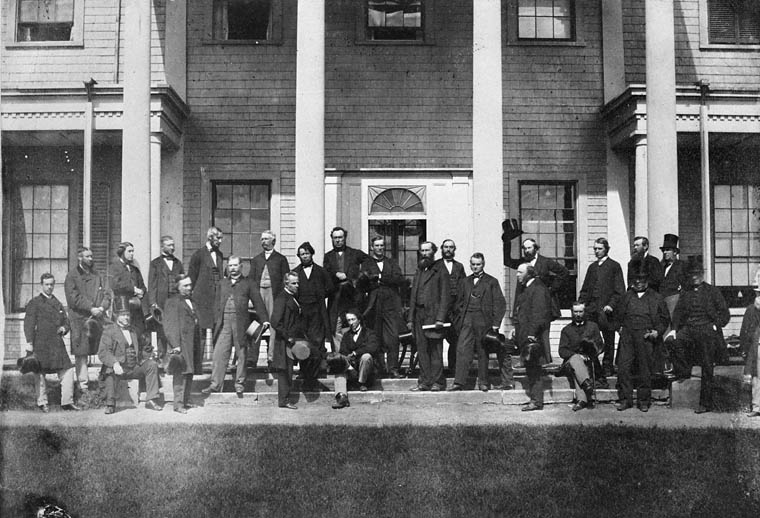
-
Article
Felix Callihoo
Felix (or Felice) Callihoo, Métis political leader, activist, rancher (born 28 April 1885 in St. Albert, AB; died 27 January 1950 in St. Paul, AB). Felix Callihoo was from St. Paul-des-Métis, Alberta. He was voted in as one of the first vice-presidents of the Métis Association of Alberta (MAA, now Otipemisiwak Métis Government) when the MAA’s executive was formally organized on 28 December 1932.
"https://thecanadianencyclopedia.ca/images/tce_placeholder.jpg?v=e9dca980c9bdb3aa11e832e7ea94f5d9" // resources/views/front/categories/view.blade.php
https://thecanadianencyclopedia.ca/images/tce_placeholder.jpg?v=e9dca980c9bdb3aa11e832e7ea94f5d9
-
Article
Fenians
Fenians were members of a mid-19th century movement to secure Ireland’s independence from Britain. They were a secret, outlawed organization in the British Empire, where they were known as the Irish Republican Brotherhood. They operated freely and openly in the United States as the Fenian Brotherhood. Eventually, both wings became known as the Fenians. They launched a series of armed raids into Canadian territory between 1866 and 1871. The movement was primarily based in the United States, but it had a significant presence in Canada.
"https://d3d0lqu00lnqvz.cloudfront.net/media/media/a4c521f1-90fe-495e-9550-39952e8e3d07.jpg" // resources/views/front/categories/view.blade.php
https://d3d0lqu00lnqvz.cloudfront.net/media/media/a4c521f1-90fe-495e-9550-39952e8e3d07.jpg
-
Article
Feo Monck
Frances Elizabeth Owen “Feo” Monck, author (born 1 August 1835 in Charleville, Enniskerry, County Wicklow, Ireland; died 31 July 1919). Feo Monck’s brother-in-law was governor general Viscount Monck, and her husband, Richard Monck, was military secretary to the governor general from 1864 to 1869. When Lady Monck was absent, she acted as the hostess for viceregal social occasions, including the ball held during the Quebec Conference of 1864. She recorded her experiences in the book, My Canadian Leaves: An Account of a Visit to Canada in 1864–1865.
"https://d3d0lqu00lnqvz.cloudfront.net/media/media/143f8587-f938-4cf1-bdc2-c441d02dc962.jpg" // resources/views/front/categories/view.blade.php
https://d3d0lqu00lnqvz.cloudfront.net/media/media/143f8587-f938-4cf1-bdc2-c441d02dc962.jpg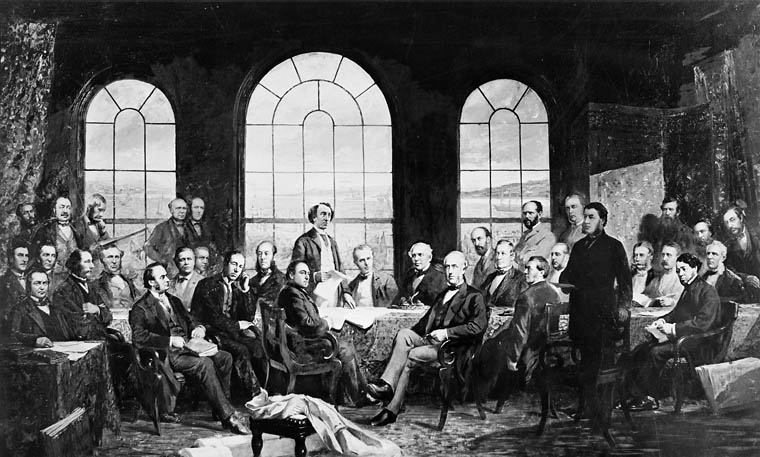
-
Article
Filles du Roi
The Filles du Roi were a cohort of around 800 unmarried women sponsored by the King to immigrate to New France between 1663 and 1673. At the time, private interests instead gave priority to bringing over male workers. As a result, the French government and religious communities attempted to correct the gender imbalance in the colony. By facilitating the migration of the Filles du Roi, Minister Jean-Baptiste Colbert sought to incentivize male workers, who had finished their contract, and soldiers of the Carignan-Salières regiment (which had just been demobilized) to settle in the colony. Today, many people can trace their ancestry to the Filles du Roi.
"https://d3d0lqu00lnqvz.cloudfront.net/media/media/d698c031-e790-4c17-906a-5b880e71e24d.jpg" // resources/views/front/categories/view.blade.php
https://d3d0lqu00lnqvz.cloudfront.net/media/media/d698c031-e790-4c17-906a-5b880e71e24d.jpg
-
Article
Fishing Admiral
Fishing Admiral, a position of authority claimed by the first fishing ship's captain to enter each Newfoundland harbour every year, although in some harbours in the 1500s each ship's captain may have taken a turn during the fishing season.
"https://thecanadianencyclopedia.ca/images/tce_placeholder.jpg?v=e9dca980c9bdb3aa11e832e7ea94f5d9" // resources/views/front/categories/view.blade.php
https://thecanadianencyclopedia.ca/images/tce_placeholder.jpg?v=e9dca980c9bdb3aa11e832e7ea94f5d9
-
Article
Frances Brooke
Here she wrote what may be described as the first Canadian novel, The History of Emily Montague (1769), which she enriched with descriptions of landscape and climate, current events and inhabitants of the new colony.
"https://d3d0lqu00lnqvz.cloudfront.net/media/media/c438c23a-f24c-4938-83c4-80ffc17c2c69.jpg" // resources/views/front/categories/view.blade.php
https://d3d0lqu00lnqvz.cloudfront.net/media/media/c438c23a-f24c-4938-83c4-80ffc17c2c69.jpg
-
Article
Frances Gertrude McGill
Frances Gertrude McGill, teacher, bacteriologist, forensic pathologist (born 18 November 1882 in Minnedosa, MB; died 21 January 1959 in Winnipeg). McGill was Canada’s first female forensic pathologist and a pioneer in the field. She assisted police in solving numerous difficult criminal cases and unusual deaths, earning the nickname “the Sherlock Holmes of Saskatchewan.” She is often regarded as the first female member of the Royal Canadian Mounted Police (RCMP). Her personal motto is said to have been “Think like a man, act like a lady and work like a dog.”
"https://d3d0lqu00lnqvz.cloudfront.net/!feature-img-thumbnails/Francesgertrudemcgill-tw.jpg" // resources/views/front/categories/view.blade.php
https://d3d0lqu00lnqvz.cloudfront.net/!feature-img-thumbnails/Francesgertrudemcgill-tw.jpg
-
Article
Frances Stewart
Frances Stewart, née Browne, diarist, letter writer (b at Dublin, Ire 24 May 1794; d near Peterborough, Ont 24 Feb 1872).
"https://thecanadianencyclopedia.ca/images/tce_placeholder.jpg?v=e9dca980c9bdb3aa11e832e7ea94f5d9" // resources/views/front/categories/view.blade.php
https://thecanadianencyclopedia.ca/images/tce_placeholder.jpg?v=e9dca980c9bdb3aa11e832e7ea94f5d9
-
Article
Francis de Rottenburg
Baron Francis de Rottenburg, soldier, military figure in the WAR OF 1812 (b at Danzig [now Gdansk], Poland, 4 Nov 1757; d at Portsmouth, England, 24 Apr 1832). Francis de Rottenburg was the son of Franz Rottenburg, a merchant and landowner.
"https://thecanadianencyclopedia.ca/images/tce_placeholder.jpg?v=e9dca980c9bdb3aa11e832e7ea94f5d9" // resources/views/front/categories/view.blade.php
https://thecanadianencyclopedia.ca/images/tce_placeholder.jpg?v=e9dca980c9bdb3aa11e832e7ea94f5d9
-
Article
Francis Dickens
Francis Jeffrey Dickens, North-West Mounted Police inspector (b at London, Eng 15 Jan 1844; d at Moline, Ill 11 June 1886), third son of Charles Dickens. In 1864, after numerous unsuccessful career starts, Dickens joined the Bengal Mounted Police in India.
"https://thecanadianencyclopedia.ca/images/tce_placeholder.jpg?v=e9dca980c9bdb3aa11e832e7ea94f5d9" // resources/views/front/categories/view.blade.php
https://thecanadianencyclopedia.ca/images/tce_placeholder.jpg?v=e9dca980c9bdb3aa11e832e7ea94f5d9
-
Article
Francis Gore
Francis Gore, colonial administrator (b at Blackheath [London], Eng 1769; d at Brighton, Eng 3 Nov 1852).
"https://d3d0lqu00lnqvz.cloudfront.net/media/media/5de2b9ef-b081-4ae0-b536-a66f7d2519b9.jpg" // resources/views/front/categories/view.blade.php
https://d3d0lqu00lnqvz.cloudfront.net/media/media/5de2b9ef-b081-4ae0-b536-a66f7d2519b9.jpg
-
Article
Francis Joseph Fitzgerald
Francis Joseph Fitzgerald, Royal North-West Mounted Police inspector (b at Halifax 12 Apr 1869; d Yukon Territory Feb 1911).
"https://thecanadianencyclopedia.ca/images/tce_placeholder.jpg?v=e9dca980c9bdb3aa11e832e7ea94f5d9" // resources/views/front/categories/view.blade.php
https://thecanadianencyclopedia.ca/images/tce_placeholder.jpg?v=e9dca980c9bdb3aa11e832e7ea94f5d9
-
Article
François Bigot
François Bigot, financial commissary of Île Royale 1739–1745, intendant of New France 1748–1760 (baptized at Bordeaux, France on 30 Jan 1703; died at Neuchâtel, Switzerland on 12 Jan 1778). Traditionally, Bigot has been remembered for administrative fraud so massive as to cause the Conquest of New France by the British during the Seven Years' War. His legacy is, however, more nuanced as the colony’s economic issues went far beyond Bigot’s own corruption.
"https://d3d0lqu00lnqvz.cloudfront.net/media/media/e7fc615b-0819-4943-8d60-6ae83399268c.jpg" // resources/views/front/categories/view.blade.php
https://d3d0lqu00lnqvz.cloudfront.net/media/media/e7fc615b-0819-4943-8d60-6ae83399268c.jpg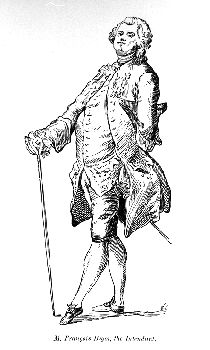
-
Article
François de Beauharnois de La Chaussaye, Baron de Beauville
François de Beauharnois de La Chaussaye, Baron de Beauville, INTENDANT of New France 1702-05 (bap 19 Sept 1665 near Orléans, France; d there 9 Sept 1746). Beauharnois, a protégé of the minister of marine, faced a difficult situation on his arrival in New France.
"https://thecanadianencyclopedia.ca/images/tce_placeholder.jpg?v=e9dca980c9bdb3aa11e832e7ea94f5d9" // resources/views/front/categories/view.blade.php
https://thecanadianencyclopedia.ca/images/tce_placeholder.jpg?v=e9dca980c9bdb3aa11e832e7ea94f5d9