
Browse "Communities & Sociology"
-
List
Notable Women Entrepreneurs in Canadian History
Women have had a long history of entrepreneurship in Canada and their involvement continues to grow. The entrepreneurs listed below are just a few examples of the many women who have made their mark on Canadian business history.
"https://d3d0lqu00lnqvz.cloudfront.net/beverlymascoll/beverlymascoll.jpg" // resources/views/front/categories/view.blade.php
https://d3d0lqu00lnqvz.cloudfront.net/beverlymascoll/beverlymascoll.jpg
-
Article
Numbered Treaties (Plain-Language Summary)
The Numbered Treaties are a series of 11 treaties. A treaty is an agreement between two or more nations. The Numbered Treaties were signed by the Canadian government and Indigenous people. All 11 treaties were signed between 1871 and 1921. The Numbered Treaties cover parts of British Columbia, Alberta, Saskatchewan, Manitoba, Ontario. They also cover portions of Yukon and the Northwest Territories. The treaties provided the Canadian government with land. The government wanted land for industrial development and white settlement. In exchange, the government promised Indigenous people special rights and benefits. These treaty terms are controversial and contested. The Numbered Treaties have ongoing legal, social, and economic impacts on Indigenous communities. (See also Treaties with Indigenous Peoples in Canada.) (This is a plain-language summary of the Numbered Treaties. If you are interested in reading about this topic in more depth, please see our full-length entry, Numbered Treaties.)
"https://d3d0lqu00lnqvz.cloudfront.net/media/media/4f1d71aa-8b25-417f-a88b-2a078f3b1768.jpg" // resources/views/front/categories/view.blade.php
https://d3d0lqu00lnqvz.cloudfront.net/media/media/4f1d71aa-8b25-417f-a88b-2a078f3b1768.jpg
-
Article
Nunatsiavut
Nunatsiavut (meaning “our beautiful land” in Inuktitut) is the homeland of the Labrador Inuit (Labradormiut). The territory covers 72,520km2 of land and 44,030km2 of sea in the northern part of the Labrador Peninsula. On 1 December 2005, the Labrador Inuit celebrated the creation of the Nunatsiavut Government, their own regional government within the province of Newfoundland and Labrador. The Labradormiut became the first Inuit in Canada to achieve self-government. Of the approximately 6,500 beneficiaries, about 2,500 live within the settlement area in five communities: Rigolet, Postville, Makkovik, Hopedale (the legislative capital) and Nain (the administrative capital).
"https://d3d0lqu00lnqvz.cloudfront.net/media/new_article_images/Nunatsiavut/Nunatsiavut_flag.png" // resources/views/front/categories/view.blade.php
https://d3d0lqu00lnqvz.cloudfront.net/media/new_article_images/Nunatsiavut/Nunatsiavut_flag.png
-
Article
Odawa
Odawa (or Ottawa) are an Algonquian-speaking people (see Indigenous Languages in Canada) living north of the Huron-Wendat at the time of French penetration to the Upper Great Lakes. A tradition of the Odawa, shared by the Ojibwa and Potawatomi, states that these three groups were once one people. The division of the Upper Great Lake Algonquians apparently took place at Michilimackinac, the meeting point of lakes Huron and Michigan. The Odawa, or "traders," remained near Michilimackinac, while the Potawatomi, "Those-who-make-or-keep-a-fire," moved south, up Lake Michigan. The Ojibwa (Ojibwe), or "To-roast-till-puckered-up," went northwest to Sault Ste Marie.
"https://d3d0lqu00lnqvz.cloudfront.net/media/media/7f43d674-3179-4006-afce-5521ddca5b0a.jpg" // resources/views/front/categories/view.blade.php
https://d3d0lqu00lnqvz.cloudfront.net/media/media/7f43d674-3179-4006-afce-5521ddca5b0a.jpg
-
Article
Official Languages Act (1988) (Plain-Language Summary)
The Official Languages Act of 1969 made English and French the two official languages in Canada. The Official Languages Act of 1988 offered more detail about how the policies of bilingualism should be put into practice. It highlighted the responsibilities of federal institutions with respect to official languages in Canada. An important goal of the Official Languages Act is to ensure the equality of English and French in federal institutions and in Canadian society. (This article is a plain-language summary of the Official Languages Act of 1988. If you are interested in reading about this topic in more depth, please see our full-length entry on The Official Languages Act (1988).)
"https://thecanadianencyclopedia.ca/images/tce_placeholder.jpg?v=e9dca980c9bdb3aa11e832e7ea94f5d9" // resources/views/front/categories/view.blade.php
https://thecanadianencyclopedia.ca/images/tce_placeholder.jpg?v=e9dca980c9bdb3aa11e832e7ea94f5d9
-
Article
Ojibwe
The Ojibwe (also Ojibwa and Ojibway) are an Indigenous people in Canada and the United States who are part of a larger cultural group known as the Anishinaabeg. Chippewa and Saulteaux people are also part of the Ojibwe and Anishinaabe ethnic groups. The Ojibwe are closely related to the Odawa and Algonquin peoples, and share many traditions with neighbouring Cree people, especially in the north and west of Ontario, and east of Manitoba. Some Cree and Ojibwe peoples have merged to form Oji-Cree communities. In their traditional homelands in the Eastern Woodlands, Ojibwe people became integral parts of the early fur trade economy. Ojibwe culture, language (Anishinaabemowin) and activism have persisted despite assimilative efforts by federal and provincial governments, and in many cases are representative of the enduring First Nations presence in Canada.
"https://d3d0lqu00lnqvz.cloudfront.net/media/Twitter_Cards/Autumn Peltier.png" // resources/views/front/categories/view.blade.php
https://d3d0lqu00lnqvz.cloudfront.net/media/Twitter_Cards/Autumn Peltier.png
-
Article
Kanesatake Resistance (Oka Crisis)
The Kanesatake Resistance, also known as the Oka Crisis or the Mohawk Resistance at Kanesatake, was a 78-day standoff (11 July–26 September 1990) between Kanyen'kehà:ka (Mohawk) protesters, Quebec police, the RCMP and the Canadian Army. It took place in the community of Kanesatake, near the Town of Oka, on the north shore of Montreal. Related protests and violence occurred in the Kahnawá:ke reserve, to the south of Montreal. The crisis was sparked by the proposed expansion of a golf course and the development of townhouses on disputed land in Kanesatake that included a Kanyen'kehà:ka burial ground. Tensions were high, particularly after the death of Corporal Marcel Lemay, a Sûreté du Québec police officer. Eventually, the army was called in and the protest ended. The golf course expansion was cancelled, and the land was purchased by the federal government. However, it did not establish the land as a reserve, and there has since been no organized transfer of the land to the Mohawks of Kanesatake. This article is a full-length entry about the Kanesatake Resistance (Oka Crisis). For a plain-language summary, please see Kanesatake Resistance (Oka Crisis) (Plain-Language Summary).
"https://d3d0lqu00lnqvz.cloudfront.net/media/new_article_images/OkaCrisis/1990_C_35_7 (003).jpg" // resources/views/front/categories/view.blade.php
https://d3d0lqu00lnqvz.cloudfront.net/media/new_article_images/OkaCrisis/1990_C_35_7 (003).jpg.jpg)
-
Article
Old Believers
Old Believers, also known as Old Ritualists, are descendants of conservative members of the Russian Orthodox Church who refused to accept a reform imposed in the mid-17th century by the patriarch Nikon.
"https://thecanadianencyclopedia.ca/images/tce_placeholder.jpg?v=e9dca980c9bdb3aa11e832e7ea94f5d9" // resources/views/front/categories/view.blade.php
https://thecanadianencyclopedia.ca/images/tce_placeholder.jpg?v=e9dca980c9bdb3aa11e832e7ea94f5d9
-
Article
Olive Dickason
Olive Patricia Dickason (née Williamson), CM, Métis journalist, historian, university professor, author (born 6 March 1920 in Winnipeg, MB; died 12 March 2011 in Ottawa, ON). Dickason was the first scholar in Canada to receive a PhD in Indigenous history. Her ground-breaking research and books about Indigenous and Métis history and culture transformed how Canadians perceive the origin of their country and Indigenous peoples. Dickason’s work inspired a new generation of scholars, helping to launch Indigenous studies as an area of scholarly research. She received an Order of Canada in recognition of her achievements.
"https://d3d0lqu00lnqvz.cloudfront.net/media/new_article_images/OliveDickason/Canada's First Nations.jpg" // resources/views/front/categories/view.blade.php
https://d3d0lqu00lnqvz.cloudfront.net/media/new_article_images/OliveDickason/Canada's First Nations.jpg
-
Article
Olivia Chow
Olivia Chow, mayor of Toronto 2023–present, politician, organizer, artist (born 24 March 1957 in Hong Kong). Olivia Chow began her career in Toronto municipal politics as a school trustee in the 1980s. She went on to serve as a city councillor from 1991 until 2005. In 2006, she entered federal politics as a Member of Parliament. She took a prominent role in the NDP caucus alongside her husband, NDP leader Jack Layton. In 2023, Chow became the first racialized person elected mayor of Toronto.
"https://d3d0lqu00lnqvz.cloudfront.net/Olivia_Chow_at_Mayoral_Candidates_Roundtable_2014_cropped.jpg" // resources/views/front/categories/view.blade.php
https://d3d0lqu00lnqvz.cloudfront.net/Olivia_Chow_at_Mayoral_Candidates_Roundtable_2014_cropped.jpg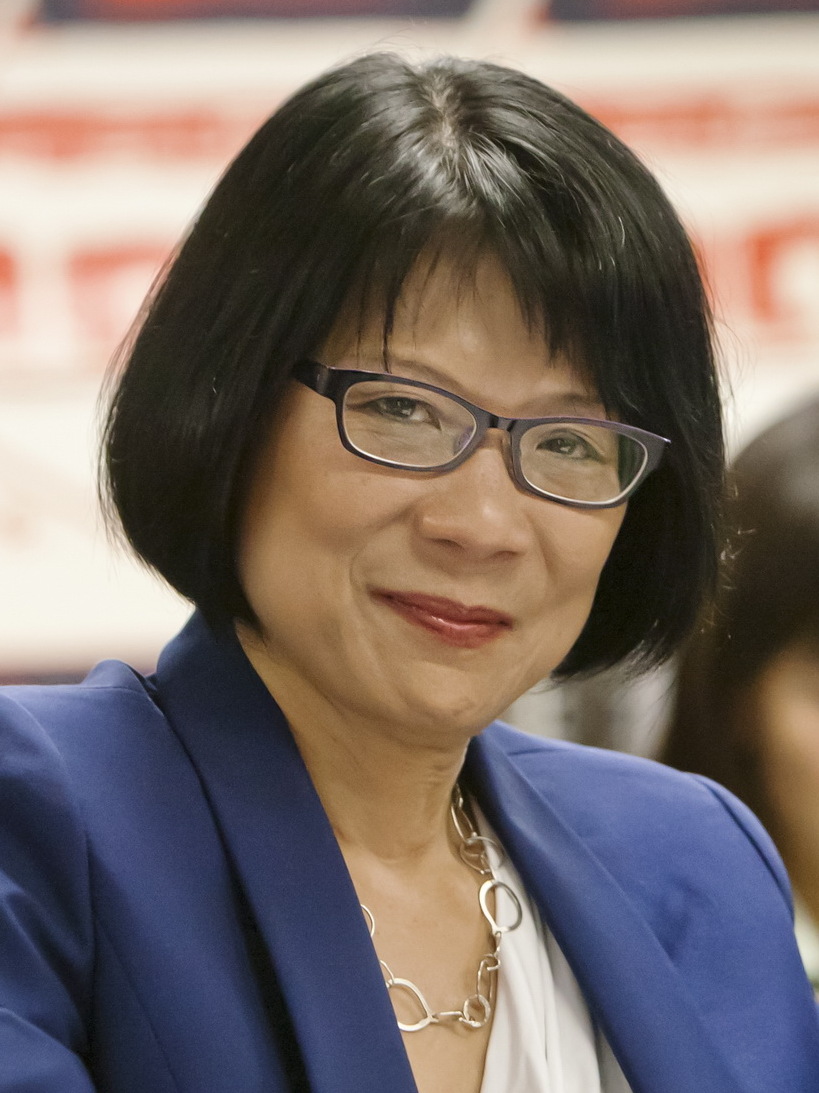
-
Article
Olivia Poole
Susan Olivia Davis Poole, inventor (born 18 April 1889 in Devils Lake, North Dakota; died 10 October 1975 in Ganges, BC). Olivia Poole was raised on the Ojibwe White Earth Reservation in Minnesota. There, she was inspired by the traditional practice of using a bouncing cradleboard to soothe babies. In 1957, she patented her invention of the baby jumper, under the name Jolly Jumper, making her one of the first Indigenous women in Canada to patent and profit from an invention.
"https://d3d0lqu00lnqvz.cloudfront.net/Poole 1.jfif" // resources/views/front/categories/view.blade.php
https://d3d0lqu00lnqvz.cloudfront.net/Poole 1.jfif -
Article
Olivier Le Jeune
We may never know the exact number of British ships that carried enslaved people from the continent of Africa to the New World (see Black Enslavement in Canada). However, the earliest record of enslaved Black Africans in New France is the sale of a boy from either Madagascar or Guinea. In 1629, the child, believed to have been around six years old, was brought to New France aboard a British ship as the chattel slave of Sir David Kirke, a trader and privateer for England’s King Charles I. The boy was later sold to a French clerk named Olivier Le Baillif, and then transferred to Guillaume Couillard. In 1633, the enslaved boy was baptized and given the name Olivier Le Jeune. Le Jeune remained in the colony of New France for the rest of his life until he died on 10 May 1654.
"https://d3d0lqu00lnqvz.cloudfront.net/media/media/10e1983c-bdbe-4650-9121-50dd7f143f28.jpg" // resources/views/front/categories/view.blade.php
https://d3d0lqu00lnqvz.cloudfront.net/media/media/10e1983c-bdbe-4650-9121-50dd7f143f28.jpg
-
Article
Oneida
The Oneida (Onyota’a:ka “People of the Standing Stone”) are an Indigenous nation in Canada. The Oneida are one the five original nations of the Haudenosaunee Confederacy. Historically, the Oneida occupied a village near Oneida Lake in New York state. They also occupy territory in southwestern Ontario. Oneida people live both on and off reserves. As of November 2023, the Government of Canada reported 6,503 members of Oneida Nation of the Thames and 2,254 Oneida members of Six Nations of the Grand River. (See also First Nations and Indigenous Peoples in Canada.)
"https://d3d0lqu00lnqvz.cloudfront.net/Flag_of_the_Oneida_of_the_Thames_First_Nation.png" // resources/views/front/categories/view.blade.php
https://d3d0lqu00lnqvz.cloudfront.net/Flag_of_the_Oneida_of_the_Thames_First_Nation.png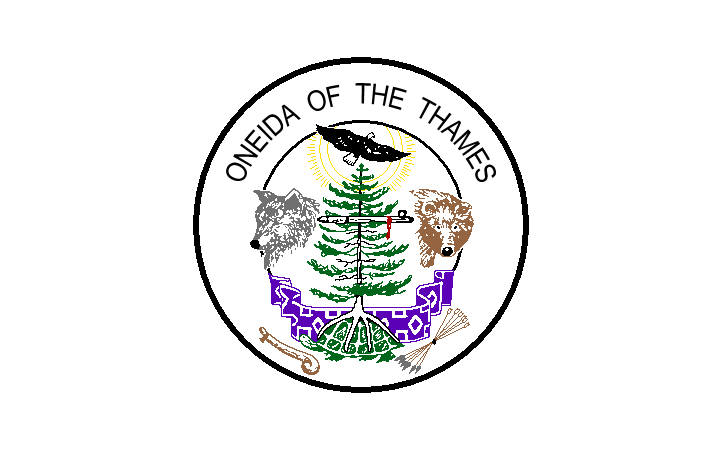
-
Article
Onondaga
The Onondaga are an Indigenous nation in Canada. They make up one-sixth of the Haudenosaunee Confederacy; the rest include the Kanyen’kehà:ka (Mohawk), Cayuga, Seneca, Oneida and Tuscarora. Onondaga traditional territory is located outside Syracuse, New York. Onondaga peoples also live on Six Nations territory near Brantford, Ontario. According to the Government of Canada, in January 2024, there were 711 registered members of the Bearfoot Onondaga First Nation and 892 registered members of the Onondaga Clear Sky First Nation. (See also First Nations.)
"https://d3d0lqu00lnqvz.cloudfront.net/3546949418_5e04fd2103_b.jpg" // resources/views/front/categories/view.blade.php
https://d3d0lqu00lnqvz.cloudfront.net/3546949418_5e04fd2103_b.jpg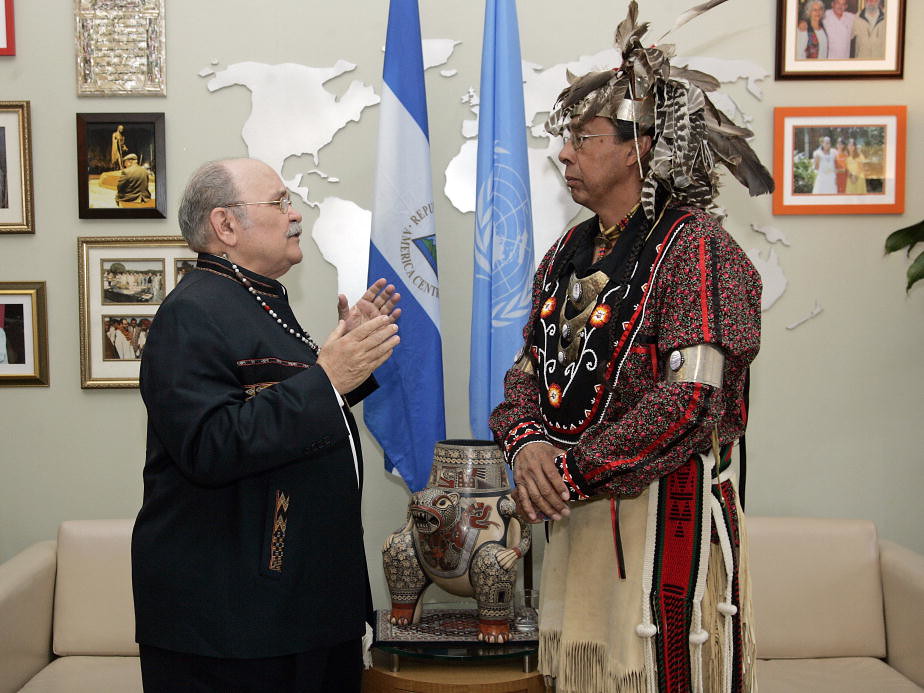
-
Article
Ontario Schools Question
The Ontario schools question was the first major schools issue to focus on language rather than religion. In Ontario, French or French-language education remained a contentious issue for nearly a century, from 1890 to 1980, with English-speaking Catholics and Protestants aligned against French-speaking Catholics.
"https://d3d0lqu00lnqvz.cloudfront.net/media/media/0bbc7423-f097-4fac-8e20-9663a9419422.jpg" // resources/views/front/categories/view.blade.php
https://d3d0lqu00lnqvz.cloudfront.net/media/media/0bbc7423-f097-4fac-8e20-9663a9419422.jpg
