Browse "Communities & Sociology"
-
Article
Francophone Nationalism in Québec
Francophone nationalism in Québec or Québec nationalism is the result of the evolution of French-Canadian nationalism.
"https://d3d0lqu00lnqvz.cloudfront.net/media/media/69946f3c-6a50-4516-a665-8c412faf420d.jpg" // resources/views/front/categories/view.blade.php
https://d3d0lqu00lnqvz.cloudfront.net/media/media/69946f3c-6a50-4516-a665-8c412faf420d.jpg
-
Article
Social Conditions of Indigenous Peoples in Canada
Social conditions, including health, income, education, employment and community, contribute to the well-being of all people. Among the Indigenous population in Canada (i.e., First Nations, Métis and Inuit peoples), social conditions have been impacted by the dispossession of cultural traditions, social inequities, prejudice and discrimination. Social conditions also vary greatly according to factors such as place of residence, income level, and family and cultural factors. While progress with respect to social conditions is being achieved, gaps between the social and economic conditions of Indigenous people and non-Indigenous people in Canada persist.
"https://d3d0lqu00lnqvz.cloudfront.net/media/media/1c9e6b76-0f75-4626-bf76-5325340c66dd.jpg" // resources/views/front/categories/view.blade.php
https://d3d0lqu00lnqvz.cloudfront.net/media/media/1c9e6b76-0f75-4626-bf76-5325340c66dd.jpg
-
Article
Indigenous Women's Issues in Canada
First Nations, Métis and Inuit women (collectively referred to as Indigenous women) face many socio-economic issues today because of the effects of colonization. Europeans forced a male-controlled system of government and society (known as patriarchy) on Indigenous societies. The 1876 Indian Act disadvantaged certain Indigenous women by excluding them from band council government and enforcing discriminatory measures that took away Indian Status rights. Many Indigenous women today are leading the way in the area of healing the wounds of colonization, as they grapple with the issues of residential schools, missing and murdered Indigenous women and girls, abuse and violence, and drug, alcohol and other addictions. (See also Indigenous Feminisms in Canada.)
"https://d3d0lqu00lnqvz.cloudfront.net/media/media/64c38e30-7fd2-4acc-a41a-0b4d9d991bd2.jpg" // resources/views/front/categories/view.blade.php
https://d3d0lqu00lnqvz.cloudfront.net/media/media/64c38e30-7fd2-4acc-a41a-0b4d9d991bd2.jpg
-
Article
Netsilingmiut
Until the latter half of the 20th century, the Netsilingmiut were nomadic hunters who lived in small shifting family groups with simple nonhierarchical social organization. They had no formal government and no institutionalized group relationships.
"https://d3d0lqu00lnqvz.cloudfront.net/media/media/f293ab63-54d2-4847-9688-ea19de3a10e7.jpg" // resources/views/front/categories/view.blade.php
https://d3d0lqu00lnqvz.cloudfront.net/media/media/f293ab63-54d2-4847-9688-ea19de3a10e7.jpg
-
Article
The Neutral Confederacy
The Neutral Confederacy was a political and cultural union of Iroquoian nations who lived in the Hamilton-Niagara district of southwestern Ontario and across the Niagara River to western New York before their dispersal by the Seneca in the mid-17th century. Some surviving Neutral migrated west and south, where they were absorbed by various Haudenosaunee (Iroquois) communities. As a result of this dispersal, information about pre-contact Neutral history comes mainly from Jesuit records and archaeological excavations.
"https://d3d0lqu00lnqvz.cloudfront.net/media/media/377f6033-1f74-466b-a742-684e889a069a.jpg" // resources/views/front/categories/view.blade.php
https://d3d0lqu00lnqvz.cloudfront.net/media/media/377f6033-1f74-466b-a742-684e889a069a.jpg
-
Article
Nine Hour Movement
The Nine Hour Movement was an international phenomenon, taking place in Canada between January and June 1872. The movement’s goal was to standardize shorter working days. Though this particular mandate was unsuccessful, the movement did have an impact, including setting the foundation for the Canadian Labor Union.
"https://d3d0lqu00lnqvz.cloudfront.net/media/media/74917b1f-8a36-49c3-99fd-4cf328a0bfa3.jpg" // resources/views/front/categories/view.blade.php
https://d3d0lqu00lnqvz.cloudfront.net/media/media/74917b1f-8a36-49c3-99fd-4cf328a0bfa3.jpg
-
Article
Nisga'a
The Nisga’a are the original occupants of the Nass River Valley of Northwestern British Columbia. As of 2021, 1,794 Nisga’a continue to live on traditional lands in this area. In the 2021 Census, 4,890 people identified as Nisga’a. Granted self-government in a landmark case in 2000, the Nisga’a Lisims Government now governs the Nisga’a nation.
"https://d3d0lqu00lnqvz.cloudfront.net/media/media/6c6fbfac-3c49-4d28-afd9-afbac5a5d336.jpg" // resources/views/front/categories/view.blade.php
https://d3d0lqu00lnqvz.cloudfront.net/media/media/6c6fbfac-3c49-4d28-afd9-afbac5a5d336.jpg
-
Macleans
Nisga'a Land Treaty
This article was originally published in Maclean’s magazine on July 27, 1998. Partner content is not updated. A mere 111 years after a group of northwestern B.C. natives first asked Ottawa and Victoria for a treaty confirming their title to hundreds of square kilometres of the remote and lovely Nass River valley, their descendants may finally be on the verge of satisfaction.
"https://thecanadianencyclopedia.ca/images/tce_placeholder.jpg?v=e9dca980c9bdb3aa11e832e7ea94f5d9" // resources/views/front/categories/view.blade.php
https://thecanadianencyclopedia.ca/images/tce_placeholder.jpg?v=e9dca980c9bdb3aa11e832e7ea94f5d9
-
Article
Niska Archaeological Site
The Niska site (Borden No. DkNu-3) covers an area of 64 ha in southwestern Saskatchewan, east of the town of Ponteix.
"https://d3d0lqu00lnqvz.cloudfront.net/media/media/4643ad16-739c-485e-a87f-b6bbfb5dc881.jpg" // resources/views/front/categories/view.blade.php
https://d3d0lqu00lnqvz.cloudfront.net/media/media/4643ad16-739c-485e-a87f-b6bbfb5dc881.jpg
-
Article
Norman McLeod
Norman McLeod, Presbyterian minister (b at Point of Stoer, Scot 29 Sept 1780; d at Waipu, NZ 14 Mar 1866). McLeod, a teacher and lay preacher, moved to Pictou, Nova Scotia, in 1817.
"https://thecanadianencyclopedia.ca/images/tce_placeholder.jpg?v=e9dca980c9bdb3aa11e832e7ea94f5d9" // resources/views/front/categories/view.blade.php
https://thecanadianencyclopedia.ca/images/tce_placeholder.jpg?v=e9dca980c9bdb3aa11e832e7ea94f5d9
-
Article
North-West Resistance
The North-West Resistance (or North-West Rebellion) was a violent, five-month insurgency against the Canadian government, fought mainly by Métis and their First Nations allies in what is now Saskatchewan and Alberta. It was caused by rising fear and insecurity among the Métis and First Nations peoples as well as the white settlers of the rapidly changing West. A series of battles and other outbreaks of violence in 1885 left hundreds of people dead, but the resisters were eventually defeated by federal troops. The result was the permanent enforcement of Canadian law in the West, the subjugation of Plains Indigenous Peoples in Canada, and the conviction and hanging of Louis Riel.
"https://d3d0lqu00lnqvz.cloudfront.net/media/media/44b2bd9e-c62a-4a72-b6a8-029e1173ce70.jpg" // resources/views/front/categories/view.blade.php
https://d3d0lqu00lnqvz.cloudfront.net/media/media/44b2bd9e-c62a-4a72-b6a8-029e1173ce70.jpg
-
Article
North-West Schools Question
The North-West Schools Question was a conflict between church and state for control of education in the North-West Territories (now Saskatchewan and Alberta) in the late-19th century. The controversy was similar to other educational crises across Canada, and reflected the larger national debate about the future of Canada as a bilingual and bicultural country.
"https://d3d0lqu00lnqvz.cloudfront.net/media/media/6d628c6c-859f-462a-86bb-e96af37cefad.jpg" // resources/views/front/categories/view.blade.php
https://d3d0lqu00lnqvz.cloudfront.net/media/media/6d628c6c-859f-462a-86bb-e96af37cefad.jpg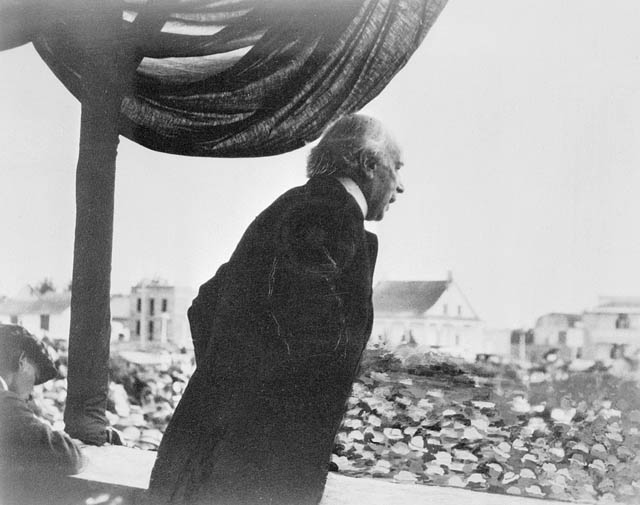
-
Article
Northern Youth Abroad
Northern Youth Abroad is a registered not-for-profit charity. Since 1998, it has provided education and travel opportunities for over 550 young people, aged 15 to 22, from every community in Nunavut and the Northwest Territories. The programs are designed to foster cross-cultural awareness and global citizenship, while building the self-confidence and self-esteem necessary to help develop life and career goals.
"https://d3d0lqu00lnqvz.cloudfront.net/NorthernYouthAbroad/14496009746_0e4e140273.jpg" // resources/views/front/categories/view.blade.php
https://d3d0lqu00lnqvz.cloudfront.net/NorthernYouthAbroad/14496009746_0e4e140273.jpg
-
Article
Norwegian Music in Canada
It is believed that the Norse (Vikings) visited North America around the year 1000. However, people from modern Norway, the western kingdom of the Scandinavian peninsula, immigrated to Canada from the USA during the 1890s and moved into the Prairies and particularly to British Columbia, whose coastline so closely resembled that of their homeland. In 1986 there were 243,675 people of Norwegian origin living in Canada (191,000 in British Columbia, Alberta, and Saskatchewan). Those born in Canada numbered 224,000, and of the 20,000 immigrants 2,000 arrived in the period 1977-86.
"https://thecanadianencyclopedia.ca/images/tce_placeholder.jpg?v=e9dca980c9bdb3aa11e832e7ea94f5d9" // resources/views/front/categories/view.blade.php
https://thecanadianencyclopedia.ca/images/tce_placeholder.jpg?v=e9dca980c9bdb3aa11e832e7ea94f5d9
-
List
Notable Indigenous Entrepreneurs in Canada
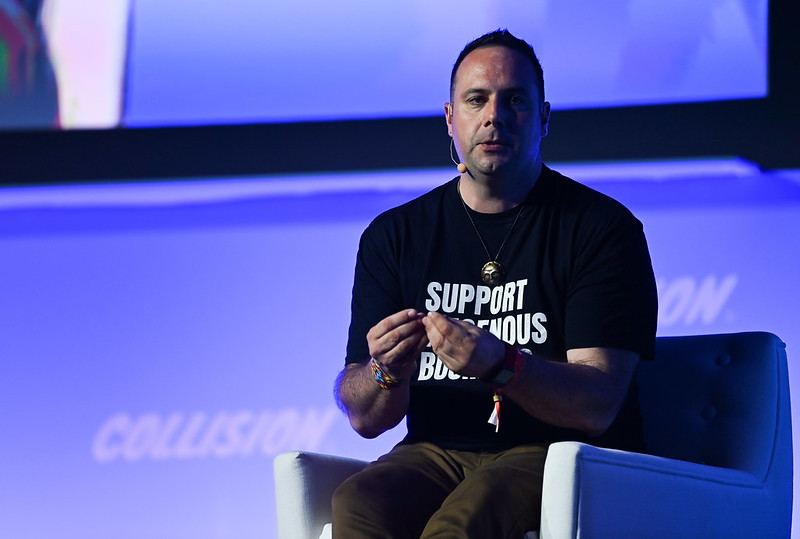
Indigenous economies thrived long before Europeans arrived in North America and, due to hard work and ingenuity, a growing number of Indigenous entrepreneurs are enjoying success today. Many are demonstrating a blending of traditional values and an Indigenous world view with financial success. The following are but a few of a long list of remarkable Indigenous entrepreneurs running thriving businesses in Canada. (See also Economic Conditions of Indigenous Peoples in Canada.)
"https://d3d0lqu00lnqvz.cloudfront.net/IndigenousEntrepeneurs/JeffWard.jpg" // resources/views/front/categories/view.blade.php
https://d3d0lqu00lnqvz.cloudfront.net/IndigenousEntrepeneurs/JeffWard.jpg