
 Share on Facebook
 Share on X
 Share by Email
 Share on Google Classroom
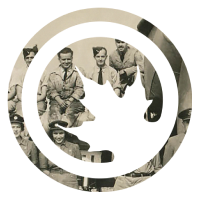
You certainly trained well and the Canadian Army, particularly the 3rd Division, of which I was a member, which I should say, which our regiment was a member, did a lot of training. And then we had our baptism to fire on D-Day. You learn very quickly that those things buzzing around your head were not bees or mosquitoes, they were bullets. And you learned that very, very quickly.
And you know, I’m sure, the original date for D-Day was to be June the 5th. I think we probably went onboard of what I call the mother-ship, we were not given the name of the vessel. And by we, I mean our regiment. But minus any vehicles, just the infantry companies. And the channel was quite rough.
But in the larger ship, it wasn’t too bad. We had an extra day there because the invasion was postponed because of weather, a decision made by General Eisenhower. When the day itself arrived, the 6th of June, early in the morning, we got off the big boat, into what they called Landing Craft, Infantry. Which were a small flat-bottomed boat and they held about 40 soldiers, which is approximately the size of our infantry rifle platoon, or was in those days.
They were a flat bottom boat and they bounced around on rough seas and I’m quite sure to a man, we were all seasick. Now, somebody had foreseen that and we were all issued, as we got onboard the smaller craft, what they called “bags, vomit, 1.” And they were a very welcomed piece of equipment. We just then proceeded to head toward the shore and wait for a landing.
When we approached the shore, the tide was beginning to ebb, to decrease, and some of the beach defences were showing. And they had very dangerous mines attached to them. Now, with the rough seas, the navy, Royal Navy man, in command of the craft, just one person, he and I decided that it would be just a little dangerous to try and maneuver through those because if we hit a mine, it could literally blow our small craft out of the water. So we offloaded it into about knee-deep water and the last 100 yards or so, we just simply waded on shore.
We were being fired on by enemy machine guns and we suffered one or two casualties. And as a matter of fact, when we first got into our craft, the smaller one, the seas were so rough that one of our members got washed overboard and drowned. That was our first casualty.
The actual wade in, yeah, you got up to your knees or maybe a little higher but you just learned to accept those things as part of the routine.
-
- MLA 8TH EDITION
- . "Frank Battershill ". The Canadian Encyclopedia, 03 August 2022, Historica Canada. thecanadianencyclopedia.ca/en/article/mpsb-frank-battershill. Accessed 25 October 2026.
- Copy
-
- APA 6TH EDITION
- (2022). Frank Battershill . In The Canadian Encyclopedia. Retrieved from https://thecanadianencyclopedia.ca/en/article/mpsb-frank-battershill
- Copy
-
- CHICAGO 17TH EDITION
- . "Frank Battershill ." The Canadian Encyclopedia. Historica Canada. Article published August 03, 2022; Last Edited August 03, 2022.
- Copy
-
- TURABIAN 8TH EDITION
- The Canadian Encyclopedia, s.v. "Frank Battershill ," by , Accessed October 25, 2026, https://thecanadianencyclopedia.ca/en/article/mpsb-frank-battershill
- Copy
Thank you for your submission
Our team will be reviewing your submission
and get back to you with any further questions.
Thanks for contributing to The Canadian Encyclopedia.
CloseMemory Project
Frank Battershill
Published Online August 3, 2022
Last Edited May 3, 2023