Share on Facebook
 Share on X
 Share by Email
 Share on Google Classroom
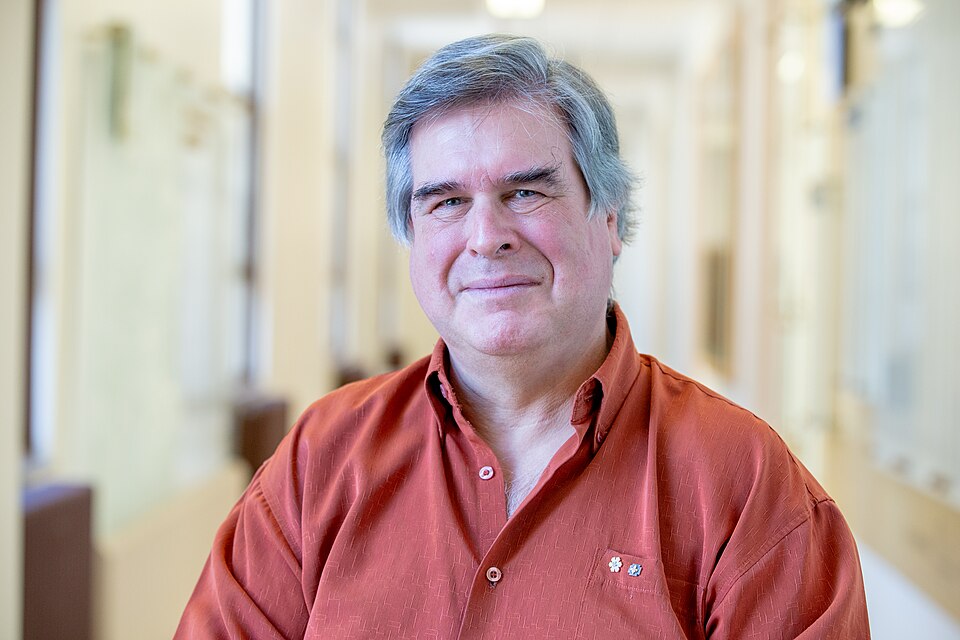
Gilles Brassard, OC , O.Q. , RSC, computer scientist, researcher, professor (born 20 April 1955 in Montreal, QC). He was born with a highly intellectual potential and started university at the age of 13. Since he was fascinated by computers, he pursued university studies in computer science and later made a career out of it. His interest in physics led him to research quantum computing. Brassard is a groundbreaking co-founder of quantum cryptography and quantum teleportation, concepts of data transmission analysis with origins in quantum computing.
Education
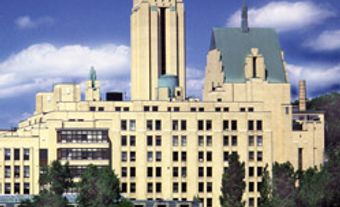
Gilles Brassard grew up in Montreal in a family of five children. He excelled in school and skipped several grades. When Brassard was ten, he considered a career as a mathematician, after his brother, Robert Brassard, six years his senior, introduced him to advanced concepts such as differential calculus (see Mathematics). He was intrigued by computers, which were very rare at the time, and became interested in programming. In 1968, after graduating from Saint-Viateur High School at the age of 13, he began studying computer science at the Université de Montréal (UdeM).
In 1972, he earned a Bachelor of Computer Science and a master's in 1975. In that same year, he moved to New York State in the United States to study theoretical computer science at Cornell University. In 1979, he earned a doctorate in cryptography, which is a computer coding process that secures the transfer and storage of information that must remain confidential.
Professional Career
In 1979, Gilles Brassard was 24 years old when he returned to Quebec, where he was hired as an assistant professor in the Department of Computer Science and Operations Research at Université de Montréal (UdeM). He was promoted to full professor in 1988, a position he still holds today.
Between 2001 and 2021, he directed the Canada Research Chair in Quantum Computing.
In 2009, Gilles Brassard founded the Institut transdisciplinaire d’information quantique (INTRIQ), a group of researchers with diverse expertise supported by the Fonds de recherche du Québec - Nature et technologie (FRQNT).
Quantum Computing
Gilles Brassard built an international reputation after publicizing his research on quantum cryptography and teleportation, which are considered the pillars of quantum computing (see Computer Science). These scientific discoveries are the result of a long collaboration with American physicist, Charles H. Bennett.
Quantum Cryptography
In 1979, at a scientific conference in the city of San Juan, Puerto Rico, Charles H. Bennett, a researcher for the American computer firm IBM, approached Gilles Brassard, aware of his interest in cryptography. After years of remote collaboration in their spare time, the two scientists co-authored their first scientific paper in 1984. It introduced the first quantum cryptography protocol named BB84, the acronym for the first letter of their names and the year the work was published. Quantum cryptography combines computer science with quantum physics to transfer confidential information in a secure manner. This process generates and transmits an encryption key using the laws of quantum physics, detecting and blocking any interception attempts by unauthorized individuals or machines. Quantum cryptography is used for some banking transactions, as well as for sensitive communications (military, government, etc.) exchanged over a dedicated fiber optic network.
In 1994, American mathematician and computer scientist Peter Shor cast a dark shadow over traditional data protection technologies on the Internet. He demonstrated that the supposedly impenetrable properties of classical cryptography would collapse when quantum computers, ultra-powerful and fast machines, become widely available, since these computers will be able to quickly decrypt data secured by the traditional cryptographic infrastructure. Gilles Brassard warned of the risks involved, pointing out that quantum computers could soon become a reality. According to him, to prepare for this catastrophic scenario, governments must invest in research.
Quantum cryptography was still a very abstract notion when it was discovered. Brassard and Bennett were not recognized for their work until much later. In February 2003, the scholarly journal MIT Technology Review, published by the prestigious Massachusetts Institute of Technology, cited quantum cryptography as one of the "ten emerging technologies that will change the world".
In 2025, the Association for Computing Machinery presented Brassard and Bennett with the highest honour in computer science, the Turing Award, which comes with a prize of US$1 million. They were awarded this prize for "for their essential role in establishing the foundations of quantum information science and transforming secure communication and computing.”
Did you know?
In February 2025, a quantum cryptography lab located in the IDELUX Cybersecurity Centre in Transinne, Belgium, was named Gilles Brassard in honour of his legacy in the field.
Quantum Teleportation
In 1992, Gilles Brassard and other researchers, including Quebec computer scientist Claude Crépeau, invented a new theoretical and experimental protocol: quantum teleportation. This allows two entangled photons that have been separated to react simultaneously and in the same way when one of the two photons undergoes a change of state, regardless of the distance between them. This discovery was acclaimed as one of the ten most important scientific breakthroughs of 1998 by the scholarly journal Science.
In 1997, Austrian physicist Anton Zeilinger and his team of researchers carried out a first experiment in quantum teleportation. This feat earned him, along with two other researchers, the Nobel Prize in Physics in 2022.
Awards and Distinctions
- Urgel-Archambault Award from theAssociation canadienne-française pour l'avancement des sciences (1992)
- Steacie Prize of the National Research Council of Canada (1994)
- Fellow of the Academy of Sciences of the Royal Society of Canada (1996)
- Marie-Victorin Award, Government of Quebec (2000)
- Gerhard Herzberg Gold Medal for Science and Engineering from the Natural Sciences and Engineering Research Council of Canada (2009)
- Honorary doctorates from theEidgenössische Technische Hochschule in Zurich (2010), the University of Ottawa (2014), and theUniversità della Svizzera italiana (2015)
- Killam Prize from the Natural Sciences Research Council of Canada (2011)
- Officer of theOrder of Canada (2013)
- Award ofExcellence from the Fonds de recherche du Québec - Nature et technologie (2014)
- Officer of theNational Order of Québec (2017)
- Wolf Prize in Physics from the Wolf Foundation (2018)
- Micius Quantum Prize from the Micius Quantum Foundation (2019)
- Turing Award from the Association for Computing Machinery (2025)