
Abraham Ulrikab and Human Zoos
Video- Indigenous Peoples
View the transcript
A human zoo, formerly known as an ethnographic show, was a type of exhibit popular in Europe and North America from the late 19th to early 20th centuries. Indigenous peoples from around the world were displayed, usually for White audiences, at zoos, circuses and world’s fairs.
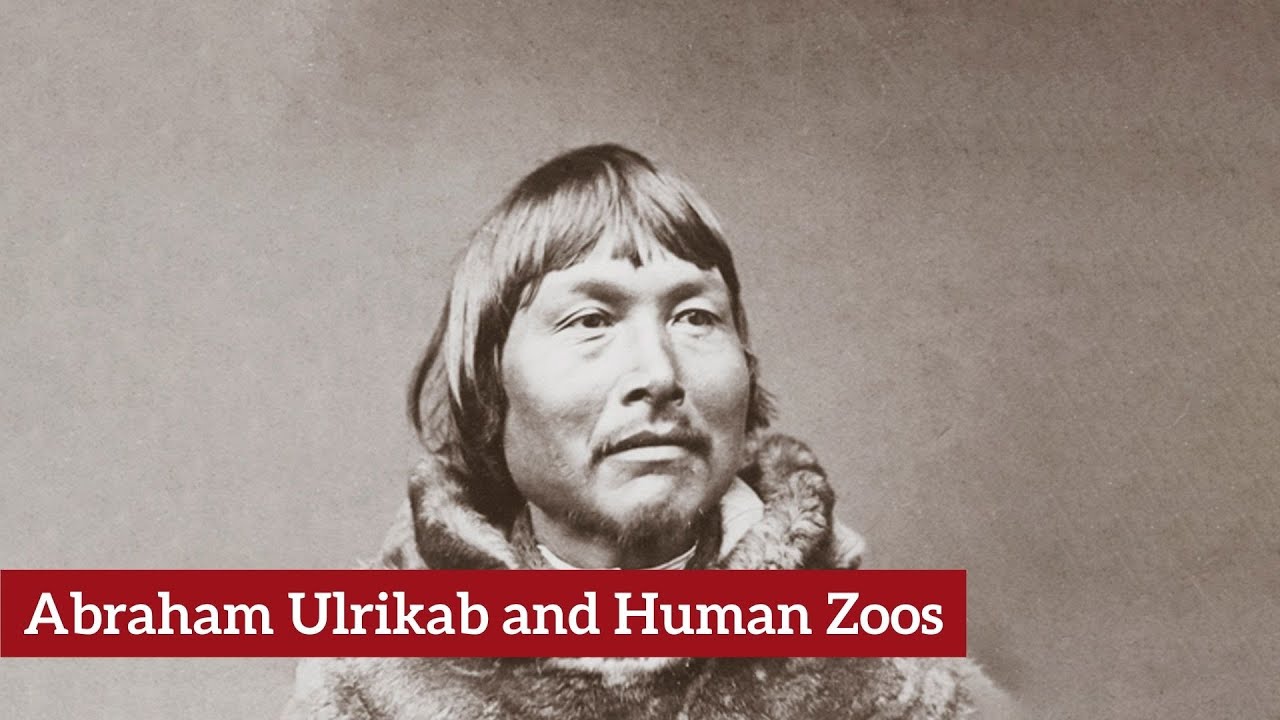
Abraham Ulrikab was an Inuk man born in Hebron, Labrador, in 1845. Educated by Moravian missionaries, he was literate in Inuktitut. A devout Christian, he played violin in the church. He was a fisherman and hunter with a wife and two children.
By 1880, life in Labrador was difficult. Abraham owed debts to the Moravian missionaries’ store. In his diary, he wrote, “Because I was in deep misery, I often prayed to God to help me to free myself from this and to hear my sighs, because I even wasn’t able anymore to take care of my relatives.”
That year, Norwegian Johan Adrian Jacobsen, an agent for a German zoo owner, arrived in Hebron to recruit a dozen or so Inuit to participate in an exhibition, in exchange for good pay. Abraham first joined Jacobsen as an interpreter to help him recruit other Inuit. Eventually, he agreed to go to Europe along with his family. He saw this as an answer to his prayers.
On the 26th of August 1880, Abraham and seven other Inuit set sail for Europe with Jacobsen. The group was exhibited at zoos in Hamburg and Berlin, where they were expected to demonstrate traditional skills such as kayaking and seal hunting. Abraham quickly became homesick. He disliked the crowds and noise.
They toured several cities. In December, in Darmstadt, Germany, a 15-year-old girl and her mother from the group of Inuit fell ill and died. Shortly after, Abraham’s three-year-old daughter Sara died of smallpox. They continued to travel, arriving in Paris on the 31st of December. French authorities demanded they be vaccinated, but it was too late. Abraham and the others had already contracted smallpox. After being displayed again in Paris, Abraham died on the 13th of January 1881. His wife, Ulrike, and the other Inuit from the exhibition passed away shortly after. The Inuit were buried in a French cemetery. In 1886, France’s Muséum national d’histoire naturelle exhumed their bodies to be included in their collections. Their bones remain there today.
Abraham kept a diary in Inuktitut of his experiences. The original has been lost, but a German translation survived. It provides a rare first-person account of life in a human zoo.
Canada and France have signed an agreement to work together toward the repatriation of the remains of Abraham and the other Inuit from the exhibit. The Nunatsiavut Government is working on a repatriation protocol for the remains and related artifacts.