
Browse "Things"
-
Article
Province House - Halifax
Province House, Halifax, built between 1811 and 1818 to house Parliament, the courts and the public service of Nova Scotia.
"https://thecanadianencyclopedia.ca/images/tce_placeholder.jpg?v=e9dca980c9bdb3aa11e832e7ea94f5d9" // resources/views/front/categories/view.blade.php
https://thecanadianencyclopedia.ca/images/tce_placeholder.jpg?v=e9dca980c9bdb3aa11e832e7ea94f5d9
-
Article
Province House, Charlottetown
Province House in Charlottetown is the home of Prince Edward Island's Legislative Assembly.
"https://thecanadianencyclopedia.ca/images/tce_placeholder.jpg?v=e9dca980c9bdb3aa11e832e7ea94f5d9" // resources/views/front/categories/view.blade.php
https://thecanadianencyclopedia.ca/images/tce_placeholder.jpg?v=e9dca980c9bdb3aa11e832e7ea94f5d9
-
Article
Province of Canada (1841-67)
In 1841, Britain united the colonies of Upper and Lower Canada into the Province of Canada. This was in response to the violent rebellions of 1837–38. The Durham Report (1839) recommended the guidelines to create the new colony with the Act of Union. The Province of Canada was made up of Canada West (formerly Upper Canada) and Canada East (formerly Lower Canada). The two regions were governed jointly until the Province was dissolved to make way for Confederation in 1867. Canada West then became Ontario and Canada East became Quebec. The Province of Canada was a 26-year experiment in anglophone-francophone political cooperation. During this time, responsible government came to British North America and expanded trade and commerce brought wealth to the region. Leaders such as Sir John A. Macdonald, Sir George-Étienne Cartier and George Brown emerged and Confederation was born.This article is a full-length entry about the Province of Canada. For a plain-language summary, please see Province of Canada (Plain-Language Summary).
"https://d3d0lqu00lnqvz.cloudfront.net/media/media/dcae055f-192e-4de7-b004-4a70146eca56.jpg" // resources/views/front/categories/view.blade.php
https://d3d0lqu00lnqvz.cloudfront.net/media/media/dcae055f-192e-4de7-b004-4a70146eca56.jpg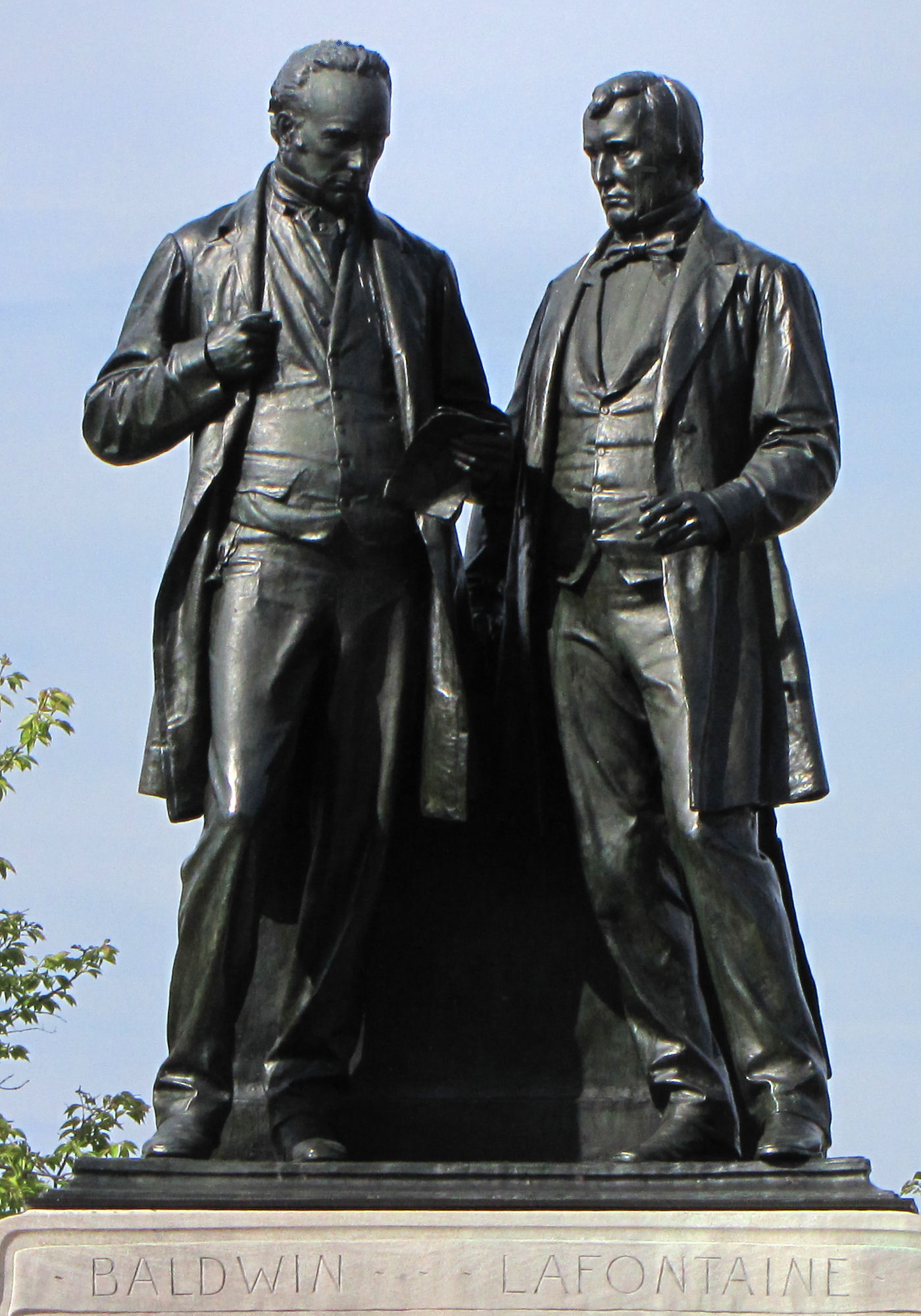
-
Article
Province of Canada (Plain-Language Summary)
The Province of Canada existed between 1841 and 1867. The legislation that created the Province of Canada was called the Act of Union. The Province of Canada included parts of what are now Ontario, Quebec and Labrador. Before 1841, the region was made up of two British colonies. They were called Upper Canada and Lower Canada. When Britain created the Province of Canada, it combined these two colonies into one. In the new colony, Upper Canada became known as Canada West. Lower Canada was known as Canada East. The people in Canada West were mostly English. The people in Canada East were mostly French. This article is a plain-language summary of the Province of Canada. If you are interested in reading about this topic more in depth, please see our full-length entry, Province of Canada (1841-67).
"https://d3d0lqu00lnqvz.cloudfront.net/media/new_article_images/PoliticsInOntario/Map_Canada_West_East.jpg" // resources/views/front/categories/view.blade.php
https://d3d0lqu00lnqvz.cloudfront.net/media/new_article_images/PoliticsInOntario/Map_Canada_West_East.jpg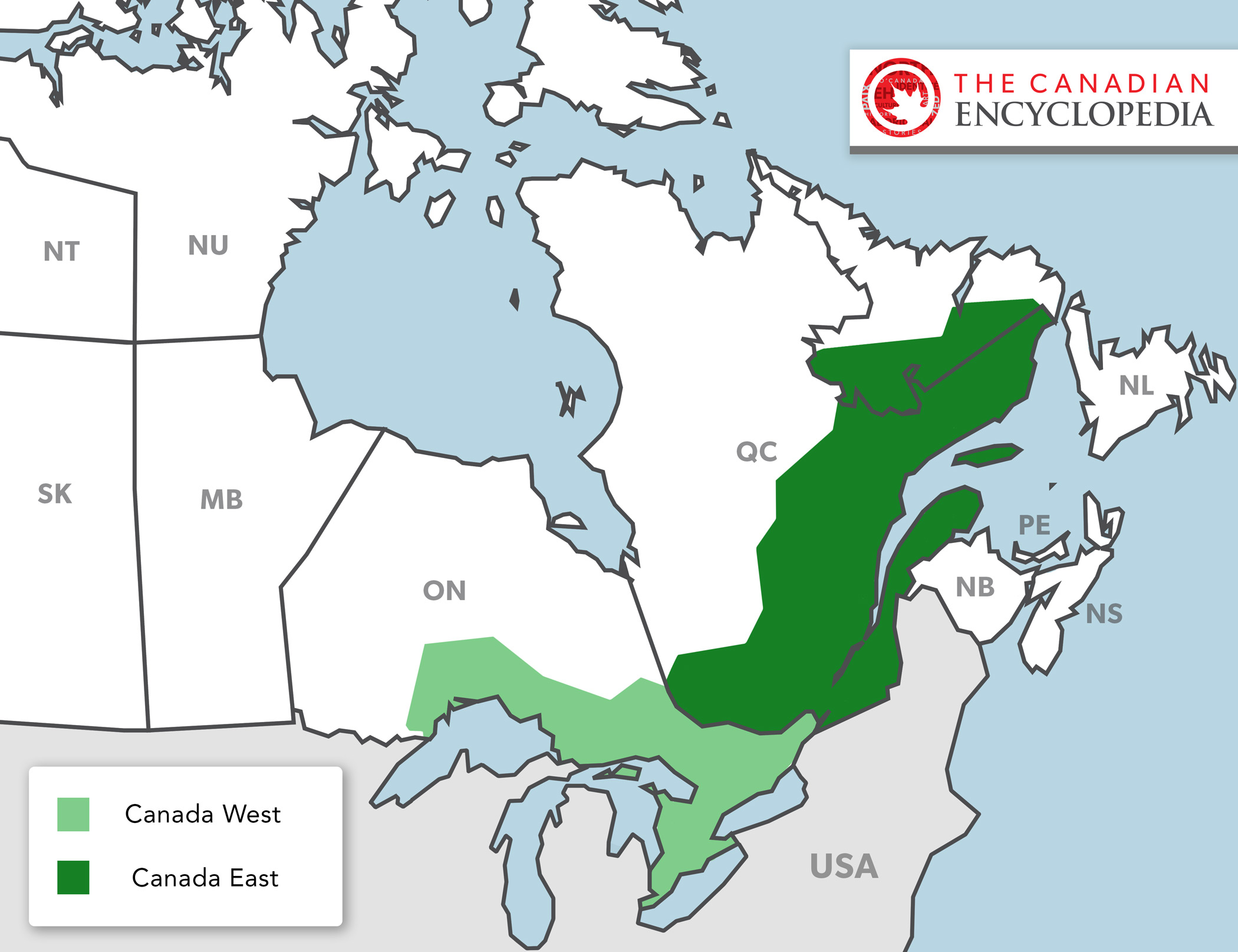
-
Article
Province of Quebec 1763-91
At the end of the Seven Years’ War (1756–63), Great Britain set out to organize the North American territories surrendered by France in the Treaty of Paris, 1763. By the Royal Proclamation of 1763, the Province of Quebec was created out of the inhabited portion of New France. The boundaries took on a rectangular shape on each side of the St. Lawrence River, and stretching from Lake Nipissing and the 45th parallel to the Saint John River and Ile d'Anticosti. These boundaries were modified by the Quebec Act of 1774 to include the fishing zone off Labrador and the Lower North Shore, and the fur trade area between the Ohio and Mississippi rivers and the Great Lakes. The Treaty of Paris, 1783 pushed the boundary farther north. With the Constitutional Act, 1791, Britain divided the Province of Quebec into Upper Canada (the predecessor of modern-day Ontario) and Lower Canada (whose geographical boundaries comprised the southern portion of present-day Quebec).
"https://d3d0lqu00lnqvz.cloudfront.net/media/new_article_images/PoliticsInOntario/Map_Province_of_QC_1763.jpg" // resources/views/front/categories/view.blade.php
https://d3d0lqu00lnqvz.cloudfront.net/media/new_article_images/PoliticsInOntario/Map_Province_of_QC_1763.jpg
-
Macleans
Provinces Assess Economic Future
With the exception of Nova Scotia, every province has tabled its 1998-1999 budget.This article was originally published in Maclean's Magazine on June 8, 1998
"https://thecanadianencyclopedia.ca/images/tce_placeholder.jpg?v=e9dca980c9bdb3aa11e832e7ea94f5d9" // resources/views/front/categories/view.blade.php
https://thecanadianencyclopedia.ca/images/tce_placeholder.jpg?v=e9dca980c9bdb3aa11e832e7ea94f5d9
-
Macleans
Provinces Unite on Social Programs
The atmosphere was at once optimistic and wary. As they arrived in Saskatoon for last week's premiers' conference, provincial officials thought the stars were lining up for an agreement on a united front to carry them into negotiations with Ottawa on social programs.This article was originally published in Maclean's Magazine on August 17, 1998
"https://thecanadianencyclopedia.ca/images/tce_placeholder.jpg?v=e9dca980c9bdb3aa11e832e7ea94f5d9" // resources/views/front/categories/view.blade.php
https://thecanadianencyclopedia.ca/images/tce_placeholder.jpg?v=e9dca980c9bdb3aa11e832e7ea94f5d9
-
Article
Provincial and Territorial Emblems
Each Canadian province and territory has been granted or has adopted emblems that represent sovereignty and identity. These emblems are coats of arms, flags, provincial floral emblems, animals, plants, minerals and, in some cases, tartans. Through symbolism, they express the features of a province or territory, and its inhabitants: history, geography, natural resources, flora and fauna, human activities, values and aspirations. While the description of a coat of arms in the specialized language of heraldry never changes, stylistic execution and proportions can vary. This allows governments to give their coat of arms a different look from time to time, provided the basic elements remain the same.
"https://d3d0lqu00lnqvz.cloudfront.net/media/media/70c52f68-faf0-4d61-b849-c0bf34342d19.jpg" // resources/views/front/categories/view.blade.php
https://d3d0lqu00lnqvz.cloudfront.net/media/media/70c52f68-faf0-4d61-b849-c0bf34342d19.jpg
-
Article
Provincial Floral Emblems
Floral emblems are generally selected from the flora of the country, nation, state, territory, or province they represent. Tradition dictates that the selected plant be popular and widely found throughout the region.
"https://d3d0lqu00lnqvz.cloudfront.net/Provincial-Floral-Emblems/provincial-floral-emblems-en.jpg" // resources/views/front/categories/view.blade.php
https://d3d0lqu00lnqvz.cloudfront.net/Provincial-Floral-Emblems/provincial-floral-emblems-en.jpg
-
Article
Provincial Government in Canada
Under Canada’s federal system, the powers of government are shared between the federal government and 10 provincial governments. The Constitution Act, 1867 granted specific jurisdiction to the provinces in 16 areas, compared to 29 for the federal government. However, provincial powers have expanded since then. Provinces can levy direct taxation and derive most of their non-tax revenue from the use of public lands and natural resources. Provincial governments in Canada are modelled on the British Westminster parliamentary tradition and reflect the principles of responsible government. They comprise an elected legislative assembly, from which a governing cabinet is selected by the premier. The lieutenant-governor assents to legislation as the representative of the Crown.
"https://d3d0lqu00lnqvz.cloudfront.net/media/media/b71f52d6-44fe-46cd-9248-27a0ae355508.jpg" // resources/views/front/categories/view.blade.php
https://d3d0lqu00lnqvz.cloudfront.net/media/media/b71f52d6-44fe-46cd-9248-27a0ae355508.jpg
-
Article
Provincial Orders
On 9 May 1991 Provincial Orders were incorporated into the Order of Precedence for Canadian Orders, Declarations and Medals through Order in Council approved by the government of Canada.
"https://thecanadianencyclopedia.ca/images/tce_placeholder.jpg?v=e9dca980c9bdb3aa11e832e7ea94f5d9" // resources/views/front/categories/view.blade.php
https://thecanadianencyclopedia.ca/images/tce_placeholder.jpg?v=e9dca980c9bdb3aa11e832e7ea94f5d9
-
Article
Provincial Organizations Research
Research, Provincial Organizations All provinces except Newfoundland and PEI have provincial research organizations functioning to promote economic development through the application of modern TECHNOLOGY to regional INDUSTRY.
"https://thecanadianencyclopedia.ca/images/tce_placeholder.jpg?v=e9dca980c9bdb3aa11e832e7ea94f5d9" // resources/views/front/categories/view.blade.php
https://thecanadianencyclopedia.ca/images/tce_placeholder.jpg?v=e9dca980c9bdb3aa11e832e7ea94f5d9
-
Article
Pseudoscorpion
Pseudoscorpion and false-scorpion are the common names for tiny creatures in the class Arachnida, order Pseudoscorpiones (or Pseudoscorpionida).
"https://d3d0lqu00lnqvz.cloudfront.net/media/media/e9645241-0eeb-42fd-8aba-c143926ecddb.jpg" // resources/views/front/categories/view.blade.php
https://d3d0lqu00lnqvz.cloudfront.net/media/media/e9645241-0eeb-42fd-8aba-c143926ecddb.jpg
-
Article
Psychedelic Research in 1950s Saskatchewan
In the 1950s, Saskatchewan was home to some of the most important psychedelic research in the world. Saskatchewan-based psychiatrist Humphry Osmond coined the word psychedelic in 1957. In the mental health field, therapies based on guided LSD and mescaline trips offered an alternative to long-stay care in asylums. They gave clinicians a deeper understanding of psychotic disorders and an effective tool for mental health and addictions research. Treating patients with a single dose of psychedelic was seen as an attractive, cost-effective approach. It fit with the goals of a new, publicly funded health-care system aimed at restoring health and autonomy to patients who had long been confined to asylums. Click here for definitions of key terms used in this article.
"https://d3d0lqu00lnqvz.cloudfront.net/media/home-page-images/Weyburn-postcard-LXX-1643.jpg" // resources/views/front/categories/view.blade.php
https://d3d0lqu00lnqvz.cloudfront.net/media/home-page-images/Weyburn-postcard-LXX-1643.jpg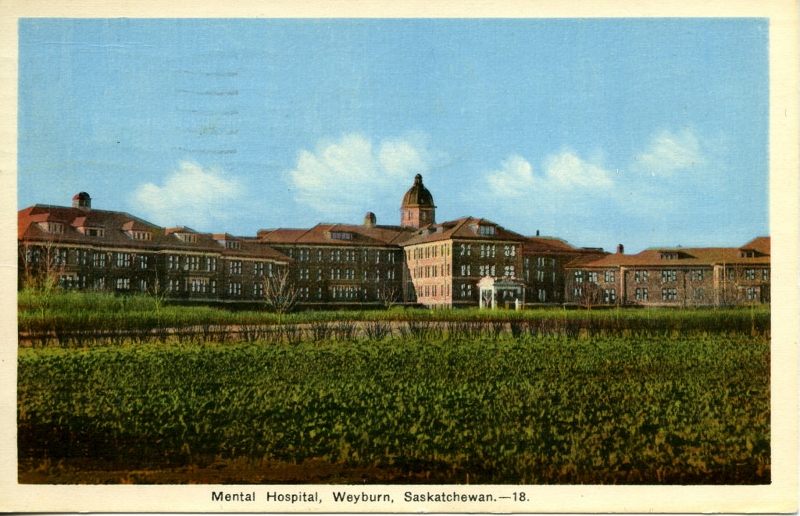
-
Article
Psychiatry
PsychiatryPsychiatry is the branch of medicine concerned with disorders of the mind (or mental illnesses) and a broad range of other disturbed behaviours, including behavioural and emotional reactions to physical disease, life stresses and personal crises; personality problems; and difficulties with coping, adjustments and achievement. Psychiatrists are physicians, and in Canada they need to have passed the fellowship examination of the Royal College of Physicians and Surgeons of Canada, or, in Québec, to have obtained...
"https://thecanadianencyclopedia.ca/images/tce_placeholder.jpg?v=e9dca980c9bdb3aa11e832e7ea94f5d9" // resources/views/front/categories/view.blade.php
https://thecanadianencyclopedia.ca/images/tce_placeholder.jpg?v=e9dca980c9bdb3aa11e832e7ea94f5d9