Browse "Things"
-
Article
Jurisprudence
The term "jurisprudence"means literally and traditionally "practical wisdom about law," the intellectual capacity to frame and apply laws according to sound theoretical principles. Nowadays, the term has several different meanings, all descendants of this classical sense.
"https://thecanadianencyclopedia.ca/images/tce_placeholder.jpg?v=e9dca980c9bdb3aa11e832e7ea94f5d9" // resources/views/front/categories/view.blade.php
https://thecanadianencyclopedia.ca/images/tce_placeholder.jpg?v=e9dca980c9bdb3aa11e832e7ea94f5d9
-
Article
Juries in Canada
A jury is a group of citizens summoned by law to render verdict on a question submitted in a court of justice. Originally, jurors testified too and decided issues on the basis of their own community knowledge. But since the admission of sworn testimony, jury verdicts have been based on evidence submitted at the trial.
"https://thecanadianencyclopedia.ca/images/tce_placeholder.jpg?v=e9dca980c9bdb3aa11e832e7ea94f5d9" // resources/views/front/categories/view.blade.php
https://thecanadianencyclopedia.ca/images/tce_placeholder.jpg?v=e9dca980c9bdb3aa11e832e7ea94f5d9
-
Article
Juvenile Delinquency
Juvenile delinquency, in social science, refers primarily to social acts of juveniles that are defined and evaluated as deviant or antisocial by legal or social norms and that are usually socially learned.
"https://thecanadianencyclopedia.ca/images/tce_placeholder.jpg?v=e9dca980c9bdb3aa11e832e7ea94f5d9" // resources/views/front/categories/view.blade.php
https://thecanadianencyclopedia.ca/images/tce_placeholder.jpg?v=e9dca980c9bdb3aa11e832e7ea94f5d9
-
Article
Juvenile Justice Systems
On 7 July 1982, Parliament enacted the Young Offenders Act (effective April 1984, some sections not until 1985), which the government claimed would bring about a long-overdue reform of Canada's juvenile justice system.
"https://thecanadianencyclopedia.ca/images/tce_placeholder.jpg?v=e9dca980c9bdb3aa11e832e7ea94f5d9" // resources/views/front/categories/view.blade.php
https://thecanadianencyclopedia.ca/images/tce_placeholder.jpg?v=e9dca980c9bdb3aa11e832e7ea94f5d9
-
Article
J.W. Herbert & Co.
J.W. Herbert & Co. Montreal publishing, retailing, and instrument-building firm, active from the mid-1830s to 1861. It built and repaired pianos and organs as early as 1837, when La Minerve (1 Jun 1837) printed testimonial letters on behalf of one of the partners, William Dennis.
"https://thecanadianencyclopedia.ca/images/tce_placeholder.jpg?v=e9dca980c9bdb3aa11e832e7ea94f5d9" // resources/views/front/categories/view.blade.php
https://thecanadianencyclopedia.ca/images/tce_placeholder.jpg?v=e9dca980c9bdb3aa11e832e7ea94f5d9
-
Article
Kale
Kale (Brassica oleracea, Acephala Group), cole crop (like cabbage, cauliflower, etc), belonging to the Cruciferae family.
"https://d3d0lqu00lnqvz.cloudfront.net/media/media/97699743-eed8-4d0a-8a03-2c0ed68541b1.jpg" // resources/views/front/categories/view.blade.php
https://d3d0lqu00lnqvz.cloudfront.net/media/media/97699743-eed8-4d0a-8a03-2c0ed68541b1.jpg
-
Article
Kamouraska (Film)
Directed by Claude Jutra, Kamouraska (1973) is the film adaptation of Anne Hébert's 1970 novel of the same name (see Kamouraska).
"https://d3d0lqu00lnqvz.cloudfront.net/16025520587_16d1b4544d_b.jpg" // resources/views/front/categories/view.blade.php
https://d3d0lqu00lnqvz.cloudfront.net/16025520587_16d1b4544d_b.jpg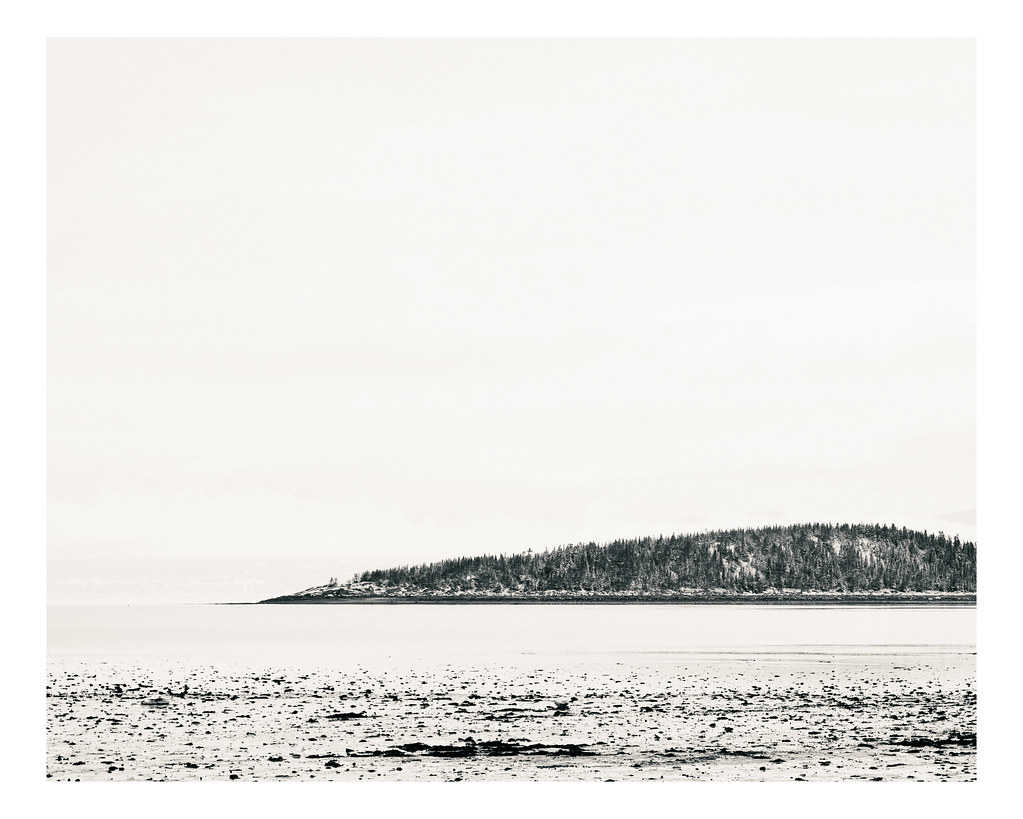
-
Article
Kanesatake Resistance (Oka Crisis) (Plain-Language Summary)
In the summer of 1990, a resistance occurred in Kanesatake, Quebec. Nearby is a town called Oka. This event has many names – the Oka Crisis, the Kanesatake Resistance, and the Mohawk Resistance. The main participants were Kanyen'kehà:ka (Mohawk) protesters, the Quebec police, the RCMP, and the Canadian Army. It started when members of the Kanyen'kehà:ka community started protesting the expansion of a golf course and the building of townhouses. An Indigenous burial ground was on this land. The situation quickly became violent. One police officer was killed. He was a corporal in the Sûreté du Quebec. After this, the Canadian Army went to Kanesatake. The expansion ultimately was stopped. The federal government bought the disputed land. The resistance ended in late September. However, the land was not transferred to the Kanyen'kehà:ka. The resistance had lasting repercussions. This article is a plain-language summary of the Kanesatake Resistance (Oka Crisis). If you are interested in reading about this topic more in depth, please see our full-length entry, Kanesatake Resistance (Oka Crisis).
"https://d3d0lqu00lnqvz.cloudfront.net/media/media/af36926e-717c-45ef-91cc-f00a20c1faeb.jpg" // resources/views/front/categories/view.blade.php
https://d3d0lqu00lnqvz.cloudfront.net/media/media/af36926e-717c-45ef-91cc-f00a20c1faeb.jpg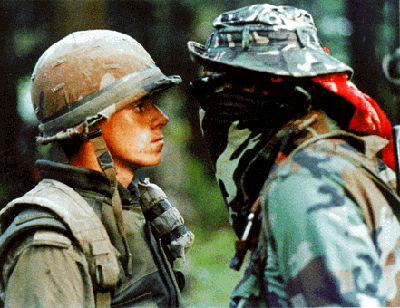
-
Article
Kangaroo APCs (Armoured Personnel Carriers)
“Kangaroo” is the nickname given to a series of military transport vehicles (APCs) designed by the Canadian army in 1944, during the Battle of Normandy. (See Second World War.) It was a modified version of existing armoured vehicles such as the M7 (Priest) self-propelled gun, the Ram tank and the Sherman tank. Major components of these vehicles, such as their turret, were removed, thus allowing them to be used to transport infantry soldiers, safe from enemy fire.
"https://d3d0lqu00lnqvz.cloudfront.net/media/media/a137744-v8.jpg" // resources/views/front/categories/view.blade.php
https://d3d0lqu00lnqvz.cloudfront.net/media/media/a137744-v8.jpg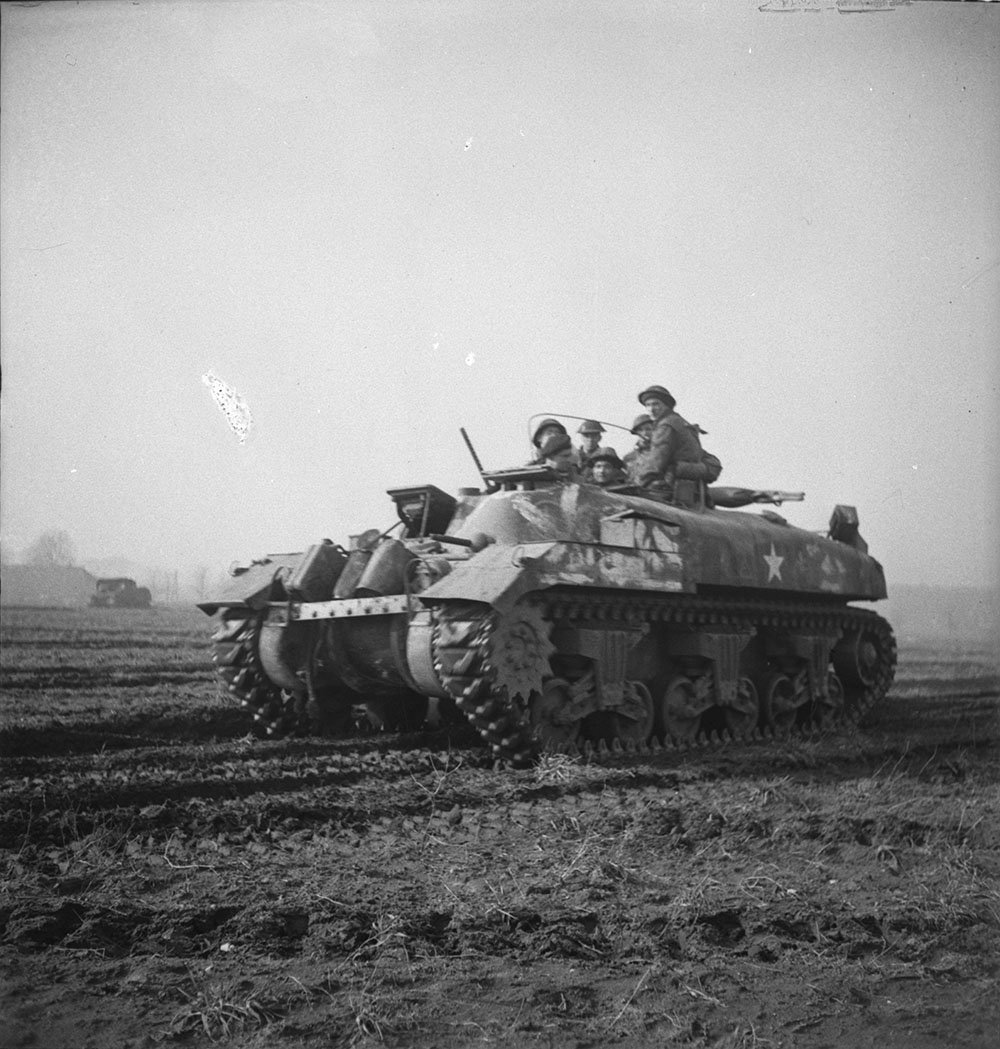
-
Article
Kangaroo Rat
Kangaroo rats are solitary, strictly nocturnal rodents of the North American family Heteromyidae. The family comprises 75 species (see Pocket Mouse). Of the 14 species of kangaroo rat, only one occurs in Canada. Ord's kangaroo rat (Dipodomys ordii) of the Great Sand Hills of south-west Saskatchewan and Alberta is one of Canada's rare desert-dwelling mammals.
"https://d3d0lqu00lnqvz.cloudfront.net/media/media/65db67a8-774d-4965-b9f4-1ff6d9b46d9f.jpg" // resources/views/front/categories/view.blade.php
https://d3d0lqu00lnqvz.cloudfront.net/media/media/65db67a8-774d-4965-b9f4-1ff6d9b46d9f.jpg
-
Article
Karate
Karate, which translates as "empty hands," is a form of unarmed combat employing a variety of punches, open-hand strikes, kicks and blocks.
"https://thecanadianencyclopedia.ca/images/tce_placeholder.jpg?v=e9dca980c9bdb3aa11e832e7ea94f5d9" // resources/views/front/categories/view.blade.php
https://thecanadianencyclopedia.ca/images/tce_placeholder.jpg?v=e9dca980c9bdb3aa11e832e7ea94f5d9
-
Article
Karluk
Karluk, whaling ship, 251 tons, 39 metres long, sunk in the Arctic Ocean 11 January 1914. Eleven of the 25 survivors died before rescue from Wrangel Island on 7 September 1914. The loss of these men and the ship caused a half-century of dispute about the leadership and technical skills of Vilhjalmur Stefansson, leader of the Canadian Arctic Expedition of 1913, and Robert Bartlett, captain of the Karluk.
"https://d3d0lqu00lnqvz.cloudfront.net/Karluk.jpg" // resources/views/front/categories/view.blade.php
https://d3d0lqu00lnqvz.cloudfront.net/Karluk.jpg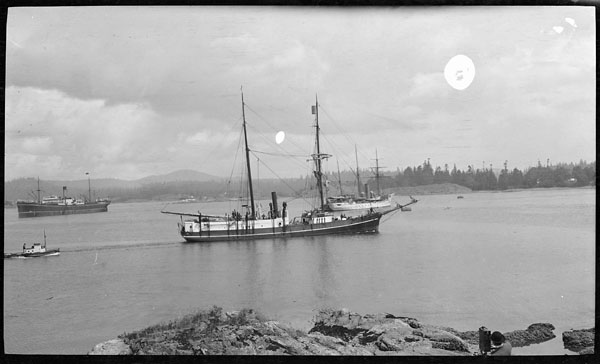
-
Article
Karst Landform
A karst landform is a geological feature created on the Earth's surface by the drainage of water into the ground. Typical karst forms include sinkholes, caves, natural bridges and sinking streams. They were first studied in detail in Kras, Slovenia, hence the name karst. There are 1.2 million km2 of karst rock outcroppings in Canada, found in all geological regions except the Canadian Shield.
"https://d3d0lqu00lnqvz.cloudfront.net/media/media/da6ae2ec-e05e-46fd-916c-6185a6a86215.jpg" // resources/views/front/categories/view.blade.php
https://d3d0lqu00lnqvz.cloudfront.net/media/media/da6ae2ec-e05e-46fd-916c-6185a6a86215.jpg
-
Article
Kateri Memorial Hospital Centre
Kateri Memorial Hospital Centre (KMHC) is a healthcare facility located in Kahnawà:ke, Quebec. Then known as Hôpital du Sacré-Cœur de Caughnawaga (Sacred Heart Hospital of Caughnawaga), it was established in 1905 by Adele Perronno. Initially, the funding to support the hospital came from the Jesuits, a private donor, the federal government, and later the Quebec government. The hospital is named after Saint Kateri Tekakwitha and has served the community for over 100 years. It is unique for a number of reasons. First, it is run by a Board established by the Mohawk Council of Kahnawà:ke. Secondly, it is a hospital located within a First Nations community. Finally, the new buildings were constructed following nation-to-nation discussions and agreements with the Quebec government. Beginning in 2015, the hospital underwent an estimated $31 million expansion and renovation. It provides various healthcare services, including clinics and a long-term care home. The community takes great pride in the hospital, viewing it as a symbol of their resilience.
"https://d3d0lqu00lnqvz.cloudfront.net/KateriMemorialHospitalCentre/CP115913047_resized.jpg" // resources/views/front/categories/view.blade.php
https://d3d0lqu00lnqvz.cloudfront.net/KateriMemorialHospitalCentre/CP115913047_resized.jpg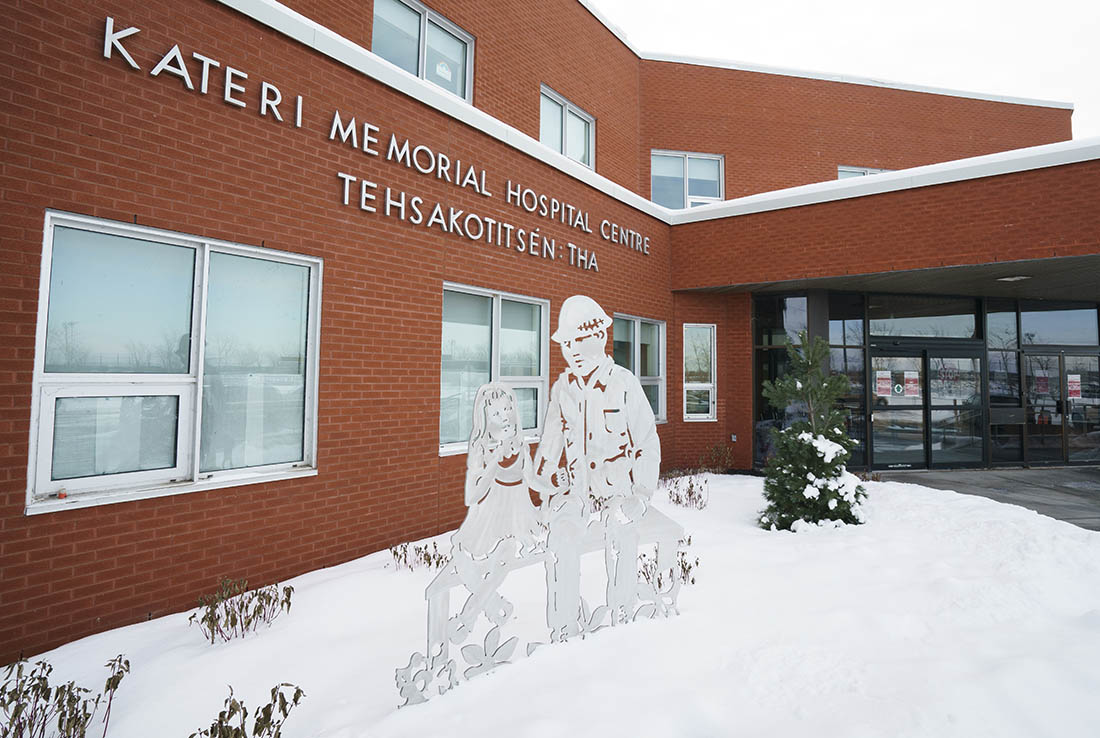
-
Article
Kayak
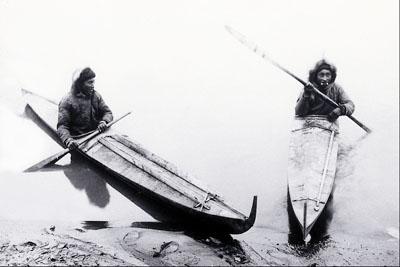
For over 2,000 years, the Inuit have used kayaks for traveling and hunting expeditions, except for the most northerly polar Inuit. Essentially a one-person, closed-deck hunting craft, it was employed occasionally for the transport of goods. Although kayaks are rarely used today for hunting, the kayak remains an important part of Inuit culture and heritage.
"https://d3d0lqu00lnqvz.cloudfront.net/media/media/cbb4d419-1b24-4855-83c1-531a98fb7874.jpg" // resources/views/front/categories/view.blade.php
https://d3d0lqu00lnqvz.cloudfront.net/media/media/cbb4d419-1b24-4855-83c1-531a98fb7874.jpg