
Browse "Things"
-
Article
Industrialization in Canada
Industrialization is a process of economic and social change. It is one that shifts the centres of economic activity onto the focus of work, wages and incomes. These changes took two forms in Canada, beginning in the 19th century. First, economic and social activities were transformed from agriculture and natural resource extraction to manufacturing and services. Second, economic and social activities shifted from rural cottage industries to urban industrial pursuits. Industrialized production took place under the privately owned factory system, in which a larger proportion of the population expected to be wage earners for all of their working lives. Therefore, industrialization brought major changes, not only in work and the economy, but in the way society was organized and in the relations among different groups in society. Although it has evolved over nearly two centuries, the process of industrialization is considered revolutionary — as the term Industrial Revolution suggests — because it marked the shift from feudalism to capitalism, and from agriculture to manufacturing and services — changes that fundamentally altered human existence. This is the full-length entry about Industrialization in Canada. For a plain-language summary, please see Industrialization in Canada (Plain-Language Summary).
"https://d3d0lqu00lnqvz.cloudfront.net/media/media/e82643fb-76c4-461d-ba67-acf2e559c83a.jpg" // resources/views/front/categories/view.blade.php
https://d3d0lqu00lnqvz.cloudfront.net/media/media/e82643fb-76c4-461d-ba67-acf2e559c83a.jpg
-
Article
Industrialization in Canada (Plain-Language Summary)
Industrialization is a process. It first occurred in Britain in the mid-1700s. That period is called the First Industrial Revolution. At that time, industries that manufactured products began to increase in number. (See also Manufacturing in Canada). The places where the products were made are called factories. Industries became more important than agriculture for the economy. This was a revolution. This had never happened before. In the past, land had always meant wealth. So, landowners were always the wealthiest people. During the Industrial Revolution, the individuals and companies that owned the factories became wealthy. Another big change was that fewer people farmed. They moved to cities to work in factories. This meant that cities became bigger and bigger. Thus, the industrial revolution led to urbanization. It also led to workers earning wages (or money) for their work. This was another first. This article is a plain-language summary of Industrialization in Canada. If you are interested in reading about this topic in more depth, please see our full-length entry, Industrialization in Canada.
"https://d3d0lqu00lnqvz.cloudfront.net/industrializationincanada/assemblyfordcompanyofcanada.jpg" // resources/views/front/categories/view.blade.php
https://d3d0lqu00lnqvz.cloudfront.net/industrializationincanada/assemblyfordcompanyofcanada.jpg
-
Article
Industry in Canada
Industry, in its broadest sense, includes all economic activity, but for convenience commentators divide it into three sectors: primary, secondary and tertiary. Primary manufacturing involves harvesting natural resources; secondary, manufacturing; and tertiary, the service industries. All these elements make up Canada's industrial system, which has become increasingly complex over time. Canada is considered a “developed” country in that it has, as part of its economy, a developed industrial base. (See also Economic History; Regionalism; Regional Economics; Technology.) Click here for definitions of key terms used in this article.
"https://d3d0lqu00lnqvz.cloudfront.net/media/media/804ad87a-c2a5-4d29-814e-542e786b1778.jpg" // resources/views/front/categories/view.blade.php
https://d3d0lqu00lnqvz.cloudfront.net/media/media/804ad87a-c2a5-4d29-814e-542e786b1778.jpg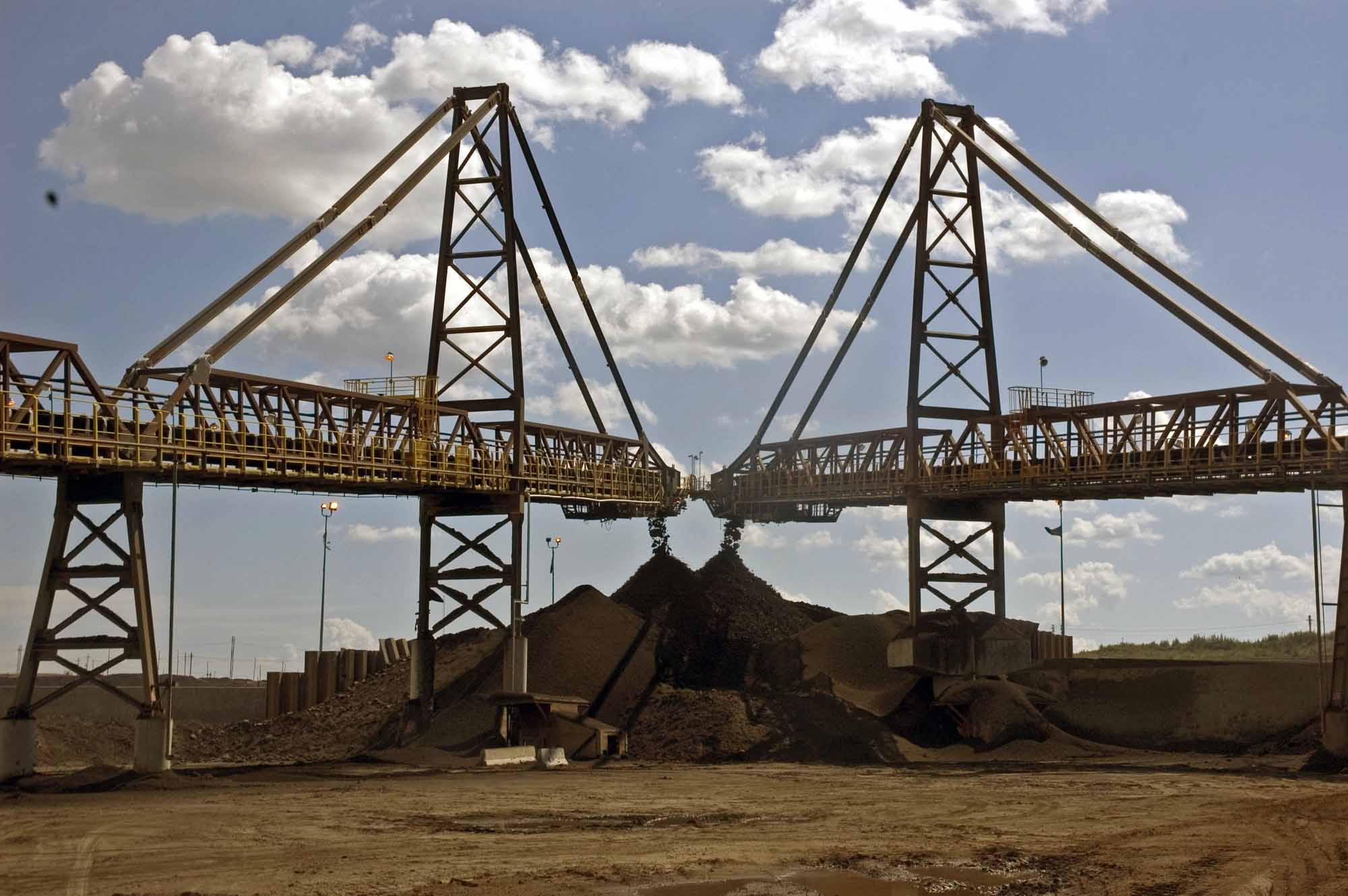
-
Article
Infantry
Known as the “Queen of Battle,” the infantry is the branch of the army that provides its primary fighters. The main responsibility of infantry soldiers is to “close with and destroy the enemy.” Although they are trained, armed and equipped to fight on foot, infantry soldiers are usually transported to the battlefield by other means. Infantry soldiers can also specialize as light, mechanized, airmobile, airborne and other types. The characteristics of infantry are mobility, firepower, flexibility, communications and vulnerability (to enemy action). Infantry soldiers are trained in a wide range of individual and crew-served weapons and work with the all-arms team of reconnaissance, armour, artillery, air defence, engineers, tactical aviation and other combat specialists. Except for a brief time during the feudal period (when cavalry dominated), the infantry has been the largest single component of armies since ancient times. In Canada, the infantry has always been the army’s largest element.
"https://d3d0lqu00lnqvz.cloudfront.net/Infantry/InfantryCorpsBadge.jpg" // resources/views/front/categories/view.blade.php
https://d3d0lqu00lnqvz.cloudfront.net/Infantry/InfantryCorpsBadge.jpg
-
Article
Inflation in Canada
Inflation popularly means rising general prices, most frequently calculated by the consumer price index (CPI) — a measure of the cost of a basket of commodities purchased by a typical family.
"https://thecanadianencyclopedia.ca/images/tce_placeholder.jpg?v=e9dca980c9bdb3aa11e832e7ea94f5d9" // resources/views/front/categories/view.blade.php
https://thecanadianencyclopedia.ca/images/tce_placeholder.jpg?v=e9dca980c9bdb3aa11e832e7ea94f5d9
-
List
Influential Indigenous Rights Court Cases in Canada
Rights of Indigenous peoples in Canada are recognized within Canada’s Constitution Act, 1982 in section 35. However, these rights are not clearly defined or explained within the Constitution Act, 1982, resulting in numerous Indigenous rights court cases. These influential court cases have helped to establish Indigenous rights within Canada and to clarify concepts surrounding Indigenous rights.
"https://d3d0lqu00lnqvz.cloudfront.net/media/media/c813762a-d4db-4a05-b769-18eb4e9b7957.jpg" // resources/views/front/categories/view.blade.php
https://d3d0lqu00lnqvz.cloudfront.net/media/media/c813762a-d4db-4a05-b769-18eb4e9b7957.jpg
-
Article
Influenza (Flu) in Canada
Influenza, often referred to as the flu, is a common, contagious respiratory illness. There are four types of influenza viruses: A, B, C and D. While influenza A, B and C viruses can infect humans, influenza D is believed to primarily affect animals such as cattle and pigs. Influenza C is rare in comparison to influenza A and B, which are the main sources of the “seasonal flu,” or the viruses that circulate in Canada and other countries each winter. Influenza A is also the source of flu pandemics. Canada has experienced five influenza pandemics since the late 19th century, in 1890, 1918, 1957, 1968 and 2009. In Canada, influenza causes an estimated 12,200 hospitalizations and 3,500 deaths each year.
"https://d3d0lqu00lnqvz.cloudfront.net/media/media/73780e73-cf0f-4654-b6da-da083ddb6c53.jpg" // resources/views/front/categories/view.blade.php
https://d3d0lqu00lnqvz.cloudfront.net/media/media/73780e73-cf0f-4654-b6da-da083ddb6c53.jpg
-
Article
Information and Communications Technology
Communications technologies include the techniques, tools and methods used to facilitate communication. Information technologies include those used to create, record, modify and display the content being communicated.
"https://d3d0lqu00lnqvz.cloudfront.net/media/media/528dd8b2-60b3-4853-9b1a-8c6731b71fe4.jpg" // resources/views/front/categories/view.blade.php
https://d3d0lqu00lnqvz.cloudfront.net/media/media/528dd8b2-60b3-4853-9b1a-8c6731b71fe4.jpg
-
Article
Information Highway
Information Highway is a term attributed to former American vice-president Al Gore in the 1990s and refers to the delivery of digital media over high-speed networks.
"https://thecanadianencyclopedia.ca/images/tce_placeholder.jpg?v=e9dca980c9bdb3aa11e832e7ea94f5d9" // resources/views/front/categories/view.blade.php
https://thecanadianencyclopedia.ca/images/tce_placeholder.jpg?v=e9dca980c9bdb3aa11e832e7ea94f5d9
-
Article
Information Society
Information SocietyFor many writers, pundits and policy makers the rapid development and diffusion of INFORMATION AND COMMUNICATIONS TECHNOLOGIES (ICT) heralds the development of a new kind of society - a society where the production and exchange of information is a key feature in both the economy and social life in general. While the first half of the 20th century saw the dominant form of economic production shift from agricultural to industrial, the second half was...
"https://thecanadianencyclopedia.ca/images/tce_placeholder.jpg?v=e9dca980c9bdb3aa11e832e7ea94f5d9" // resources/views/front/categories/view.blade.php
https://thecanadianencyclopedia.ca/images/tce_placeholder.jpg?v=e9dca980c9bdb3aa11e832e7ea94f5d9
-
Article
Injunction
An injunction is an equitable judicial remedy issued at the court's discretion. It usually takes the form of an order preventing or restraining a person from performing an act. The order may also take a mandatory form by compelling someone to do something.
"https://thecanadianencyclopedia.ca/images/tce_placeholder.jpg?v=e9dca980c9bdb3aa11e832e7ea94f5d9" // resources/views/front/categories/view.blade.php
https://thecanadianencyclopedia.ca/images/tce_placeholder.jpg?v=e9dca980c9bdb3aa11e832e7ea94f5d9
-
Article
Injury and Prevention
Some 2000 Canadians between the ages of one and 19 are killed each year because of injury, and over 85 000 are hospitalized. With the control of infectious diseases, injury has become the leading cause of death and disability in Canadian children and youth.
"https://thecanadianencyclopedia.ca/images/tce_placeholder.jpg?v=e9dca980c9bdb3aa11e832e7ea94f5d9" // resources/views/front/categories/view.blade.php
https://thecanadianencyclopedia.ca/images/tce_placeholder.jpg?v=e9dca980c9bdb3aa11e832e7ea94f5d9
-
Article
Canada and Innovations in Battlefield Transfusions
One of the most challenging aspects of military (and emergency) medicine is the stabilization of patients who have suffered traumatic injuries and severe blood loss. Canada has made significant contributions to the development of battlefield transfusions, including the popularization of blood transfusion in the First World War and the development of mobile transfusion units in the Spanish Civil War. Canada was also a leader in the production of freeze-dried blood serum during the Second World War. During the war in Afghanistan, Canadians established a walking blood bank at the Role 3 Multinational Medical Unit at Kandahar Airfield, where survival rates ranged from 95 to 98 percent. These developments reduced mortality rates and improved patient care during wartime and have improved trauma management in civilian contexts as well.
"https://d3d0lqu00lnqvz.cloudfront.net/Transfusions/Transfusion-Unit_1930s.jpg" // resources/views/front/categories/view.blade.php
https://d3d0lqu00lnqvz.cloudfront.net/Transfusions/Transfusion-Unit_1930s.jpg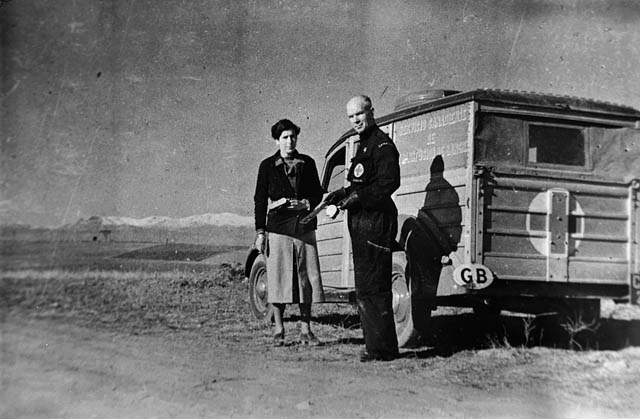
-
Article
Innu Nikamu
Innu Nikamu is an annual festival of traditional and contemporary Indigenous music featuring hunters and musicians from Quebec. Innu Nikamu takes place in the Maliotenam (Mani-Utenam) reserve, located near Sept-Îles in Quebec’s Côte-Nord administrative region.
"https://d3d0lqu00lnqvz.cloudfront.net/49293624953_12db918e57_k.jpg" // resources/views/front/categories/view.blade.php
https://d3d0lqu00lnqvz.cloudfront.net/49293624953_12db918e57_k.jpg
-
Article
INRS - Armand-Frappier Santé Biotechnologie Research Centre
The Armand-Frappier Santé Biotechnologie Research Centre, is part of the Institut national de la recherche scientifique (INRS). It is an important centre for research, training and technology transfer (see Medical Education).
"https://thecanadianencyclopedia.ca/images/tce_placeholder.jpg?v=e9dca980c9bdb3aa11e832e7ea94f5d9" // resources/views/front/categories/view.blade.php
https://thecanadianencyclopedia.ca/images/tce_placeholder.jpg?v=e9dca980c9bdb3aa11e832e7ea94f5d9