Browse "Things"
-
Article
Battle for Hill 70
The capture of Hill 70 in France was an important Canadian victory during the First World War, and the first major action fought by the Canadian Corps under a Canadian commander. The battle, in August 1917, gave the Allied forces a crucial strategic position overlooking the occupied city of Lens.
"https://d3d0lqu00lnqvz.cloudfront.net/media/media/60c335ab-7325-4faf-b25a-e2197d6da9b6.jpg" // resources/views/front/categories/view.blade.php
https://d3d0lqu00lnqvz.cloudfront.net/media/media/60c335ab-7325-4faf-b25a-e2197d6da9b6.jpg
-
Article
Hill 70 and Canadian Independence
Canada’s war of independence was the First World War. Unlike the Americans, our war of independence was not fought against the country from which we became independent, but alongside it. We started the war as a colony of Britain and ended it as an ally. The remarkable performance of the Canadian Corps and its first Canadian commander made these gains in autonomy possible.
"https://d3d0lqu00lnqvz.cloudfront.net/media/media/9dd8ed5e-dc70-4b32-a4d8-bbe7a5207248.jpg" // resources/views/front/categories/view.blade.php
https://d3d0lqu00lnqvz.cloudfront.net/media/media/9dd8ed5e-dc70-4b32-a4d8-bbe7a5207248.jpg
-
Article
Hindenburg Line
Hindenburg Line (Siegfried-Stellung), a system of fortified and entrenched reserve positions stretching 80 km southeast from Arras to Soissons, France, built by the Germans in the winter of 1916-17.
"https://thecanadianencyclopedia.ca/images/tce_placeholder.jpg?v=e9dca980c9bdb3aa11e832e7ea94f5d9" // resources/views/front/categories/view.blade.php
https://thecanadianencyclopedia.ca/images/tce_placeholder.jpg?v=e9dca980c9bdb3aa11e832e7ea94f5d9
-
Article
Hinduism
Hinduism, the religion of approximately one billion people in India, Africa, Indonesia and the West Indies. Immigration from these countries (principally India) to Canada has provided the base for a Canadian population of about 297,200 Hindus (2001 census, last figures available).
"https://d3d0lqu00lnqvz.cloudfront.net/media/media/d17df9ee-bfe1-4057-bd99-89b724f5a697.jpg" // resources/views/front/categories/view.blade.php
https://d3d0lqu00lnqvz.cloudfront.net/media/media/d17df9ee-bfe1-4057-bd99-89b724f5a697.jpg
-
Article
Hippies in Canada
“Hippies” is a term used to describe young people who participated in the 1960s counterculture movement, which originated in the United States and spread throughout Canada in the second half of that decade. As a noun, “hippie” was a play on the adjective “hip,” which was used to describe young bohemians who lived in Greenwich Village in New York City, and in San Francisco, in the 1950s and early 1960s. Hippies were part of the “baby boom” generation, born immediately following the end of the Second World War (see Baby Boomers in Canada). This demographic wave was significant enough to transform Canadian society; by the mid-1960s more than half of Canada’s population of 20 million was under the age of 25.
"https://d3d0lqu00lnqvz.cloudfront.net/media/new_article_images/HippiesinCanada/VW_Van_Hippies_British_Columbia.jpg" // resources/views/front/categories/view.blade.php
https://d3d0lqu00lnqvz.cloudfront.net/media/new_article_images/HippiesinCanada/VW_Van_Hippies_British_Columbia.jpg
-
Article
Hiram Walker Resources Ltd
Hiram Walker Resources Ltd, with head offices in Toronto, was a Canadian holding company with diverse interests. The company was incorporated as the Consumers' Gas Co in 1848 in the Province of Canada.
"https://thecanadianencyclopedia.ca/images/tce_placeholder.jpg?v=e9dca980c9bdb3aa11e832e7ea94f5d9" // resources/views/front/categories/view.blade.php
https://thecanadianencyclopedia.ca/images/tce_placeholder.jpg?v=e9dca980c9bdb3aa11e832e7ea94f5d9
-
Article
His Majesty's Royal Chapel of the Mohawks
His Majesty’s Royal Chapel of the Mohawks is the oldest-standing church in Ontario. Now a part of the Anglican Church of Canada and the Six Nations of the Grand River’s Tourism Department, the chapel is located in the original location of the Kanyen’kehá:ka (Mohawk) village on the north side of the Grand River, near Brantford, Ontario. It houses at least four historic communion items and a Bible presented by Queen Anne to the Kanyen’kehá:ka in 1712 at their original church at Fort Hunter in the Mohawk Valley, New York. In 1830, the Bishop of Quebec consecrated the chapel as the Mohawk Church. In 1904, King Edward VII designated it a Royal Chapel. The chapel was renamed His Majesty’s Chapel of the Mohawks, highlighting the relationship between the Kanyen’kehá:ka and the Crown. Fires destroyed portions of the chapel in 1975, 1976 and 1994, believed to be deliberately set.
"https://d3d0lqu00lnqvz.cloudfront.net/ChapeloftheMohawks/Chapel-Front_resized.jpg" // resources/views/front/categories/view.blade.php
https://d3d0lqu00lnqvz.cloudfront.net/ChapeloftheMohawks/Chapel-Front_resized.jpg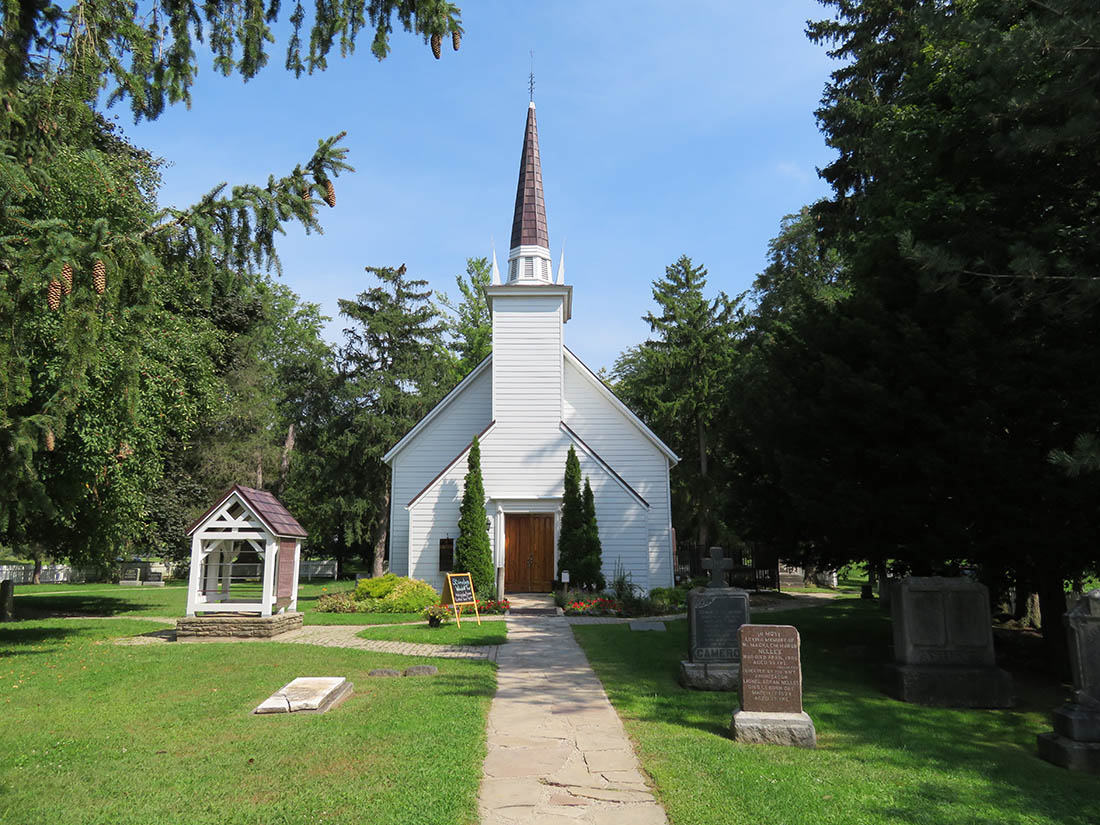
-
Article
Histoire des Canadiens-français 1608-1880
Histoire des Canadiens-français 1608-1880Histoire des Canadiens-français 1608-1880 by Benjamin Sulte (8 volumes, 1882-84), proclaims in its own subtitle its significance as a comprehensive study of the French Canadian people (complete with statistics): it examines their "origins; history; religion; wars; discoveries; colonization; customs; domestic, social and political life; development and future." An eccentric "liberal" history, it met with the church's approval - despite its denunciation of the JESUIT RELATIONS - because of its outspoken critique of...
"https://d3d0lqu00lnqvz.cloudfront.net/media/media/a75df73a-e1e0-4b27-ba7a-76631cfc6a0e.jpg" // resources/views/front/categories/view.blade.php
https://d3d0lqu00lnqvz.cloudfront.net/media/media/a75df73a-e1e0-4b27-ba7a-76631cfc6a0e.jpg
-
Article
Histoire du Canada depuis sa découverte jusqu'à nos jours
Histoire du Canada depuis sa découverte jusqu'à nos jours, a Canadian classic by François-Xavier GARNEAU, appeared in 4 volumes from 1845-52, tracing French Canada's development from Champlain's voyages of discovery to 1840.
"https://thecanadianencyclopedia.ca/images/tce_placeholder.jpg?v=e9dca980c9bdb3aa11e832e7ea94f5d9" // resources/views/front/categories/view.blade.php
https://thecanadianencyclopedia.ca/images/tce_placeholder.jpg?v=e9dca980c9bdb3aa11e832e7ea94f5d9
-
Article
Historic Dunvegan
One of the most important fur trade sites on the PEACE RIVER, a post operated at Dunvegan from 1805 to 1918. The first post was built by Archibald Norman McLeod of the North West Company to trade with the BEAVER and other First Nations who lived in the middle and upper reaches of the Peace River.
"https://d3d0lqu00lnqvz.cloudfront.net/media/media/1b7019ae-3e5d-4d8a-9491-35e2fb72ca9a.jpg" // resources/views/front/categories/view.blade.php
https://d3d0lqu00lnqvz.cloudfront.net/media/media/1b7019ae-3e5d-4d8a-9491-35e2fb72ca9a.jpg
-
Article
Historic Gardens
Gardens can be viewed, studied and understood as cultural landscapes. Their aesthetic, horticultural, historic and environmental richness as well as their evocative power excite wonder and delight.
"https://d3d0lqu00lnqvz.cloudfront.net/media/media/762a4957-0a7a-4613-857f-80a5fabbdd7f.jpg" // resources/views/front/categories/view.blade.php
https://d3d0lqu00lnqvz.cloudfront.net/media/media/762a4957-0a7a-4613-857f-80a5fabbdd7f.jpg
-
Article
Historic Rockslides in Canada
Historic Rockslides in Canada Site Date Volume m³ Damage Rubble Creek, BC 1855? 25 million unknown Frank, Alberta 29 April 1903 30 million 70 deaths, half a town destroyed Brazeau Lake, Alberta July 1933 5 million telephone lines Hope, BC 9 January 1965 47 million 4 deaths; road buried English Chief River, NWT 5 October 1985 7 million None
"https://thecanadianencyclopedia.ca/images/tce_placeholder.jpg?v=e9dca980c9bdb3aa11e832e7ea94f5d9" // resources/views/front/categories/view.blade.php
https://thecanadianencyclopedia.ca/images/tce_placeholder.jpg?v=e9dca980c9bdb3aa11e832e7ea94f5d9
-
Article
Historica Canada
Historica Canada is a registered charitable organization devoted to enhancing awareness and appreciation of Canadian history and citizenship. Its free programs and educational resources, which include The Canadian Encyclopedia, are offered bilingually and reach more than 28 million users annually. In addition to English and French, as of October 2024 the organization is offering the option of following some of its programs, including the Encyclopedia, in 35 other languages (see Languages in use in Canada). Historica Canada’s head office is in Toronto, but staff are based across the country and travel regularly to promote engagement in a variety of activities.
"https://d3d0lqu00lnqvz.cloudfront.net/TCE_placeholder.png" // resources/views/front/categories/view.blade.php
https://d3d0lqu00lnqvz.cloudfront.net/TCE_placeholder.png
-
Article
Historical Societies
The main purpose of historical societies in Canada is the study and promotion of Canadian history. There are hundreds of historical associations in Canada. Activities include publication of scholarly and amateur works, public education programs, and assistance to and co-operation with archives, museums, heritage groups and other similar organizations.
"https://d3d0lqu00lnqvz.cloudfront.net/YorkPioneers.jpg" // resources/views/front/categories/view.blade.php
https://d3d0lqu00lnqvz.cloudfront.net/YorkPioneers.jpg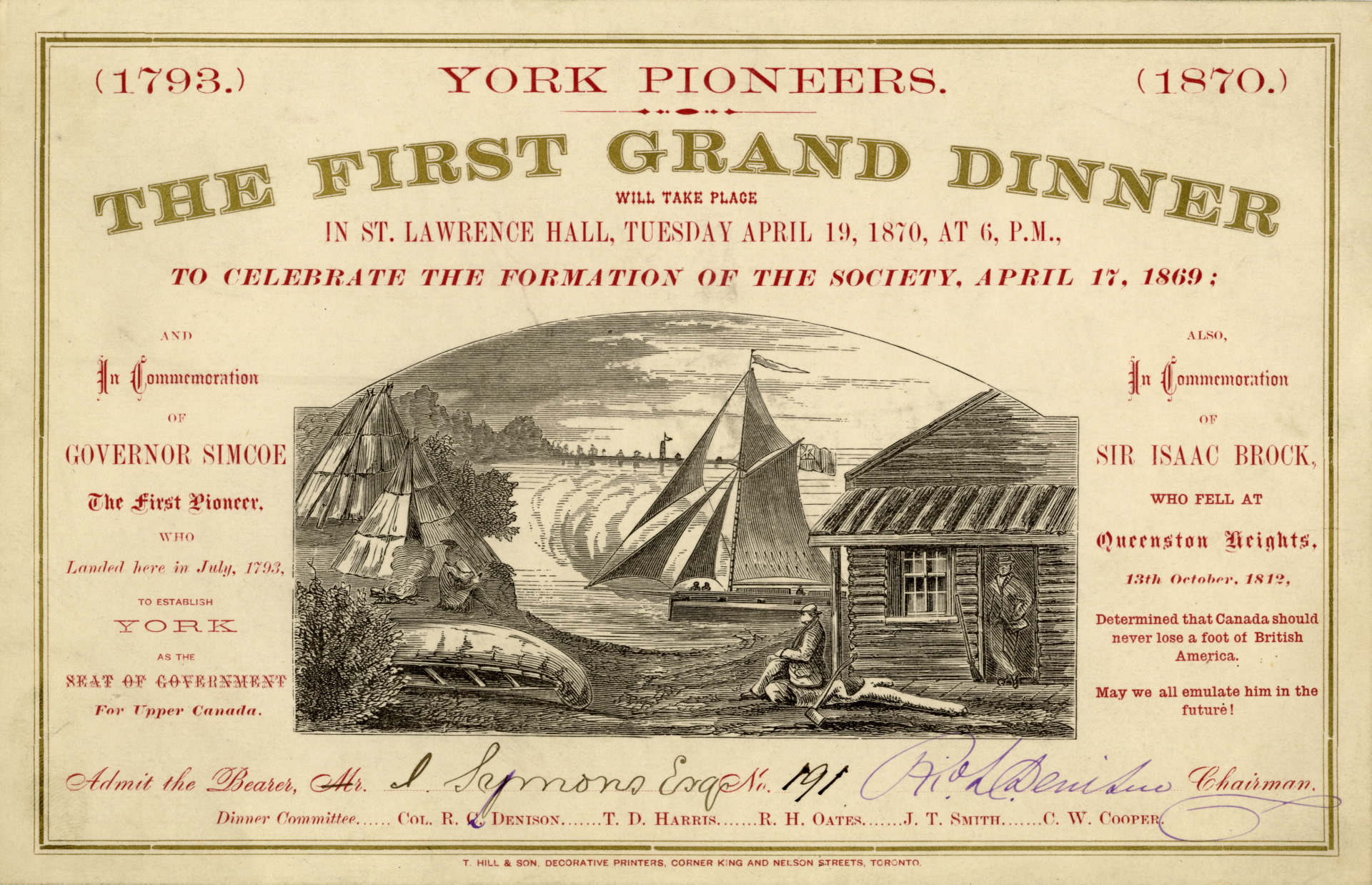
-
Article
Historical Sources
Historians use written, oral and visual sources to develop and support their interpretations of historical events. The historical discipline divides source materials into two categories: primary sources and secondary sources. Both categories are flexible and depend on the subject and era a historian is investigating.
"https://d3d0lqu00lnqvz.cloudfront.net/media/media/58da114a-b3c6-46ec-acb3-f525c1bcca6a.jpg" // resources/views/front/categories/view.blade.php
https://d3d0lqu00lnqvz.cloudfront.net/media/media/58da114a-b3c6-46ec-acb3-f525c1bcca6a.jpg