
Browse "Things"
-
Article
Gambling
Gambling is the betting of something of value on the outcome of a contingency or event, the result of which is uncertain and may be determined by chance, skill, a combination of chance and skill, or a contest.
"https://thecanadianencyclopedia.ca/images/tce_placeholder.jpg?v=e9dca980c9bdb3aa11e832e7ea94f5d9" // resources/views/front/categories/view.blade.php
https://thecanadianencyclopedia.ca/images/tce_placeholder.jpg?v=e9dca980c9bdb3aa11e832e7ea94f5d9
-
Article
Game Bird
Game bird is not a scientific term, but refers to any bird that is hunted. There are 2 categories in Canada, migratory and nonmigratory.
"https://d3d0lqu00lnqvz.cloudfront.net/media/media/82572582-06cb-4165-a0ba-fbb3f8e521d1.jpg" // resources/views/front/categories/view.blade.php
https://d3d0lqu00lnqvz.cloudfront.net/media/media/82572582-06cb-4165-a0ba-fbb3f8e521d1.jpg
-
Article
Games
Games are distinguishable from other forms of play in that they are contests in which all players start out with equal chances of winning; they end when a winner or loser is determined; and although the play may appear spontaneous or unsupervised, it is in fact guided by rigid rules and procedures.
"https://d3d0lqu00lnqvz.cloudfront.net/media/Twitter_Cards/Trivial Pursuit (2).jpg" // resources/views/front/categories/view.blade.php
https://d3d0lqu00lnqvz.cloudfront.net/media/Twitter_Cards/Trivial Pursuit (2).jpg.jpg)
-
Article
Northern Gannet
The gannet, or northern gannet (Sula bassanus), is a large, long-winged seabird, white except for conspicuous black wing tips and a yellowish-tinged head. It weighs about 3,100 g and is up to 100 cm long. Nine species of gannets and boobies comprise the predominantly tropical family Sulidae. All have a stout appearance, thick, sharply pointed bills, fairly short necks and legs, and wedge-shaped tails. They feed on fish caught by plunge-diving, often from heights of 20–30 m. Summer diet mainly consists of mackerel, herring and capelin; winter foods are poorly known.
"https://d3d0lqu00lnqvz.cloudfront.net/media/media/b2be0d1b-9e0f-4794-997a-2ec03cbfab51.jpg" // resources/views/front/categories/view.blade.php
https://d3d0lqu00lnqvz.cloudfront.net/media/media/b2be0d1b-9e0f-4794-997a-2ec03cbfab51.jpg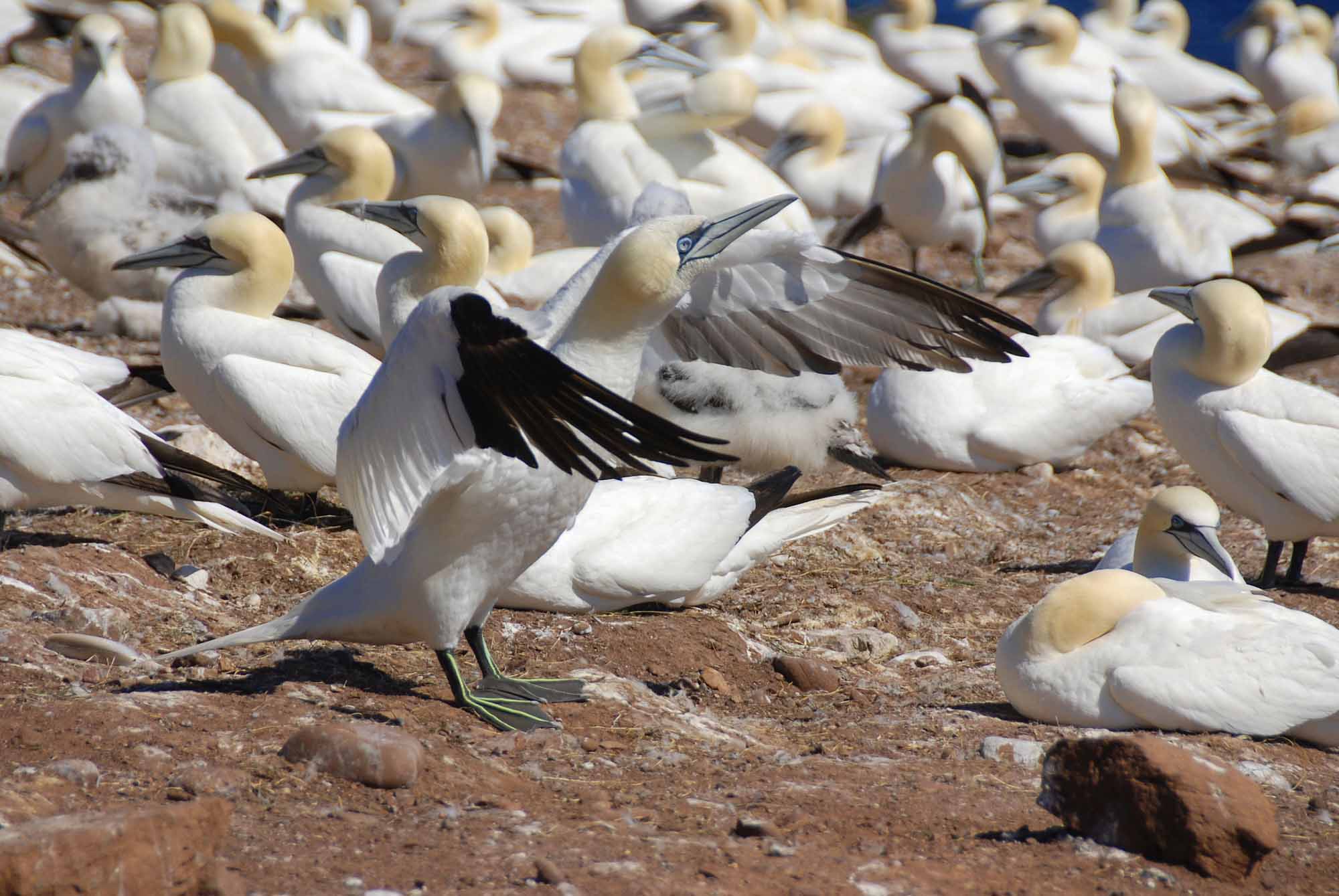
-
Article
Gar in Canada
Gar are large, slender, thick-scaled, predatory fish of the family Lepisosteidae, order Semionotiformes, class Actinopterygii. Gars are found in the fresh waters of eastern North America, Central America and Cuba, occasionally in brackish water and, rarely, in the sea. The seven living species are divided into two genera (Lepisosteus and Atractosteus) by some ichthyologists; others consider them all as Lepisosteus. In Canada, two species, the rare spotted gar (L. oculatus) and the more familiar longnose gar (L. osseus), reach their northern limit in the Great Lakes drainage basin.
"https://d3d0lqu00lnqvz.cloudfront.net/media/media/120636ae-9a48-4754-a80f-9db3245a83bc.jpg" // resources/views/front/categories/view.blade.php
https://d3d0lqu00lnqvz.cloudfront.net/media/media/120636ae-9a48-4754-a80f-9db3245a83bc.jpg
-
Article
Garden Island Rafting and Shipbuilding Enterprises
Dileno Dexter Calvin (1798-1884), a timber merchant from Clayton, New York, relocated his business on Garden Island (26.3 ha at the east end of Lake Ontario) in 1836. By 1880 he owned the island; today it remains the exclusive property of his descendants.
"https://thecanadianencyclopedia.ca/images/tce_placeholder.jpg?v=e9dca980c9bdb3aa11e832e7ea94f5d9" // resources/views/front/categories/view.blade.php
https://thecanadianencyclopedia.ca/images/tce_placeholder.jpg?v=e9dca980c9bdb3aa11e832e7ea94f5d9
-
Article
Gardiner Dam
Gardiner Dam, located 100 km south of Saskatoon, is a 5 km long earth-fill structure towering 64 m above the South Saskatchewan riverbed.
"https://thecanadianencyclopedia.ca/images/tce_placeholder.jpg?v=e9dca980c9bdb3aa11e832e7ea94f5d9" // resources/views/front/categories/view.blade.php
https://thecanadianencyclopedia.ca/images/tce_placeholder.jpg?v=e9dca980c9bdb3aa11e832e7ea94f5d9
-
Editorial
Gardiner Museum of Ceramic Art
The Gardiner Museum of Ceramic Art is located in downtown Toronto. It was designed by Bruce Kuwabara and his team at KPMB Architects. Approaching the museum, one encounters an elevated cube cantilevered towards Queen’s Park. Its fritted-glass windows are set back from the building’s elegant limestone facade. The building is a dramatic extension of the modest original. The original building was a stately, two-storey neoclassical modernist structure designed by Keith Wagland. (He was one of Kuwabara’s professors at the University of Toronto.) It was completed in 1984.
"https://d3d0lqu00lnqvz.cloudfront.net/1024px-Gardiner_Museum_Illusions_2012.jpg" // resources/views/front/categories/view.blade.php
https://d3d0lqu00lnqvz.cloudfront.net/1024px-Gardiner_Museum_Illusions_2012.jpg
-
Macleans
Garlic's Curative Powers
Ted Maczka is Garlic Man. "I preach the gospel of garlic," proclaims the retired tool-and-die maker. "It's my baby.This article was originally published in Maclean's Magazine on May 20, 1996
"https://thecanadianencyclopedia.ca/images/tce_placeholder.jpg?v=e9dca980c9bdb3aa11e832e7ea94f5d9" // resources/views/front/categories/view.blade.php
https://thecanadianencyclopedia.ca/images/tce_placeholder.jpg?v=e9dca980c9bdb3aa11e832e7ea94f5d9
-
Article
Garrison Mentality
Garrison mentality is a concept in Canadian literary theory and criticism. It was first put forth by critic and scholar Northrop Frye in the mid-1960s. It argues that early Canadian identity was shaped by the fear of a hostile landscape. Communities had to defend themselves from overwhelming forces. Frye believed that the threat of Canada’s wilderness — a “huge, unthinking, menacing, and formidable physical setting” — led to a desire among Canadians to retreat into safety. This in turn shaped their values as a group. Frye argued that the environment’s impact on Canada’s national psyche was revealed through recurring themes in Canadian art and culture. As a literary theory, the garrison mentality has inspired both supporters and detractors. Frye argued that it could be a limiting factor in the development of the arts in Canada. Others have argued that the mentality has merit, and that it resists the hyper-individualism of modern life.
"https://d3d0lqu00lnqvz.cloudfront.net/media/media/b92b7c2b-030a-4e8b-a2d8-11b69cff66a6.jpg" // resources/views/front/categories/view.blade.php
https://d3d0lqu00lnqvz.cloudfront.net/media/media/b92b7c2b-030a-4e8b-a2d8-11b69cff66a6.jpg
-
Article
Garrison Towns
In 1662 Placentia had a garrison of 25 French soldiers. Its growing importance as the centre of the French fishing fleet meant an increase of its garrison to about 150 by 1704. It was fear of this garrison town that provoked the first British garrison at St John's in 1696.
"https://thecanadianencyclopedia.ca/images/tce_placeholder.jpg?v=e9dca980c9bdb3aa11e832e7ea94f5d9" // resources/views/front/categories/view.blade.php
https://thecanadianencyclopedia.ca/images/tce_placeholder.jpg?v=e9dca980c9bdb3aa11e832e7ea94f5d9
-
Article
Common Gartersnake
The common gartersnake (Thamnophis sirtalis) is a relatively small, striped, non-venomous snake. It is one of the most widespread snake species in North America, and its range extends farther north than that of any other North American snake. In Canada, it is found in every province, as far north as James Bay and into the southernmost Northwest Territories. The common gartersnake is broken into five subspecies across Canada: the Maritime gartersnake (Thamnophis s. pallidulus; PEI, NS, NB, QC), the Eastern gartersnake (Thamnophis s. sirtalis; QC, ON), the red-sided gartersnake (Thamnophis s. parietalis; ON, MB, SK, AB, BC, NWT), the valley gartersnake (Thamnophis s. fitchi; BC), and the Puget Sound gartersnake (Thamnophis s. pickeringii; BC).
"https://d3d0lqu00lnqvz.cloudfront.net/Gartersnake/RedSidedGartersnake.jpg" // resources/views/front/categories/view.blade.php
https://d3d0lqu00lnqvz.cloudfront.net/Gartersnake/RedSidedGartersnake.jpg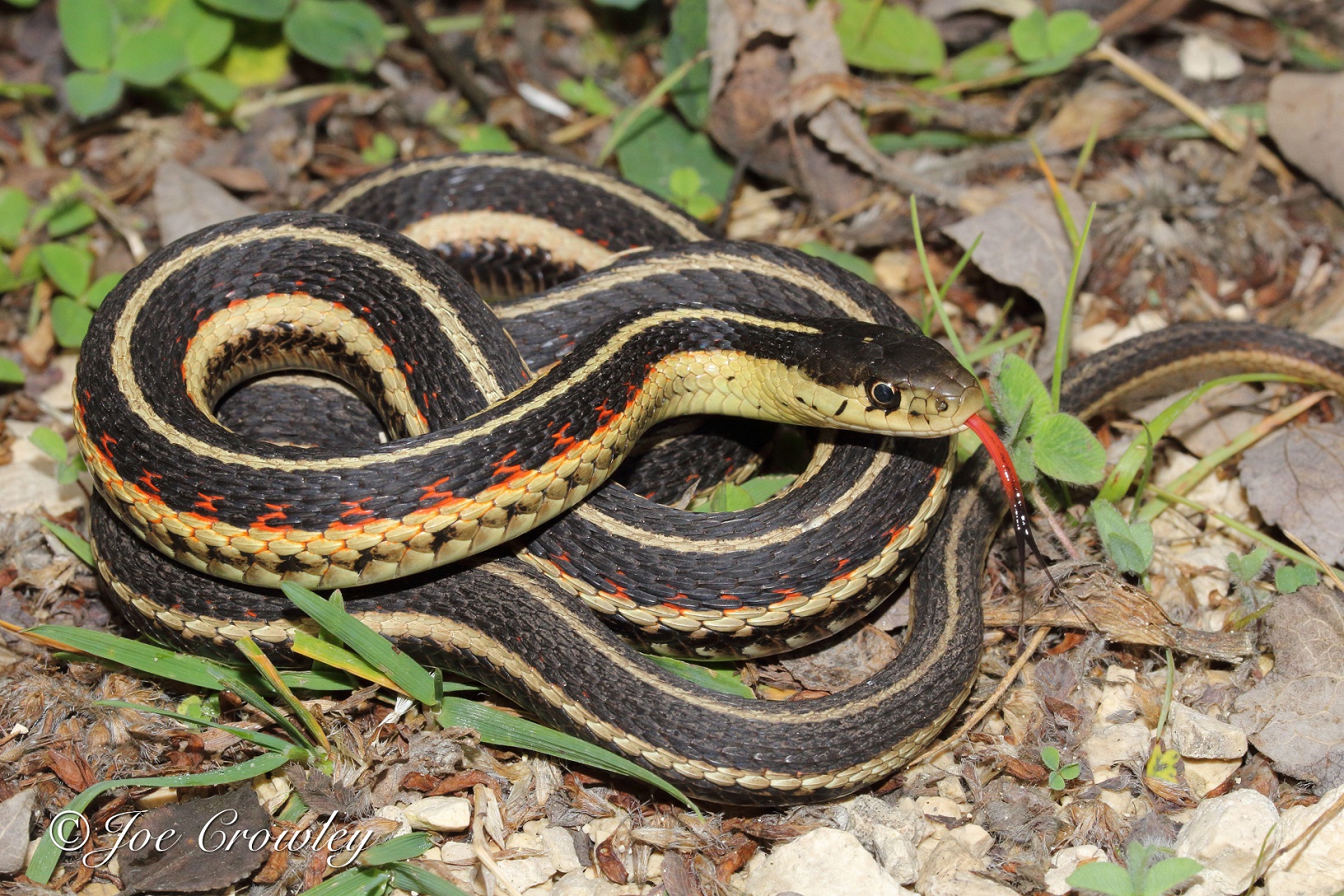
-
Article
Gasoline Stations
Motor vehicle registration figures appear for the first time in The Canada Year Book for 1916-17. It was in this year that the Year Book accorded motor vehicles a new status as the most important means of transportation in Canada.
"https://d3d0lqu00lnqvz.cloudfront.net/media/media/0bfb66f1-3552-4566-a144-166cd2aa4d1e.jpg" // resources/views/front/categories/view.blade.php
https://d3d0lqu00lnqvz.cloudfront.net/media/media/0bfb66f1-3552-4566-a144-166cd2aa4d1e.jpg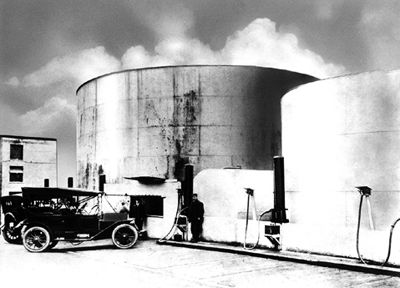
-
Macleans
Gates Under Siege
They came by the thousands last week, a ragtag army of pasty-faced computer geeks in sandals and T-shirts, streaming into the San Jose Convention Center in California's Silicon Valley to honour the 29-year-old hacker from Helsinki who might just be the one to dethrone Bill Gates.This article was originally published in Maclean's Magazine on March 15, 1999
"https://thecanadianencyclopedia.ca/images/tce_placeholder.jpg?v=e9dca980c9bdb3aa11e832e7ea94f5d9" // resources/views/front/categories/view.blade.php
https://thecanadianencyclopedia.ca/images/tce_placeholder.jpg?v=e9dca980c9bdb3aa11e832e7ea94f5d9
-
Article
Gavazzi Riots
The Gavazzi Riots were two major disturbances that occurred in Canada East in 1853. Alessandro Gavazzi, a former Catholic priest and Italian patriot, had embarked on a speaking tour of North America. He scheduled stops in Québec City and Montreal for June. Both of these events were violently disturbed by angry mobs. In each case, soldiers intervened to restore order. In Montreal, on 9 June 1853, soldiers opened fire on the mob that tried to stop Gavazzi’s speech. Ten were killed and many more were wounded. The riots were a major confrontation between the city’s Catholic and Protestant communities. The events highlighted a period of increased religious tension in Canada.
"https://d3d0lqu00lnqvz.cloudfront.net/TCE_placeholder.png" // resources/views/front/categories/view.blade.php
https://d3d0lqu00lnqvz.cloudfront.net/TCE_placeholder.png