Browse "Things"
-
Article
Fort Niagara
Fort Niagara is situated on the east side of the Niagara River at Lake Ontario north of Youngstown, New York. It was built by the French in 1726–27 and surrendered to the British in 1759 during the Seven Years’ War. Fort Niagara was a major British supply depot during the American Revolution but was later transferred to the United States. It was an important American staging area during the War of 1812 but was captured by the British in 1813. Today it is a New York State historic site.
"https://d3d0lqu00lnqvz.cloudfront.net/media/media/659c26df-741b-477d-8d28-b5a7c4212206.jpg" // resources/views/front/categories/view.blade.php
https://d3d0lqu00lnqvz.cloudfront.net/media/media/659c26df-741b-477d-8d28-b5a7c4212206.jpg
-
Article
Fort Reliance
Fort Reliance, YT, is an abandoned post, established in 1874, located on the east bank of the YUKON RIVER, 13 km downstream from DAWSON. It remained the centre of the FUR TRADE and mining on the upper Yukon River for more than a decade.
"https://thecanadianencyclopedia.ca/images/tce_placeholder.jpg?v=e9dca980c9bdb3aa11e832e7ea94f5d9" // resources/views/front/categories/view.blade.php
https://thecanadianencyclopedia.ca/images/tce_placeholder.jpg?v=e9dca980c9bdb3aa11e832e7ea94f5d9
-
Article
Fort Saint-Pierre
Fort Saint-Pierre is a French trading post spanning the years c. 1632 to 1669. It is situated on the southeastern shore of Cape Breton Island, in the village of St. Peters, on the Atlantic coast of a narrow isthmus separating the inland waterway of Lake Bras D'or from the open ocean.
"https://d3d0lqu00lnqvz.cloudfront.net/media/media/53e44654-9a96-4878-852f-9637b47db180.jpg" // resources/views/front/categories/view.blade.php
https://d3d0lqu00lnqvz.cloudfront.net/media/media/53e44654-9a96-4878-852f-9637b47db180.jpg
-
Article
Fort Selkirk
The trading post was short-lived; it shut down in the summer of its establishment after it was attacked and plundered by the Chilkat. In 1898-99 the site was the base of the YUKON FIELD FORCE. A private trading post was established by Arthur Harper around 1890.
"https://d3d0lqu00lnqvz.cloudfront.net/media/media/ed5cd90d-59e6-4f79-98c0-9d447f907a0b.jpg" // resources/views/front/categories/view.blade.php
https://d3d0lqu00lnqvz.cloudfront.net/media/media/ed5cd90d-59e6-4f79-98c0-9d447f907a0b.jpg
-
Article
Fort Carillon (Ticonderoga)
Fort Carillon was built in 1755 on the orders of the governor of New France, Pierre de Rigaud de Vaudreuil. Situated at the junction of Lake George and Lake Champlain, the fort was intended to reinforce France's military presence in an area contested by the British colonies. In 1759, Fort Carillon was abandoned by the French and renamed Fort Ticonderoga by the British. (See Seven Years’ War.) Fort Ticonderoga later played a decisive role in the American Revolution. Since 1909, this historic site has been open to the public.
"https://d3d0lqu00lnqvz.cloudfront.net/Fort_Ticonderoga_Ticonderoga_NY.jpg" // resources/views/front/categories/view.blade.php
https://d3d0lqu00lnqvz.cloudfront.net/Fort_Ticonderoga_Ticonderoga_NY.jpg
-
Article
Fort Vancouver
Fort Vancouver, a Hudson’s Bay Company fur trade post, was originally constructed in 1825 by doctor and merchant John McLoughlin. The Oregon Treaty of 1846, which placed the fort in American territory, forced the company to transfer its depot to Fort Victoria in 1849.
"https://d3d0lqu00lnqvz.cloudfront.net/media/media/8995b1e1-60ec-48e0-8b23-d944da85cc4d.jpg" // resources/views/front/categories/view.blade.php
https://d3d0lqu00lnqvz.cloudfront.net/media/media/8995b1e1-60ec-48e0-8b23-d944da85cc4d.jpg
-
Article
Fort William
Fort William, named after North West Company (NWC) chief superintendent William McGillivray, was originally a depot built in 1803 by the NWC to facilitate fur trade dealings. The company’s reliance on Fort William after merging with the Hudson’s Bay Company eventually decreased, and the fort became a post and fishing spot until its closure in 1883. By 1902, the Fort William’s last remaining buildings were completely demolished in the expansion of the Canadian Pacific Railway’s facilities. In 1971, the government of Ontario recreated Fort William at Pointe de Meuron in Thunder Bay under the name Fort William Historical Park.
"https://d3d0lqu00lnqvz.cloudfront.net/media/media/7b13aa86-dd8f-4056-b650-3839e00b77e9.jpg" // resources/views/front/categories/view.blade.php
https://d3d0lqu00lnqvz.cloudfront.net/media/media/7b13aa86-dd8f-4056-b650-3839e00b77e9.jpg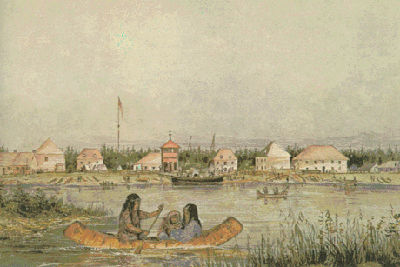
-
Article
Fortification
Although the barrier posed by these walls was sometimes increased by setting a ditch below their outer faces, fortification did not progress beyond this rather simple conception until the 16th century.
"https://d3d0lqu00lnqvz.cloudfront.net/media/media/528fc0db-255d-4206-bfde-3fcb0b932747.jpg" // resources/views/front/categories/view.blade.php
https://d3d0lqu00lnqvz.cloudfront.net/media/media/528fc0db-255d-4206-bfde-3fcb0b932747.jpg
-
Article
Forty-ninth Parallel
The forty-ninth parallel is the line of latitude that forms the boundary between Canada and the United States from Lake of the Woods to the Strait of Georgia.
"https://d3d0lqu00lnqvz.cloudfront.net/media/media/ab134ae7-ce92-4a7d-8509-11a50d91c57b.jpg" // resources/views/front/categories/view.blade.php
https://d3d0lqu00lnqvz.cloudfront.net/media/media/ab134ae7-ce92-4a7d-8509-11a50d91c57b.jpg
-
Editorial
History of the Canada-US Border in the West
The following article is an editorial written by The Canadian Encyclopedia staff. Editorials are not usually updated. In December 2001, U.S. Attorney-General John Ashcroft announced plans to deploy military personnel to patrol the Canada-U.S. border. After September 11, Ashcroft criticized Canada's porous border, though there was no evidence that any of the terrorists, all holding legal U.S. visas, came through Canada. It was not the first time that the longest undefended, and perhaps indefensible, border in the world was contentious.
"https://thecanadianencyclopedia.ca/images/tce_placeholder.jpg?v=e9dca980c9bdb3aa11e832e7ea94f5d9" // resources/views/front/categories/view.blade.php
https://thecanadianencyclopedia.ca/images/tce_placeholder.jpg?v=e9dca980c9bdb3aa11e832e7ea94f5d9
-
Article
Forum
Forum. Montreal arena, home of the famous hockey team the Canadiens, and the site of many sporting, musical, and stage events. Situated at the corner of Atwater and Ste-Catherine streets, it is the property of the Canadian Arena Co.
"https://thecanadianencyclopedia.ca/images/tce_placeholder.jpg?v=e9dca980c9bdb3aa11e832e7ea94f5d9" // resources/views/front/categories/view.blade.php
https://thecanadianencyclopedia.ca/images/tce_placeholder.jpg?v=e9dca980c9bdb3aa11e832e7ea94f5d9
-
Article
Fossil
Fossils [Lat fossilis, "dug up"] are traces of ancient animals or plants preserved in the Earth's crust. Paleontology is the modern, scientific study of fossils, but these curious objects have attracted attention since ancient times.
"https://d3d0lqu00lnqvz.cloudfront.net/media/new_article_images/MistakenPoint/48170013536_89398a21f7_c.jpg" // resources/views/front/categories/view.blade.php
https://d3d0lqu00lnqvz.cloudfront.net/media/new_article_images/MistakenPoint/48170013536_89398a21f7_c.jpg
-
Article
Fossil and Dinosaur Bonebeds
Part of a macrofossil, ceratopsian (horned) dinosaur bonebed at Dinosaur Provincial Park, Alberta (courtesy David A. Eberth).Fossil and Dinosaur Bonebeds Bonebeds are notable accumulations of modern or FOSSIL bones and teeth from more than one individual that occur in a geologic stratum or on the surface of the ground. Although modern bonebeds are common, the term is most often used in reference to ancient occurrences, in particular, fossil bones of large animals such as DINOSAURS...
"https://d3d0lqu00lnqvz.cloudfront.net/media/media/02a642a0-0d77-4886-9c75-55a389c9b77a.jpg" // resources/views/front/categories/view.blade.php
https://d3d0lqu00lnqvz.cloudfront.net/media/media/02a642a0-0d77-4886-9c75-55a389c9b77a.jpg
-
Article
Fossil Animals
The first animals were microscopic in size and left no known fossil remains. The oldest animal fossils occur in sediments deposited under shallow equatorial seas over 600 million years ago.
"https://thecanadianencyclopedia.ca/images/tce_placeholder.jpg?v=e9dca980c9bdb3aa11e832e7ea94f5d9" // resources/views/front/categories/view.blade.php
https://thecanadianencyclopedia.ca/images/tce_placeholder.jpg?v=e9dca980c9bdb3aa11e832e7ea94f5d9
-
Article
Fossil Plants
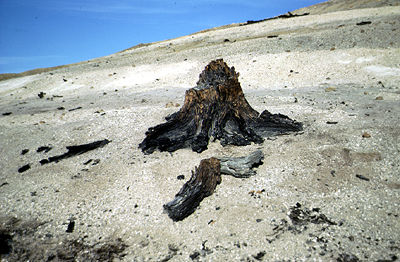
"Plant" refers to familiar land plants, and also to aquatic plants, mosses, liverworts and algae plants. Although not technically plants, fungi and bacteria are often included. Palaeobotany is the study of ancient plant life using fossil evidence. Plant fossils are found coast-to-coast in Canada, from 45-million-year-old mosses in British Columbia to fossil forests on Axel Heiberg and Ellesmere islands in the Canadian Arctic.
"https://d3d0lqu00lnqvz.cloudfront.net/media/media/17c83e96-a43b-4b20-82a8-016902d93bab.jpg" // resources/views/front/categories/view.blade.php
https://d3d0lqu00lnqvz.cloudfront.net/media/media/17c83e96-a43b-4b20-82a8-016902d93bab.jpg