
Browse "Things"
-
Article
Five Digital Technologies and their Challenges
In the span of several decades, digital technologies have changed how Canadians work, communicate, consume products and access information. Although technologies like self-driving cars and the Internet of Things may seem advanced, many such tools are still in their early stages. With the growth of the digital economy, digital technologies will continue to present opportunities and challenges. Here’s a look at five of these technologies and some of the risks that come with them.
"https://d3d0lqu00lnqvz.cloudfront.net/media/new_article_images/DigitalTech/cloud_computing.jpg" // resources/views/front/categories/view.blade.php
https://d3d0lqu00lnqvz.cloudfront.net/media/new_article_images/DigitalTech/cloud_computing.jpg
-
List
Five Prehistoric Canadian Animals
Many animals found in Canada have become part of the country’s iconography. The beaver, the caribou, the loon and the polar bear, for example, all grace our currency, while moose, narwhals and others are pictured in regional emblems. If asked to name the creatures that roamed Canada long before these familiar ones, many might cite Tyrannosaurus rex or Triceratops, two of the 88 species of dinosaur found here (see Dinosaurs Found in Canada). But between dinosaurs and today’s beavers — a period of about 225 million years — whole ecosystems flourished and disappeared in Canada, and networks of animals with them. Below are five prehistoric Canadian animals. Two of them, Albertonectes and Cryodrakon, were contemporaries of the dinosaurs. Three others, the giant beaver, mammoth, and American mastodon, existed millennia later.
"https://d3d0lqu00lnqvz.cloudfront.net/Albertonectes/AlbertonectesFullBody.jpg" // resources/views/front/categories/view.blade.php
https://d3d0lqu00lnqvz.cloudfront.net/Albertonectes/AlbertonectesFullBody.jpg
-
Article
Fjord
In oceanographic terminology, fjords are estuaries, ie, semienclosed bodies of water in which seawater is measurably diluted by fresh water from land drainage.
"https://d3d0lqu00lnqvz.cloudfront.net/media/media/c86e45b6-5998-4dec-b556-28266c7e0f25.jpg" // resources/views/front/categories/view.blade.php
https://d3d0lqu00lnqvz.cloudfront.net/media/media/c86e45b6-5998-4dec-b556-28266c7e0f25.jpg
-
Article
The Great Flag Debate
The long and often bitter debate over the new Canadian flag began in the House of Commons on 15 June 1964. It ended by closure on 15 December 1964. Feelings ran high among many English Canadians. Opposition leader John Diefenbaker demanded that the flag honour Canada’s “founding races” and feature the Union Jack. Prime Minister Lester B. Pearson insisted on a design that conveyed allegiance to Canada while avoiding colonial association. A prolonged, heated debate ensued. Historian Rick Archbold described it as “among the ugliest in the House of Commons history.” The new flag, designed by George Stanley with final touches by graphic artist Jacques Saint-Cyr, was approved on 15 December 1964 by a vote of 163 to 78. The royal proclamation was signed by Queen Elizabeth II on 28 January 1965. The national flag was officially unfurled on 15 February 1965. In 1996, February 15 was declared an annual National Flag of Canada Day.
"https://d3d0lqu00lnqvz.cloudfront.net/media/media/bba3ea66-c7be-4b5c-9acf-49088244e6fd.jpg" // resources/views/front/categories/view.blade.php
https://d3d0lqu00lnqvz.cloudfront.net/media/media/bba3ea66-c7be-4b5c-9acf-49088244e6fd.jpg
-
Article
Flatfish
Flatfish is the common name for fish belonging to the order Pleuronectiformes. There are 14 families of flatfish and over 800 species worldwide. In Canadian waters there are approximately 39 species of flatfish, from five families. These families are Pleuronectidae, Bothidae, Paralichthyidae, Scophthalmidae and Cynoglossidae. Familiar flatfishes found in Canada include halibut, plaice, flounder and turbot. Among their distinguishing features, flatfish have both eyes on one side of their body.
"https://d3d0lqu00lnqvz.cloudfront.net/media/new_article_images/FlatFish/winter_flounder4_NOAA.jpg" // resources/views/front/categories/view.blade.php
https://d3d0lqu00lnqvz.cloudfront.net/media/new_article_images/FlatFish/winter_flounder4_NOAA.jpg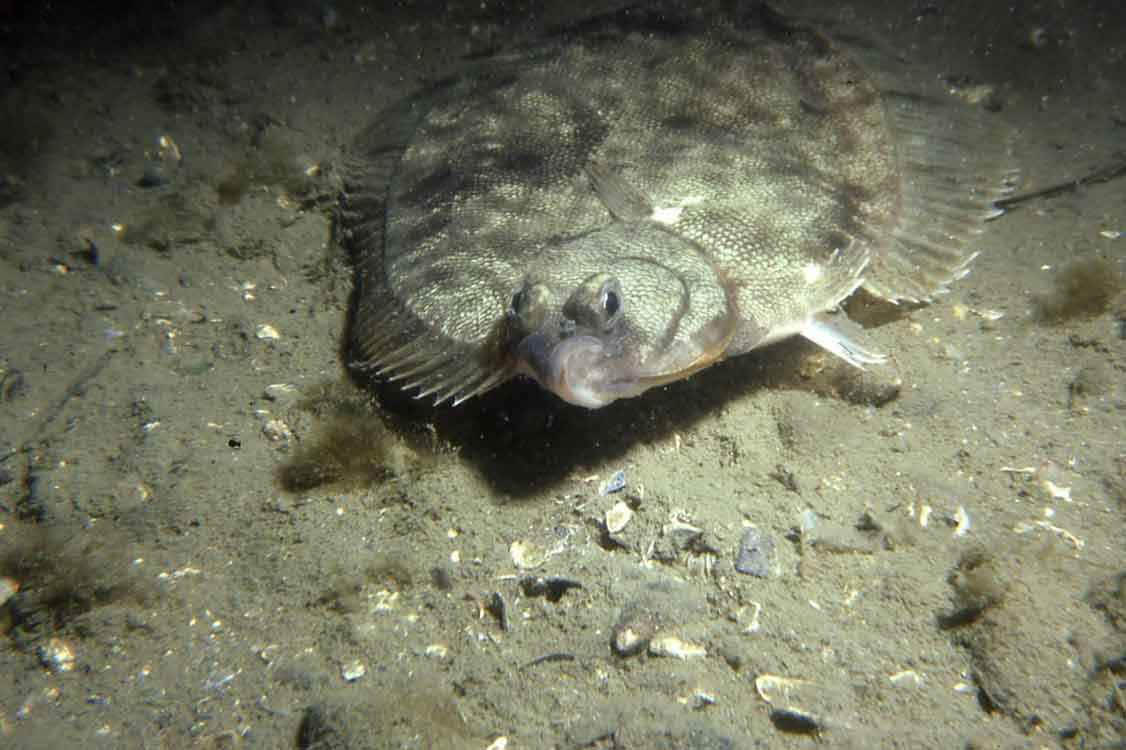
-
Article
Flatworm
Flatworms (Platyhelminthes) are a phylum of soft, bilaterally symmetrical invertebrates. Flatworms vary in shape from leaflike to ribbonlike; size ranges from microscopic to over 15 m long (some parasitic forms).
"https://d3d0lqu00lnqvz.cloudfront.net/media/media/1c916851-7140-481e-a5e6-812a3be18786.jpg" // resources/views/front/categories/view.blade.php
https://d3d0lqu00lnqvz.cloudfront.net/media/media/1c916851-7140-481e-a5e6-812a3be18786.jpg
-
Article
Flax
Flax (Linum usitatissimum), annual plant belonging to the family of the same name (Linaceae). Flax is sown and harvested much like a spring cereal crop and matures at the same time as wheat.
"https://thecanadianencyclopedia.ca/images/tce_placeholder.jpg?v=e9dca980c9bdb3aa11e832e7ea94f5d9" // resources/views/front/categories/view.blade.php
https://thecanadianencyclopedia.ca/images/tce_placeholder.jpg?v=e9dca980c9bdb3aa11e832e7ea94f5d9
-
Article
Flea
Fleas are very small, wingless, laterally flattened insects of the order Siphonaptera. They’re best known for being external parasites on mammals and occasionally birds. Adult fleas live in the fur or feathers of their hosts, feeding on their blood to survive and reproduce. While fleas do feed off humans, more common host animals include rodents, dogs and cats. The “human” flea, Pulex irritans, actually attacks a broad range of mammal species, and the same is true of most flea species that bite humans. About 2,000 species and subspecies are known worldwide, with at least 127 found in Canada, most of them in British Columbia and Alberta.
"https://d3d0lqu00lnqvz.cloudfront.net/media/media/0eca7c30-71f0-499e-ae2c-f9b6d8219faf.jpg" // resources/views/front/categories/view.blade.php
https://d3d0lqu00lnqvz.cloudfront.net/media/media/0eca7c30-71f0-499e-ae2c-f9b6d8219faf.jpg
-
Article
Fleur-de-lys
The fleur-de-lys, a symbol of the French presence in North America, has featured on the Quebec flag since 1948 and appears on the flags of a number of other French-speaking communities in Canada and the United States.
"https://d3d0lqu00lnqvz.cloudfront.net/media/media/98975740-c322-469b-9fe0-d603876f072d.png" // resources/views/front/categories/view.blade.php
https://d3d0lqu00lnqvz.cloudfront.net/media/media/98975740-c322-469b-9fe0-d603876f072d.png
-
Article
Floods in Canada
Floods are primarily caused by naturally occurring changes in the height of rivers, lakes and oceans. According to Public Safety Canada, floods are the most common natural hazard in the country and among the costliest. Historic floods have occurred across Canada, with many of the worst happening on major river systems that pass through populated areas. Scientists predict that flooding linked to the impacts of climate change will increase as the 21st century progresses, particularly in coastal areas of the country. This article is a full-length entry about floods in Canada. For a plain-language summary, please see Floods in Canada (Plain-Language Summary).
"https://d3d0lqu00lnqvz.cloudfront.net/media/media/86edab5a-1476-4145-911f-6e0a94bb25cc.jpg" // resources/views/front/categories/view.blade.php
https://d3d0lqu00lnqvz.cloudfront.net/media/media/86edab5a-1476-4145-911f-6e0a94bb25cc.jpg
-
Article
Floods in Canada (Plain-Language Summary)
Floods occur when water levels rise in rivers, lakes and oceans. Floods are the most common natural hazard in the country and among the most expensive. Canada has had many historic floods. Many of the worst floods are on major rivers that pass through populated areas. Climate change increases the risk of flooding, especially near coasts. This article is a plain-language summary of floods in Canada. If you are interested in reading about this topic more in depth, please see our full-length entry, Floods in Canada.
"https://d3d0lqu00lnqvz.cloudfront.net/media/media/c61bdc21-634f-4316-9ab1-acb89adc0cdf.jpg" // resources/views/front/categories/view.blade.php
https://d3d0lqu00lnqvz.cloudfront.net/media/media/c61bdc21-634f-4316-9ab1-acb89adc0cdf.jpg
-
Article
Floras and Botanical Journals
Before 1900 a published "flora" was, loosely defined, a comprehensive, itemized description of the plants of a specific geographical region. Usually more than a mere list, it should have been an analytical description, discussing habitats and distribution and citing previous authorities.
"https://d3d0lqu00lnqvz.cloudfront.net/media/media/51ac5d7f-0f57-4858-b967-2b6ee584bfc5.jpg" // resources/views/front/categories/view.blade.php
https://d3d0lqu00lnqvz.cloudfront.net/media/media/51ac5d7f-0f57-4858-b967-2b6ee584bfc5.jpg
-
Article
Flour Milling
In North America in precontact times, Indigenous people hand-ground corn and other substances (eg, acorns) into flour used in porridge, flat cakes, etc. By the middle of the 16th century, the first European settlers had arrived in New France, bringing with them their flour milling technology.
"https://d3d0lqu00lnqvz.cloudfront.net/media/media/7bd60d6b-69f6-4c5a-8511-05e7168b0127.jpg" // resources/views/front/categories/view.blade.php
https://d3d0lqu00lnqvz.cloudfront.net/media/media/7bd60d6b-69f6-4c5a-8511-05e7168b0127.jpg
-
Article
Fly
Adult flies have sucking or piercing mouth parts and lack the mandibles with which other insects bite food. Many so called "biting flies" (eg, horseflies, mosquitoes, no-see-ums, black flies, stable flies, tse-tse flies) feed on VERTEBRATE blood.
"https://d3d0lqu00lnqvz.cloudfront.net/media/media/1411b444-a35b-4113-8841-686fbe20b642.jpg" // resources/views/front/categories/view.blade.php
https://d3d0lqu00lnqvz.cloudfront.net/media/media/1411b444-a35b-4113-8841-686fbe20b642.jpg
-
Article
FN C1 Self-Loading Rifle
The FN C1 7.62 mm self-loading rifle is the Canadian version of the FN FAL ― a gas-operated, magazine-fed weapon produced by Belgian armaments manufacturer Fabrique Nationale (FN) Herstal. It was the first semi-automatic rifle adopted by the Canadian Army and saw service from 1955 to 1985. Canada was also the first NATO country to use the rifle, which was later used by many militaries around the world. Replacing the Lee-Enfield, the C1 was itself later replaced by the C7 and C8.
"https://d3d0lqu00lnqvz.cloudfront.net/media/media/FN_C1/FN_C1.jpg" // resources/views/front/categories/view.blade.php
https://d3d0lqu00lnqvz.cloudfront.net/media/media/FN_C1/FN_C1.jpg