
Browse "Politics & Law"
-
Article
Racial Segregation of Black People in Canada
Racial segregation is the separation of people, or groups of people, based on race in everyday life. Throughout Canada’s history, there have been many examples of Black people being segregated, excluded from, or denied equal access to opportunities and services such as education, employment, housing, transportation, immigration, health care and commercial establishments. The racial segregation of Black people in Canada was historically enforced through laws, court decisions and social norms. (See also Anti-Black Racism in Canada.) (This is the full-length entry on racial segregation of Black people in Canada. For a plain-language summary, please see Racial Segregation of Black People in Canada (Plain-Language Summary).)
"https://d3d0lqu00lnqvz.cloudfront.net/media/new_article_images/RacialSegregationBlackPeopleCanada/Ar00710.png" // resources/views/front/categories/view.blade.php
https://d3d0lqu00lnqvz.cloudfront.net/media/new_article_images/RacialSegregationBlackPeopleCanada/Ar00710.png
-
Macleans
Rae's New Agenda
BOB RAE IS GOOD with a crowd. Not Johnny Carson good, but good all the same.This article was originally published in Maclean's Magazine on February 21, 2005
"https://thecanadianencyclopedia.ca/images/tce_placeholder.jpg?v=e9dca980c9bdb3aa11e832e7ea94f5d9" // resources/views/front/categories/view.blade.php
https://thecanadianencyclopedia.ca/images/tce_placeholder.jpg?v=e9dca980c9bdb3aa11e832e7ea94f5d9
-
Article
Rand Formula
The Rand Formula is a feature of Canadian labour law requiring workers covered by collective bargaining contracts to pay union dues — whether or not those workers are union members. The Formula was a victory for unions struggling for recognition and security after the Second World War, and became a standard part of labour contracts, and union power, in the decades that followed.
"https://thecanadianencyclopedia.ca/images/tce_placeholder.jpg?v=e9dca980c9bdb3aa11e832e7ea94f5d9" // resources/views/front/categories/view.blade.php
https://thecanadianencyclopedia.ca/images/tce_placeholder.jpg?v=e9dca980c9bdb3aa11e832e7ea94f5d9
-
Article
Rapport de la Commission d'enquête sur l'enseignement des arts dans la province de Québec
Rapport de la Commission d'enquête sur l'enseignement des arts dans la province de Québec, commonly called the Rioux Report. It was submitted to the lieutenant-governor in August 1968 by the commission's president, Marcel Rioux.
"https://thecanadianencyclopedia.ca/images/tce_placeholder.jpg?v=e9dca980c9bdb3aa11e832e7ea94f5d9" // resources/views/front/categories/view.blade.php
https://thecanadianencyclopedia.ca/images/tce_placeholder.jpg?v=e9dca980c9bdb3aa11e832e7ea94f5d9
-
Macleans
RCMP Drug Operation Claims Lives
This article was originally published in Maclean’s magazine on March 31, 1997. Partner content is not updated. Eugene Uyeyama appeared to have it all. After 12 years, the woman of his dreams had finally said "yes," and married him. He and his new bride, Michele, had just returned from a luxurious two-week Caribbean cruise, and were looking forward to their first Christmas as husband and wife.
"https://thecanadianencyclopedia.ca/images/tce_placeholder.jpg?v=e9dca980c9bdb3aa11e832e7ea94f5d9" // resources/views/front/categories/view.blade.php
https://thecanadianencyclopedia.ca/images/tce_placeholder.jpg?v=e9dca980c9bdb3aa11e832e7ea94f5d9
-
Macleans
RCMP Raid BC Premier's House
This article was originally published in Maclean’s magazine on March 15, 1999. Partner content is not updated. B.C. Premier Glen Clark lives in a modest, shingled home on Anzio Drive on Vancouver's east side, near the Burnaby boundary. Last Tuesday night, his wife, Dale, a public school teacher, was home as usual with the couple's two young children, Reid and Layne. Around 7 p.m.
"https://thecanadianencyclopedia.ca/images/tce_placeholder.jpg?v=e9dca980c9bdb3aa11e832e7ea94f5d9" // resources/views/front/categories/view.blade.php
https://thecanadianencyclopedia.ca/images/tce_placeholder.jpg?v=e9dca980c9bdb3aa11e832e7ea94f5d9
-
Macleans
RCMP Recreates Historic March
Growing up in the small town of Hartney in the southwest corner of Manitoba, Grant Little believed that the Royal Canadian Mounted Police "hung the moon.This article was originally published in Maclean's Magazine on July 12, 1999
"https://thecanadianencyclopedia.ca/images/tce_placeholder.jpg?v=e9dca980c9bdb3aa11e832e7ea94f5d9" // resources/views/front/categories/view.blade.php
https://thecanadianencyclopedia.ca/images/tce_placeholder.jpg?v=e9dca980c9bdb3aa11e832e7ea94f5d9
-
Article
RCMP Troop 17
On 16 September 1974, thirty-two women from across Canada made history when they were sworn in as the first female officers in the Royal Canadian Mounted Police (RCMP). Known as Troop 17, they paved the way for equal opportunity in national law enforcement. In 2023, approximately 22 per cent of RCMP officers are women.
"https://d3d0lqu00lnqvz.cloudfront.net/media/media/1703ee6f-bab8-4f7e-9f0d-9ff5c82dfea3.jpg" // resources/views/front/categories/view.blade.php
https://d3d0lqu00lnqvz.cloudfront.net/media/media/1703ee6f-bab8-4f7e-9f0d-9ff5c82dfea3.jpg
-
Article
Rebellion in Lower Canada (The Patriots' War)
In 1837 and 1838, French Canadian militants in Lower Canada took up arms against the British Crown in a pair of insurrections. The twin rebellions killed more than 300 people. They followed years of tensions between the colony’s anglophone minority and the growing, nationalistic aspirations of its francophone majority. The rebels failed in their campaign against British rule. However, their revolt led to political reform, including the unified Province of Canada and the introduction of responsible government. The rebellion in Lower Canada, which is also known as the Patriots' War (la Guerre des patriotes), also gave French Canadians one of their first nationalist heroes in Louis-Joseph Papineau.
"https://d3d0lqu00lnqvz.cloudfront.net/media/media/37aadc48-3f88-4946-a9aa-0d2ad30495cd.jpg" // resources/views/front/categories/view.blade.php
https://d3d0lqu00lnqvz.cloudfront.net/media/media/37aadc48-3f88-4946-a9aa-0d2ad30495cd.jpg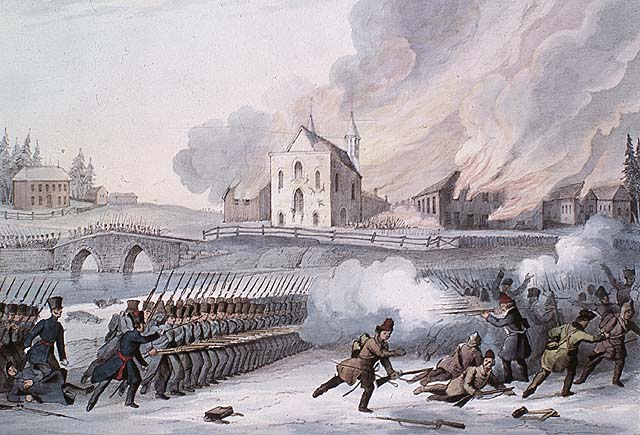
-
Article
Reciprocity
Reciprocity was a free trade agreement between the United States and Canada. It mutually reduced import duties and protective tariffs on certain goods exchanged between the two countries. It was in effect from 1854 to 1866 and was controversial at times on both sides of the border. It was replaced in 1878 by the Conservative Party’s protectionist National Policy. It involved levying tariffs on imported goods to shield Canadian manufacturers from American competition. A narrower reciprocity agreement was introduced in 1935 and expanded in 1938. However, it was suspended in 1948 after both countries signed the General Agreement on Tariffs and Trade (GATT).
"https://d3d0lqu00lnqvz.cloudfront.net/media/media/f8f2bab3-d387-4165-9fbc-617c30019b95.jpg" // resources/views/front/categories/view.blade.php
https://d3d0lqu00lnqvz.cloudfront.net/media/media/f8f2bab3-d387-4165-9fbc-617c30019b95.jpg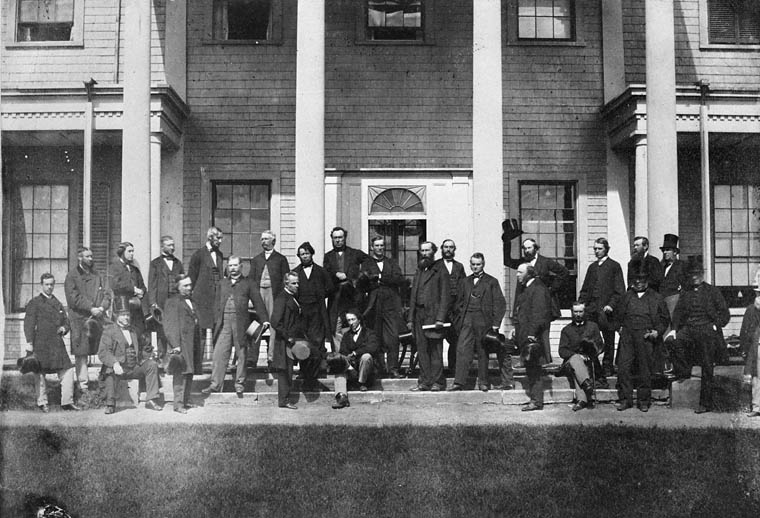
-
Article
Reciprocity (Plain-Language Summary)
Reciprocity was a free trade deal between the United States and Canada. (Reciprocity is when both sides give and receive.) The deal reduced import duties and tariffs on certain goods traded between the two countries. It was in effect from 1854 to 1866. It was at times a source of great controversy in both countries. It was replaced in 1878 by the National Policy. It was a more protectionist policy. It imposed tariffs on imported goods. This shielded manufacturers in Canada from US competition. A more limited reciprocity deal was reached in 1935. It ended in 1948 after both countries signed the General Agreement on Tariffs and Trade (GATT). This article is a plain-language summary of Reciprocity. If you would like to read about this topic in more depth, please see our full-length entry: Reciprocity.
"https://thecanadianencyclopedia.ca/images/tce_placeholder.jpg?v=e9dca980c9bdb3aa11e832e7ea94f5d9" // resources/views/front/categories/view.blade.php
https://thecanadianencyclopedia.ca/images/tce_placeholder.jpg?v=e9dca980c9bdb3aa11e832e7ea94f5d9
-
Article
Reconciliation in Canada (Plain-Language Summary)
The word reconciliation is used a lot in Canada. It is closely tied with Indigenous peoples. Indigenous peoples were harmed in many ways in the past. Children were abused in residential schools. Their languages and cultures were taken from them (see Genocide and Indigenous Peoples in Canada). The key goal of reconciliation is to heal the wounds of the past and make reparations for these wounds. Reconciliation also includes making a better future. In Canada, the process of reconciliation has only recently started. The process will continue for a long time. This article is a plain-language summary of Reconciliation in Canada. If you are interested in reading about this topic in more depth, please see our full-length entry, Reconciliation in Canada.
"https://d3d0lqu00lnqvz.cloudfront.net/10022750263_777cc2f581_k-1.jpg" // resources/views/front/categories/view.blade.php
https://d3d0lqu00lnqvz.cloudfront.net/10022750263_777cc2f581_k-1.jpg
-
Article
Reconstruction Party of Canada
The Reconstruction Party of Canada was a Canadian political party that was active during the mid-1930s. It was mainly a federal party that contested the 1935 election. It also had a short-lived Alberta wing that contested the 1935 Alberta election. It was one of four new political parties created in Canada during the Great Depression. (The others were the Social Credit Party, the Co-operative Commonwealth Federation and Quebec’s Union Nationale). The right-wing party was isolationist, favoured workers’ rights and opposed the power of big business. It was founded by longtime Conservative Party MP and Cabinet minister Henry Herbert Stevens, who was known for his anti-immigrant views. The party won only one seat in 1935 — the Kootenay East riding that Stevens had held for years. The party was dissolved when Stevens rejoined the Conservatives in 1938.
"https://d3d0lqu00lnqvz.cloudfront.net/Henry_Herbert_Stevens.jpg" // resources/views/front/categories/view.blade.php
https://d3d0lqu00lnqvz.cloudfront.net/Henry_Herbert_Stevens.jpg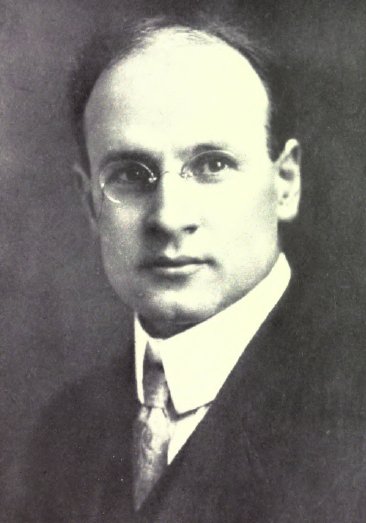
-
Article
Red River Resistance
The Red River Resistance (also known as the Red River Rebellion) was an uprising in 1869–70 in the Red River Colony. The resistance was sparked by the transfer of the vast territory of Rupert’s Land to the new Dominion of Canada. The colony of farmers and hunters, many of them Métis, occupied a corner of Rupert’s Land and feared for their culture and land rights under Canadian control. The Métis mounted a resistance and declared a provisional government to negotiate terms for entering Confederation. The uprising led to the creation of the province of Manitoba, and the emergence of Métis leader Louis Riel — a hero to his people and many in Quebec, but an outlaw in the eyes of the Canadian government.
"https://d3d0lqu00lnqvz.cloudfront.net/media/media/f0a1f84f-c420-4038-8815-42587e295b75.jpg" // resources/views/front/categories/view.blade.php
https://d3d0lqu00lnqvz.cloudfront.net/media/media/f0a1f84f-c420-4038-8815-42587e295b75.jpg
-
Article
Red Tory
The language of Red Toryism became popular in the mid-1960s when Gad Horowitz suggested that George Grant was Red Tory.
"https://thecanadianencyclopedia.ca/images/tce_placeholder.jpg?v=e9dca980c9bdb3aa11e832e7ea94f5d9" // resources/views/front/categories/view.blade.php
https://thecanadianencyclopedia.ca/images/tce_placeholder.jpg?v=e9dca980c9bdb3aa11e832e7ea94f5d9