Browse "Military"
-
Article
Infantry
Known as the “Queen of Battle,” the infantry is the branch of the army that provides its primary fighters. The main responsibility of infantry soldiers is to “close with and destroy the enemy.” Although they are trained, armed and equipped to fight on foot, infantry soldiers are usually transported to the battlefield by other means. Infantry soldiers can also specialize as light, mechanized, airmobile, airborne and other types. The characteristics of infantry are mobility, firepower, flexibility, communications and vulnerability (to enemy action). Infantry soldiers are trained in a wide range of individual and crew-served weapons and work with the all-arms team of reconnaissance, armour, artillery, air defence, engineers, tactical aviation and other combat specialists. Except for a brief time during the feudal period (when cavalry dominated), the infantry has been the largest single component of armies since ancient times. In Canada, the infantry has always been the army’s largest element.
"https://d3d0lqu00lnqvz.cloudfront.net/Infantry/InfantryCorpsBadge.jpg" // resources/views/front/categories/view.blade.php
https://d3d0lqu00lnqvz.cloudfront.net/Infantry/InfantryCorpsBadge.jpg
-
Article
Canada and the Italian Campaign
Canada’s longest Second World War army campaign was in Italy. Canadian forces served in the heat, snow and mud of the grinding, nearly two-year Allied battle across Sicily and up the Italian peninsula—prying the country from Germany's grip, at a cost of more than 26,000 Canadian casualties.
"https://d3d0lqu00lnqvz.cloudfront.net/media/media/b953ce91-4743-48e3-a180-ffe7c2816954.jpg" // resources/views/front/categories/view.blade.php
https://d3d0lqu00lnqvz.cloudfront.net/media/media/b953ce91-4743-48e3-a180-ffe7c2816954.jpg
-
Article
John Norton and the War of 1812
Canada is a country so vast that too often, it seems, its history is lost inside its geography. A striking example is the history of Indigenous peoples, whose long, rich narrative is well-preserved by them, but seldom gets the same attention on a broader scale — even when their stories affect us all.
"https://d3d0lqu00lnqvz.cloudfront.net/media/media/41ca7dbe-20b9-4db4-b6f0-911988594c22.jpg" // resources/views/front/categories/view.blade.php
https://d3d0lqu00lnqvz.cloudfront.net/media/media/41ca7dbe-20b9-4db4-b6f0-911988594c22.jpg
-
Article
Khaki University
Khaki University (initially Khaki College), an educational institution set up and managed by the Canadian Army in Britain, 1917-19 and 1945-46. The program was rooted in the study groups of the Canadian YMCA and the chaplain services of the Canadian Army.
"https://thecanadianencyclopedia.ca/images/tce_placeholder.jpg?v=e9dca980c9bdb3aa11e832e7ea94f5d9" // resources/views/front/categories/view.blade.php
https://thecanadianencyclopedia.ca/images/tce_placeholder.jpg?v=e9dca980c9bdb3aa11e832e7ea94f5d9
-
Article
Koje-Do
Koje-Do (now Geojedo), is an island 40 kilometers southwest of Busan, South Korea, where the United States operated a prisoner of war (POW) camp during the Korean War. North Korean and Chinese prisoners rebelled and seized the camp.
"https://thecanadianencyclopedia.ca/images/tce_placeholder.jpg?v=e9dca980c9bdb3aa11e832e7ea94f5d9" // resources/views/front/categories/view.blade.php
https://thecanadianencyclopedia.ca/images/tce_placeholder.jpg?v=e9dca980c9bdb3aa11e832e7ea94f5d9
-
Article
La Maison des Canadiens
“Within sight of this house over 100 men of the Queen’s Own Rifles were killed or wounded, in the first few minutes of the landings.”
"https://d3d0lqu00lnqvz.cloudfront.net/media/media/3a69be0a-4b74-40aa-a2d9-cfe6007d77a2.jpg" // resources/views/front/categories/view.blade.php
https://d3d0lqu00lnqvz.cloudfront.net/media/media/3a69be0a-4b74-40aa-a2d9-cfe6007d77a2.jpg
-
Article
La Musique du Royal 22e Regiment (Royal 22nd Regiment Band)
La Musique du Royal 22e Régiment. The regimental band of the Royal 22e Régiment. Originally named the Royal 22nd Regiment by King George V, the infantry unit was renamed in 1928 as the Royal 22e Régiment to reflect the language and culture of the unit.
"https://thecanadianencyclopedia.ca/images/tce_placeholder.jpg?v=e9dca980c9bdb3aa11e832e7ea94f5d9" // resources/views/front/categories/view.blade.php
https://thecanadianencyclopedia.ca/images/tce_placeholder.jpg?v=e9dca980c9bdb3aa11e832e7ea94f5d9
-
Article
Canada and the Movement to Ban Land Mines
In the mid-1990s, Canada became a global leader in the effort to eradicate land mines, which are explosive and deadly weapons. In December 1997, representatives from 122 countries assembled in Ottawa to sign the Mine Ban Treaty (or Ottawa Treaty), which came into force on 1 March 1999. With over 80 per cent of the countries in the world having signed the treaty, it is one of the most widely accepted. The Canadian government continues to support demining efforts globally by assisting in related United Nations operations, supporting organizations like the International Campaign to Ban Landmines, and providing training, education and funding for mine clearing.
"https://d3d0lqu00lnqvz.cloudfront.net/media/media/5ba6f6d1-a6f0-443d-82ea-5da36705544a.jpg" // resources/views/front/categories/view.blade.php
https://d3d0lqu00lnqvz.cloudfront.net/media/media/5ba6f6d1-a6f0-443d-82ea-5da36705544a.jpg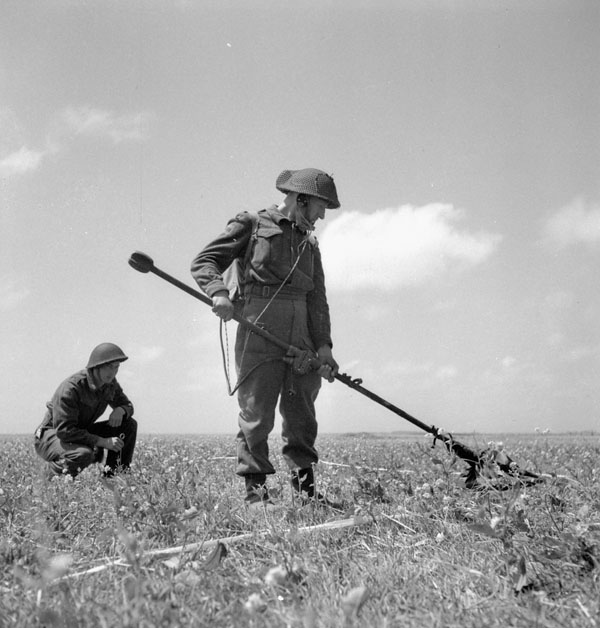
-
Article
Last Post Fund
The Last Post Fund is a nonprofit organization established in 1909. The organization’s mission is to ensure a dignified funeral and burial, as well as a military-style gravestone, to all eligible veterans. The fund is closely linked to Veterans Affairs Canada.
"https://thecanadianencyclopedia.ca/images/tce_placeholder.jpg?v=e9dca980c9bdb3aa11e832e7ea94f5d9" // resources/views/front/categories/view.blade.php
https://thecanadianencyclopedia.ca/images/tce_placeholder.jpg?v=e9dca980c9bdb3aa11e832e7ea94f5d9
-
Article
Canada and the League of Nations
The League of Nations was an organization of 63 countries established in 1919, after the First World War. Canada was a founding member. The League ultimately failed in its aim of collective security. It was replaced by the United Nations at the end of the Second World War. However, the League of Nations did establish a new model for international organizations. League membership brought Canada its first official contact with foreign governments and helped to establish its position as a sovereign state. It also introduced Canada to the opportunities and challenges of international co-operation and peacekeeping.
"https://d3d0lqu00lnqvz.cloudfront.net/media/media/51b027bf-71b7-4da0-b10b-083506ad8a36.jpg" // resources/views/front/categories/view.blade.php
https://d3d0lqu00lnqvz.cloudfront.net/media/media/51b027bf-71b7-4da0-b10b-083506ad8a36.jpg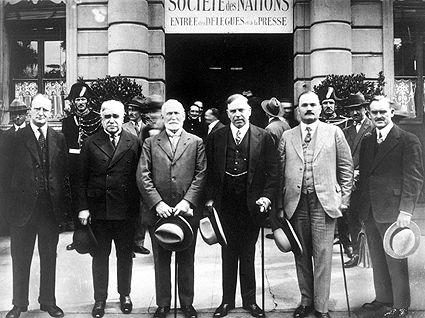
-
Article
Leliefontein
During the SOUTH AFRICAN WAR 90 officers and men of the Royal Canadian Dragoons were assigned to cover the retreat of a British infantry column under attack by several hundred Boer horsemen near Leliefontein farm, east Transvaal.
"https://thecanadianencyclopedia.ca/images/tce_placeholder.jpg?v=e9dca980c9bdb3aa11e832e7ea94f5d9" // resources/views/front/categories/view.blade.php
https://thecanadianencyclopedia.ca/images/tce_placeholder.jpg?v=e9dca980c9bdb3aa11e832e7ea94f5d9
-
Article
Leo, the Royal Cadet
Leo, the Royal Cadet. A Canadian 'military' opera in four acts, written in Kingston, Ont. The libretto is by George Frederick Cameron (1854-85) and the music, for chorus, 16 solo voices, and orchestra, was composed ca 1889 by Oscar Ferdinand Telgmann.
"https://thecanadianencyclopedia.ca/images/tce_placeholder.jpg?v=e9dca980c9bdb3aa11e832e7ea94f5d9" // resources/views/front/categories/view.blade.php
https://thecanadianencyclopedia.ca/images/tce_placeholder.jpg?v=e9dca980c9bdb3aa11e832e7ea94f5d9
-
Article
Light Armoured Vehicle (LAV) III
The Light Armoured Vehicle (LAV) III is an eight-wheeled, moderately well-protected combat vehicle capable of movement on most types of terrain. It was designed and manufactured by General Motors Defense (General Dynamics Land Systems–Canada since 2002) at the company’s plant in London, Ontario. The LAV III entered service in 1999. The vehicle notably saw service in the War in Afghanistan as well as in many UN missions. Between 2011 and 2019, LAV III vehicles went through an upgrade process to the new LAV 6.0 standard.
"https://d3d0lqu00lnqvz.cloudfront.net/LAVIII/LAV-Petawawa.jpg" // resources/views/front/categories/view.blade.php
https://d3d0lqu00lnqvz.cloudfront.net/LAVIII/LAV-Petawawa.jpg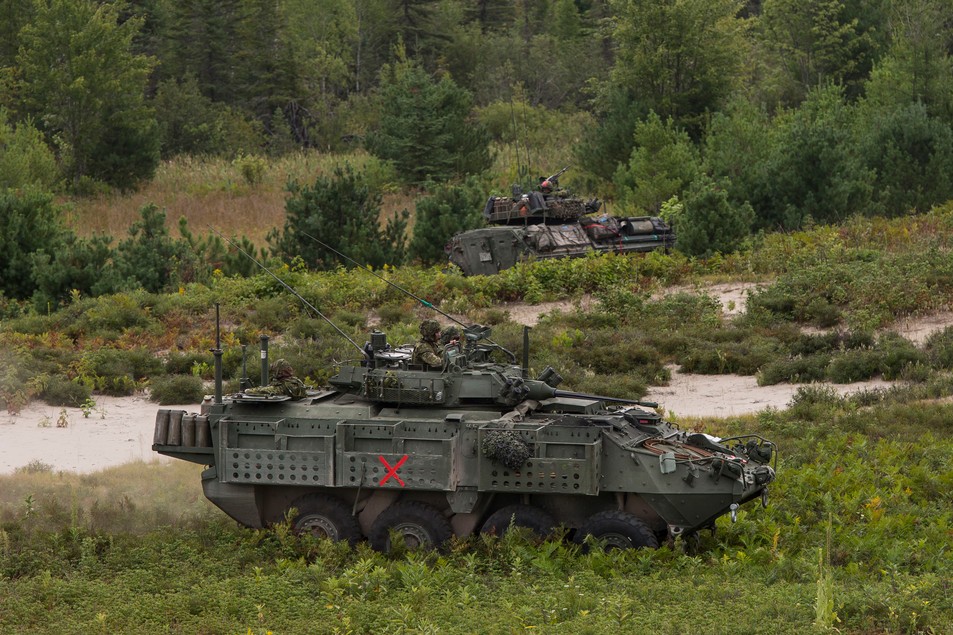
-
Article
Meet the Navy
Meet the Navy. Royal Canadian Navy musical revue produced during World War II under the supervision of Capt Joseph P. Connolly, director of Special Services for the RCN. Rehearsals began in June 1943 at Hart House in Toronto.
"https://d3d0lqu00lnqvz.cloudfront.net/media/media/1b768fed-d683-4f4c-a8d2-b07fa59c1b04.jpg" // resources/views/front/categories/view.blade.php
https://d3d0lqu00lnqvz.cloudfront.net/media/media/1b768fed-d683-4f4c-a8d2-b07fa59c1b04.jpg
-
Article
Middle Power
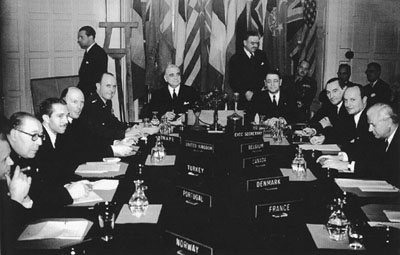
In international relations, the term middle power refers to a state that wields less influence on the world stage than a superpower. As the term suggests, middle powers fall in the middle of the scale measuring a country’s international influence. Where superpowers have great influence over other countries, middle powers have moderate influence over international events. Canada was considered to be a middle power during the postwar period — from 1945 until about 1960. Though Canada was not as powerful or prominent as the United Kingdom or the United States during this time, it was an international player that influenced events through moral leadership, peacekeeping and conflict mediation.
"https://d3d0lqu00lnqvz.cloudfront.net/media/media/a8f651d1-144a-49a7-af14-dc0c180d3168.jpg" // resources/views/front/categories/view.blade.php
https://d3d0lqu00lnqvz.cloudfront.net/media/media/a8f651d1-144a-49a7-af14-dc0c180d3168.jpg