
Browse "Places"
-
Collection
Archaeological Sites
Archaeology is a historical science aimed at the discovery and understanding of past human behaviour through the study of material remains. Archaeologists draw the bulk of their information from physical artifacts left at locations where people lived, worked, visited and were buried long ago. The Canadian Encyclopedia features articles on many of the country’s archaeological sites, organized here by the provinces and territories in which they are found.
"https://d3d0lqu00lnqvz.cloudfront.net/media/media/df535176-cd56-4e6c-b160-d533fa81bd1e.jpg" // resources/views/front/categories/view.blade.php
https://d3d0lqu00lnqvz.cloudfront.net/media/media/df535176-cd56-4e6c-b160-d533fa81bd1e.jpg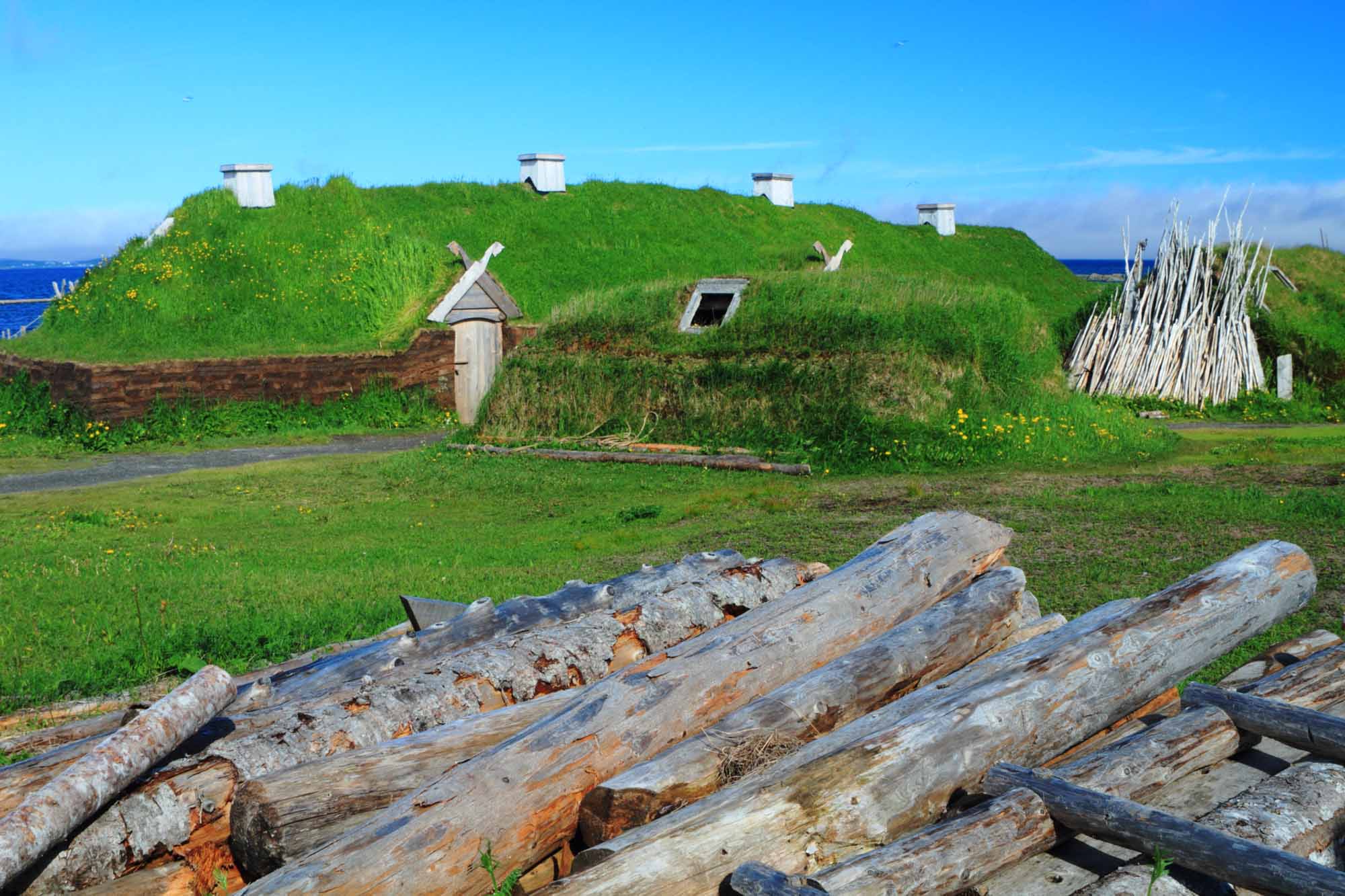
-
Article
Architecture of Art Galleries in Canada
While the Canadian Heritage Information Network (CHIN) lists nearly 400 art and leisure museums, Canada's major institutions are relatively few in number and often of relatively recent vintage.
"https://d3d0lqu00lnqvz.cloudfront.net/media/media/07073232-3548-469e-941d-a60b8ebcc4a6.jpg" // resources/views/front/categories/view.blade.php
https://d3d0lqu00lnqvz.cloudfront.net/media/media/07073232-3548-469e-941d-a60b8ebcc4a6.jpg
-
Collection
Arctic
Known for its icy conditions, dramatic landscape and unique cultures, the Arctic is broadly defined as the region north of the Arctic Circle, or the latitude 66°30′ N. In this area, there is at least one 24-hour period during which the sun does not rise and one during which the sun does not set. Canada is one of only eight Arctic countries that make up the Arctic Council. The Arctic has become increasingly relevant to...
"https://d3d0lqu00lnqvz.cloudfront.net/media/media/01850850-f19d-4852-9a49-d8309c31909b.jpg" // resources/views/front/categories/view.blade.php
https://d3d0lqu00lnqvz.cloudfront.net/media/media/01850850-f19d-4852-9a49-d8309c31909b.jpg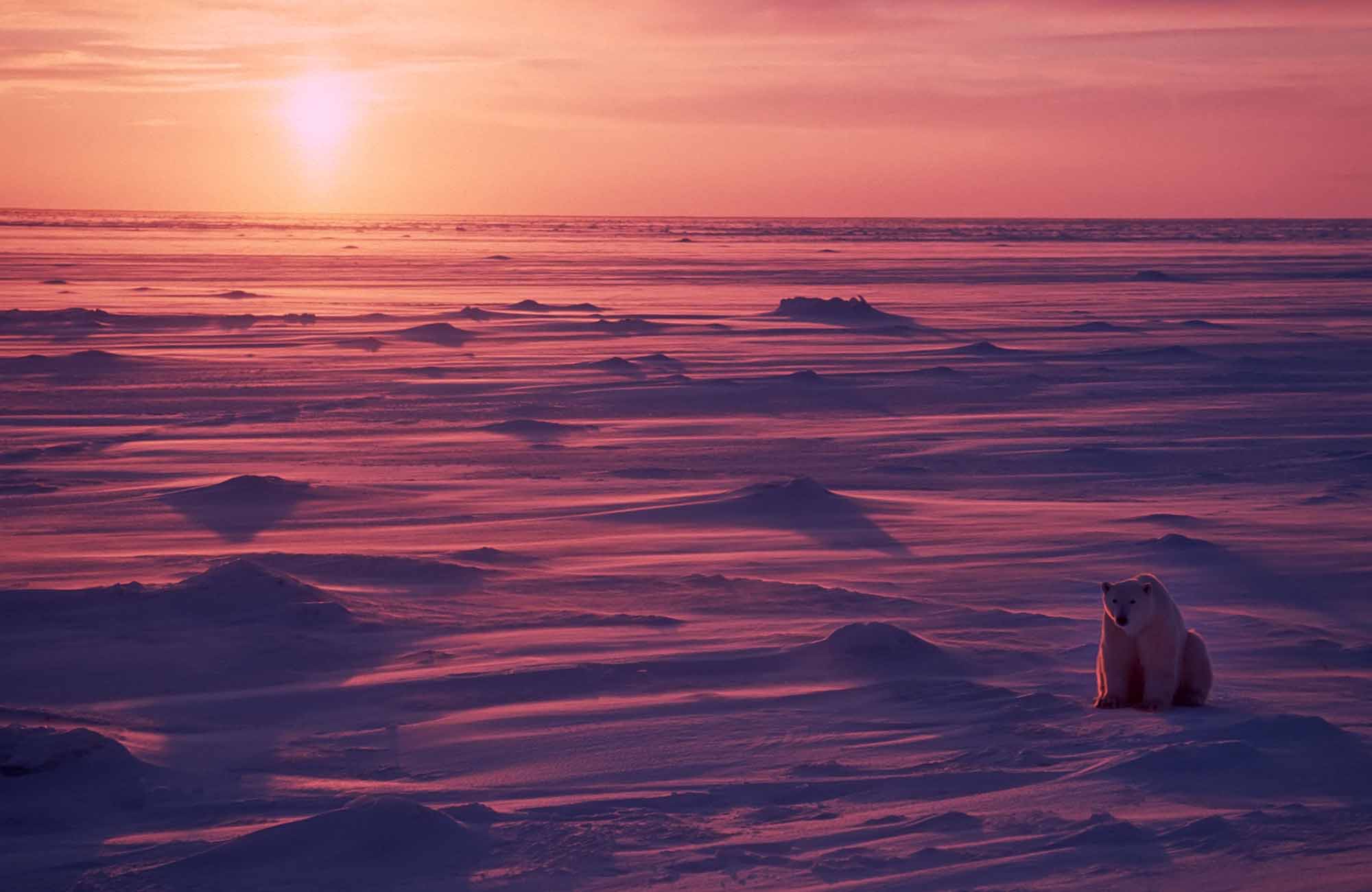
-
Article
Arctic Archipelago
Lying north of mainland Canada, the Arctic Archipelago consists of 94 major islands (greater than 130 km2) and 36,469 minor islands covering a total of 1.4 million km 2. Apart from Greenland, which is almost entirely ice-covered, the Canadian Arctic Archipelago forms the world's largest High Arctic land area. It contains six of the world's 30 largest islands; Baffin Island (fifth) is larger than the United Kingdom. The largest islands are Baffin, Victoria, Ellesmere, Banks, Devon, Axel Heiberg, Melville and Prince of Wales. They are separated by large channels, some of which would qualify as seas elsewhere in the world. For example, Parry Channel runs from Lancaster Sound to M’Clure Strait and divides the Queen Elizabeth Islands in the north from the rest of the archipelago, and is an important part of the Northwest Passage.
"https://d3d0lqu00lnqvz.cloudfront.net/media/media/b066cf6a-5f6c-4fbe-b7a2-001ae2446bd4.jpg" // resources/views/front/categories/view.blade.php
https://d3d0lqu00lnqvz.cloudfront.net/media/media/b066cf6a-5f6c-4fbe-b7a2-001ae2446bd4.jpg
-
Article
Arctic Bay
Arctic Bay, Nunavut, incorporated as a hamlet in 1976, population 994 (2021 census), 868 (2016 census).
"https://d3d0lqu00lnqvz.cloudfront.net/Arctic-Bay/Arctic_bay_aerial-view.jpg" // resources/views/front/categories/view.blade.php
https://d3d0lqu00lnqvz.cloudfront.net/Arctic-Bay/Arctic_bay_aerial-view.jpg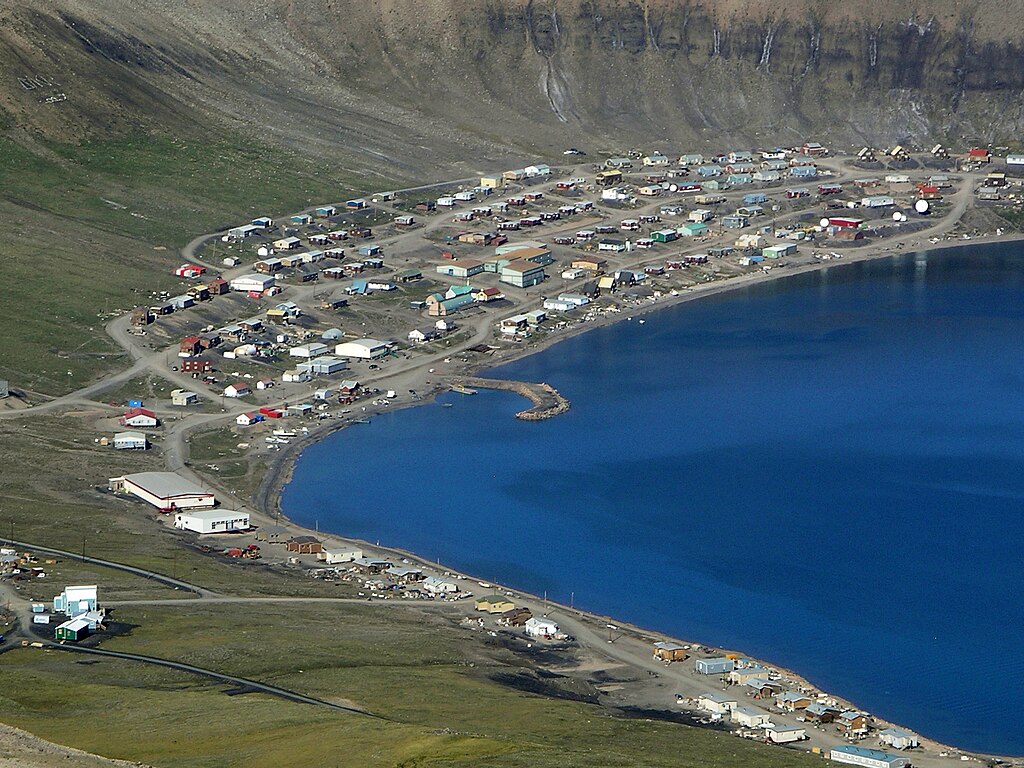
-
Article
Arctic Circle
The Arctic Circle is a parallel or line of latitude at approximately 66°33’ N that marks the border of the Arctic, the northernmost region of Earth. The geographic point at the centre of Arctic Circle is the North Pole. In Canada, communities located close to this cartographic boundary include Old Crow in the Yukon, Fort McPherson in the Northwest Territories, and Repulse Bay and Qikiqtarjuaq in Nunavut. The latitude of the Arctic Circle shifts slightly depending on the tilt of the Earth’s rotational axis.
"https://d3d0lqu00lnqvz.cloudfront.net/media/media/98ad523f-8b74-429e-864d-27b1e0f18ac9.png" // resources/views/front/categories/view.blade.php
https://d3d0lqu00lnqvz.cloudfront.net/media/media/98ad523f-8b74-429e-864d-27b1e0f18ac9.png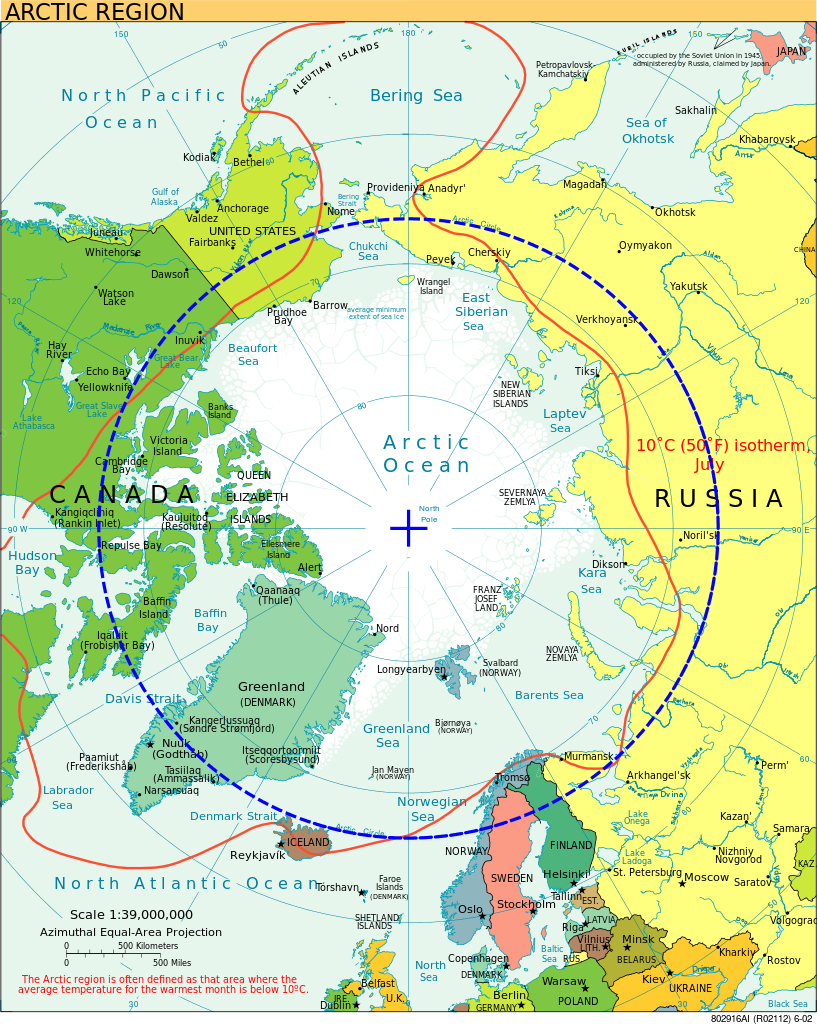
-
Article
Arctic Ocean and Canada
The Arctic Ocean is a body of water centered approximately on the north pole. It is the smallest of Earth’s five oceans. Its boundaries are defined by the International Hydrographic Organization, although some other authorities draw them differently. Depending on which definition is used, waters of Canada’s Arctic Archipelago are included as part of the ocean, as are major Canadian bodies of water such as Baffin Bay, Hudson Bay and the Beaufort Sea.
"https://d3d0lqu00lnqvz.cloudfront.net/media/new_article_images/ArcticOcean/ArcticOceanMapEN.jpg" // resources/views/front/categories/view.blade.php
https://d3d0lqu00lnqvz.cloudfront.net/media/new_article_images/ArcticOcean/ArcticOceanMapEN.jpg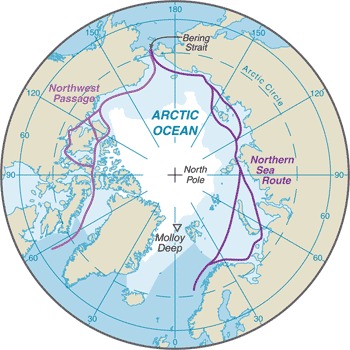
-
Article
Arctic Red River
The Arctic Red River flows 499 km north-northwest from glaciers in the North Mackenzie Mountains, crossing four mountain ranges before it winds its way through the Mackenzie Lowlands, crossing the Arctic Circle and joining the Mackenzie River just south of the Mackenzie River Delta. The total land area within the watershed is some 23,200 km2. Its Gwich'in name, Tsiigèhnjik, means "river of iron" and is likely derived from the silt-stained waters, as is its English name.
"https://d3d0lqu00lnqvz.cloudfront.net/arcticredriver/arctic-red-river.jpg" // resources/views/front/categories/view.blade.php
https://d3d0lqu00lnqvz.cloudfront.net/arcticredriver/arctic-red-river.jpg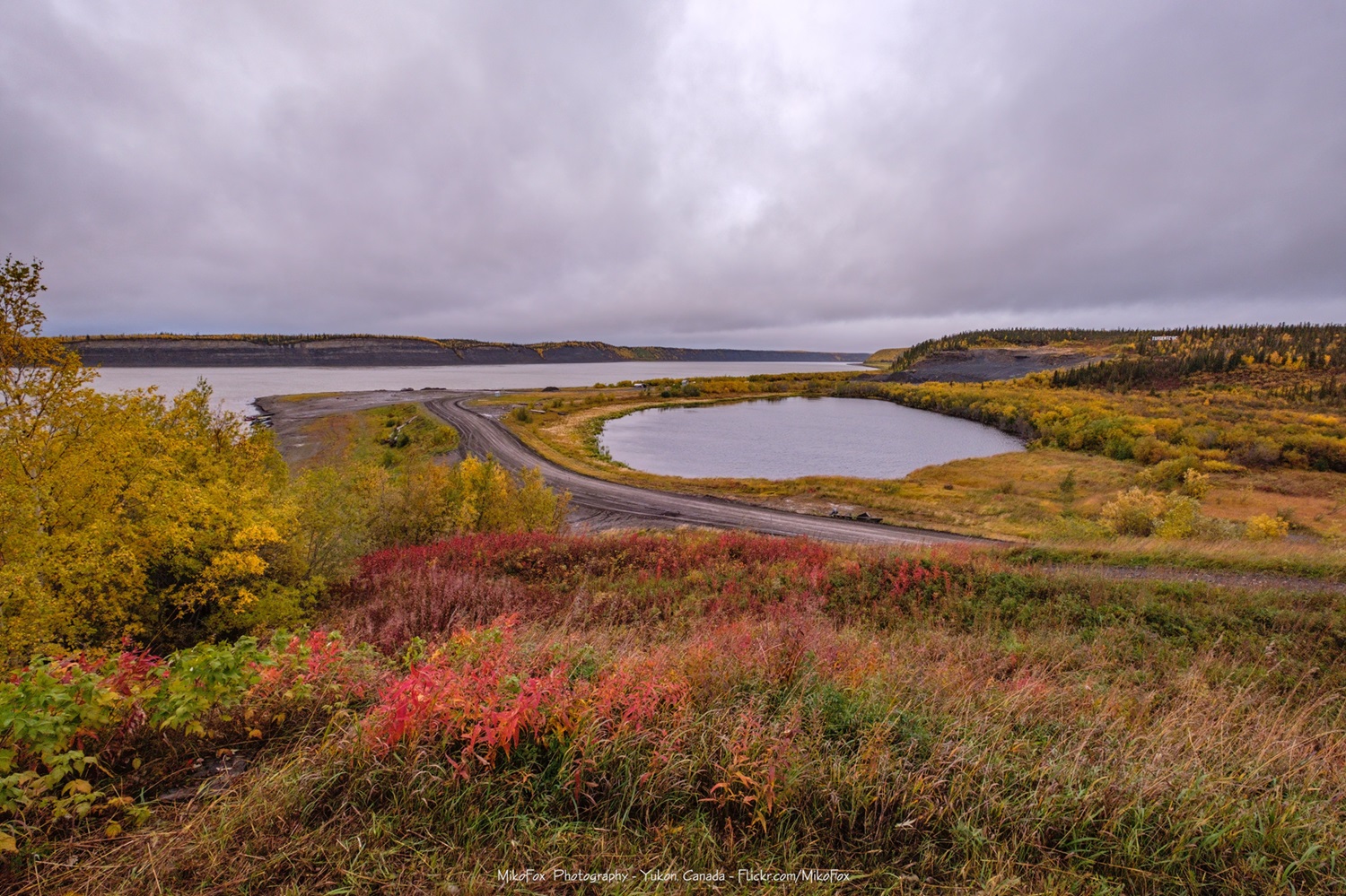
-
Article
Argentia
Argentia, NL, Unincorporated Place. Argentia is located on the west coast of the Avalon Peninsula of Newfoundland.
"https://thecanadianencyclopedia.ca/images/tce_placeholder.jpg?v=e9dca980c9bdb3aa11e832e7ea94f5d9" // resources/views/front/categories/view.blade.php
https://thecanadianencyclopedia.ca/images/tce_placeholder.jpg?v=e9dca980c9bdb3aa11e832e7ea94f5d9
-
Article
Armstrong
Armstrong, British Columbia, incorporated as a city in 1913, population 5,323 (2021 census), 5,114 (2016 census). The City of Armstrong is the business centre of a farm and forest economy of the Spallumcheen district. It is at the north end of the Okanagan Valley 23 km North of Vernon and 13 km South of Enderby.
"https://d3d0lqu00lnqvz.cloudfront.net/WelcometoArmBC.jpg" // resources/views/front/categories/view.blade.php
https://d3d0lqu00lnqvz.cloudfront.net/WelcometoArmBC.jpg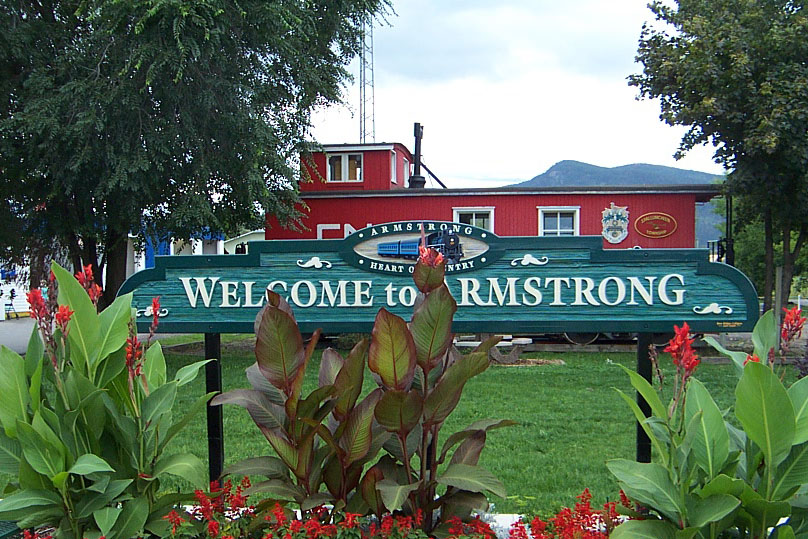
-
Article
Arnprior
Arnprior, Ont, incorporated as a town in 1892, population 8114 (2011c), 7158 (2006c). The Town of Arnprior is located at the confluence of the Madawaska and Ottawa rivers, 56 km west of Ottawa.
"https://thecanadianencyclopedia.ca/images/tce_placeholder.jpg?v=e9dca980c9bdb3aa11e832e7ea94f5d9" // resources/views/front/categories/view.blade.php
https://thecanadianencyclopedia.ca/images/tce_placeholder.jpg?v=e9dca980c9bdb3aa11e832e7ea94f5d9
-
Article
Art Galleries and Museums
Art galleries and museums are institutions that collect, preserve, study and present permanent collections of heritage objects to the public. According to the Canadian Museums Association, there are currently over 2300 museums and related institutions in Canada.
"https://d3d0lqu00lnqvz.cloudfront.net/media/media/497492ef-da54-4767-acf9-8c04f5884787.MOV" // resources/views/front/categories/view.blade.php
https://d3d0lqu00lnqvz.cloudfront.net/media/media/497492ef-da54-4767-acf9-8c04f5884787.MOV -
Article
Art Gallery of Alberta
Hopes of constructing a new building for the gallery's growing collection came to fruition in 1962 when Mrs. A.E. Condell bequeathed funds for a new gallery in the name of her son, Arthur Blow Condell. Architects Donald G. Bittorf and B.
"https://d3d0lqu00lnqvz.cloudfront.net/media/media/07073232-3548-469e-941d-a60b8ebcc4a6.jpg" // resources/views/front/categories/view.blade.php
https://d3d0lqu00lnqvz.cloudfront.net/media/media/07073232-3548-469e-941d-a60b8ebcc4a6.jpg
-
Article
Art Gallery of Greater Victoria
The Art Gallery of Greater Victoria was founded in 1946 and has been in its current location since 1950. At the heart of the gallery complex is the historic Spencer mansion which was built in 1889.
"https://d3d0lqu00lnqvz.cloudfront.net/media/media/eb27f928-be28-4c7d-b678-46d44fcc767b.jpg" // resources/views/front/categories/view.blade.php
https://d3d0lqu00lnqvz.cloudfront.net/media/media/eb27f928-be28-4c7d-b678-46d44fcc767b.jpg
-
Article
Art Gallery of Hamilton
Art Gallery of Hamilton was founded in 1914 on the occasion of a bequest of paintings from the Estate of William Blair Bruce (1859-1906), and developed through the efforts of two former Directors, T.R. MacDonald (1947-1973) and Glen Cumming (1973-1989).
"https://thecanadianencyclopedia.ca/images/tce_placeholder.jpg?v=e9dca980c9bdb3aa11e832e7ea94f5d9" // resources/views/front/categories/view.blade.php
https://thecanadianencyclopedia.ca/images/tce_placeholder.jpg?v=e9dca980c9bdb3aa11e832e7ea94f5d9
