Browse "People"
-
Article
Sir Willoughby Garnons Gwatkin
Sir Willoughby Garnons Gwatkin, soldier (b in Eng 11 Aug 1859; d at Twickenham, Eng 2 Feb 1925). Educated at King's College, Cambridge, and commissioned in the British army in 1882, Gwatkin was permanently seconded to Canada in 1911.
"https://thecanadianencyclopedia.ca/images/tce_placeholder.jpg?v=e9dca980c9bdb3aa11e832e7ea94f5d9" // resources/views/front/categories/view.blade.php
https://thecanadianencyclopedia.ca/images/tce_placeholder.jpg?v=e9dca980c9bdb3aa11e832e7ea94f5d9
-
Article
Sister Gilberte Villeneuve
Gilberte Villeneuve, registered nurse, teacher, director of psychiatric care, hospital manager, superior of the Sisters of Providence community, great builder and mayor of Ville Gamelin (born 1 September 1917 in Loretteville, QC; died 4 April 2020 in Montreal, QC). As a nurse specializing in mental illness, she devoted her career to understanding, caring for and treating this serious brain disorder. As a caregiver, she also served the poor, the needy and the underprivileged, providing them with love and understanding.
"https://d3d0lqu00lnqvz.cloudfront.net/TCE_placeholder.png" // resources/views/front/categories/view.blade.php
https://d3d0lqu00lnqvz.cloudfront.net/TCE_placeholder.png
-
Article
Sister Marie-Stéphane
Sister Marie-Stéphane (b Hélène Côté). Teacher, composer, b St-Barthélémy, Que, 9 Jan 1888, d Montreal 9 Aug 1985; D MUS (Montreal) 1936. She began musical studies at five with her elder sister and continued them in her parish convent.
"https://thecanadianencyclopedia.ca/images/tce_placeholder.jpg?v=e9dca980c9bdb3aa11e832e7ea94f5d9" // resources/views/front/categories/view.blade.php
https://thecanadianencyclopedia.ca/images/tce_placeholder.jpg?v=e9dca980c9bdb3aa11e832e7ea94f5d9
-
Article
Sitting Bull
Sitting Bull (Tatanka Iyotake in the Lakota language, meaning literally “Buffalo Bull Who Sits Down”), Hunkpapa Lakota Sioux chief (born in 1831; died 15 December 1890 at Standing Rock, South Dakota). Sitting Bull led the Dakota (Sioux) resistance against US incursion into traditional territory. After the most famous battle at Little Big Horn, in which General George Custer’s forces were completely annihilated, Sitting Bull left the United States for the Cypress Hills in Saskatchewan. Sitting Bull symbolized the conflict between settlers and Indigenous culture over lifestyles, land and resources.
"https://d3d0lqu00lnqvz.cloudfront.net/media/media/489163d3-1f7a-4bc5-9623-49010f3ab5da.jpg" // resources/views/front/categories/view.blade.php
https://d3d0lqu00lnqvz.cloudfront.net/media/media/489163d3-1f7a-4bc5-9623-49010f3ab5da.jpg
-
Article
Six Brown Brothers
Six Brown Brothers. Vaudeville and musical comedy act in the forefront of the introduction of the saxophone into North American popular music.
"https://thecanadianencyclopedia.ca/images/tce_placeholder.jpg?v=e9dca980c9bdb3aa11e832e7ea94f5d9" // resources/views/front/categories/view.blade.php
https://thecanadianencyclopedia.ca/images/tce_placeholder.jpg?v=e9dca980c9bdb3aa11e832e7ea94f5d9
-
Article
Six Nations of the Grand River
Six Nations of the Grand River, Ontario, is the common name for both a reserve and a Haudenosaunee First Nation. The reserve, legally known as Six Nations Indian Reserve No. 40, is just over 182 km2, located along the Grand River in southwestern Ontario. As of February 2026, the nations that make up Six Nations of the Grand River have a combined registered population of 29,942 members, with 12,895 members living on-reserve. Six Nations is the largest First Nations reserve in Canada by population, and the second largest by size. There are several individual communities within the reserve, the largest of which is Ohsweken. (See also Reserves in Ontario.) Six Nations is home to the six individual nations that form the Hodinöhsö:ni’ Confederacy (Haudenosaunee). These nations are the Kanyen’kehaka (Mohawk), Onyota’a:ka (Oneida), Onöñda’gega’ (Onondaga), Gayogohono (Cayuga), Onöndowága’ (Seneca) and Skaru:reh (Tuscarora).
"https://d3d0lqu00lnqvz.cloudfront.net/media/new_article_images/SixNations/SixNationsPowwow.jpg" // resources/views/front/categories/view.blade.php
https://d3d0lqu00lnqvz.cloudfront.net/media/new_article_images/SixNations/SixNationsPowwow.jpg
-
Article
Sixties Scoop (Plain-Language Summary)
The term “Sixties Scoop” refers to the large numbers of Indigenous children who were taken from their homes (scooped) throughout the 1960s. Most of these children were adopted by non-Indigenous families in Canada and the United States. The “Sixties Scoop” has left a lasting legacy on the children, families and communities involved. This article is a plain-language summary of the Sixties Scoop. If you are interested in reading about this topic more in depth, please see our full-length entry, Sixties Scoop.
"https://d3d0lqu00lnqvz.cloudfront.net/media/media/9fee628e-1ce5-4c82-9ebb-d5b2764b09c4.jpg" // resources/views/front/categories/view.blade.php
https://d3d0lqu00lnqvz.cloudfront.net/media/media/9fee628e-1ce5-4c82-9ebb-d5b2764b09c4.jpg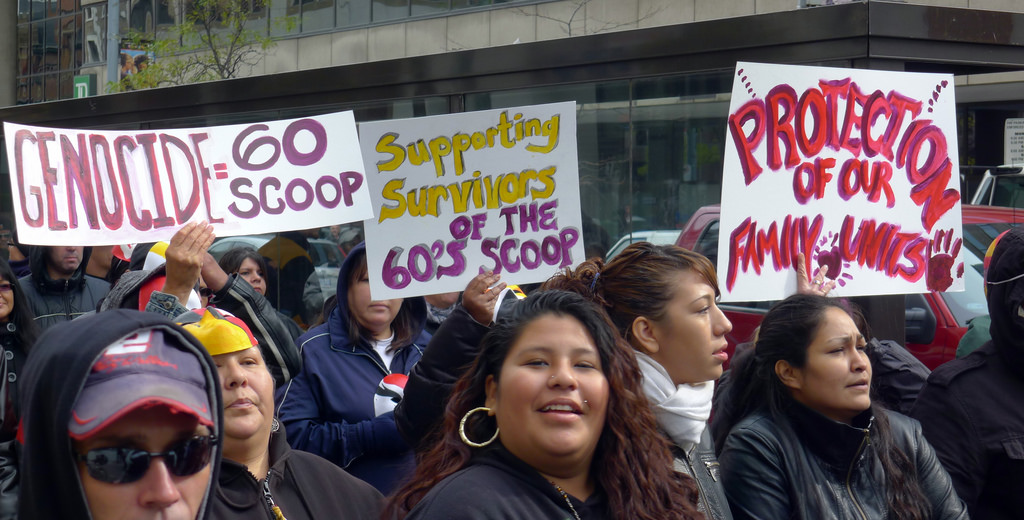
-
Article
Skip Beckwith
Skip Beckwith (born Charles Frederick Pearson), bassist, musical director, arranger, composer, producer, born 1 October 1939 in Sydney, NS; died 31 July 2019 in Lunenberg, NS). He notably worked as the musical director of internationally-renowned Canadian singer Anne Murray from 1969 to 1975.
"https://thecanadianencyclopedia.ca/images/tce_placeholder.jpg?v=e9dca980c9bdb3aa11e832e7ea94f5d9" // resources/views/front/categories/view.blade.php
https://thecanadianencyclopedia.ca/images/tce_placeholder.jpg?v=e9dca980c9bdb3aa11e832e7ea94f5d9
-
Article
SKY Lee
SKY Lee, illustrator, novelist, short-story writer (b at Port Alberni, BC 1952). SKY Lee grew up in Port Alberni, BC. She moved to Vancouver in 1967, where she received a BA in fine arts from the University of British Columbia. She also received a diploma in nursing from Douglas College.
"https://thecanadianencyclopedia.ca/images/tce_placeholder.jpg?v=e9dca980c9bdb3aa11e832e7ea94f5d9" // resources/views/front/categories/view.blade.php
https://thecanadianencyclopedia.ca/images/tce_placeholder.jpg?v=e9dca980c9bdb3aa11e832e7ea94f5d9
-
"https://thecanadianencyclopedia.ca/images/tce_placeholder.jpg?v=e9dca980c9bdb3aa11e832e7ea94f5d9" // resources/views/front/categories/view.blade.php
https://thecanadianencyclopedia.ca/images/tce_placeholder.jpg?v=e9dca980c9bdb3aa11e832e7ea94f5d9
-
Article
Slavey
Slavey (also Awokanak, Slave, Deh Gah Got'ine or Deh Cho) are a major group of Athapaskan-speaking (or Dene) people living in the boreal forest region of the western Canadian Subarctic. Although there is no equivalent in Dene languages, the term has been adopted by many Dene as a collective term of self-designation when speaking English.
"https://d3d0lqu00lnqvz.cloudfront.net/media/media/7462d870-15c4-4aad-8c8c-7ec1bac9cb1e.jpg" // resources/views/front/categories/view.blade.php
https://d3d0lqu00lnqvz.cloudfront.net/media/media/7462d870-15c4-4aad-8c8c-7ec1bac9cb1e.jpg
-
Article
Sleeping Car Porters in Canada
Sleeping car porters were railway employees who attended to passengers aboard sleeping cars. Porters were responsible for passengers’ needs throughout a train trip, including carrying luggage, setting up beds, pressing clothes and shining shoes, and serving food and beverages, among other services. The vast majority of sleeping car porters were Black men and the position was one of only a few job opportunities available to Black men in Canada. While the position carried respect and prestige for Black men in their communities, the work demanded long hours for little pay. Porters could be fired suddenly and were often subjected to racist treatment. Black Canadian porters formed the first Black railway union in North America (1917) and became members of the larger Brotherhood of Sleeping Car Porters in 1939. Both unions combatted racism and the many challenges that porters experienced on the job.
"https://d3d0lqu00lnqvz.cloudfront.net/media/new_article_images/SleepingCarPorters/L3D211046.jpg" // resources/views/front/categories/view.blade.php
https://d3d0lqu00lnqvz.cloudfront.net/media/new_article_images/SleepingCarPorters/L3D211046.jpg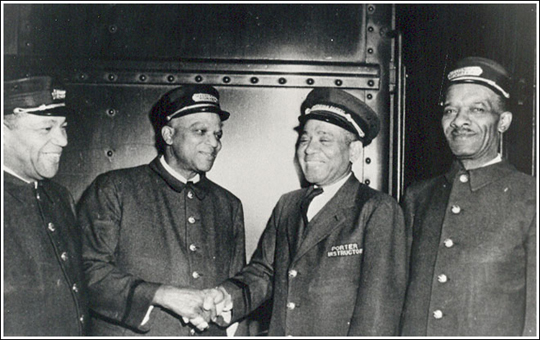
-
Article
Sloan
Sloan is a rock band that first performed in Halifax in the spring of 1991 with members Jay Ferguson (guitar/vocals), Chris Murphy (bass/vocals), Patrick Pentland (guitar/vocals) and Andrew Scott (drums/vocals).
"https://thecanadianencyclopedia.ca/images/tce_placeholder.jpg?v=e9dca980c9bdb3aa11e832e7ea94f5d9" // resources/views/front/categories/view.blade.php
https://thecanadianencyclopedia.ca/images/tce_placeholder.jpg?v=e9dca980c9bdb3aa11e832e7ea94f5d9
-
Article
Sloan
Sloan. Alternative pop/rock band, formed in 1991 in Halifax, NS by Jay Ferguson (guitar/vocals), Chris Murphy (bass/vocals), Patrick Pentland (guitar/vocals) and Andrew Scott (drums/vocals). All four members write and sing their own songs and sometimes swap instruments during concerts.
"https://thecanadianencyclopedia.ca/images/tce_placeholder.jpg?v=e9dca980c9bdb3aa11e832e7ea94f5d9" // resources/views/front/categories/view.blade.php
https://thecanadianencyclopedia.ca/images/tce_placeholder.jpg?v=e9dca980c9bdb3aa11e832e7ea94f5d9
-
Article
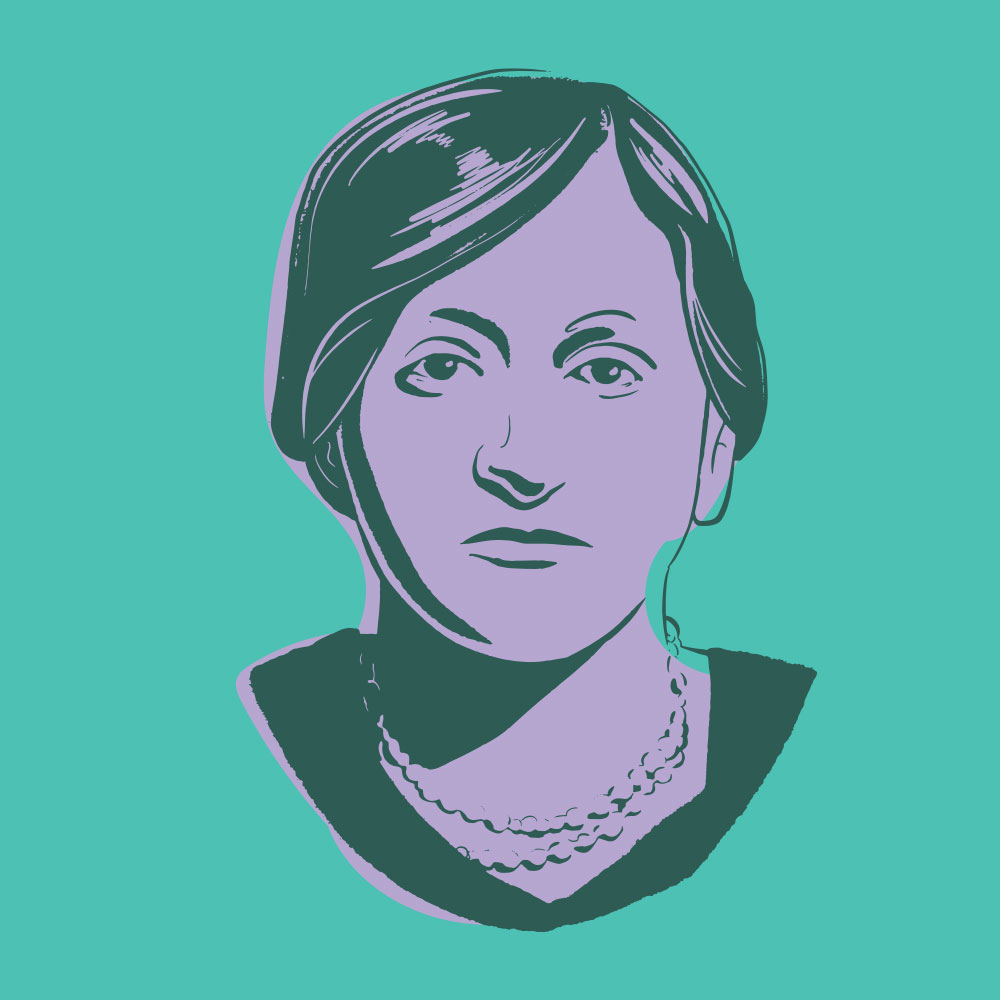
Slova Greenberg
Slova (Slava, Sluva) Greenberg, née Shaperow (Shapiro), healthcare and elder care activist (born 1860 or 1866 in Romania; died 20 November 1938 in Toronto, ON). Slova Greenberg was an advocate for the Jewish community in Toronto and helped establish a dedicated system of health and elder care for its members. She was instrumental in founding Baycrest, now a leading geriatric residence and health care centre, as well as Mount Sinai Hospital, both in Toronto. This article was created in collaboration with The Museum of Toronto.
"https://d3d0lqu00lnqvz.cloudfront.net/Slova-Greenberg.jpg" // resources/views/front/categories/view.blade.php
https://d3d0lqu00lnqvz.cloudfront.net/Slova-Greenberg.jpg