Browse "Communities & Sociology"
-
Collection
Indigenous Material Culture in Canada
Material culture refers to physical forms of culture. This includes art, monuments, buildings, tools, weapons, money, clothing, religious items, and other artifacts. The design and function of these objects directly reflects the society that made them. A society’s history and geography also influence the creation and meaning of such items. The study of material culture helps us to understand human behaviour and the way that people interact with objects. This collection explores Indigenous material culture...
"https://d3d0lqu00lnqvz.cloudfront.net/12312958-dfa5-4132-af16-a075bd3c0165-1.jpg" // resources/views/front/categories/view.blade.php
https://d3d0lqu00lnqvz.cloudfront.net/12312958-dfa5-4132-af16-a075bd3c0165-1.jpg
-
List
Notable Indigenous Olympians in Canada
Drawing inspiration from the Olympic Games in ancient Greece, the modern Olympics began in 1896. Like the Olympics, the Paralympic Games take place every two years, alternating between summer and winter sports. Indigenous athletes from Canada have competed at these games and brought home medals. They have represented the country in various sports at the Olympics, from long-distance running to skiing to water sports and more. This article explores some of the most notable Indigenous Olympians from Canada.
"https://d3d0lqu00lnqvz.cloudfront.net/AngelaChalmers/AngelaChalmers1.jpg" // resources/views/front/categories/view.blade.php
https://d3d0lqu00lnqvz.cloudfront.net/AngelaChalmers/AngelaChalmers1.jpg
-
Article
Indigenous Peoples and the World Wars
Thousands of Indigenous peoples served in the Canadian military forces in the First World War and Second World War; most were volunteers. On the home front, most Indigenous communities participated in the national war effort in diverse ways. The world wars were dramatic events for Indigenous peoples in Canada (see Indigenous Peoples and the First World War and Indigenous Peoples and the Second World War). Conflict offered these marginalized populations opportunities to renew warrior cultural traditions, reaffirm sacred treaties, prove their worth to indifferent non-Indigenous Canadians, break down social barriers and find good jobs.
"https://d3d0lqu00lnqvz.cloudfront.net/media/media/807e5d85-0d60-4180-8400-b1badabf3486.jpg" // resources/views/front/categories/view.blade.php
https://d3d0lqu00lnqvz.cloudfront.net/media/media/807e5d85-0d60-4180-8400-b1badabf3486.jpg
-
Article
Indigenous Perspectives on the Fur Trade
Indigenous peoples in Canada were essential players in the fur trade of the early 17th to the mid-19th centuries. They provided animal furs, including highly sought-after beaver pelts, to European traders, who, in turn, gave Indigenous peoples manufactured items like pots, beads, textiles and weapons. While some past historians have framed the fur trade as a predominately unequal commercial exchange, it was conducted according to First Nations laws and principles, and worked to transform strangers into kin and sometimes even enemies into allies. When European traders arrived in North America, they entered an Indigenous world on Indigenous terms and travelled and traded there only with the co-operation and goodwill of First Nations. Indigenous peoples taught European newcomers how to behave in the fur trade, emphasizing the importance of gift-giving, reciprocity and family obligations. From an Indigenous perspective then, the fur trade was as much about family, co-operation and reciprocity as it was about commerce and exchange.
"https://d3d0lqu00lnqvz.cloudfront.net/IPFurTrade.jpg" // resources/views/front/categories/view.blade.php
https://d3d0lqu00lnqvz.cloudfront.net/IPFurTrade.jpg
-
Article
Indigenous Services Canada
Indigenous Services Canada (part of the former Indigenous/Indian and Northern Affairs Canada or INAC) was created by the federal government in 2017 to provide and support the delivery of services such as health care, child care, education and infrastructure to First Nations, Métis and Inuit communities. The overarching vision of the department is to support self-determination as a means of providing Indigenous peoples with the power to deliver their own services.
"https://d3d0lqu00lnqvz.cloudfront.net/media/media/5fa84076-4dad-4e4d-b343-7d76fb4427b9.jpg" // resources/views/front/categories/view.blade.php
https://d3d0lqu00lnqvz.cloudfront.net/media/media/5fa84076-4dad-4e4d-b343-7d76fb4427b9.jpg
-
Article
Indigenous Suffrage
From the colonial era to the present, the Canadian electoral system has evolved in ways that have affected Indigenous suffrage (the right to vote in public elections). Voting is a hallmark of Canadian citizenship, but not all Indigenous groups (particularly status Indians) have been given this historic right due to political, socio-economic and ethnic restrictions. Today, Canada’s Indigenous peoples — defined in Section 35 (2) of the Constitution Act, 1982 as Indians (First Nations), Métis and Inuit — can vote in federal, provincial, territorial and local elections.
"https://d3d0lqu00lnqvz.cloudfront.net/media/media/bd7dcb30-05e5-4ba5-a9f7-9adea1ed9928.jpg" // resources/views/front/categories/view.blade.php
https://d3d0lqu00lnqvz.cloudfront.net/media/media/bd7dcb30-05e5-4ba5-a9f7-9adea1ed9928.jpg
-
Collection
Indigenous Treaties in Canada
Indigenous treaties in Canada are constitutionally recognized agreements between the Crown and Indigenous peoples. Most of these agreements describe exchanges where Indigenous nations agree to share some of their interests in their ancestral lands in return for various payments and promises. On a deeper level, treaties are sometimes understood, particularly by Indigenous people, as sacred covenants between nations that establish a relationship between those for whom Canada is an ancient homeland and those whose family...
"https://d3d0lqu00lnqvz.cloudfront.net/media/media/4f1d71aa-8b25-417f-a88b-2a078f3b1768.jpg" // resources/views/front/categories/view.blade.php
https://d3d0lqu00lnqvz.cloudfront.net/media/media/4f1d71aa-8b25-417f-a88b-2a078f3b1768.jpg
-
Article
Indigenous Women and the Franchise
The context for Indigenous women and the franchise has been framed by colonialism as much as by gender discrimination. Indigenous women (First Nations, Métis, and Inuit) have gained the right to vote at different times in Canadian history. The process has been connected to enfranchisement — both voluntary and involuntary — which means that Indigenous women were afforded political participation and Canadian citizenship rights at the cost of Indigenous rights (see Indigenous Suffrage).
"https://d3d0lqu00lnqvz.cloudfront.net/media/media/2617aa3c-9753-4851-b870-a29783e97387.jpg" // resources/views/front/categories/view.blade.php
https://d3d0lqu00lnqvz.cloudfront.net/media/media/2617aa3c-9753-4851-b870-a29783e97387.jpg
-
Article
Indonesian Canadians
Immigration from Indonesia to Canada began after the Second World War. In the wake of the decolonization process, 300,000 “Indos” (Indische Nederlander), persons of mixed Dutch and Asian ancestry, were repatriated to the Netherlands. Some of them decided to continue their journeys, settling in Australia, the United States and Canada. Throughout the 1960s and early 1970s, political instability also led many Indonesians to immigrate to Canada. According to the 2016 census, 21,395 individuals indicated that they had Indonesian origins. Notable Indonesian Canadians include violin maker Piet Molenaar and Toronto filmmaker Mike Hoolboom.
"https://d3d0lqu00lnqvz.cloudfront.net/media/media/dac2bfbe-b7bb-4080-83aa-a7a2cab9cc08.jpg" // resources/views/front/categories/view.blade.php
https://d3d0lqu00lnqvz.cloudfront.net/media/media/dac2bfbe-b7bb-4080-83aa-a7a2cab9cc08.jpg
-
Article
Indspire
Indspire is a national charitable organization, formerly known as the National Aboriginal Achievement Foundation. Indspire is dedicated to investing in the education of Indigenous people in Canada. In so doing, the organization hopes to give Indigenous students the skills and opportunities to create positive futures for themselves and their communities. Indspire aims to inspire and promote excellence. Every year, Indspire presents awards to Indigenous peoples who have made significant contributions to their communities and to Indigenous peoples as a whole. Well-known recipients of the Indspire Awards include Murray Sinclair, Susan Aglukark, Maria Campbell, Daphne Odjig, Tomson Highway, Reggie Leach and hundreds more.
"https://d3d0lqu00lnqvz.cloudfront.net/Indspire/indspire.jpg" // resources/views/front/categories/view.blade.php
https://d3d0lqu00lnqvz.cloudfront.net/Indspire/indspire.jpg
-
Article
Innu (Montagnais-Naskapi)
Innu, which means “people” in the Innu language, is the predominant term used to describe all Innu. Some groups maintain the use of one of two older terms: Montagnais (French for “mountain people”), usually applied to groups in forested, more southern communities, and Naskapi, which refers to far northern groups who inhabit the barren lands of the subarctic. In the 2021 census, 18,620 people identified as having Innu ancestry, with 17,970 people claiming Innu/Montagnais ancestry and 735 people claiming Naskapi ancestry.
"https://d3d0lqu00lnqvz.cloudfront.net/media/media/innu essipit first nation.jpg" // resources/views/front/categories/view.blade.php
https://d3d0lqu00lnqvz.cloudfront.net/media/media/innu essipit first nation.jpg
-
Article
Intergenerational Trauma and Residential Schools
Historical trauma occurs when trauma caused by historical oppression is passed down through generations. For more than 100 years, the Canadian government supported residential school programs that isolated Indigenous children from their families and communities (see Residential Schools in Canada). Under the guise of educating and preparing Indigenous children for their participation in Canadian society, the federal government and other administrators of the residential school system committed what has since been described as an act of cultural genocide. As generations of students left these institutions, they returned to their home communities without the knowledge, skills or tools to cope in either world. The impacts of their institutionalization in residential school continue to be felt by subsequent generations. This is called intergenerational trauma. This is the full-length entry about Intergenerational Trauma and Residential Schools. For a plain-language summary, please see Intergenerational Trauma and Residential Schools (Plain-Language Summary).
"https://thecanadianencyclopedia.ca/images/tce_placeholder.jpg?v=e9dca980c9bdb3aa11e832e7ea94f5d9" // resources/views/front/categories/view.blade.php
https://thecanadianencyclopedia.ca/images/tce_placeholder.jpg?v=e9dca980c9bdb3aa11e832e7ea94f5d9
-
Article
Interior Salish
The Interior Salish peoples include the Lillooet (or Lil’wat, see also Lillooet, British Columbia), Shuswap (now Secwepemc), Thompson (now Nlaka'pamux), Sinixt and Okanagan (Syilx) First Nations. These First Nations occupy territory in the interior of British Columbia(although some territory extends into the state of Washington in the United States). They speak languages belonging to the Interior Salish division of the Salishan language family. In the 2016 Census (Canada), 5,620 peoples identified themselves as Salish speakers, including 1,290 that speak Shuswap (Secwepemctsin). (See also Indigenous Languages in Canada).
"https://d3d0lqu00lnqvz.cloudfront.net/media/media/99144a52-aa7d-447b-86e4-3b03248f412d.jpg" // resources/views/front/categories/view.blade.php
https://d3d0lqu00lnqvz.cloudfront.net/media/media/99144a52-aa7d-447b-86e4-3b03248f412d.jpg
-
Interview
Interned in Canada: an Interview with Pat Adachi
Pat Adachi was born and raised in Vancouver, the daughter of Japanese immigrants. She grew up in the heart of the city’s Little Tokyo neighbourhood, within walking distance of the local grounds where her father would take her on Sundays to watch her favourite baseball team, the Vancouver Asahi. Adachi and her family lived normal lives, until she and her community were uprooted in 1942, when the federal government ordered Japanese Canadians to internment camps in rural British Columbia (see Internment of Japanese Canadians). In this interview, Adachi shares her story and relates the experiences of the 22,000 Japanese Canadians who were interned in Canada during the Second World War. This interview has been edited for length and clarity.
"https://d3d0lqu00lnqvz.cloudfront.net/media/new_article_images/Pat Adachi.jpg" // resources/views/front/categories/view.blade.php
https://d3d0lqu00lnqvz.cloudfront.net/media/new_article_images/Pat Adachi.jpg
-
Article
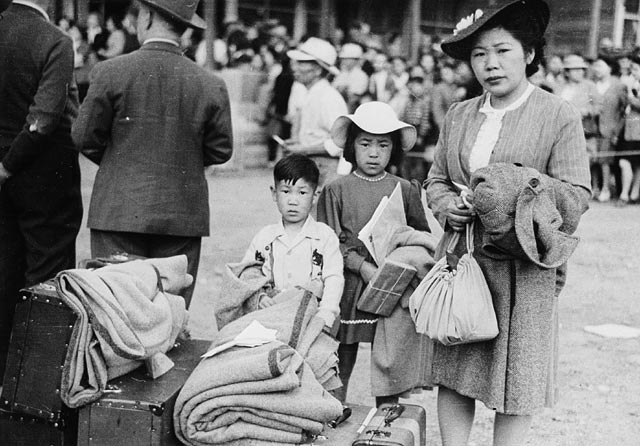
Internment of Japanese Canadians
The forcible expulsion and confinement of Japanese Canadians during the Second World War is one of the most tragic sets of events in Canada’s history. Some 21,000–22,000 Japanese Canadians were taken from their homes on Canada’s West Coast, without any charge or due process. Beginning 24 February 1942, they were exiled to remote areas of British Columbia and elsewhere. The federal government stripped them of their property and pressured many of them to accept mass deportation after the war. Those who remained were not allowed to return to the West Coast until 1 April 1949. In 1988, the federal government officially apologized for its treatment of Japanese Canadians. A redress payment of $21,000 was made to each survivor, and more than $12 million was allocated to a community fund and human rights projects. This article is the full-length text on Japanese Internment in Canada. For a plain-language summary, see Internment of Japanese Canadians (Plain-Language Summary).
"https://d3d0lqu00lnqvz.cloudfront.net/media/media/0bec6156-0467-4a97-909f-da599383381d.jpg" // resources/views/front/categories/view.blade.php
https://d3d0lqu00lnqvz.cloudfront.net/media/media/0bec6156-0467-4a97-909f-da599383381d.jpg