Share on Facebook
 Share on X
 Share by Email
 Share on Google Classroom
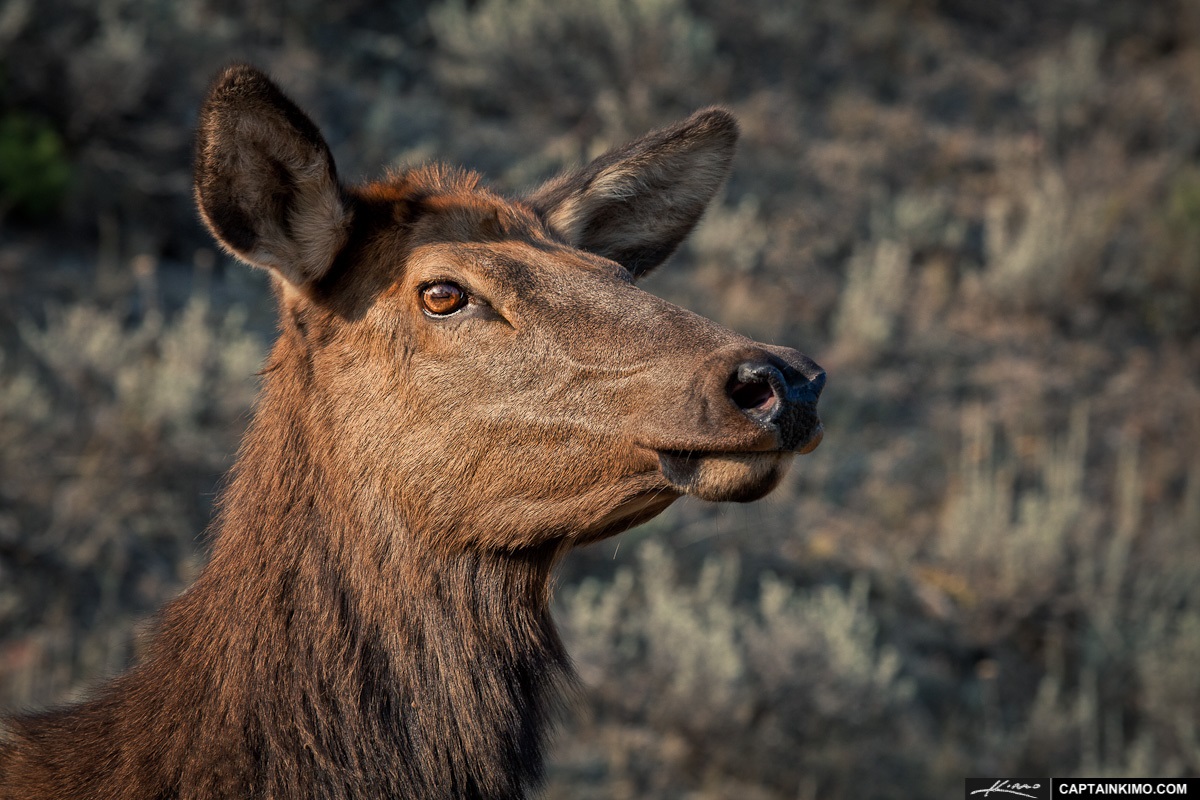
Wapiti or American elk (Cervus canadensis) are the second largest (after the moose) deer in North America. The name wapiti is Shawnee for "white rump."
Evolution
Genetically, wapiti belong to the Asian red deer group, which split pre-Pleistocene from the European red deer (Cervus elaphus) and is thus only distantly related to the latter. It is more closely related to the sika deer (C. nippon) and the alpine-adapted white-lipped deer (C. albirostris). Its closest relatives, however, are the saltatorial (jumping) mountain red deer from Tibet and western China (C. weemsi), highly specialized to ascend in powerful jumps long, steep mountain slopes while hurtling over rhododendron and willow bushes. Wapiti and their counterpart in Siberia and Outer Mongolia, called maral, have evolved as speedy, enduring runners in open landscapes or along level trails. They originated in Pleistocene Beringia, moving east post-glacially into North America, and their counterparts, the maral, moving west into central Asia. Wapiti expanded their range and population only after the extinction of the American megafauna (large animals, including the mammoth) about 11,000 years ago.
Distribution and Habitat
Before 1492, wapiti were relatively rare in the fossil record, but rapidly grew in abundance after colonization, potentially due to decreased hunting from Indigenous peoples, whose numbers had decreased as a result of introduced diseases and genocide. Wapiti reached their maximum geographic range well before 1800. By 1835, however, the wapiti had disappeared from their eastern range (Ontario and Quebec) through overhunting by settlers. They were later reintroduced into Ontario. They went extinct in Alberta before 1913, but were reintroduced from Yellowstone National Park (in the central northwestern United States) by 1917. There are scattered populations east of the Rockies in Alberta, Saskatchewan and Manitoba. They are found along the Rockies in British Columbia, as well as on Vancouver Island, and a small population has been introduced to the coast. A small introduced population is also found in Yukon.
Wapiti are social, tending toward life in open terrain. In North America, they are found in widely different habitats. Their Asian counterparts are confined largely to the sub-alpine, constricted in distribution by other red deer species. Males and females segregate, with females maximizing security from predation and stags maximizing access to forage. Stags are about 10% heavier than hinds (females).
Reproduction and Development
In rut, stags advertise with loud, clear bugling (the most vocal deer in Canada), and by soaking themselves with urine. Dominant wapiti stags form their respective female harems. The gestation period is relatively long, some 240 days; calves are born in June.
Relationship with Humans
Wapiti are an important game animal today, and likely were historically as well. Game-ranched elk have spread chronic wasting disease into western Canada from imports from the United States.