Share on Facebook
 Share on X
 Share by Email
 Share on Google Classroom
The Walrus is an award-winning Canadian general interest magazine, founded in 2003. It is independently owned through the Walrus Foundation, which has non-profit charitable status. With offices in Toronto, the Walrus publishes eight print issues per year and updates content daily on its website. It also produces podcasts and live events nationwide, as part of its mandate to stimulate Canada’s national discourse on important current events. The magazine’s motto is “Canada’s Conversation.” The Walrus mainly focuses on long-form current affairs journalism. It also includes fiction, poetry, photography, illustration and humour.
First issue of The Walrus
The cover of an ambitious new magazine called The Walrus, 16 September 2003.
(photo by Tannis Toohey/Toronto Star via Getty Images)
Origin and Founding
The Walrus was initially conceived by founding editor David Berlin as a world-class Canadian publication akin to such magazines as the Atlantic, the New Yorker and Harper’s. Berlin’s idea was to develop a publication aimed at an educated audience. The magazine would serve as a venue for great journalism and debate on contemporary issues.
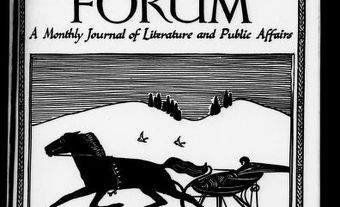
There had been several attempts at maintaining such a magazine in Canada, including Saturday Night and Canadian Forum. However, by the 1990s, all were either struggling financially or had already gone out of business. (Canadian Forum, first published in 1920, went out of business in 2000. Saturday Night was published for more than 100 years before it was finally shuttered in 2005.)
Despite this, Berlin wanted to realize his dream of a serious and intelligent Canadian general interest magazine. In 2002, he contacted Harper’s publisher John R. MacArthur with his idea. At one point, Berlin suggested the new magazine could be a Canadian edition of Harper’s, containing 40 pages of Canadian content. The Harper’s team was initially supportive of the idea. But by the fall of 2002, Berlin had managed to secure enough funding to publish 10 issues per year and hire a staff.
The Walrus was named after an animal that is indigenous to Canada yet is less well known than the beaver, one of the country’s national symbols. At the time, there was already a publication known as the Beaver. (It was renamed Canada’s History in 2010.) When Berlin was asked by the editor-in-chief of Vanity Fair why the publication was called the Walrus, Berlin replied, “no one ignores a walrus.”
When it launched, the Walrus aimed to distinguish itself from competitors by offering a uniquely Canadian perspective on domestic and international affairs. The new publication would be committed to ideas and long-form journalism while striving to be witty, bold and contemplative.
Ken Alexander, co-founder of The Walrus
Walrus co-founder Ken Alexander at the magazine’s Duncan St. newsroom in Toronto as he prepared to leave the publication, 24 June 2008.
(photo by Colin McConnell/Toronto Star via Getty Images)
Early History
The Walrus’s first issue hit newsstands in late September 2003. A direct mail ad campaign to 60,000 households secured 6,000 paid subscribers, a return of 10 per cent — much higher than the industry standard of 1 to 3 per cent. The Walrus also had significant financial support from the Chawkers Foundation and other charities to help the magazine through its first five years. It later obtained charitable status from the Canada Revenue Agency.
By the third issue, the magazine had between 30,000 and 32,000 paid subscriptions. This was promising, but there were also concerns that the magazine lacked focus. These concerns were amplified when David Berlin resigned for unspecified health reasons in February 2004. There were other serious growing pains at the publication in its early years, including the loss of editor Paul Wilson after only two more issues due to creative differences. This was followed by the departure of founding publisher (and then editor-in-chief) Ken Alexander. The magazine also lost major funding sources in its early years.
Despite these challenges, the Walrus made a strong early impression. In 2004, Utne Reader named the Walrus the best new publication. In 2008, just five years after it launched, the magazine was nominated 37 times and won at least six gold and four silver prizes at the prestigious National Magazine Awards.

The Walrus Foundation
In November 2006, Shelley Ambrose was hired as publisher of the Walrus magazine and executive director of its foundation. The Walrus Foundation had become an official charity in 2005. Its purpose was to raise revenue for the nearly bankrupt magazine, which was struggling to survive in the post-Internet print media market.
Ambrose determined that the magazine’s problem was not a lack of interest in quality writing but a reliance on an antiquated business model. She bolstered the work of the foundation, which continued to solicit funds from donors. But Ambrose also organized Walrus Foundation dinners, speeches, forums and other initiatives across the country. These raised funds and promoted the magazine while fulfilling its mandate to challenge and educate readers and train journalists. The Walrus Bookshelf, for instance, brought noted authors to secondary schools. It also distributed books to teachers and students. Ambrose also augmented the print magazine by taking it online with podcasts and an engaging website. All activities online and on various platforms were carefully planned to link with magazine articles. As a result of Ambrose’s initiatives, the magazine’s readership and subscriptions soared. Its finances stabilized, as nearly half the annual budget was funded through the foundation.
Ambrose resigned from the Walrus in June 2020. She expressed enormous pride in all that had been accomplished during her tenure. This included the quality of the magazine, the popularity of the platforms and nationwide events, and the well-endowed Walrus Trust.
Educational Mandate
One of the Walrus’ unique characteristics is its educational mandate. As a registered charity, the Walrus considers it part of its mission to provide a platform for the training of the next generation of journalists, editors and fact checkers. In addition to training journalists (the publication estimates they have trained nearly 200 Canadian journalists since launching) the Walrus is also dedicated to educating the public through its journalism.
Controversies
In 2014, the Walrus was forced to terminate its unpaid internship program after a decision was made by the Government of Ontario’s labour ministry. At the time, the Walrus offered unpaid internships lasting four to six months. The issue was controversial and provoked an acrimonious debate. Advocates of the program — including but not limited to the Walrus — argued that unpaid internships were vital to functioning publications and were a much-needed stepping stone in the career development of journalists. Workers’ rights advocates countered that the practice in general was exploitative. The Walrus now offers several paid fellowships per year to help train the next generation of Canadian journalists.
In 2015, an investigation by Canadaland revealed a toxic work environment at the Walrus, including allegations of bullying and mismanagement. A managing editor named in the piece was terminated from the Walrus shortly before the Canadaland article was published.
In 2017, editor-in-chief Jonathan Kay resigned after considerable backlash to his support of a theoretical cultural “appropriation prize” proposed by Hal Niedzviecki, then editor-in-chief of Write magazine, published by the Writers’ Union of Canada. (See also Cultural Appropriation of Indigenous Peoples in Canada.) Kay denied that he had been asked to resign but said that the Walrus was moving in a different direction, with Kay wanting to explore more controversial topics.
Recent Editors-in-Chief
After Kay’s resignation in 2017, Jessica Johnson took over as editor-in-chief and held the role until January 2023. Carmine Starnino, who had been one of the founders of Maisonneuve magazine and was the Walrus’s deputy editor, became editor-in-chief in January 2024.
Circulation and Readership
In 2025, the Walrus published eight print issues with a circulation of 22,700. The magazine’s website was visited on average 785,000 times per month, and 141,000 people subscribed to its newsletters. The Walrus’s podcasts were downloaded on average 7,000 times each month, and the publication was viewed 400,000 times on average each month on Apple News. The Walrus had about 258,000 social media followers. The publication reaches an estimated 1 million Canadians each year.
Awards
Since launching in 2003, the Walrus has won hundreds of national awards. These include awards from the National Magazine Awards, the Canadian Online Publishing Awards, the Advertising and Design Club of Canada, the Canadian Association of Journalists, the Canadian Hillman Prize and the Digital Publishing Awards, among others.
(See also Magazines; Literary Magazines in English; Canadian Magazine Strategy.)