Share on Facebook
 Share on X
 Share by Email
 Share on Google Classroom
The 519 — formerly called The 519 Church Street Community Centre — is located at 519 Church Street in Toronto’s gay village. It has evolved from a neighbourhood-led preservation effort into one of Canada’s most significant 2SLGBTQ+ community centres. Community-controlled from its founding in 1975, it quickly grew into a major hub for social services, activism and grassroots organizing after opening its doors in 1976. The 519 helped to establish Toronto’s Church and Wellesley neighbourhood as a centre of 2SLGBTQ+ community life. It is one of four 2SLGBTQ+ spaces featured in Canada Post's 2026 Places of Pride stamp collection, issued on 9 June 2026.
About The 519
The 519 — called The 519 Church Street Community Centre until 2015 — promotes 2SLGBTQ+ well-being, equity and justice. Located in Toronto’s Church and Wellesley neighbourhood, The 519 serves local and wider 2SLGBTQ+ communities.
Among Canada’s largest 2SLGBTQ+ organizations, The 519 undertakes advocacy, delivers a broad range of services, and provides a safe and accessible space for queer people and community groups. Numerous organizations were launched at The 519.
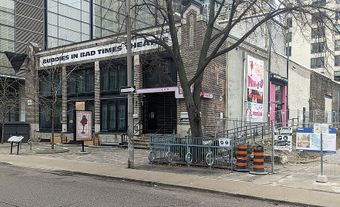
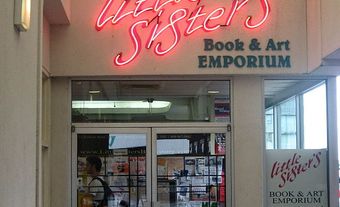
On 9 June 2026, Canada Post issued the Places of Pride stamp series, which features The 519 and other “pivotal sites that 2SLGBTQIA+ communities in Canada fought to make their own.” The other three honourees in the collection are Little Sister’s Book and Art Emporium in Vancouver, the Metamorphosis festival in Saskatoon and the Turret, an important gathering place in Halifax in the late 1970s and early 1980s.
History and Founding
The 519 building was constructed in 1906 as an exclusive space for the Granite Club, a social gathering spot for affluent members of the community. The club sold the premises to the York Badminton Club in 1928. Later, the site was home to the German Harmony Club, Ulster Athletic Club, and finally the 48th Highlanders before becoming the home of The 519.
The 519’s founding was the outcome of residents banding together to respond to local needs. Condemned in the early 1970s, the building’s demolition was blocked by the North Jarvis Community Association, a group of local residents that sought to retain the neighbourhood’s residential character.
Following a door-to-door survey in the surrounding area, a committee was appointed in 1974 by Toronto City Council. Made up of residents, businesspeople and service providers, the committee explored options for the future of the 519 Church Street site. Proposals included a theatre, car park, recreation centre, library, daycare, detox facility, family crisis centre, and seniors’ drop-in centre. Another proposal was demolition to make way for a park. The committee ultimately concluded that the building should be retained and turned into a community centre owned by the city.

Administration
The property was sold to the City of Toronto in 1975. The 519 Church Street Community Centre officially opened its doors to the public in 1976.
The 519 was the first facility of its kind in Toronto to be operated by a community-elected board of management. Community-controlled and multi-functional, the centre supports marginalized communities and provides meeting and programming space for a wide range of non-profit and community groups. This governance model has allowed local residents and groups to shape programming directly, helping make The 519 a safe and accessible space for 2SLGBTQ+ and other marginalized people.
In 1977, The 519 board received an application by Huntley Youth Services to accommodate Gay Youth Toronto, a social and support group for people ages 16 to 25. Controversial at the time, the request was approved after a divisive vote that reportedly split between straight and 2SLGBTQ+ board members. The decision marked a turning point, opening the door for other 2SLGBTQ+ organizations and support groups to operate from The 519. At the time, the Church and Wellesley neighbourhood was emerging as a centre of social, commercial and residential life for Toronto’s 2SLGBTQ+ communities — a role it continues to occupy today.
Programs
Initial programs at The 519 included a seniors’ club, a writing workshop, a chess club, and a group called the Toronto Psychic Society. The growth of the centre reflected both the rising demand for neighbourhood-based social services and the expansion of Toronto’s 2SLGBTQ+ communities. Within a decade, it was reported to be “almost filled to capacity, 14 hours a day.”
Originally conceived as a social service centre, The 519 expanded its programming to meet the needs of marginalized and underserved residents in the surrounding neighbourhoods. By 1990, The 519 housed more than 250 groups and served nearly 134,000 people annually. That number grew to more than 230,000 in 1993. Summarizing the breadth and depth of initiatives run through The 519 by that time, the centre’s annual report stated:
“People worked on networking among South Asian women, homelessness, religious persecution, child sexual abuse, AIDS prevention, racism, homophobia. Others came to line dance or play Go and bridge. We formed a coalition of agencies to improve children’s services downtown. We’ve worked on community health issues…. We brought together businesses, volunteers, and staff to coordinate fundraisers.… We’re working with women’s agencies to help them understand, recognize, and assist lesbians who’ve experienced violence.”
Expansion
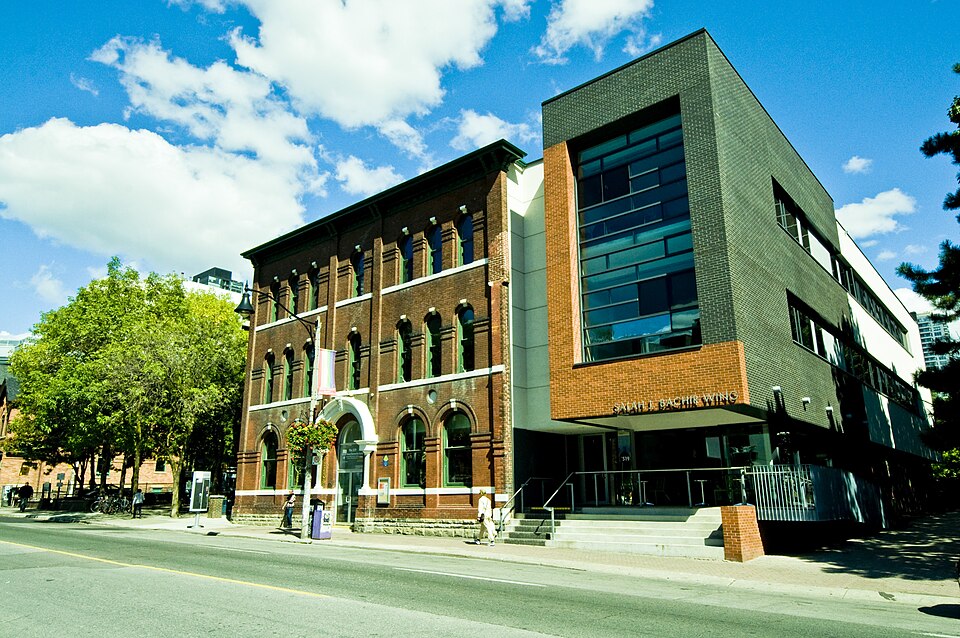
By 2002, demand at The 519 exceeded capacity. The 519 was accommodating 163,000 visits annually within its limited space, while also providing space for 260 groups and programming for 25,000 people. To meet demand, The 519 underwent renovations and a capital expansion. In 2004, construction began on the Salah J. Bachir Wing, added to the south elevation of the original building. When completed in 2010, the new expansion increased event space by 45 per cent.