Share on Facebook
 Share on X
 Share by Email
 Share on Google Classroom
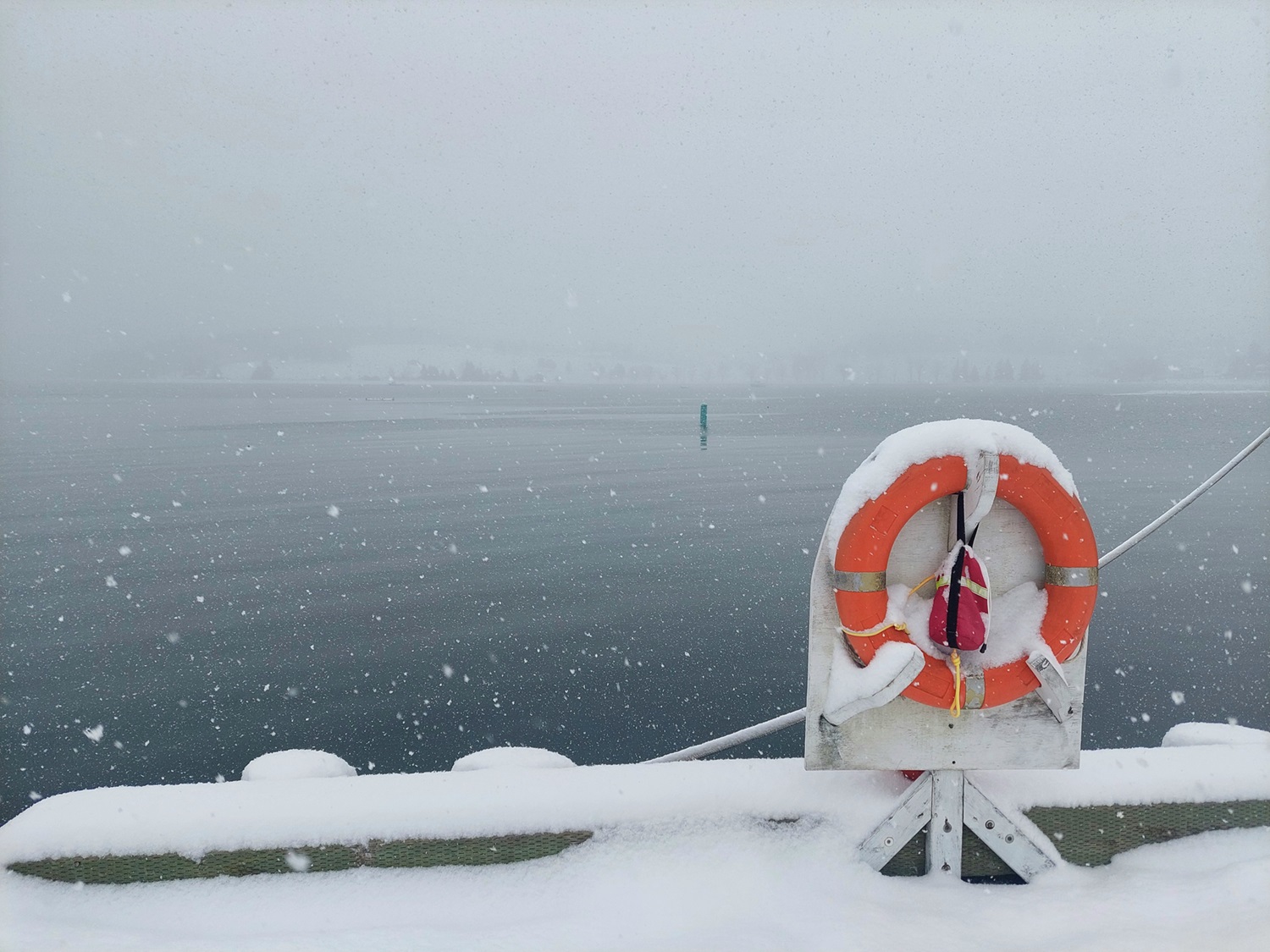
Snow consists of particles of ice that have grown large enough in the atmosphere to fall to the ground. Canada is a snowy country, with many parts of the country experiencing snow cover for 5–6 months of the year.
Formation of Snow
Snow forms when water vapour or supercooled water droplets in a cloud freeze on minute particles in the atmosphere (called condensation nuclei), creating ice crystals. As the ice crystals are swept through the cloud, water vapour freezes (sublimates) on them, creating snow crystals. Depending on the temperature and moisture conditions, the snow crystals continue to grow from one or more of three mechanisms: sublimation to form larger snow crystals, riming (the direct freezing of supercooled water) to form rimed snow crystals, or collision with other snow crystals to form snowflakes. Because of these different growth mechanisms, snow can actually consist of three elements: snow crystals, rimed snow crystals and snowflakes, as well as fragments of any of these.
The size of a snowflake is related to how far the snowflake has fallen from the sky and to how well colliding snow crystals stick to each other. The largest snowflakes are usually observed near 0° C because of the increased forces of adhesion at these temperatures. In a typical cloud, a 1mm diameter snowflake can increase its size 10 times in about 20 minutes.
The general distribution of snowfall across Canada reflects a region's proximity to moisture sources: annual snowfall totals are highest in coastal regions, particularly in the mountains of northern British Columbia, which receive more than 1,000 cm of snowfall per year on average, and are lowest over the Arctic and southern interior, where less than 100 cm falls annually. The record for the greatest snowfall in one month is held by the Haines Apps weather station in northern British Columbia, where 535.9 cm fell in December 1959. Victoria, British Columbia, which receives an annual snowfall of around 28 cm, is the least snowy of Canada's major cities, while St. John's, Newfoundland, which receives around 335 cm, is the snowiest. Some regions may experience more or less snowfall than their historical averages as climate change continues to shift weather patterns, altering moisture levels, temperatures, and other climatic variables.

Snow Cover
Snow cover is the accumulation of snow on the ground resulting from solid precipitation. The structure and dimensions of snow cover are highly variable in both space and time, depending on a host of factors such as the location of storm tracks bringing winter snowfall, weather conditions between storms, wind action (involved in the redistributing, compaction and sublimation of snow), surface topography and vegetation cover.
Snow cover is important for several reasons. First, it represents a major store of water that is released during the spring melt. Knowledge of how much water is contained in a snow cover (the snow water equivalent, or SWE, which is derived from information on the depth and density of the snow cover) and the rate at which it melts is critical information, used for flood forecasting and for the optimal management of water resources for such applications as hydroelectricity production and irrigation. Second, snow is an excellent insulator, preventing the soil from freezing to great depths. For example, the mean January air temperature at Goose Bay, Labrador, is -16.4° C, while the mean January soil temperature at a 5 cm depth is only -2.1° C. The difference of more than 14° C is due to the insulating effect of snow. This allows various wildlife to survive colder temperatures by burrowing into the snow or soil (see Animals in Winter). Third, because of its high surface reflectivity (80-90% for new snow, known as the albedo effect) and insulation properties, a snow cover dramatically changes the energy exchanges between the surface and the atmosphere. Numerous studies have shown that mean air temperatures are typically 5–10° C colder when a snow cover is present. An extensive snow cover also allows cold air to move large distances without experiencing much warming. This feedback effect means that winters with larger than normal snow cover tend to be colder than normal.
The temporal evolution of a snow cover is very complex. The moment a snowflake reaches the surface, a whole series of processes begin that modify the snowflake's crystalline structure. These processes are collectively described by the term "snow metamorphism,"which includes 3 main processes: destructive or equi-temperature metamorphism, temperature-gradient metamorphism and melt metamorphism.
Destructive Metamorphism
Destructive metamorphism is a consequence of a fundamental law of physics: energy and mass flow from areas of high to low concentration. Snowflakes have a very high surface area to mass ratio, which means they have a high surface energy state. Upon reaching the ground, water molecules migrate to reduce this excess free energy, which results in the rapid transformation of the star-shaped crystals into an aggregate of rounded, oblong or irregularly shaped smooth grains. This process is most important in the early stages of snow deposition and occurs more rapidly in warmer snow. During this process, water vapour also builds "ice necks" between adjacent grains in a process known as sintering. This process creates strong bonds between grains, resulting in dense, strong snow. The compacting action of the wind can also create a high-density surface layer known as a "wind slab."
Temperature-Gradient Metamorphism
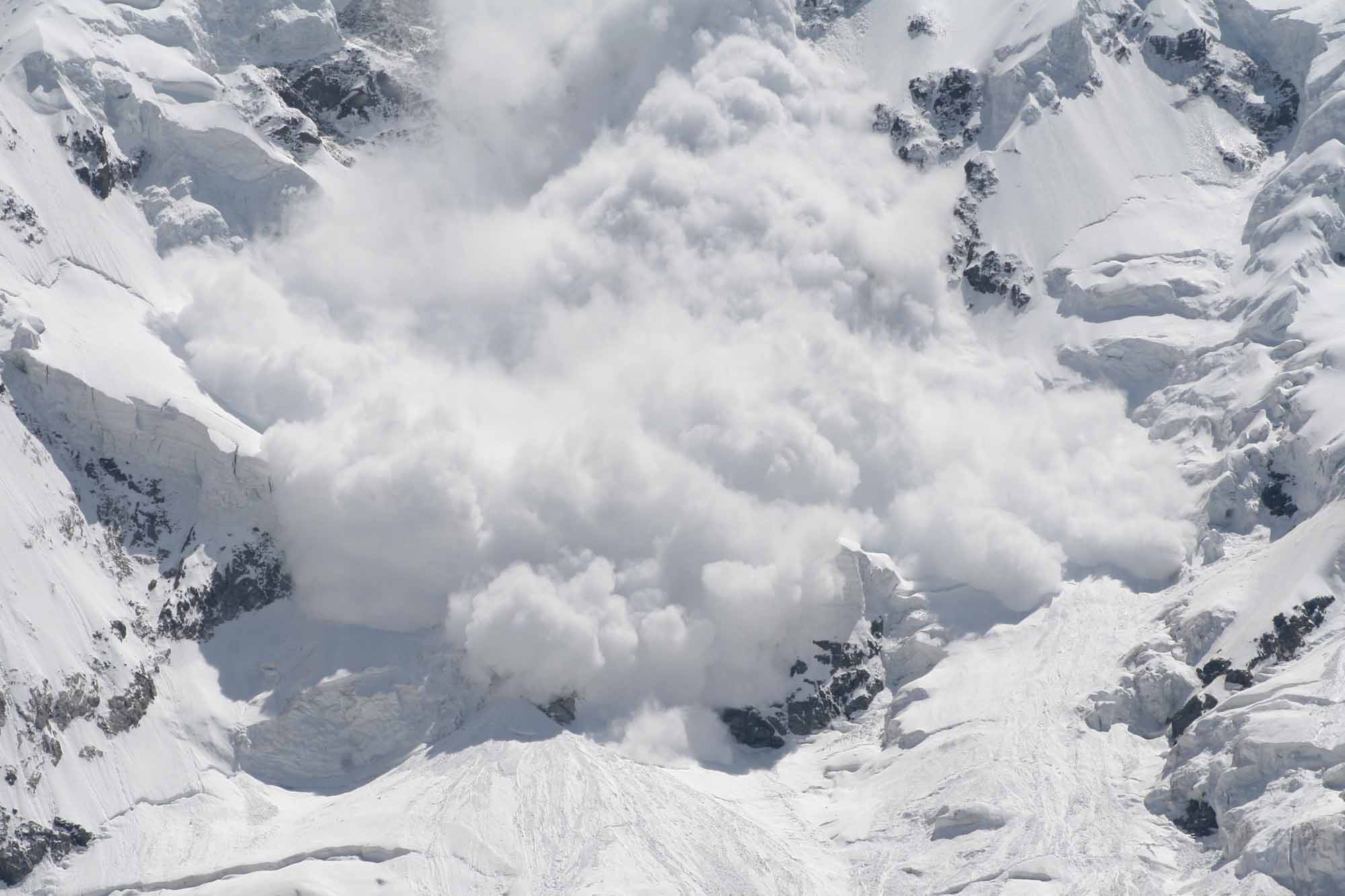
Temperature-gradient metamorphism takes place because snow is a good insulator. This means a large temperature gradient often exists between the cold surface layer and the warmer layer overlaying the ground; this causes the water vapour in surface layer snow grains to migrate to snow grains lower down in the snowpack. This process leads to the formation of large, rounded crystals near the bottom of the snow cover, which are referred to as "depth hoar" or "sugar snow." The snow grains are only loosely bonded together and contribute to increased avalanche risk in mountainous areas.
Melt Metamorphism
Melt metamorphism describes changes in snow structure caused by melt-freeze cycles. Because it has a porous structure, a snow cover is able to hold a considerable amount of meltwater. Consecutive melt-freeze cycles are a common occurrence during the early spring (melting during the day, freezing at night). These cycles lead to the formation of large, irregular grains known as "corn snow" and cause the snowpack to warm as latent heat is released from refrozen water. Snow warming is a necessary precondition for the removal of the snow cover and is termed "ripening." The various metamorphic processes, together with the compaction due to the weight of the snow, result in a gradual increase in snow density during the year from initial values of around 100 kg/m 3 to 300-400 kg/m3 prior to melt.
The evolution of snow cover can be examined by digging a hole in the snow ("snow pit" is the technical term) and observing the different layers and crystal shapes. Major snowfall events can usually be clearly seen, as well as ice layers caused by rain or wet snow.

Snow-Cover Regions
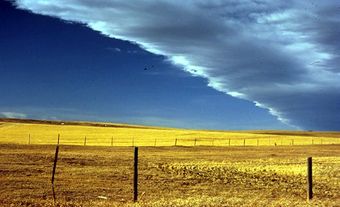
Noticeable differences in average snow cover characteristics are observed across Canada, corresponding to the main climatic and vegetation zones. Five distinct snow-cover regions are recognized: tundra (shallow, dominated by wind slab), boreal forest (medium depth, extensive depth hoar), maritime (deep, frequent ice layers), prairie (shallow, multilayered wind slab) and alpine (deep, multilayered, highly variable). Within these regions exist large differences in snow cover related to topography and vegetation density, as well as regional-scale differences related to enhanced snowfall, such as the snowbelt that occurs downwind of the Great Lakes (see Physiographic Regions).

Measuring Snow Cover
The large spatial variability in snow cover makes it extremely difficult to obtain reliable estimates of how much snow is on the ground. Regular daily snow-depth measurements are made at several hundred climate- and weather-observing stations across Canada. However, these sites tend to be concentrated in populated areas at lower elevations. To improve the spatial representativeness of snow cover measurements, and to obtain information on the snow water equivalent for water resource planning, many government agencies and hydropower authorities take regular (usually at 2-week intervals) measurements of snow depth and density over a series of points, a method called a "snow course." This is a labour-intensive process and still only provides a small sample of the snow cover over an area.
Because of these limitations, increasing use is being made of satellite technology to monitor snow cover from space. Both active and passive microwave satellites have demonstrated an all-weather ability to map snow water equivalents over selected types of terrain. This passive microwave data is used extensively by water resource managers across the prairies. Canadian scientists are currently working to extend this method to other environments, such as forests, where snow cover microwave signatures are more difficult to interpret (see Climate Information; Weather Observations).
Variability
Like all components of the climate system, snow cover exhibits considerable variation from one year to the next in response to the natural variability of atmospheric circulation patterns, which affect both snowfall and temperature. Reliable satellite observations of snow cover extent are available from the early 1970s. These data suggest that snow cover has decreased over much of southern Canada, particularly in the prairie region during the spring.
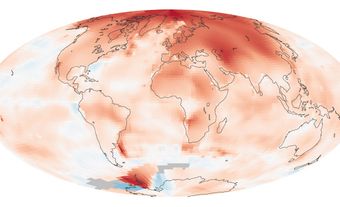
The results of modelling and sensitivity studies suggest that snow cover would decrease significantly over much of southern Canada, particularly the continental interior regions, in response to climate change. This will have a significant impact on agriculture, hydroelectricity generation, snow-related industries (see Alpine Skiing) and wild plants and animals.