Share on Facebook
 Share on X
 Share by Email
 Share on Google Classroom
The Smoot-Hawley Tariff Act was passed in 1930 by the United States Congress. The Act legislated higher tariffs on agricultural and industrial products imported into the US. Named after two Republican lawmakers, Senator Reed Smoot (Utah) and Congressman Willis Hawley (Oregon), the Smoot-Hawley Tariff Act worsened the effects of the Great Depression and contributed to the collapse of international trade. Tariffs were reduced in 1935 but were not eliminated until the Canada-US Free Trade Agreement of 1988. (See Free Trade.)

Context: Competition and Protectionism
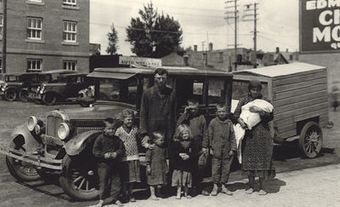
During the First World War, North American farmers increased their output to feed Canadians and Americans, as well as Allied troops and Europeans, whose agriculture had been devastated by the conflict. To keep up with this demand, North American farmers expanded their operations, taking on debt to do so. Overproduction continued after the war, while European agriculture recovered. This drove down prices for American and Canadian products, causing significant economic distress for farmers who were already in debt.
To protect American farmers from foreign competition, Congress imposed tariffs on agricultural imports with the Emergency Tariff Act in 1921 and the Fordney-McCumber Tariff Act in 1922. After the stock market crash of 1929, US lawmakers were under even more pressure to address the situation. American president Herbert Hoover promised to increase existing tariffs during the 1928 election, but industry demands for broader tariffs delayed legislation.
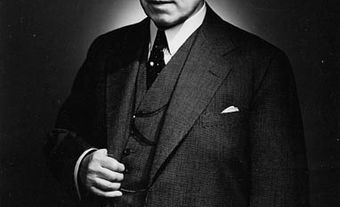
Two US lawmakers spearheaded a new tariff bill: Senator Reed Smoot (Utah) and Congressman Willis Hawley (Oregon). Smoot and Hawley were part of a protectionist wing in the Republican party that saw international competition as the main threat to the US economy and tariffs as the solution. Although the bill was approved by the House of Representatives in May 1929, it encountered opposition from both Democrats and Republicans in the Senate. The Smoot-Hawley Act was eventually passed in 1930 and signed into law by President Herbert Hoover on 17 June 1930.
Tariffs
The Act raised tariffs on over 800 types of products; on average, another 20% was added to Canadian exports. The affected products were wide ranging and included major Canadian exports such as cattle, wood, wheat and fish as well as industrial products and equipment, minerals, metals and chemicals.

Canadian Response
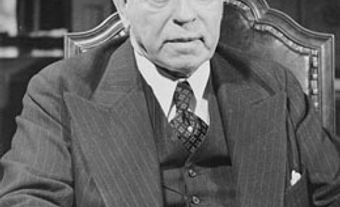
The prospect of increased US tariffs was a threat to the Liberal government under William Lyon Mackenzie King. Canadians had long feared economic annexation by the US, leading to protectionist policies at home. (See National Policy.) Confederation itself had been influenced by these concerns and in 1911, the Liberal government at the time was defeated by a Conservative party espousing an anti-American, anti-reciprocity message.
Under King’s Liberal government in the 1920s, there had been some relaxation of tariffs between Canada and the US. By 1929, the two countries traded approximately $1.5 billion across the border, illustrating the integration of their economies. When Hoover and the Republicans began talking about higher agricultural tariffs in the late 1920s, King and his government expressed concern about the potential impact on this economic relationship, and on the future of the proposed St. Lawrence Seaway. King also warned of retaliatory tariffs if Smoot-Hawley was passed. This tactic was unsuccessful, however, and King faced mounting pressure from Canadians to act. In May 1930, just before the Smoot-Hawley Act was passed, King’s government established “countervailing duties” that would raise levels to those imposed by the US. It also proposed reducing duties on countries within the British Empire.
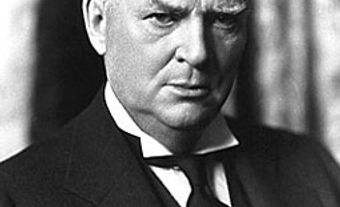
The Smoot-Hawley Act was a key issue in the July 1930 Canadian election. Conservative leader R.B. Bennett campaigned on being tough on trade and promised Canadians that he would stand up for Canadian industry and products. Bennett was rewarded at the ballot box, as Canadians were angry and wanted their government to push back harder against the US and their tariff policy. As prime minister, Bennett further increased tariffs on US products. He was not alone, as other countries around the world also applied retaliatory tariffs on US imports.

Impact of Tariffs
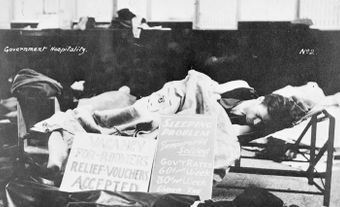
Economic historians have debated the significance of the Smoot-Hawley Act for domestic and global trade. Economists like Douglas Irwin argue that these tariffs and countertariffs made the Great Depression worse. They raised prices for consumers and reduced economic efficiency both in the US and in Canada. The tariffs also contributed to a collapse of international trade, and while they may have helped some domestic industries temporarily, they ultimately reduced the overall welfare of Americans and Canadians.
Trade between Canada and the US dropped from $1.5 billion dollars in 1929 to $1 billion in 1931 and $440 million in 1933. Clearly, the Smoot-Hawley Act damaged the trade relationship between the two countries. It isn’t clear, however, to what extent it was responsible for the steep decline in Canada-US or global trade compared to other factors, such as declining incomes and tariffs unrelated to the Smoot-Hawley Act.
Reduction in Tariffs
Americans recognized the harmful effects of this policy and President Franklin D. Roosevelt’s New Deal brought a reduction in tariffs and a liberalization in trade. In 1935, Roosevelt and Mackenzie King negotiated a reciprocal trade agreement that reduced tariffs between Canada and the US.
In 1947, the international community created the General Agreement on Tariffs and Trade (GATT). Canada and the US were among the 23 countries that signed the agreement. A forerunner to the World Trade Organization (WTO), the GATT’s goal was to promote international trade by encouraging a reduction in trade barriers like tariffs. This international agreement worked to undo the barriers to trade implemented by the Smoot-Hawley Act. The tariffs were not fully eradicated until the signing of the Canada-US Free Trade Agreement (CUSFTA) in 1988.