Share on Facebook
 Share on X
 Share by Email
 Share on Google Classroom

Drift Ice
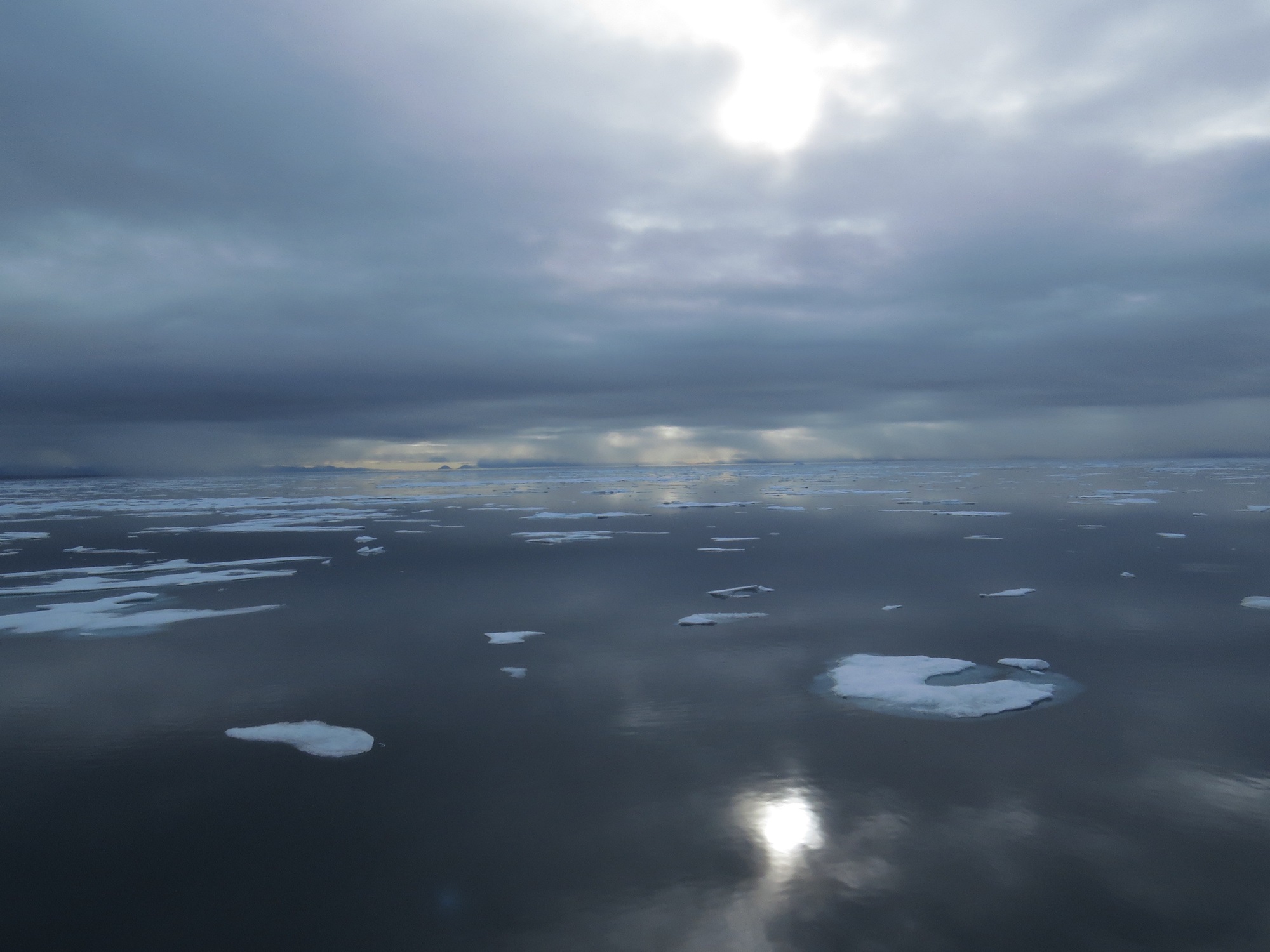
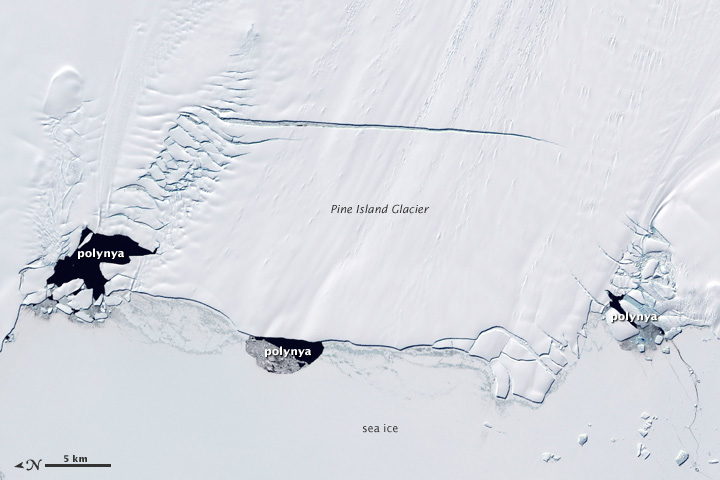
Away from land, sea ice is in nearly constant motion, being driven by wind and ocean currents. This mobile ice is often called "drift ice." Its motion constantly deforms the ice cover, creating open water "leads" (long cracks a few metres to a kilometre or more wide) in places where the ice is pulled apart, and thick ridges where it is forced together. Ridges are sinuous accumulations of broken ice; the upper part, termed the "sail," may be up to 5 m high, while the submerged portion, termed the "keel," has a depth four to five times the sail height. When ice is consistently driven away from a coastline, an open water area called a polynya may form. Leads and polynyas provide access through the ice cover and so are an important part of the habitat for marine mammals like whales and seals.
Fast Ice
In coastal waters near shore, ice motion is restricted by attachment to the coastline and by ridges grounded in shallow water. This nearly motionless ice is termed "fast ice," and it predominates in most of the Canadian Arctic Archipelago. Because it remains relatively undeformed, fast ice is more uniform than drift ice and may reach a thickness of 2.5 m off Canada's northernmost islands.
When seawater freezes to form sea ice, most of the dissolved salt is rejected, so that the sea ice is much fresher than seawater. The remaining salt is trapped in small brine pockets. These brine pockets give sea ice an opaque appearance and make it weaker than freshwater ice. In the central Arctic, thick sea ice does not melt completely during the summer, and the melting of snow accumulated on the surface flushes out much of the remaining brine to leave the ice fresher and stronger. Because of these differences in structure and appearance, sea ice is often distinguished by age. During its first winter it is termed first-year ice, after surviving one summer it is termed second-year ice, and after surviving two or more summers it is termed multiyear ice.
Environmental Factors
Sea ice is an important environmental factor in offshore transportation and in oil and gas exploration and development industries. Thick ridges and multiyear ice are serious navigation hazards, and designing for drift-ice impacts substantially increases the cost of offshore structures. To support these activities, the Canadian Coast Guard operates a fleet of ice-breaking ships, while the Atmospheric Environment Service of Environment Canada provides ice information and forecasting services.

Sea ice is also an important part of the climate system. It insulates the ocean from the cold atmosphere in winter, and in summer it increases the surface albedo (reflectivity) over that of open ocean. More ice therefore decreases the amount of solar radiation absorbed, reducing surface temperature and allowing enhanced ice growth. The reverse is true for a decrease in ice cover. Because the effect reinforces the initial perturbation, it is a positive feedback effect — the so-called ice-albedo feedback. In addition, the transport of drift ice out of the Arctic provides a source of fresh water to the North Atlantic, which affects ocean circulation. (See also Arctic Oceanography; Climate Change; Climatology; Iceberg.)