Share on Facebook
 Share on X
 Share by Email
 Share on Google Classroom
Ice, including snow, is the solid phase of water. It is useful to think of it this way rather than as "frozen water" because water can achieve the solid phase through the freezing of liquid water or by direct deposition (sublimation) of water vapour, its gaseous phase. These different processes can produce distinct ice forms in the atmosphere or on or below the Earth's surface. The form taken by the solid phase of water is often important in determining its environmental and other roles. Snow is one distinctive form of ice; others include glacier ice, river ice, lake ice, sea ice, ground ice of various types, hail, cloud crystals, hoar and rime. Ice crystals are typically hexagonal, a direct result of an internal symmetry produced by the orderly packing of the 3-atom water molecules (H2O) of which each crystal is composed. This crystal form is found in cloud crystals of a size considerably under 1 mm in diameter to crystals of over 10 cm diameter found in some glaciers.
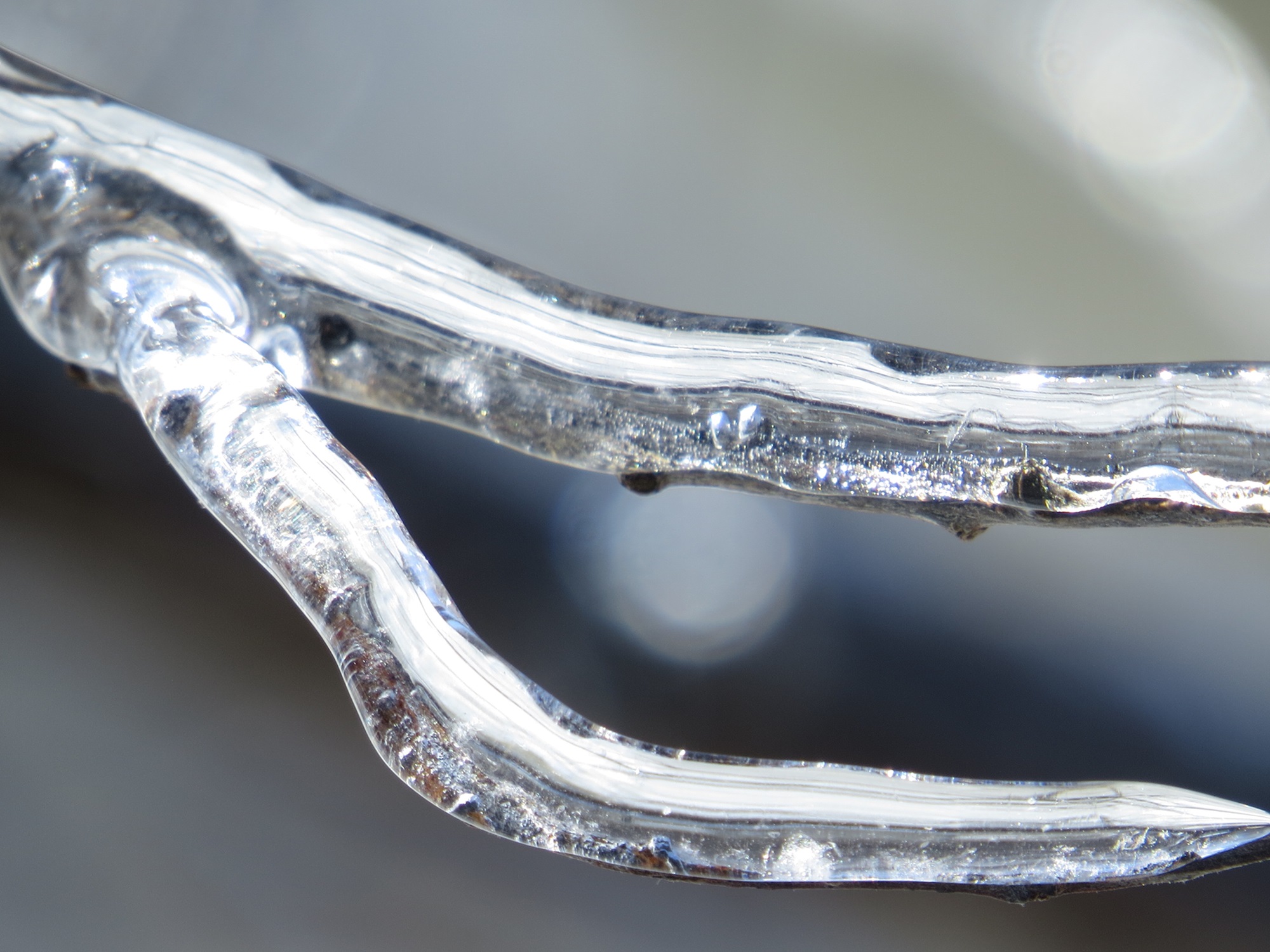
Snow
Snow is a type of solid precipitation that originates in the atmosphere and falls to Earth's surface. At below -40°C, ice crystals may be initiated from water droplets in the atmosphere by a spontaneous change from the liquid to the solid phase of water. At much lower temperatures, spontaneous change from gas to solid can occur. Tiny hexagonal crystals produced in these ways form cirrus clouds, and the flickers of "diamond dust" are often seen on cold, sunny days.
Once in existence within clouds of supercooled water droplets, such ice crystals may grow into snow crystals through the deposition of water vapour, as air has a lower capacity to hold water vapour in the presence of ice. The particular hexagonal form achieved by the growing crystal is determined by prevailing humidity and, especially, temperature conditions. When a crystal begins to fall through its cloud, further growth occurs by the accretion of supercooled cloud droplets, or riming. This is growth by freezing as distinct from vapour deposition. Graupel, heavily rimed snow, is an extreme product of this process. Rime, ice produced by the freezing of tiny, supercooled droplets, is not only important in the atmosphere, where it can cause aircraft to become iced up, but also on the Earth's surface. While falling, many snow crystals may combine to produce a snowflake.
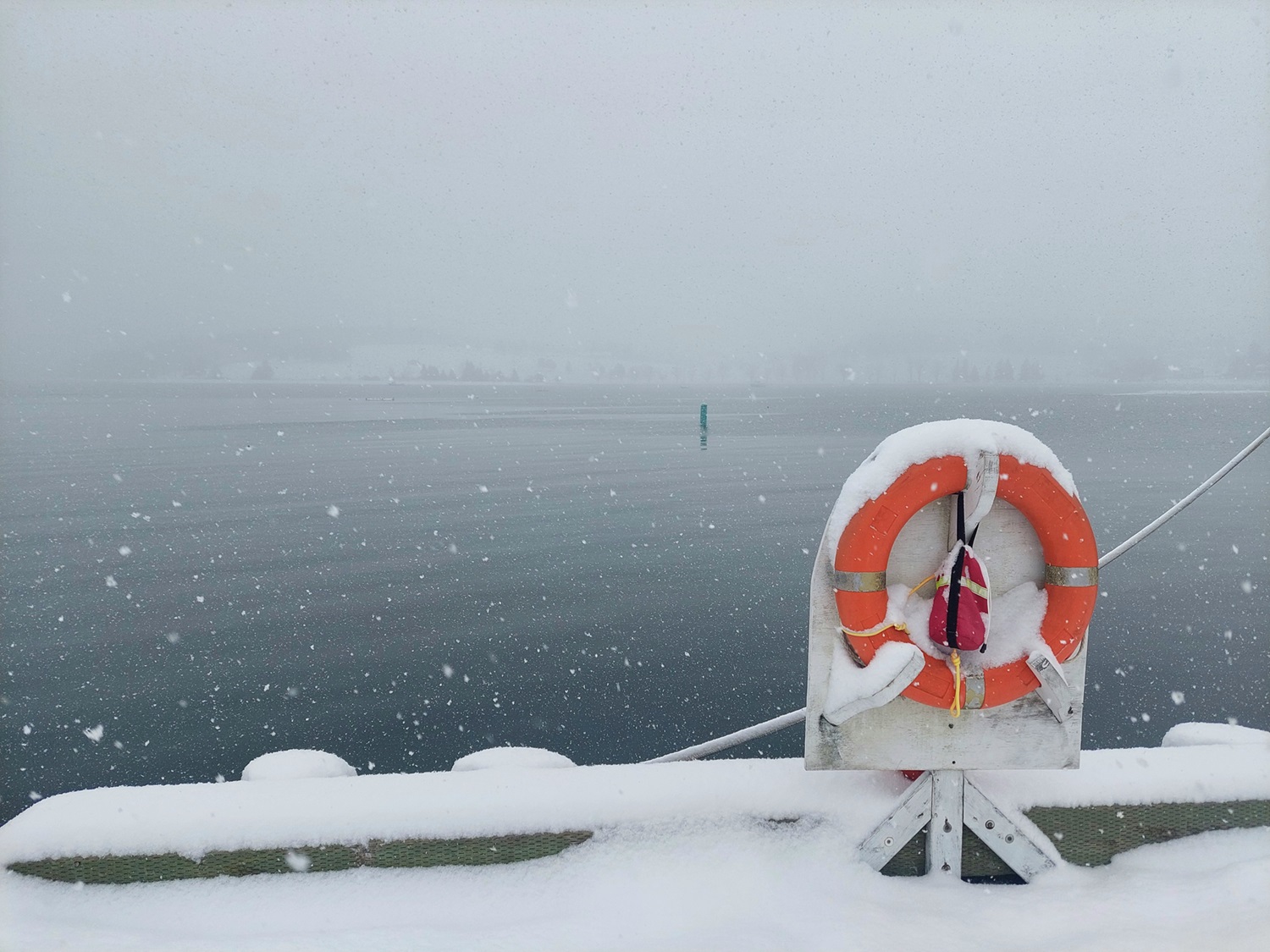
Rain and Hail
In the warmer portions of the cloud, or outside of the cloud en route to the surface, snow crystals may melt or evaporate (sublimate). Much of the rain which falls in Canada results from snow melting on its way to the surface. Hail, a type of solid precipitation characterized by layers of ice that are a record of alternating freezing and thawing in turbulent thunderclouds, is a good example of the involvement of water's various phases in the production of a distinctive ice form. Much of the cloud seeding in rainmaking or hail-suppression experiments is aimed at producing ice in water clouds.
Snowpack
On reaching the Earth, snow often forms a snowpack. The general tendency is for the pack to compact and densify before either melting and running off or turning into glacier ice. Melting and freezing may quickly produce layers of "real ice" in the pack, but in cold areas, it may take many years for the pack to compact into ice.

Bulk Ice
The freezing of water droplets or the nucleation of water vapour in the atmosphere and elsewhere produces distinctive ice crystals that may combine to form bulk ice composed of many crystals. On and below the Earth's surface, such bulk ice, produced by the freezing of substantial amounts of water or by the densification of the snowpack, forms most of the ice present (see Permafrost; Periglacial Landform).
Frozen Lakes
Ice forms on freshwater bodies when surface temperatures fall just below freezing. As the maximum density of water is near 4°C, the lake surface water cooled to that temperature becomes denser than the warm water below it and sinks. The warmer water, displaced from below, is cooled and sinks in turn. Thus, before ice can form on a lake, the entire water column must cool to 4°C through overturning so that freezing temperatures can be reached at the surface. When ice does form, much of the lake will still be at 4°C.
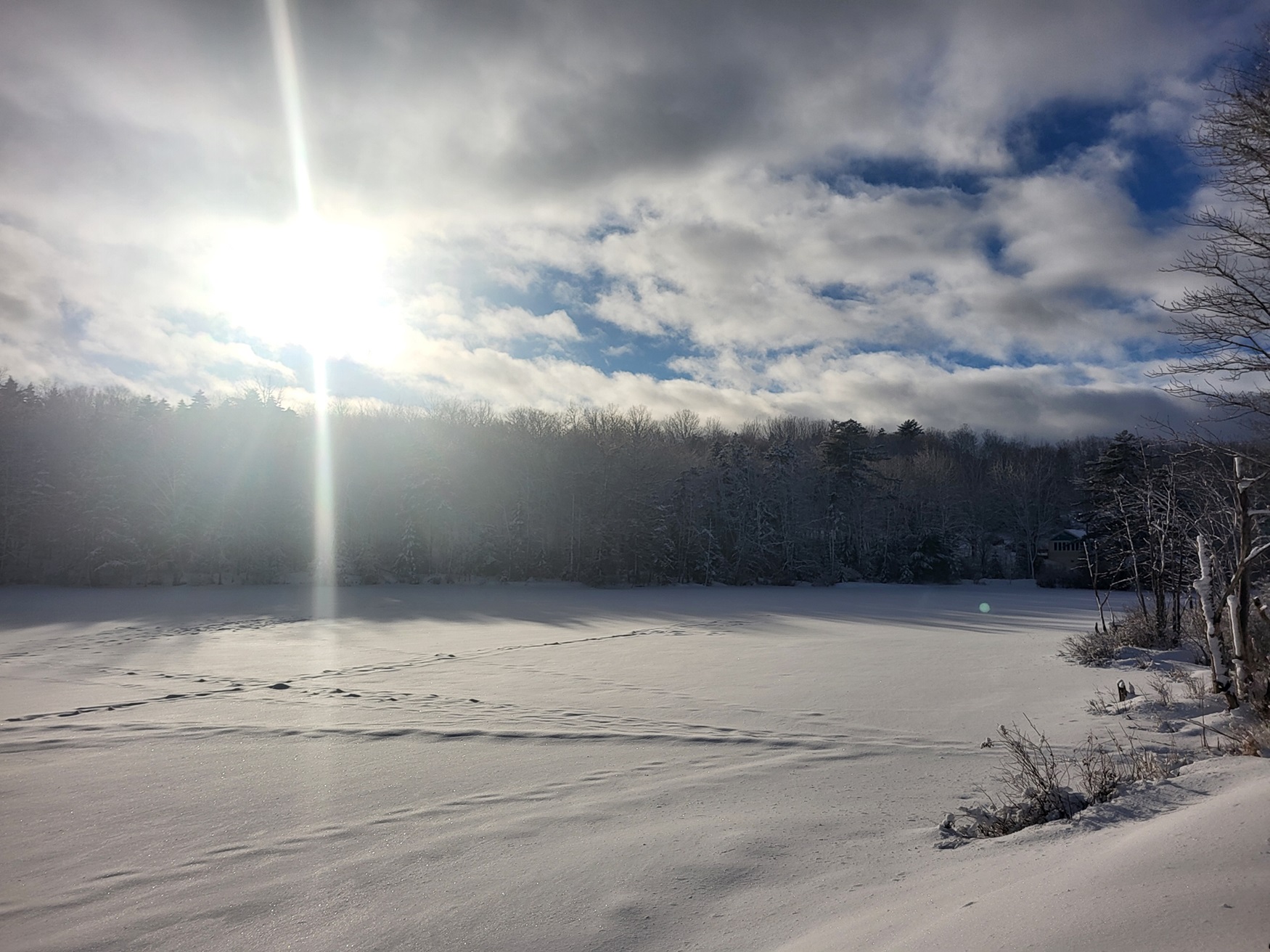
Frozen Rivers
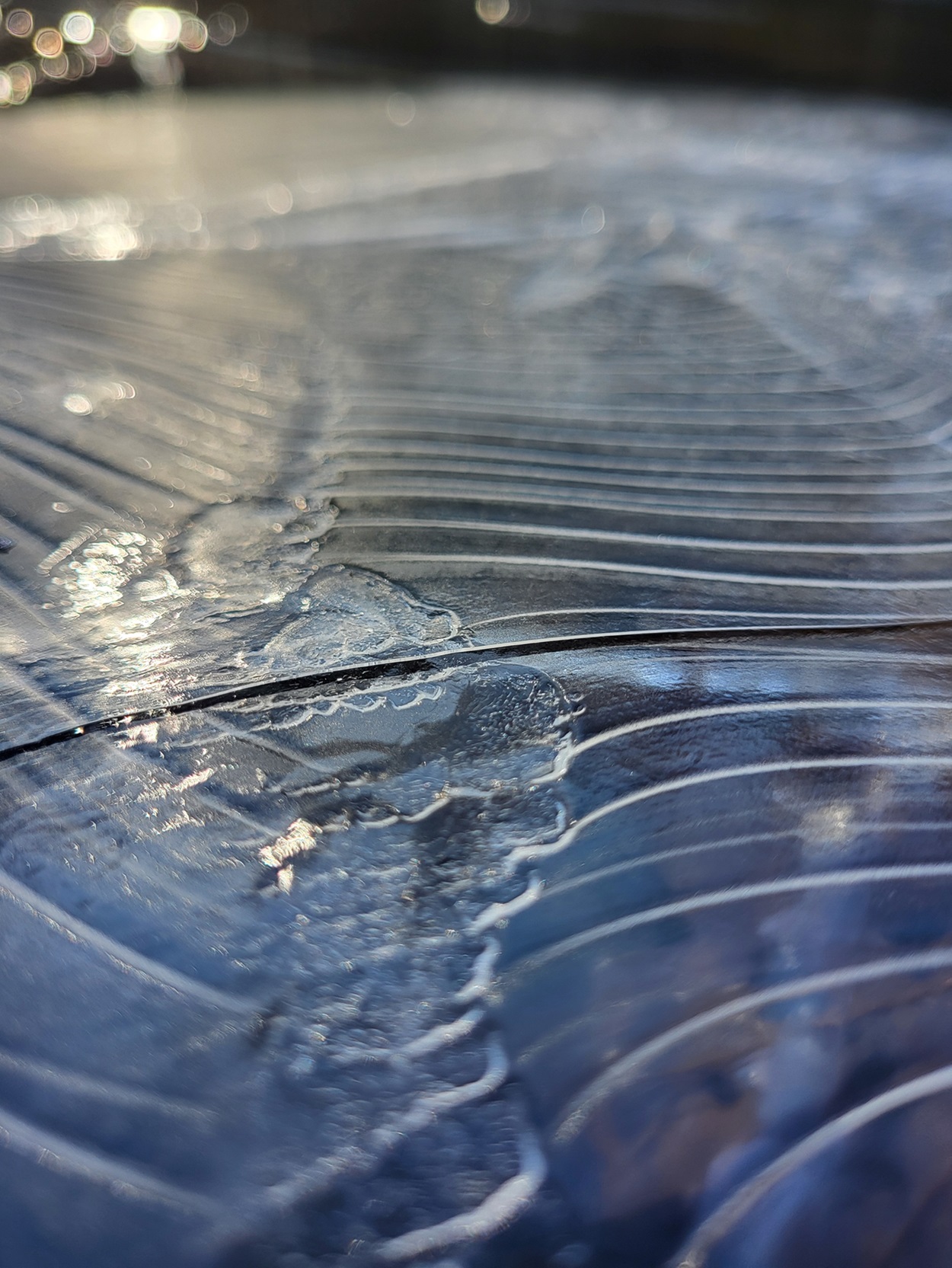
In rivers, turbulence in the flow prevents freezing until the entire water column has been cooled to 0°C. On lakes, the initial random orientation of ice crystals on the water surface tends to be replaced, as the ice thickens, by vertically oriented 6-sided columns. This process forms a clear sheet of "black ice." The columns often become loose during spring breakup, forming distinctive "candle" crystals. Flooding of snowpack lying on a lake produces slush, which, on refreezing, forms a distinctive white ice composed of randomly oriented crystals.
Types of Ice
Two types of ice, black ice and white ice, provide a good illustration of interrelationships among the process of ice production, the form of ice and the environmental implications of that ice. For example, black ice, with its orderly arrangement of crystals, is effectively transparent to light; white ice reflects or absorbs most of the light falling upon it.
Most major forms of ice have been found buried beneath the Earth's surface. It is not unusual for large pieces of glacier ice to be buried and preserved or for snowbanks to be buried in rock avalanches. Ice also actually forms and survives beneath the Earth's surface. Ice beneath the Earth's surface can affect drainage, surface topography, and vegetation development. Year-round ground ice proper is a feature of Permafrost regions, where its presence is made readily apparent by such features as pingos (see Periglacial Landforms). In such regions, ground ice presents a considerable problem for construction.
Hydrology
Ice, particularly snow, is a major control of the flow regimes of Canadian rivers. Most rivers reach peak annual flow in spring, as accumulated precipitation over many months runs off in a period of days or weeks. In colder areas, most annual precipitation runs off at this time. Rivers flowing from the mountains, as in the case of some prairie rivers, may, of course, be snow- or glacier-fed all summer.
The nature of winter precipitation also controls the low-flow phase of many of our rivers. Except in warmer southern areas, where high evaporation and evapotranspiration offset rainfall, producing late-summer droughts, Canadian rivers tend to reach minimum flows in late winter. At this time, they have been deprived of runoff for months, as precipitation has been held up in the snowpack. In the North and in permafrost regions generally, flows can drop to zero when rivers freeze to their beds. Naleds, or"icings," are ice forms that may result in such static situations. Even Niagara Falls is mainly ice at this time of year.
As a northern temperate region, the populated part of Canada receives abundant ice and snow, ensuring that most areas of the country have sufficient fresh water for society's needs. Snow provides other benefits, e.g., for winter recreation and as an insulator of the ground. But there are also attendant climate hazards. Snow-removal costs exceed $1 billion per year in Canada; indirect costs (e.g., increased fuel consumption, travel delays, etc) are even greater. The centres in Canada which receive the most snow are Goose Bay, Newfoundland, with 409 cm annually; St John's, Newfoundland, 364 cm; Quebec City, Quebec, 336 cm; Kapuskasing, Ontario, 322 cm; and Charlottetown, PEI, 305 cm.