Share on Facebook
 Share on X
 Share by Email
 Share on Google Classroom
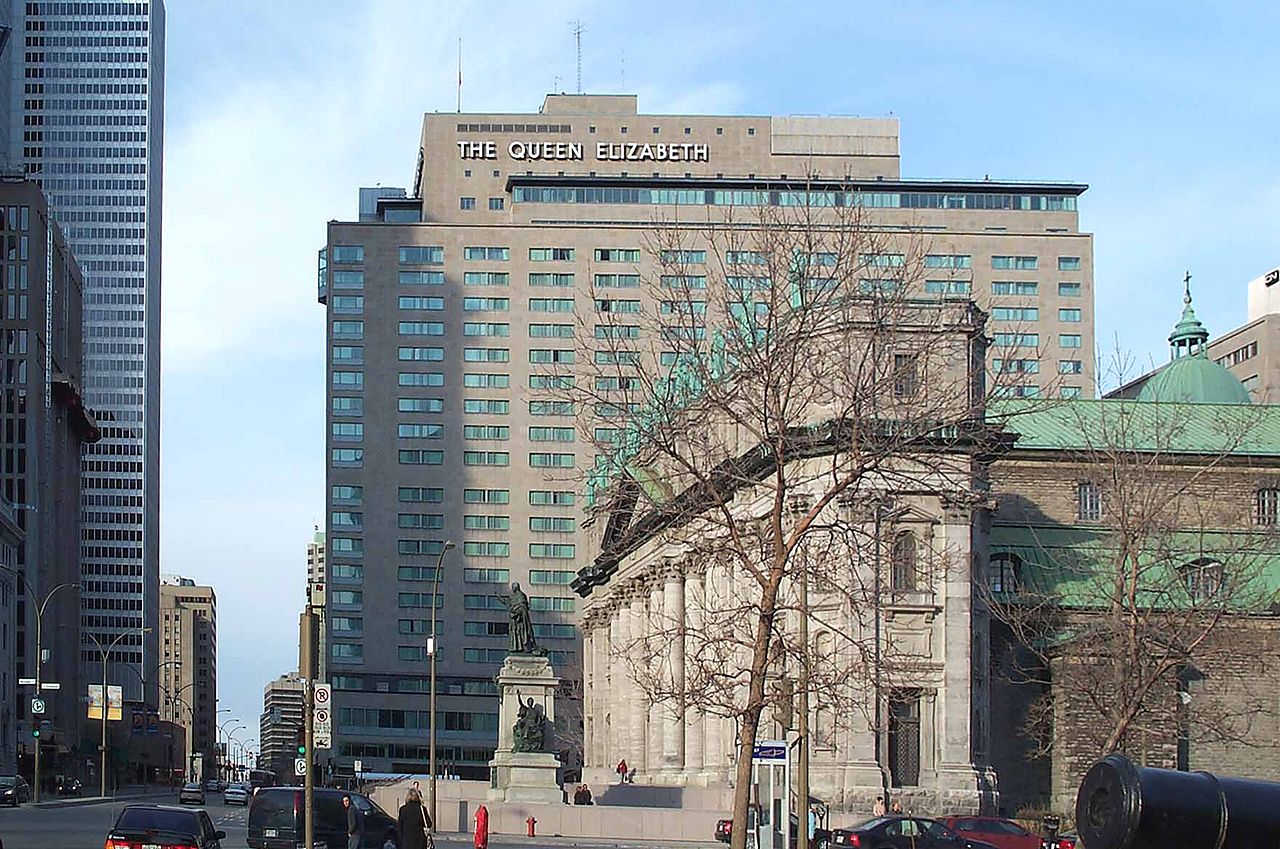
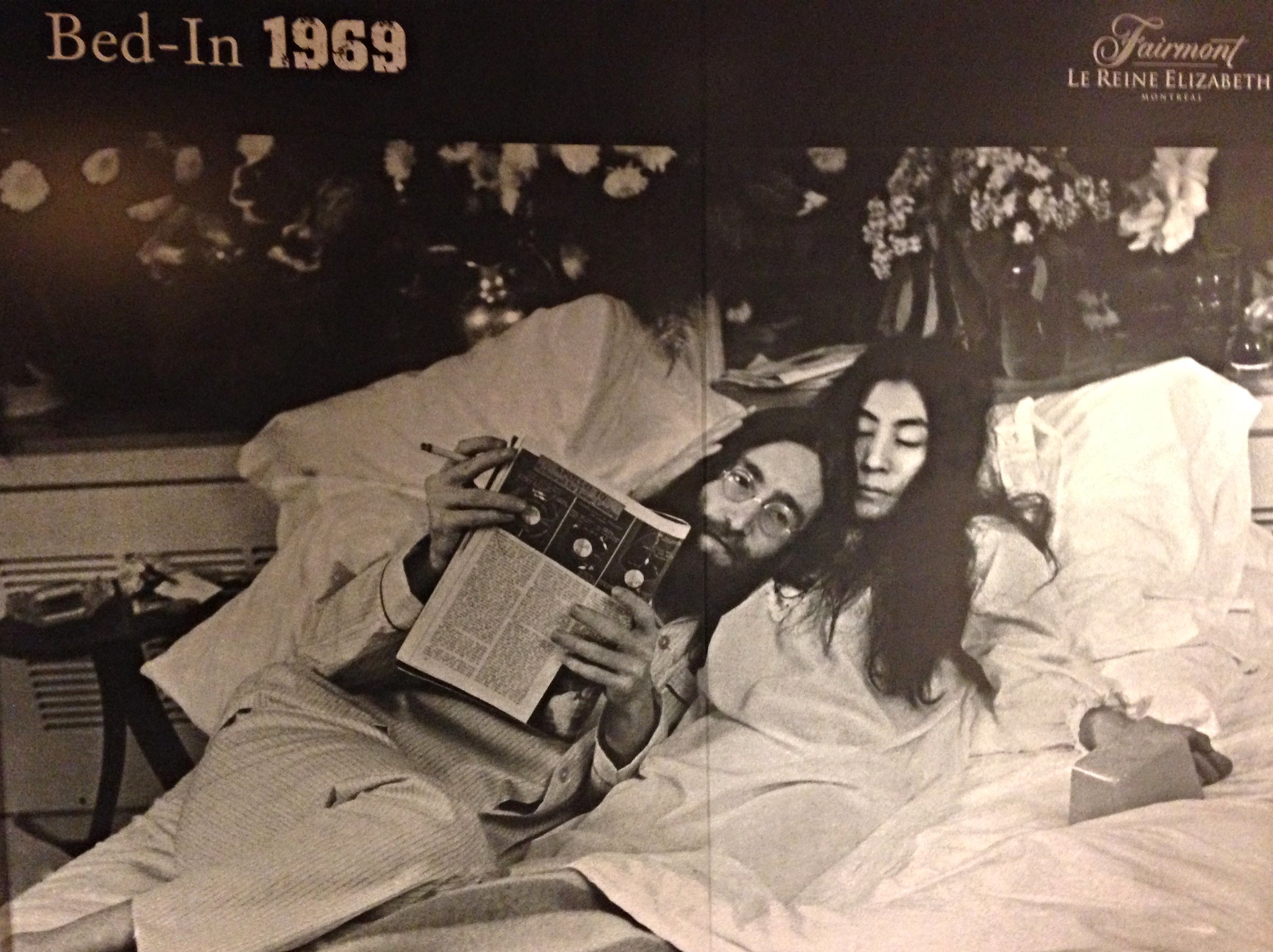
The opening of the prestigious Fairmont The Queen Elizabeth (formerly the Queen Elizabeth Hotel) in Montreal took place on 15 March 1958 and was followed, a month later (on 15, 16 and 17 April) by a gala opening that brought together the best of Canadian culture and several Hollywood celebrities. The hotel was designed and built by CN chief architect George Drummond and named by company president Donald Gordon. It gained even more notoriety following John Lennon and Yoko Ono’s 1969 Bed-In for Peace and the recording of Lennon’s anti-war song “Give Peace a Chance.”
Construction
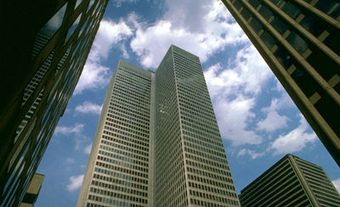
Built around the Gare Centrale (Central Station), the Queen Elizabeth Hotel complex was supposed to fill in the "gaps" resulting from the construction of the railroad tracks and be part of the Place Ville Marie on Dorchester Boulevard (now boulevard René-Lévesque), an urban development project that was very innovative at the time. The design and construction of the project fell to CN chief architect George Drummond, and CN president Donald Gordon approved the plans in 1953. Work officially began on 23 June 1954.
The L-shaped building, strengthened with 160 cement pylons to deaden the noise and vibrations of trains passing underneath it, accommodated 1,200 rooms. It was one of the first hotels in North America with escalators, air conditioning and a private telephone in each room.
Naming Controversy
In November 1954, Gordon announced that the hotel's name would be "Queen Elizabeth," which resulted in a swell of controversy and demonstrations with militants demanding "a French name for French Montreal." A petition with more than 250,000 signatures was sent to the city of Montreal in 1955, demanding that the hotel be named Château Maisonneuve in honour of Montreal founder, Paul de Chomedey, Sieur de Maisonneuve, but nothing was done despite the movement of public indignation and interventions by Mayor Jean Drapeau and a number of Montreal city councillors. Donald Gordon was even burned in effigy during a demonstration.
Disregarding all these demands, Gordon held his position and announced that the hotel would be named for Queen Elizabeth II, who acceded to the throne in 1952. Québécois nationalists perceived this inflexibility as a lack of respect and recognition, and it left many francophones with a very bitter taste.
Opening
On 15 March 1958, the hotel officially opened its doors with M. and Mme Charles Morel from Baie-Comeau celebrating their 20th wedding anniversary as its first guests.
A month later, the gala opening lasted three days (on 15, 16 and 17 April) with a panoply of guests and Hollywood celebrities, again rekindling francophone resentment. Guy Lombardo and his orchestra provided the music. Montreal singer Guylaine Guy notably performed at the opening ceremony upon her return from Paris.
Highlights
Throughout the years that followed, the Queen Elizabeth Hotel saw a parade of celebrities, each more famous than the last: Fidel Castro was the first visiting head of state on 27 April 1959; then Queen Elizabeth II dropped in for a first very brief visit on 25 June 1959. During Expo 67, more than 20 political personalities stayed there, including Queen Elizabeth and Charles de Gaulle.
In 1969 John Lennon and Yoko Ono moved in for a week during their famous Bed-In for Peace, where Lennon wrote and recorded his anthem "Give Peace a Chance." In 1970, Robert Bourassa and some members of the government sought refuge, unknown to the public, at the Queen Elizabeth Hotel during the October Crisis.
The Queen Elizabeth Hotel also houses the Beaver Club restaurant, one of the best in Montreal and in the country, with a ballroom where patrons ring in the New Year at a gala dinner and dance each December 31.
In January 1988 Canadian Pacific Hotels, which became the Fairmont Group the following year, acquired the Queen Elizabeth Hotel. In 2003, $30 million were spent on renovations, particularly on the hotel lobby and the Beaver Club restaurant. The hotel is now known as Fairmont The Queen Elizabeth.
In April 2008 the renowned hotel feted its 50th anniversary with a photo gallery presenting an eloquent account of its celebrated history. In addition, the house chefs invented an anniversary chocolate truffle, a special tea blend and a signature martini cocktail.