Share on Facebook
 Share on X
 Share by Email
 Share on Google Classroom
On the night of 21 October 1977, a violent police operation targeted gay bars in downtown Montreal. Fifty police officers arrested two hundred and twenty people. Most were accused of "gross indecency" and "presence in a bawdy-house," which the gay community disputed. This was a pivotal moment in the fight for 2SLGBTQ+ rights in its long history of police repression.
"Clean" the Gays
In the 20th century, the Canadian government increased surveillance of gay people. They were seen as a threat to national security. For example, it was believed that they were more likely to be targeted by Soviet agents and to disclose classified information. ( See : Canada’s Cold War Purge of 2SLGBTQ+ from Public Service; Canada's Cold War Purge of 2SLGBTQ+ from the Military.)
It was not until 1969 that private same-sex relations were decriminalized in Canada. (See The 1969 Amendment and the (De)criminalization of Homosexuality.) In 1965, Everett Klippert was the last person to be imprisoned simply for being gay. (See Everett Klippert Case.)
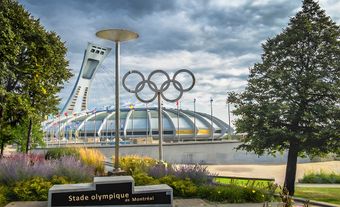
At the time, Montreal’s Gay Village was located downtown, although that was not its official name at the time. It was later relocated further east, to the Centre-Sud neighbourhood. Police raids on the community were common. Saunas and bars were at the centre of gay "clean-up" operations during and in the lead-up to the 1976 Olympic Games. These raids aimed to make the city morally "cleaner" for the international spotlight. These police operations are often attributed solely to Mayor Jean Drapeau. However, they were also supported by the RCMP and stemmed from the federal government’s wishes.
Police used the brothel law to target the 2SLGBTQ+ community. Police raids on gay bars and saunas continued even decades after the Olympics. This persecution of 2SLGBTQ+ people lead to suicides and caused a tremendous amount of suffering.
Police Crackdown and Resistance
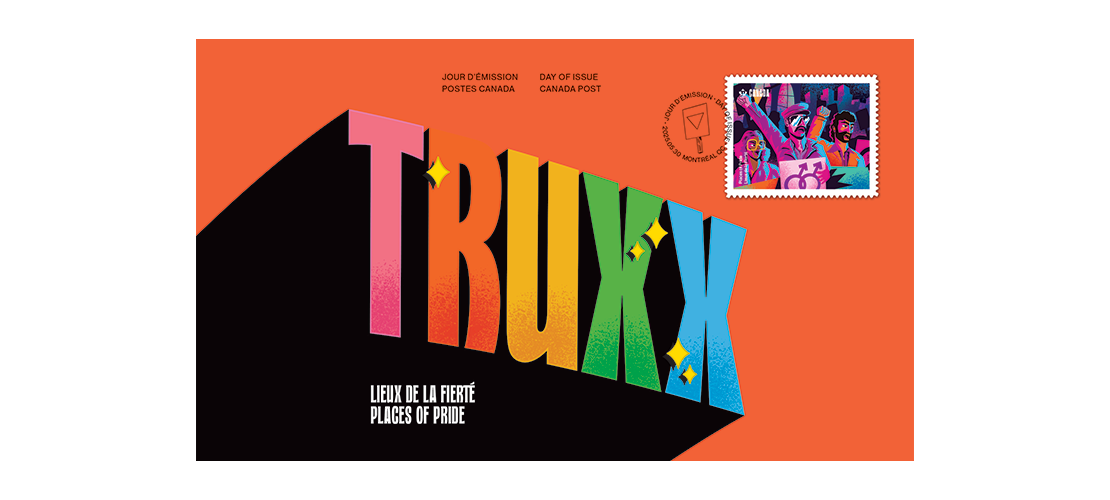
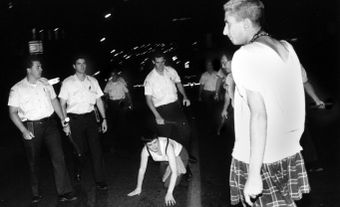
On the night of 21 to 22 October 1977, about 50 riot police officers raided the Truxx and Mystique bars on Stanley Street. At the time, these two bars were among the most popular in Montreal where people were free to be themselves. Officers entered with firearms and cameras pointed at the patrons. The police beat those present and forced them out of the bar.
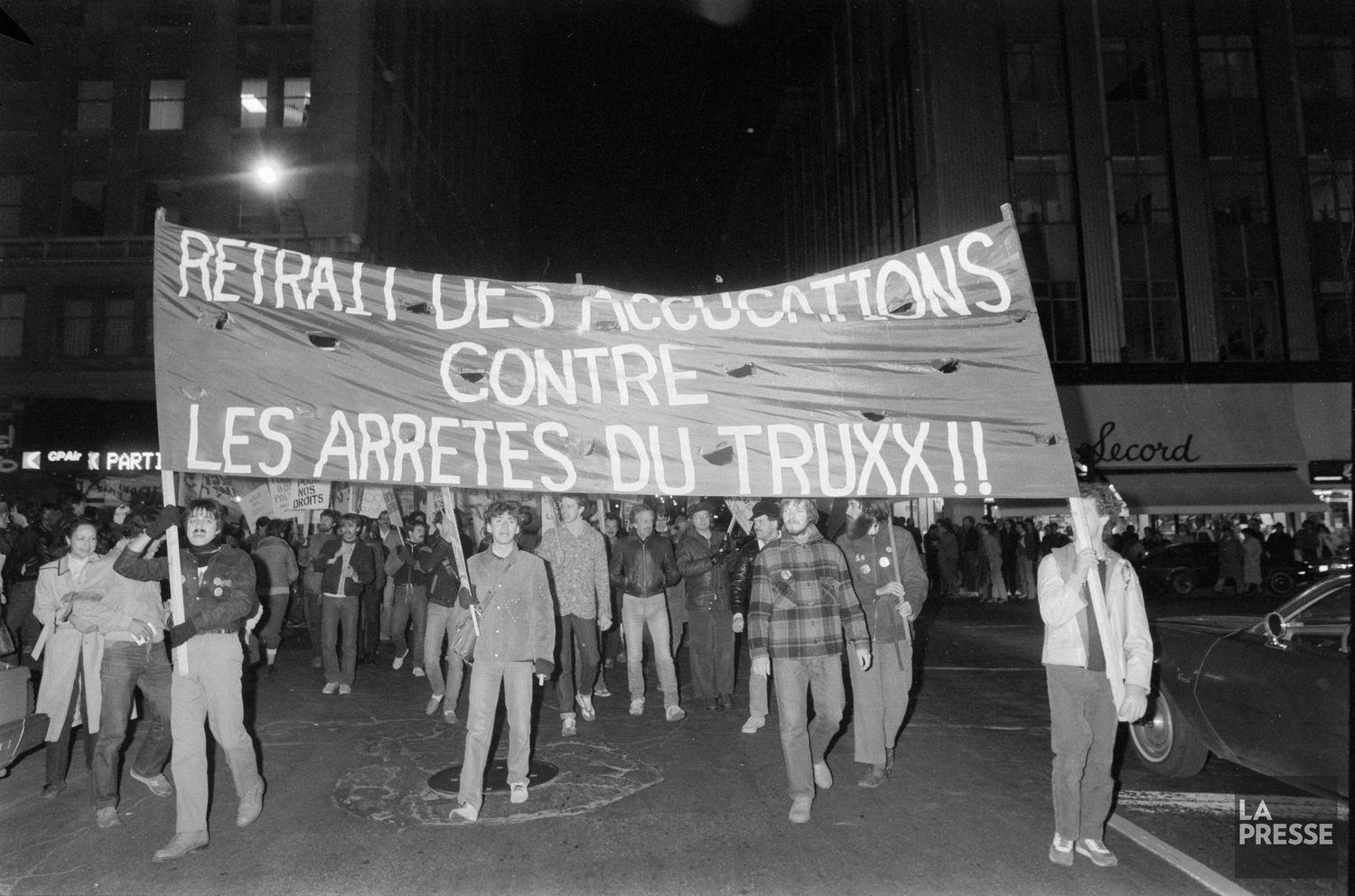
The next day, a demonstration of 2,000 people organized by the Association pour les droits des gai(e)s du Québec (Quebec Gay Rights Association) was met with strong police crackdown. It was widely reported in the media. Police attacked the demonstrators with their batons. They rode their motorcycles through the crowd to disperse it. This was a defining moment in the 2SLGBTQ+ rights movement.
Did you know?
The 22 October protest is considered one of the "Stonewalls of Quebec." This is in reference to a brutal police raid that took place in a gay bar in New York City in 1969. The American raid sparked a series of riots and demonstrations, again marking a turning point in the 2SLGBTQ+ community’s resistance movement.
In addition to the police repression, photographs of those arrested circulated in the media. This publicly revealed their homosexuality since there was no law protecting against discrimination based on sexual orientation. It was also reported that those detained were forcibly and degradingly tested for sexually transmitted infections. According to witnesses, those arrested also spent several hours being questioned by police. They were reportedly held without seats in overcrowded cells with no access to a lawyer.
In court, there was a failed attempt to use the results of drug screening conducted without consent to charge those arrested at Truxx. Most criminal charges brought against the victims of this discrimination remained pending for several years before they were finally withdrawn or dismissed. In 1980, the owner of Truxx was nevertheless found guilty of running a "bawdy-house". He lost on appeal in 1982.
Tipping point for 2SLGBTQ+ struggles
The 2SLGBTQ+ communities’ resistance led the Quebec National Assembly to vote in favour of Bill 88 in December 1977. The law condemned discrimination on the basis of sexual orientation, including in access to public services, health care, housing and employment. The Charter of Human Rights and Freedoms was amended to protect gay people, a first in Canada. Gay ministers pointed out to the Minister of Justice that they easily could have been among those arrested, which accelerated the legislative process.
Despite these advancements in 2SLGBTQ+ rights, oppression against the community persisted. Protests continued to be held to demand the withdrawal of charges against those arrested at Truxx. In the summer of 1990, the community staged a peaceful kissing demonstration in front of a police station, which was violently broken up. It had been organized in response to the Sex Garage raid, which targeted a private loft frequented by the community.
Despite the amendment to the Charter, the criminalization of gay people and police brutality against the community persisted in Montreal until the 2000s under the pretext of immorality, because the Criminal Code was a federal responsibility. Police raids occurred at various bars including Buds in 1984, Katacombes in 1994 and Taboo in 2003.
Today, tensions between the police force and Montreal's 2SLGBTQ+ communities are less pronounced, but still present. Conflicts with the police mainly target the more militant fringes of the community. Police brutality remains a topical issue.
Despite Quebec's position in favour of gay rights at the forefront at the time, the province is now criticized for its lag and regression in protecting the rights of trans and non-binary people. (See Transgender.)
Apology
In 2017, Montreal Mayor Denis Coderre and Montreal Police Chief Philippe Pichet acknowledged that the anti-2SLGBTQ+ crackdown had undermined the dignity of those oppressed. They issued a formal apology following pressure from the official opposition and the 2SLGBTQ+ communities, who deplored that this had ruined lives and left deep scars.
Commemoration
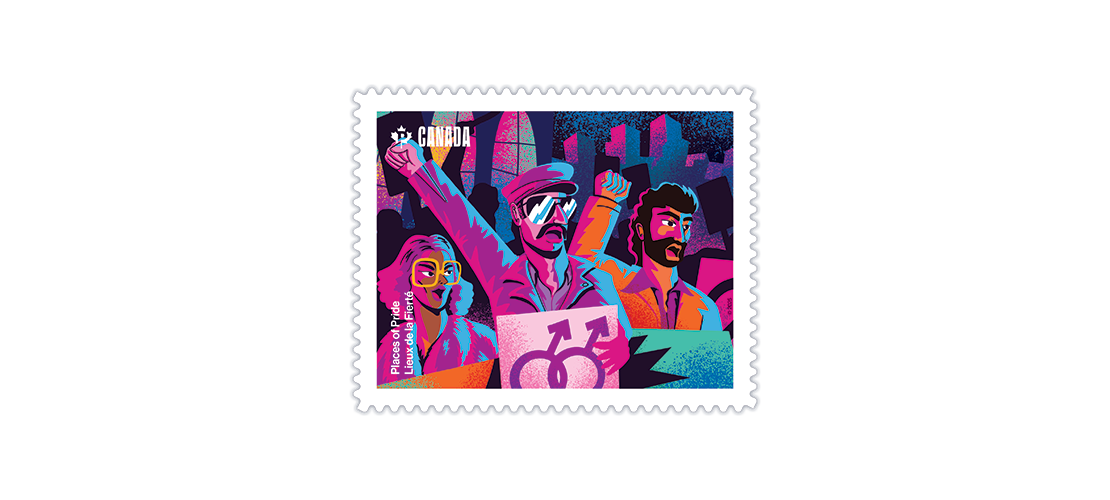
In honour of Pride Month in 2025, Canada Post issued a stamp to commemorate this pivotal moment in the fight for 2SLGBTQ+ rights.