Share on Facebook
 Share on X
 Share by Email
 Share on Google Classroom
Normand Chaurette, OC, playwright, novelist (born 9 July 1954 in Montreal, QC; died 31 August 2022 in Montreal). Normand Chaurette was awarded the Governor General’s Literary Award four times. In 2004 he was made Officer of the Order of Canada, and in 2012 he received the Queen Elizabeth II's Diamond Jubilee Medal.

Rêve d’une nuit d’hôpital (1976)
Normand Chaurette wrote his first play, Rêve d’une nuit d’hôpital, while studying literature at the Université de Montréal. The text was initially conceived for radio theatre and was later adapted for the stage.
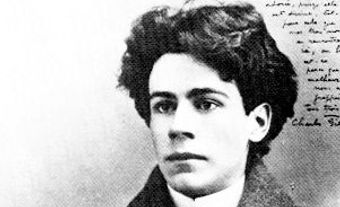
Inspired by the childhood and psychiatric hospitalisation of the poet Émile Nelligan, Rêve d'une nuit d'hôpital displays the characteristics of new Quebec dramaturgy: it abandons the use of popular language and reflects the socio-cultural reality of the previous decade. It is a literary work that places the creator himself (through a literary process called mise en abîme), at the heart of the dramatic fiction.
Chaurette's text earned him the Grand Prix international de la fiction radiophonique Paul-Gilson (1976). Along with Michel Marc Bouchard, René-Daniel Dubois and Jean-Pierre Ronfard, Normand Chaurette brought about what has been called the “great shift of 1980” (“le grand virage de 1980”) in Quebec theatre, the year his first play was staged and published.
Provincetown Playhouse, juillet 1919, j’avais 19 ans (1982)
Fêtes d'automne and especially Provincetown Playhouse, juillet 1919, j'avais 19 ans (1982) keep to the same literary mecanisms as Rêve d’une nuit d’hôpital. Provincetown Playhouse is a story of madness and murder that takes place in the birthplace of modern american theatre. The play is poetic, complex and utterly tragic. It is hailed as one of the greatest works of the Quebec repertoire, successfully tying into the theatre tradition of Eugene O’Neill, Henrik Ibsen and Racine.
Other Works
Normand Chaurette worked at the publishing house Leméac from 1984 to 1988 while pursuing writing. His subsequent works, all imbued with rich intertextuality and a sense of transgression, push the boundaries between reality and theatrical fiction further and further.
La Société de Métis (1983) takes the viewer to a Quebec resort populated by wealthy Americans, while Fragments d’une lettre d’adieu lus par des géologues (1986) transports them to a faraway, fictional Cambodia. Je vous écris du Caire (1996) is set in Italy and evokes the Egypt of Verdi’s opera Aïda.
From 1990 onwards, Chaurette focused on translation. He retranslated Hedda Gabler by Norwegian playwright Henrik Ibsen, as well as several of Shakespeare’s plays. This experience inspired Chaurette to write a completely original play: Les Reines (1991) is a rewriting of Richard III from the perspective of the women in the play.
His other theatrical works include Le Passage de l’Indiana (1996), a play centered around a strange problem of literary plagiarism; Stabat mater (1997); Petit navire (1999); Stabat mater II (1999), a verbal symphony of 15 women’s voices that explores the resonances arising from confrontation with death; Le Petit Köchel (2000) and Ce qui meurt en dernier (2010). He also wrote novels, short stories, movie scripts, radio plays, opera booklets and an essay (Comment tuer Shakespeare, 2011), as well as numerous translations.
Honours
Normand Chaurette's plays, almost always considered “unperformable,” have nonetheless enjoyed remarkable success both in Quebec and abroad. La Société de Métis has been performed extensively in Italy, Les Reines had the honour of being the first Canadian play performed at the Comédie Française, and Le Passage de l'Indiana and Le Petit Köchel premiered at the Avignon Festival.
Normand Chaurette was awarded the Canada Council for the Arts’s Governor General’s Literary Award four times. He was made Officer of the Order of Canada in 2004, and received Queen Elizabeth II's Diamond Jubilee Medal in 2012.
Awards
- Grand Prix international de la fiction radiophonique Paul-Gilson (1976)
- Governor General’s Literary Award, francophone theatre (Le Passage de l'Indiana), Canada Council for the Arts (1996)
- Prix de la critique (Fragments d’une lettre d’adieu lus par des géologues), Association québécoise des critiques de théâtre (AQCT) (1988)
- Governor General’s Literary Award, francophone theatre (Le Petit Köchel), Canada Council for the Arts (2001)
- Officer, Order of Canada (2004)
- Governor General’s Literary Award, francophone theatre (Ce qui meurt en dernier), Canada Council for the Arts (2011)
- Governor General’s Literary Award, francophone essays (Comment tuer Shakespeare), Canada Council for the Arts (2012)
- Queen Elizabeth II's Diamond Jubilee Medal (2012)