Share on Facebook
 Share on X
 Share by Email
 Share on Google Classroom
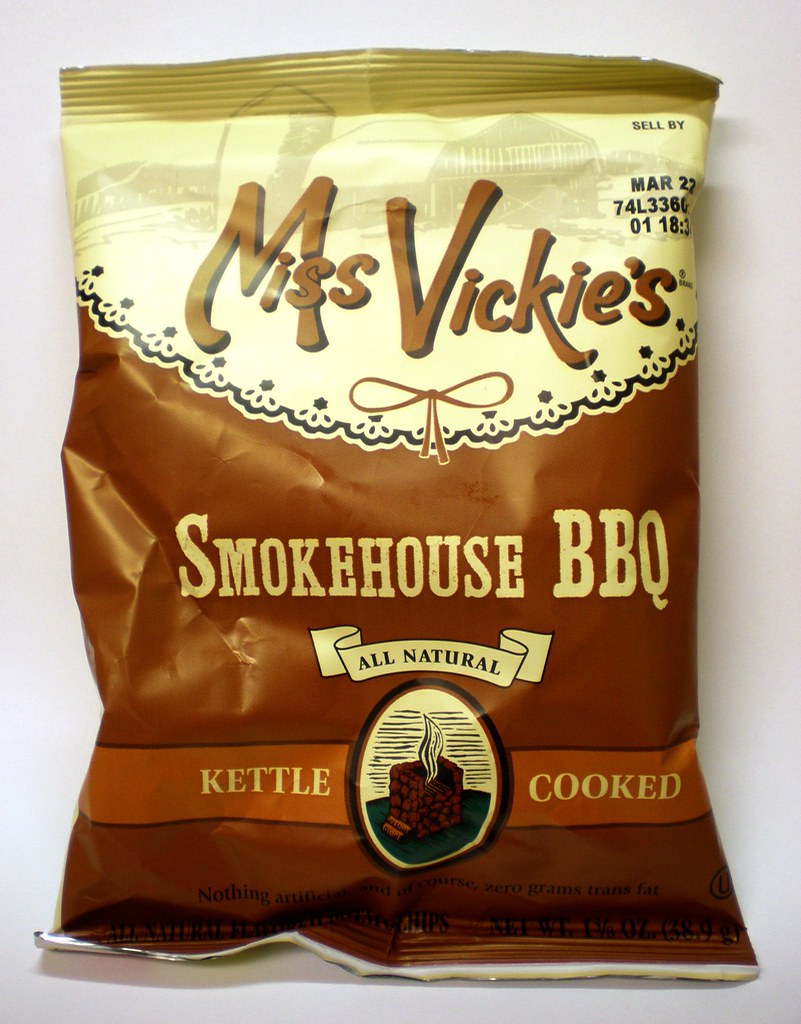
Miss Vickie’s is a brand of kettle-cooked potato chips created by Vickie Kerr in 1987. They come in a variety of flavours and are currently produced in Canada and the United States by Frito-Lay and distributed in Canada, the United States and the United Kingdom. Miss Vickie’s may hold the distinction of being the first mass-market snack food to be created and distributed in Canada by a woman-led enterprise. (See also Notable Women Entrepreneurs in Canada History.)
Concept and Origin
Originally from Deux-Montagnes, Quebec, Vickie Kerr was an early-childhood educator, a hotel receptionist and the co-owner of a tavern before she became a successful entrepreneur. In the mid-1980s, she was married to potato farmer Bill Kerr and was a mother to four children. The family lived together on a 66-hectare farm near New Lowell, Ontario, approximately 125 kilometres northwest of Toronto, in a region where potato farming was common. (See also Agriculture in Canada.) Coincidentally, at the time Vickie Kerr began making her unique brand of potato chips, the Kerr potato farm sold most of its potatoes to companies producing potato chips.
Vickie Kerr’s motivation to create a new kind of potato chip was partly to steer her children away from snack foods like the potato chips then on the market, which she considered unhealthy, as well as to help her family make ends meet. To make a healthier snack food, Kerr cooked her thinly sliced potatoes in pure peanut oil to lower cholesterol. She also prepared her chips to meet her own family’s demand, eliminating the need for preservatives. She salted the chips herself, which resulted in lower salt content, and avoided using artificial flavours and colours. Finally, unlike other potato chips, Vickie Kerr kept the potato skins on, since the skins contained more nutrients. Most commercially produced potato chips lose their vitamin A and potassium due to the method by which they are made, but that was not the case with Vickie Kerr’s recipe.
The chips made their debut at the 14th annual Alliston Potato Festival in 1987 and quickly became a local hit. Kerr cooked, packaged, and distributed the chips she made herself in small batches to a number of local stores in the New Lowell area. In 1989, she and her husband took out a third mortgage on their farm and committed themselves to developing their potato chip business as a full-time endeavour.
Unique Production and Marketing Practices
To avoid the use of preservatives, Vickie Kerr initially chose to produce only in small batches to meet the demand she was largely responsible for creating. The company began producing chips in a barn on the Kerr family farm. (See also Agriculture in Canada.) By the summer of 1990, about 50 people were working for Kerr producing 6–7,000 cases of chips per week, each case with 12 bags of chips. During seasonal swells in demand, her small business was operating 20 hours a day, but Kerr, whose potato chip business was started to give her children a healthy alternative to snack food, limited the work week to just four days so that her employees could spend ample time with their families.
Vickie Kerr’s marketing strategy also challenged conventional thinking at the time, since it relied entirely on word of mouth during its early years. Kerr also marketed her chips as health food, asking retailers not to put her product next to other potato chips in stores. Kerr’s Miss Vickie’s chips were unique snack foods in that they only contained three ingredients: potatoes, sea salt and peanut oil (the chips are no longer cooked in peanut oil).
Kerr also used a unique strategy when approaching prospective new buyers of her product, asking two questions, one being “Are you willing to pay more for a snack food that is healthy and tastes better?” Because her business needed cash to continue operations, her second question was typically “Are you willing to pay cash?” At the time, Kerr was selling her 180-gram bags of chips for about $2 each, roughly double the cost of mass-produced chips at the time.
Early Challenges
As a woman entrepreneur, Vickie Kerr faced some challenges in starting her business. In her effort to get financing for her new business, many bank managers reportedly asked her if her husband knew what she was doing. She finally got the financing she needed to develop her business after a meeting with a woman bank manager who happened to be a fan of her chips.
In addition to the problems securing financing to develop her business, the Kerrs also faced retribution from major potato chip manufacturers. Upon discovering that Vickie Kerr was producing and selling her own brand of chips, they stopped purchasing potatoes grown on the Kerr family farm. This caused considerable financial stress early on, since the family was still dependent on the income from potato farming. (See also Agriculture in Canada.) Despite these challenges, the company earned $1 million in its first year, double what the Kerrs had anticipated.
Business Expansion
As word of the new healthy potato chip spread through Ontario, the Kerrs had to acquire new equipment to help develop their business. They quickly grew from using a single industrial chip-cooking kettle to six, purchased a second-hand packaging machine for $10,000, converted a potato storage building on their farm into a production plant and had two dozen trucks on the road, expanding their reach into the major consumer markets of Toronto, Ottawa and Montreal. When Vickie Kerr’s original production facility reached the limit of its capacity in 1990, Miss Vickie’s expanded to its first purpose-built production facility in the Montreal suburb of Pointe-Claire. Vickie Kerr’s expansion strategy was driven by her insistence that her chips be produced locally to ensure freshness and avoid the use of preservatives. She also insisted that her product support the creation of jobs in the markets where it was available. By 1992, her company had expanded its production capacity once again, with a new plant opening in Port Coquitlam, British Columbia, to support the expansion of her product in that province.
Sale
In 1993 Vickie Kerr, and her husband Bill Kerr decided that they would sell their company, capitalizing on its whirlwind success. They sold the company to Hostess Frito-Lay for an undisclosed sum so they could enjoy more time with their children. At the time of the sale, Miss Vickie’s produced 85,000 bags of chips per day, representing about 1 per cent of the national potato chip market. Shortly after selling the company, the Kerrs moved to Phoenix, Arizona. Bill Kerr died in a car accident in 1997, and Vickie Kerr worked for an attorney for a period of time. As of 2016, she was living in Scottsdale, Arizona, and was the owner of the Arizona Language Centre, a language school.
Today
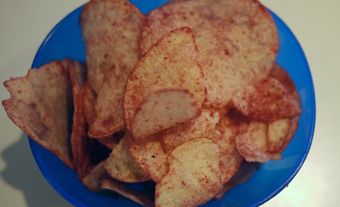
Miss Vickie’s chips are still made in Canada by Frito-Lay, a division of PepsiCo. Vickie Kerr is no longer involved in the business. Miss Vickie’s are available in several distinct flavours, including sweet chili and sour cream, lime and black pepper, honey dijon, and jalapeño. (See also Canadian Snacks and Flavours.)
/Cherryblossom.jpg)