Share on Facebook
 Share on X
 Share by Email
 Share on Google Classroom
Mario Dumont, politician, columnist, broadcaster, speaker (born 19 May 1970 in Cacouna, QC). Dumont co-founded the Action démocratique du Québec (ADQ) party in 1994, then pursued a career in the media after nearly 20 years in politics. He is the father of three children with his wife, Marie-Claude Barrette, who is also a host.
Education and Early Career
Mario Dumont grew up on a family farm in the Bas-Saint-Laurent. His mother was a teacher, and his father was an agricultural producer. Dumont studied in Rivière-du-Loup before completing his bachelor's degree in economics at Montreal’s Concordia University in 1993.
Between 1991 and 1992, Dumont was president of the Quebec Liberal Party's Youth Commission. In November 1992, he resigned and left the party because Robert Bourassa's government refused to follow the recommendations of the Allaire Report. This report advocated greater autonomy for Quebec from Canada. His resignation was also in opposition to Bourassa's support for the Charlottetown Accord. During the 1992 referendum, Dumont was co-president of the Réseau des libéraux pour le Non on the Charlottetown Accord.
Political Career
In January 1994, at the age of 23, Mario Dumont created a new political party with Jean Allaire, the Action démocratique du Québec (ADQ). He became the party leader the same year. The ADQ was an economically and socially conservative party. Its members wanted to build bridges between sovereigntists and federalists. Under Dumont, the party was initially composed of former Liberals, then diversified to include former members of the Parti Québécois. The ADQ proposed an alternative to the traditional two-party system.
In the September 1994 general election, Dumont was elected as an ADQ representative for Rivière-du-Loup, where he received more than 50% of the vote.
During the 1995 referendum on Quebec sovereignty, the ADQ supported the "Yes" camp. After the victory of the "No" camp, the party proposed a moratorium on the constitutional issue. Nevertheless, the ADQ campaigned for greater autonomy for Quebec within Canada. (See Federalism in Canada.)
Dumont was re-elected as a member of the National Assembly four times: in 1998, 2003, 2007 and finally in 2008. As the only ADQ representative in the National Assembly between 1994 and 2002, he led his party to a major comeback in 2002 by-elections. Polls showed him as the most popular political leader in Quebec.
However, Dumont's popularity did not translate into gains for his party in the 2003 general election. The ADQ won only four seats in the National Assembly. Despite everything, the party made a strong comeback in 2007 winning 41 seats and 30.9 per cent of the vote. With these results, Dumont became the leader of the Official Opposition while Jean Charest's Liberals formed a minority government.
However, the ADQ quickly lost momentum and disappointed its electorate. In the 2008 election, the ADQ suffered a catastrophic defeat, with only seven members elected, including Dumont. As a result, he resigned as party leader and member of the National Assembly in 2009.
In 2012, the ADQ merged with the Coalition Avenir Québec.
Media Career
In 2008, the same year he left politics, Mario Dumont began a career in the media. He hosted a daily public affairs program on V télé (now Noovo). He also worked on TVA, LCN and QUB. Dumont was also a columnist for the Journal de Montréal and the Journal de Québec. (See Quebecor Inc.)
Political Views
During his career, Mario Dumont's political positions were predominantly conservative and based on identity nationalism. In particular, he believes reasonable accommodations towards religious minorities to be abusive and advocates for secularism. He also wants the adoption of a Quebec constitution. Many observers describe it as populist, even anti-democratic. Some people believe his rhetoric against accommodation — which he calls "unreasonable" — as paving the way for racism by portraying minorities as enemies of the majority. In 2006 and 2007, debates and controversies regarding reasonable accommodations multiplied and dominated the media, leading to the rise of the Action démocratique du Québec (ADQ).
As a host, he remains more right wing. Dumont likes to incite controversy with his refractory opinions. He is part of the "anti-woke" movement, which is more conservative on social issues.
Some people consider that he would be a good candidate to succeed François Legault as leader of the Coalition Avenir Québec (CAQ), since this party is, in a way, a continuation of the ADQ. In an interview with The Canadian Press, Dumont said he does not consider the CAQ to be a continuation of the ADQ, even though the party has taken up many of its ideas. He believes that the ADQ is more right wing while the CAQ is centrist.
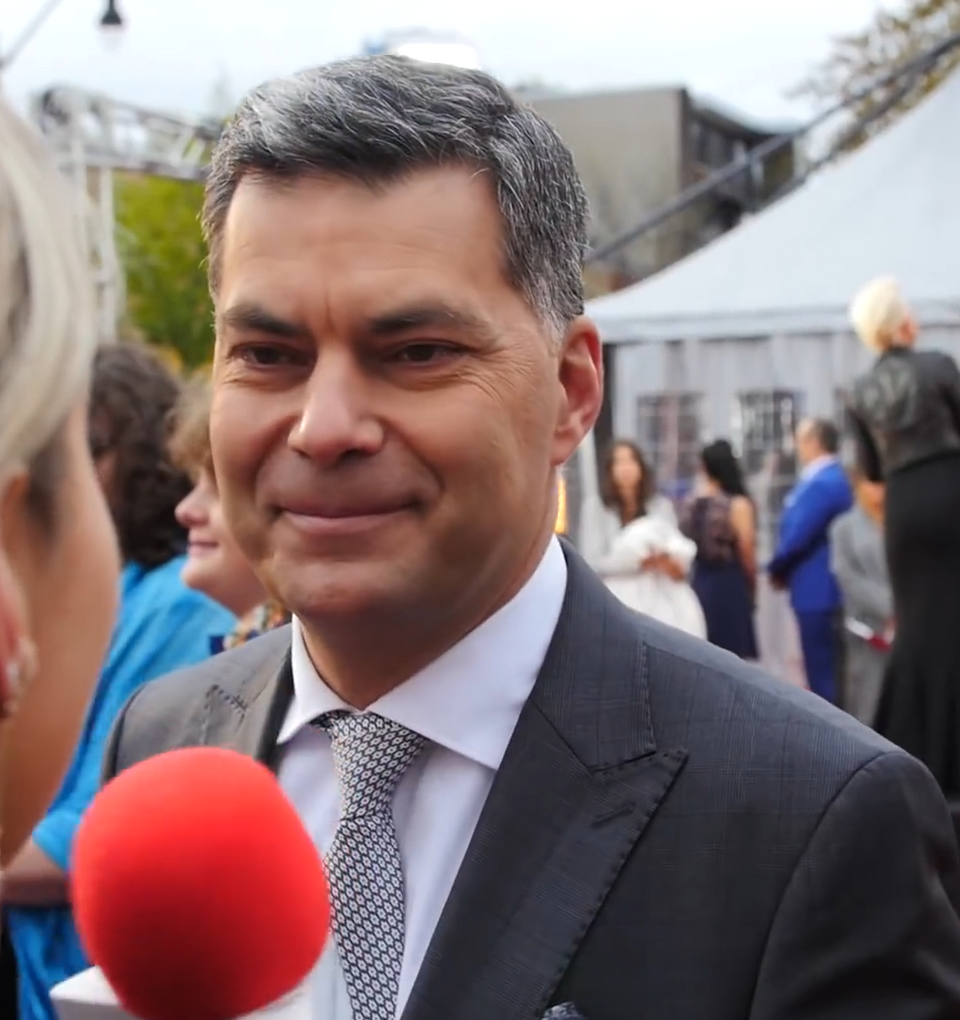
During an interview on the show Tout le monde en parle in 2024, he said he did not want to return to political life. He felt that it would be too demanding and would encroach on his free time. Dumont believes that his career in the media already allows him to play a prominent role in the political world. In addition, he claims that his media career is more lucrative.
Awards and Distinctions
In 2011, the Montreal Economic Institute awarded Mario Dumont the Economic Education Prize for his contribution to economic education in the media.
In 2020, Dumont received the Information and Journalism Personality of the Decade award from the Institut de la confiance dans les organisations. In 2021, he also won an Artis Award in the category of public affairs program host.