Share on Facebook
 Share on X
 Share by Email
 Share on Google Classroom
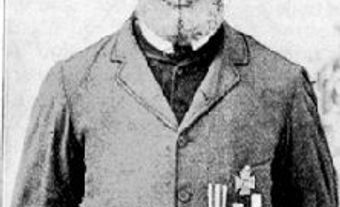
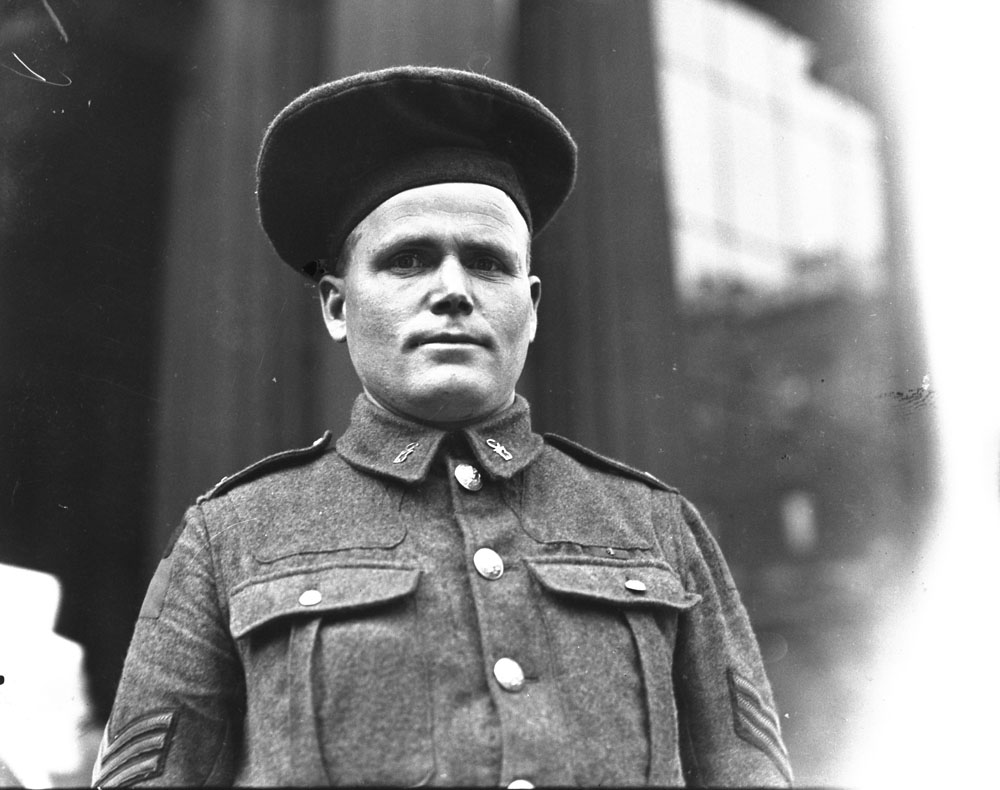
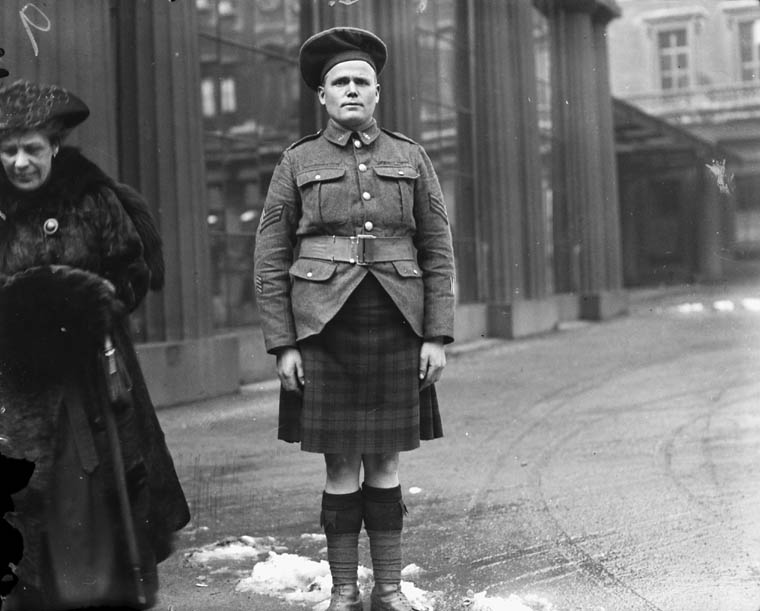
Herman James Good, VC, lumberman, soldier (born 29 November 1887 in South Bathurst, NB; died 18 April 1969 in Bathurst). Good received the Victoria Cross (VC) for his bravery at the Battle of Amiens during the First World War.
Early Life
Herman Good was one of 14 children born to Walter Frederick Good and Rebecca Anne (née Sealy). His parents were farmers and members of the Church of England (see Anglicanism in Canada). After leaving school, Herman worked on the farm and in the lumber business.
First World War
On 4 August 1914, Great Britain and Canada declared war on Germany. The following year, on 29 June, Herman Good enlisted at Sussex, New Brunswick, with the Canadian Overseas Expeditionary Force; he was 27 years old at the time.
Good’s military records indicate that he embarked for England on the SS Corsican in late October 1915 and arrived on 9 November. In April 1916, he crossed the English Channel and was placed with the 13th Battalion (Royal Highlanders of Canada), Canadian Expeditionary Force (CEF) in France. A month later, Good was shot in the buttocks, requiring several weeks of treatment and recovery before he could return to his unit. He then suffered a personal tragedy upon receiving news that his bother, Pte Ernest Robert Good, had been killed on 4 September 1916, during the Battle of the Somme.
Later that month, the 13th Battalion fought in the Battle of Thiepval Ridge (26–29 September), which was characterized by fierce fighting and heavy shelling. On 27 September, Good was pulled from the front lines, diagnosed with “shell shock.” He returned to his unit by the end of October but was again admitted in December with a fever. Good was in and out of hospital for several months, including treatment for mumps in May. He returned to duty in June 1917. Records show that he was promoted to Acting Lance Corporal in August 1917 and Lance Corporal in December.
The Battle of Amiens
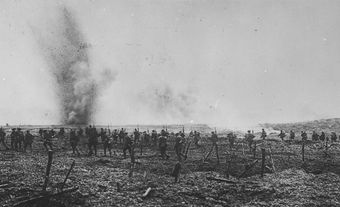
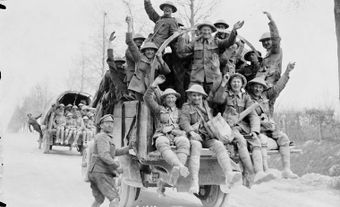
On 8 August 1918, the Canadians and their allies launched a string of offensives against Germany that led to the end of the First World War, known as the Hundred Days Offensive. It started with a surprise attack against German forces in Amiens. The allied troops secretly moved into position and attacked without warning, supported by thousands of field guns, howitzers, more than 600 tanks, and 2,000 aircraft. Instead of a lengthy bombardment prior to the attack, the allied troops advanced behind a creeping barrage that included smoke and poison gas. The Germans were caught by surprise and many surrendered the first chance they got. Others, however, fought on.
During the fighting on 8 August, L/Cpl Herman Good’s company was held up by heavy fire from three machine guns that was seriously delaying their advance. Realizing the gravity of the situation, Good dashed forward, killing several in the garrison and capturing the remainder. Later, Good encountered a battery of 5.9-inch guns. Collecting three men of his section, he charged the battery under point-blank fire and captured all three gun crews. For Good’s actions on this day, he was awarded the Victoria Cross, the highest honour for military valour awarded to soldiers of the British Empire.
Gas Wound
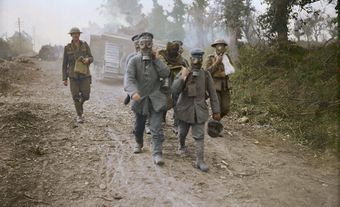
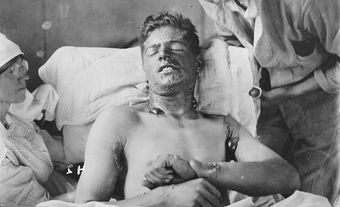
Following the victory at Amiens, the Canadians were moved back to rejoin the First (British) Army near Arras. From mid-August, preparations began for an attack east toward the German-held Drocourt-Quéant Line. During this period, the Canadians were subjected to attack from German gas shells. There was little they could do in defence, according to an entry in the 13th Battalion’s war diary on 20 August “As there are no gas defences in the area, and higher authorities state that they cannot get anti-gas material, it is hard to counteract this and our men […] suffer from it the whole time.” (See also Canada and Gas Warfare.)
Herman Good was among those affected by the gas attacks. According to his service file, he was admitted to a hospital for treatment of a “gas wound” on 21 August 1918. About a month later, on 17 September 1918, he was promoted to Lance Sergeant.
Postwar Life
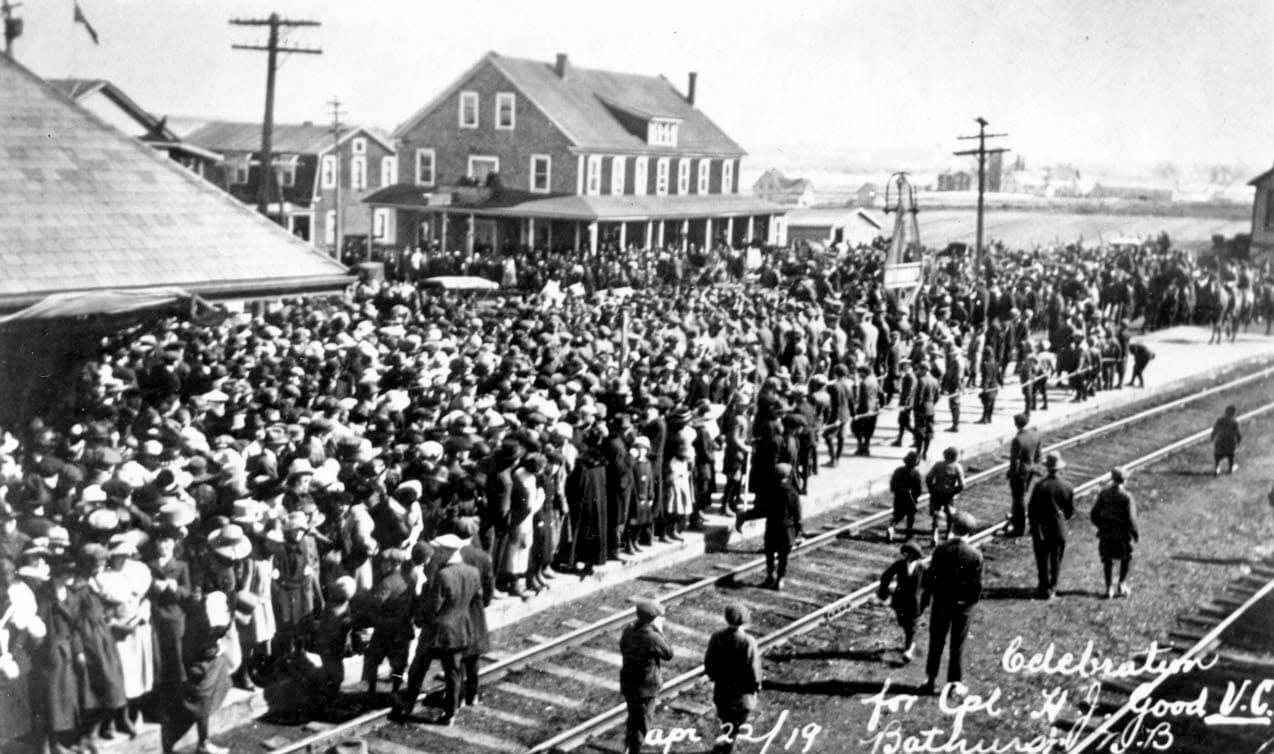
Although the First World War ended on 11 November 1918, it would be months before many Canadians returned home. On 22 April 1919, all of Bathurst turned out to welcome Herman Good, their hometown hero. After his discharge from the military in 1919, Good worked in the lumber industry and then for 20 years as a fish and game warden.
Marriage and Family
On 6 August 1919, Good married 19-year-old Martha Blanche Moore at St. George’s Anglican Church in Bathurst. The couple built their home in the Big River community south of Bathurst, and had three boys: Franklin, Alfred and Milton, who died in his first year. Martha died in 1941.
Legacy
In the early 1960s, the local Royal Canadian Legion Branch in Bathurst was renamed the Herman J. Good V.C. Branch No. 18 Royal Canadian Legion. A war museum was also established at the same location.
Herman James Good died 18 April 1969, at 81 years of age. After a funeral service at St. George's Church, he was buried with military honours in St. Alban's Cemetery in Bathurst. In addition to the family gravestone, a stone recognizing his VC was placed by the Commonwealth War Graves Commission. His medals are held by the Canadian War Museum in Ottawa.