Share on Facebook
 Share on X
 Share by Email
 Share on Google Classroom
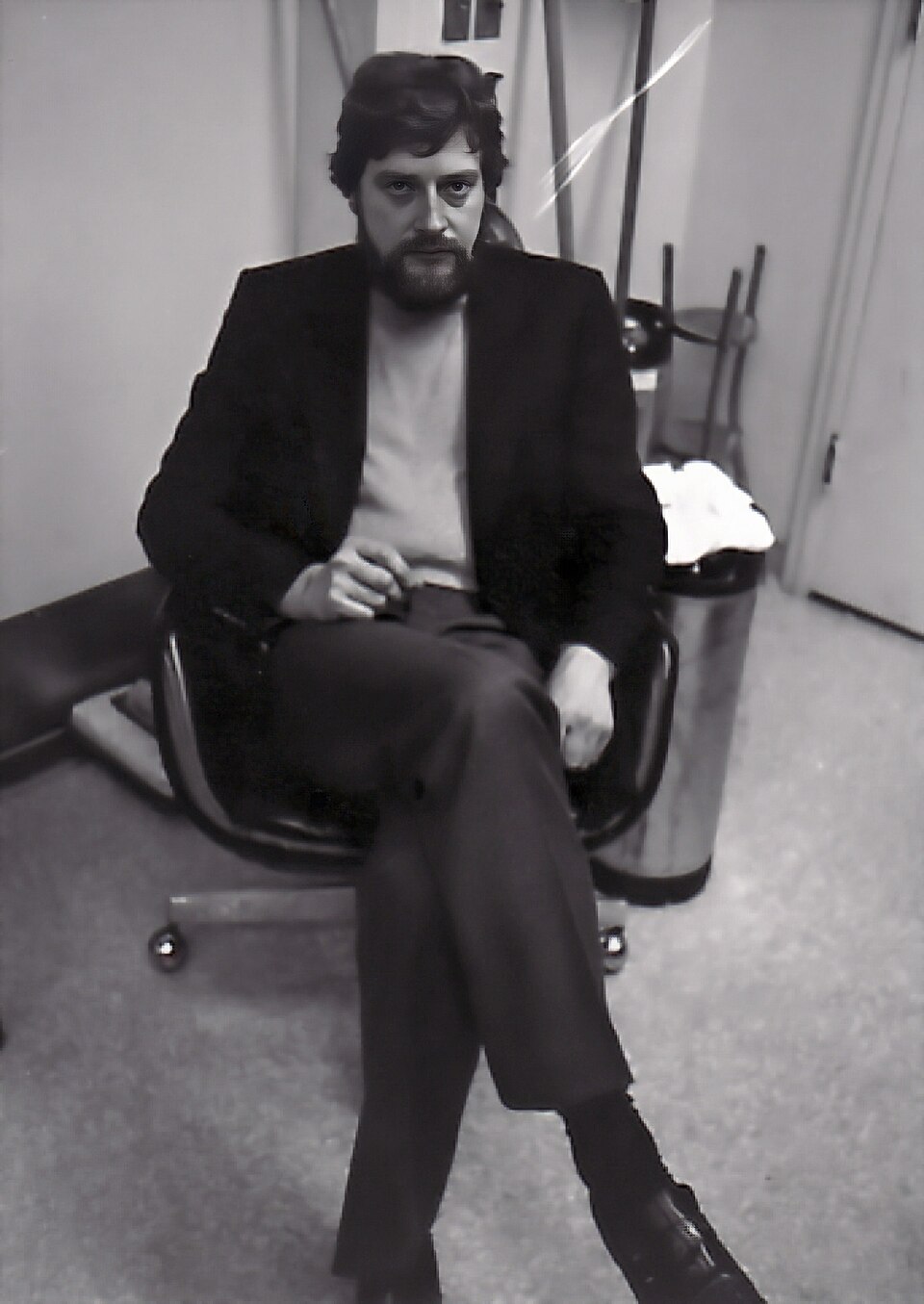
Donald “Don” Winston Thompson, pianist, bassist, vibraphonist, drummer, composer, arranger, recording engineer (born 18 January 1940 in Powell River, BC). Jazz musician Don Thompson (not to be confused with jazz musician Don “D.T.” Thompson) was self-taught as a bass, piano and vibraphone player. Comfortable in a wide range of styles, he developed a versatility largely without precedent in contemporary jazz. He began his career in Vancouver in 1960 with Chris Gage and others. He then travelled in 1965 and 1966 in the US with saxophonist John Handy (appearing as the bassist on Handy's popular Live at Monterey LP) before moving to Toronto in 1969. He was a member of Rob McConnell’s Boss Brass as both a bassist and pianist. Thompson’s discography includes 11 albums under his own name and many others as a sideman. He also played an important role as a teacher and mentor, won three Juno Awards, and was made an Officer of the Order of Canada.
Early Life and Career
After childhood piano lessons, Don Thompson took up the string bass and the vibraphone in his teens. He is essentially self-taught on all instruments. In Vancouver from 1960 to 1965, he was sideman to Chris Gage (playing bass or vibraphone) and Dave Robbins (bass) and accompanied the visiting US jazzmen Barney Kessel, John Handy, and others in local nightclubs. In 1965, with the drummer Terry Clarke, Thompson joined Handy's quintet in the US. They touring widely and making two LPs, one of which, Live at Monterey, was among the most popular jazz recordings of the 1960s.
After working briefly in Montreal with Lee Gagnon, Thompson returned to Vancouver in 1967 and moved to Toronto in 1969. He quickly became that city's first-call studio bassist, a standing he maintained until he turned exclusively to jazz in the mid-1970s.
Career Highlights
Don Thompson was a member of the Boss Brass (bassist from 1969 to 1982 and pianist as of 1988) and the bands of Sonny Greenwich (pianist from 1970 to 1982 and again as of 1990) and Moe Koffman (bassist from 1970 to 1974 and pianist from 1975 to 1978). He also played bass and drums with Lenny Breau and maintained a lengthy association with the guitarist Ed Bickert in various jazz settings.
Thompson’s work as a bassist at the Toronto jazz club Bourbon Street with (among others) the US guitarist Jim Hall and the US alto saxophonist Paul Desmond, documented by live recordings there in 1975 (for which Thompson served as recording engineer), renewed his international profile. In 1976, he began touring with Hall (Japan, the USA and Europe) and from 1982 to 1987 he was concert partner to the celebrated British pianist George Shearing, with whom he played both bass and piano. He was the sole accompanist to Shearing and the singer Mel Tormé on Top Drawer, winner of a Grammy Award in 1984. While working with Shearing, Thompson began to teach each summer at the Banff Centre for the Arts Jazz Workshop in 1982, and established the short-lived record label, From Bebop to Now, in 1983.
Resuming his activities in Toronto in 1987, Thompson played piano in the Dave McMurdo Jazz Orchestra, accompanied Jane Bunnett, Trudy Desmond and others locally, and taught privately. His pupils have included the pianists Hugh Fraser, James Gelfand, Jeff Johnston, Andy Milne, and Dave Restivo, and the bassists George Mitchell and Alec Walkington. Thompson's own groups have appeared intermittently in Toronto clubs. One quartet, with the leader at the piano, was heard in 1977 at the Laren's International Jazz Festival in Holland. Another, with Thompson playing the vibraphone, appeared at several Canadian jazz festivals in 1991.
Thompson's comparably impressive facility as a bassist, pianist and vibraphonist has few precedents in jazz. He moves easily from instrument to instrument and from idiom to idiom, bringing to each an instinctive rather than schooled musicality. His recordings range from the mainstream Secret Love to the relatively avant garde Don Thompson Quartet Live. The albums Ed Bickert/Don Thompson and A Beautiful Friendship won Juno Awards (for best jazz recording) in 1980 and 1985, respectively.
Compositions
Thompson's diverse body of compositions includes Trio'85 (for clarinet, double bass and piano; premiered by James Campbell and others), Journey to Skye (1987, for pipe band; recorded by the 78th Fraser Highlanders), Quartet'89 (for four double basses; premiered at New Music Concerts by the composer with Joel Quarrington and others), and Abstract & Dreams (1989, for jazz and string quartets; recorded by Jim Hall in 1990).
Thompson’s best-known composition is Days Gone By, which he has arranged for big band and for symphony orchestra. It has been recorded by Thompson himself, the Boss Brass, a CBC-organized All Star Jazz Sextet, Moe Koffman, Pat LaBarbera and, with lyrics added, Jeff Dyer and Arlene Smith.
Thompson also has written in the 12-tone idiom for big band, including Pluto (1974), recorded by Koffman, and Don't (1970) and Winter Mist (1987), played as suite by McMurdo. Other Thompson themes have been recorded (with the composer as a participant) by Hall (Circles), Koffman (Mercury, Bilbo, Wildlife), McMurdo (Blues for Jim-San, Ghoti), Doug Riley (Gandalf, Dreams), and Shearing (Stratford Stomp). Thompson also wrote several pieces in tribute to other musicians (e.g., For Chris Gage, Song for Sonny [Greenwich], and For Scott LaFaro) His music is the copyright of Christopher Lambert Music.
Honours and Awards
- Best Jazz Recording (Sackville 4005) Juno Awards (1980)
- Best Jazz Album (A Beautiful Friendship), Juno Awards (1985)
- Vibraphonist of the Year, Jazz Report (1993–1997)
- Composer of the Year, Jazz Report (1994)
- Original Jazz Composition, SOCAN (1994)
- Traditional Jazz Album of the Year (Ask Me Later), Juno Awards (2006)
- Officer, Order of Canada (2009)
(See also Jazz in Canada.)
A version of this article originally appeared in the Encyclopedia of Music in Canada.