Share on Facebook
 Share on X
 Share by Email
 Share on Google Classroom
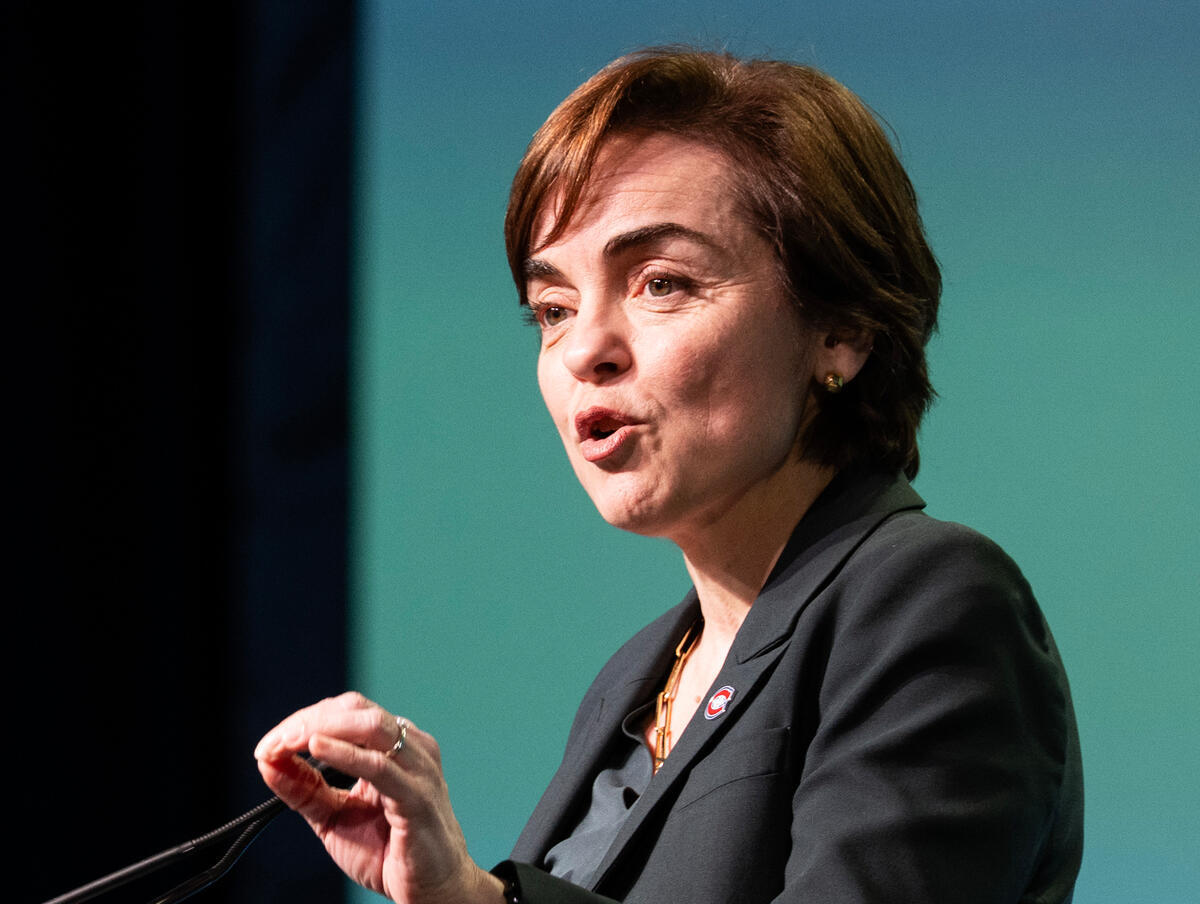
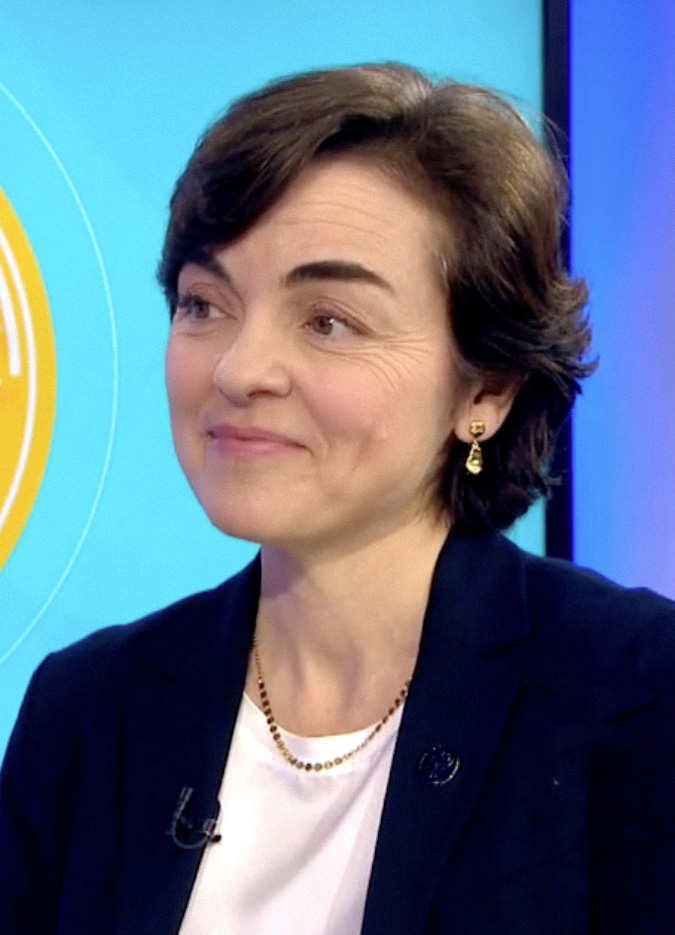
Christine Fréchette, Premier of Quebec since 2026, Quebec politician, political analyst (born 1970 in Trois-Rivières, QC). Fréchette was the leader of the Coalition avenir Québec (CAQ) from April to October 2026. At the same time, she became the premier of Quebec, the second woman to hold this position after Pauline Marois. During the general elections of 5 October 2026, the CAQ suffered a total defeat and won no seats. Christine Fréchette was also defeated in her riding in Trois-Rivières. She resigned as leader of the CAQ the day after.
Education and Early Career
Born in the Mauricie region, Christine Fréchette grew up in Trois-Rivières where she attended high school and pursued college studies. She then continued with a university degree in administration and international relations. In 1992, she obtained a bachelor's degree from HEC Montréal, then a master's degree from Université Laval in 1994.
During the 1990s, she became involved in the university and then in politics, notably with the Fédération étudiante universitaire du Québec. Between 1996 and 2000, she served as an international affairs advisor to the Parliamentary Conference of the Americas and the Franco-Quebec Interparliamentary Commission.
Her early career path revealed an interest in international relations and public policy, two issues that went on to shape her career.
Career in Public Affairs and Economic Development
During the 2000s and 2010s, Christine Fréchette developed an expertise in public affairs, political analysis and economic development. She worked as an independent consultant and then held various strategic positions in government and parapublic institutions.
Between 2008 and 2012, Fréchette became known to the public as an American politics analyst in several media outlets, including Radio-Canada and TVA.
She then held management positions in organizations related to economic development. She was involved with Montréal International and the Chamber of Commerce of Eastern Montreal, for which she served as President and Chief Executive Officer from 2016 to 2021.
Entry into Provincial Politics
From 2012 to 2014, Christine Fréchette worked on the team of Parti Québecois minister Jean-François Lisée. She served as press secretary, project manager and deputy chief of staff. However, she resigned so as not to have to defend the Quebec Charter of Values enacted by the PQ government of the time. She spoke of "irreconcilable values" and said she felt uncomfortable with the Charter.
A few years later, in the 2022 general election, she ran as a candidate for the Coalition Avenir Québec (CAQ). She was elected member of the National Assembly for the riding of Sanguinet and quickly entered the Cabinet.
Fréchette first held the position of Minister of Immigration, Francization and Integration. In this capacity, she was responsible for sensitive issues related to managing immigration thresholds and family reunification. ( See Quebec Immigration Policy.) These issues are still the subject of debate and controversy.
She then broadened her scope of responsibility by becoming Minister of the Economy, Innovation and Energy. These responsibilities reinforced her position within the CAQ as leader on economic issues and regional growth.
CAQ Leadership Race and Rise to Power
In January 2026, François Legault announced his intention to resign as leader of the Coalition Avenir Québec (CAQ). The CAQ government was very unpopular at the time. The party was trailing behind the Parti Québécois and the Quebec Liberal Party in the polls. Nevertheless, Christine Fréchette announced her candidacy for the leadership of the CAQ.
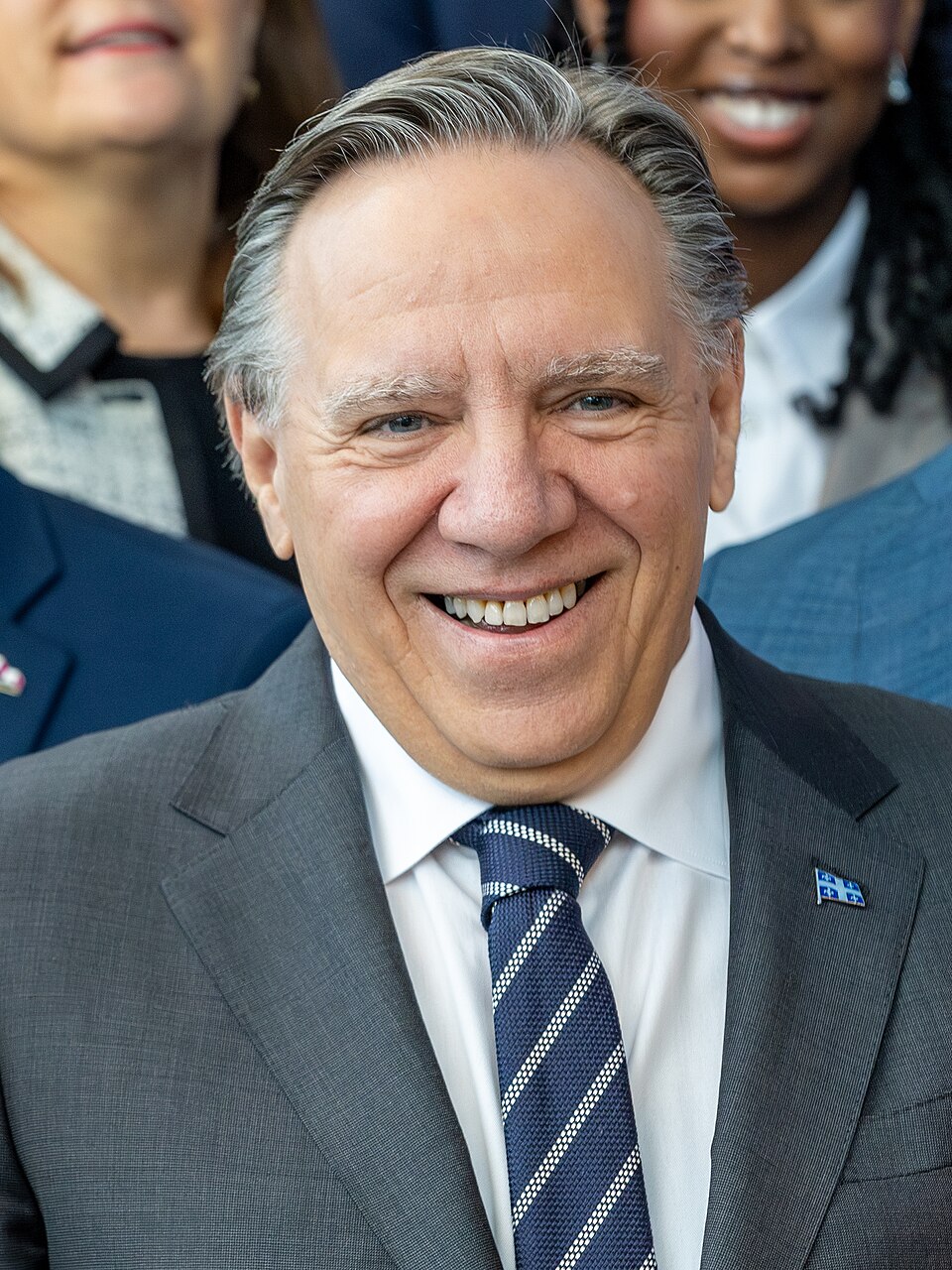
Her campaign focused on the economy and the cost of living. Her opponent, Bernard Drainville, instead prioritized identity issues, particularly with a firmer approach to immigration. (See also Quebec Immigration Policy.)
In April 2026, the leadership race ended Fréchette’s victory after receiving nearly 58 per cent of the votes of CAQ members. This victory makes her the leader of the party and the premier-designate of Quebec.
Fréchette's election as Premier marks an important milestone in Quebec's political history. She became the second woman to lead the province, more than a decade after Pauline Marois' term in office.
Premier and Electoral Defeat in 2026
Christine Fréchette faced several challenges as premier. Her government inherited several sensitive issues left by her predecessor François Legault. These included the issues of medical specialists, Quebec’s constitution and the third link between Quebec City and Lévis. At that point, her political party, the Coalition Avenir Québec (CAQ), was far behind the Parti Québécois (PQ) and the Quebec Liberal Party (QLP) in polls.
Fréchette also had to strive to maintain the unity of the party. Her victory was met with a lukewarm reception by some who supported Bernard Drainville's candidacy. When Fréchette's victory was announced, he left the room quickly, without speaking to the media.
However, Fréchette had little time to embody the spirit of change desired by the electorate. She mentioned several times that she belongs to Generation X, which was seen as a way of embodying her promise of change.
Around the start of the 2026 electoral campaign in late August, the CAQ was in second position in the polls, behind the Parti Québécois. The political context was especially affected by economic fears caused by the tariff war with the United States and perhaps a desire for political stability. However, as the campaign progressed, support levels for the CAQ fell, while the QLP and the Parti Conservateur du Québec (PCQ) gained in popularity.
In the end, the CAQ ended the election with no elected candidates. The party received 13 per cent of votes ― behind the PQ, QLP and PCQ. In contrast, in 2022, the CAQ had managed to get 90 candidates elected with 41 per cent of votes.
Christine Fréchette was also defeated in Trois-Rivières by the PQ candidate Jean Pellerin. The day after the elections, Fréchette announced her resignation as CAQ leader. As premier, she will be replaced by Paul St-Pierre Plamondon of the PQ, who will lead a minority government.