Share on Facebook
 Share on X
 Share by Email
 Share on Google Classroom
Chalk River Laboratories is a major Canadian nuclear sciences research centre located on the banks of the Ottawa River in the community of Deep River, roughly 200 kilometres north of Ottawa and near Canadian Forces Base Petawawa. (See also Nuclear Research Establishments.) The facility has long been a site of major technological innovation and scientific breakthroughs in the field of nuclear research. It was the site of Canada’s first large reactor and the first operational nuclear power reactor outside the United States. In addition to its research capabilities, the Chalk River facility is also one of the world’s largest producers of medical isotopes. Approximately 3,000 people work at Chalk River Laboratories.
Operating Structure
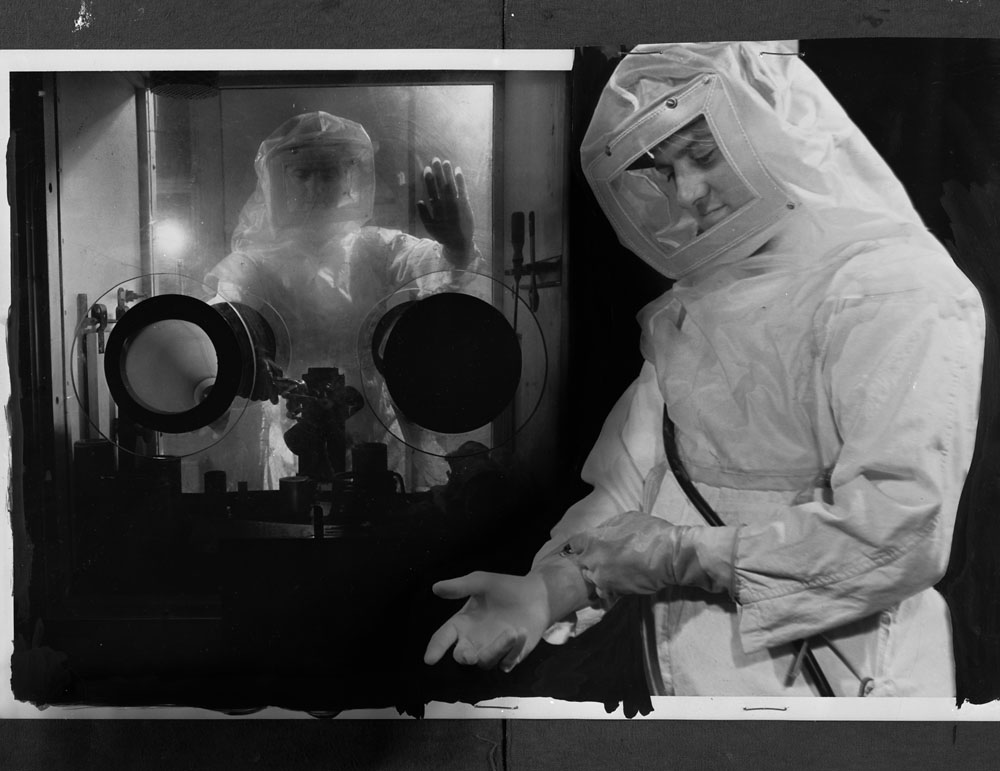
Chalk River Laboratories is owned by Atomic Energy of Canada Limited, a Crown corporation created in 1952 specifically to take over the wartime research facilities located at Chalk River. The laboratories are operated and managed by Canadian Nuclear Laboratories (CNL), a private-sector contractor.
History
Nuclear research at Chalk River began in 1944 during the Second World War and is intimately related to Canada’s participation in the Manhattan Project (see Canada and the Manhattan Project.) Canadian and British researchers investigating the potential uses of nuclear reactions for energy and for destructive purposes worked together in Montreal under the National Research Council’s (NRC) Montreal Laboratory. (See also Nuclear Energy; Nuclear Research Establishments.) The NRC developed the Chalk River site, advantageously located far from major cities, near an army base and with an ample supply of water, with Defense Industries Limited.
The first reactor to begin operations in Canada was called the ZEEP (standing for Zero Energy Experimental Pile), which went critical at 3:45 p.m. on 5 September 1945. This was the first operational nuclear reactor outside the United States. ZEEP was the direct descendent of early atomic energy experiments begun by George Laurence. ZEEP was necessary to demonstrate the technology that would be used in the NRX reactor, which was built adjacent to the ZEEP. The Montreal Laboratory was closed by the NRC in 1946, with government-sponsored nuclear research shifting permanently to Chalk River from that point on.
Nuclear Research
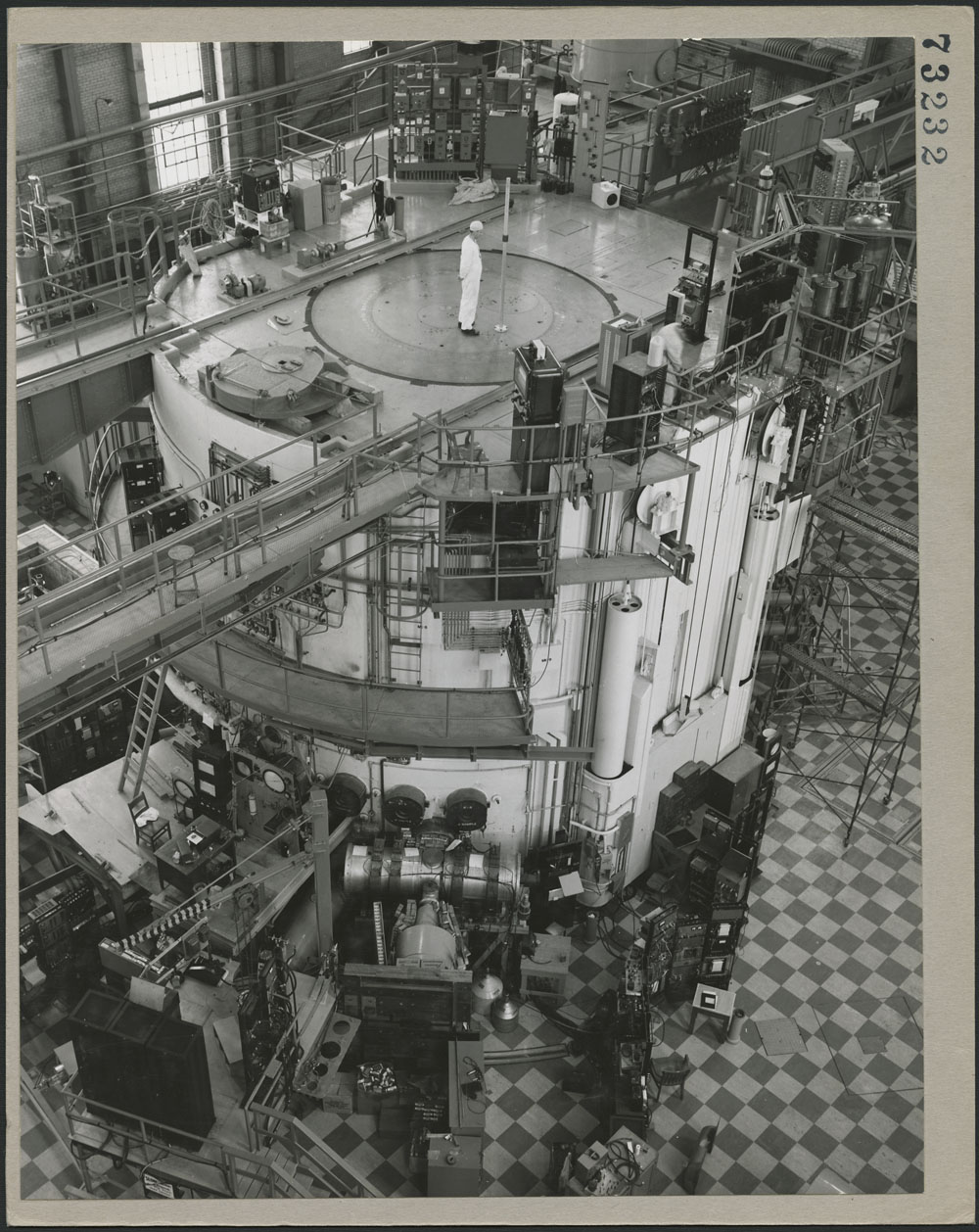
The ZEEP was used for basic nuclear research until 1970. The NRX operated from 1947 to 1992. Another research reactor built at the Chalk River site, the National Research Universal (NRU), began operating in 1957 and produced more than half the world’s medical isotopes, as well as 80 per cent of the global supply of cobalt-60, used in cancer treatments (see Cobalt). A 15-month shutdown of this reactor for safety reasons, beginning in May of 2009, caused an international shortage of medical isotopes.
The Chalk River Laboratories were transferred over to Atomic Energy of Canada Limited (AECL) in 1952, with the intended purpose that AECL would use the laboratories to explore and develop peaceful applications for nuclear energy. The NRX research reactor could produce 10 megawatts of electricity and was originally intended to produce plutonium-239 for nuclear weapons. Though both AECL and the government of Canada had repeatedly stated that the Chalk River Laboratories were not to be used for military purposes, there is nonetheless evidence to suggest plutonium created at Chalk River did in fact make its way to the American nuclear weapons program and was in all likelihood deliberately manufactured for military uses.
It was in the late 1950s that researchers at Chalk River perfected the first wholly Canadian reactor design, the CANDU (standing for CANadian Deuterium Uranium), a reactor that uses pressurized heavy water to regulate the nuclear reaction and which can be fuelled either by enriched or unenriched uranium. (See also Nuclear Power Plants.) The CANDU has a reputation as being particularly safe and has been exported around the globe to nations such as Argentina, China, India, Pakistan, Romania and South Korea. It has been widely exported for its ease of use and operations, its flexibility in terms of uranium fuel source, the fact that it can use the uranium used in decommissioned nuclear weapons as a fuel source and because the reactors cannot be made to produce the enriched uranium needed for nuclear weapons. All of the nuclear reactors currently in use or that have ever been used in Canada have been CANDU-type reactors.
Though initially developed as an experimental wartime facility, the Chalk River Laboratories expanded its scope considerably in the immediate postwar period. Scientific research undertaken at the laboratories has made important and lasting contributions to the study of physics, chemistry, biology, nuclear technology and engineering. (See also Nuclear Energy.)
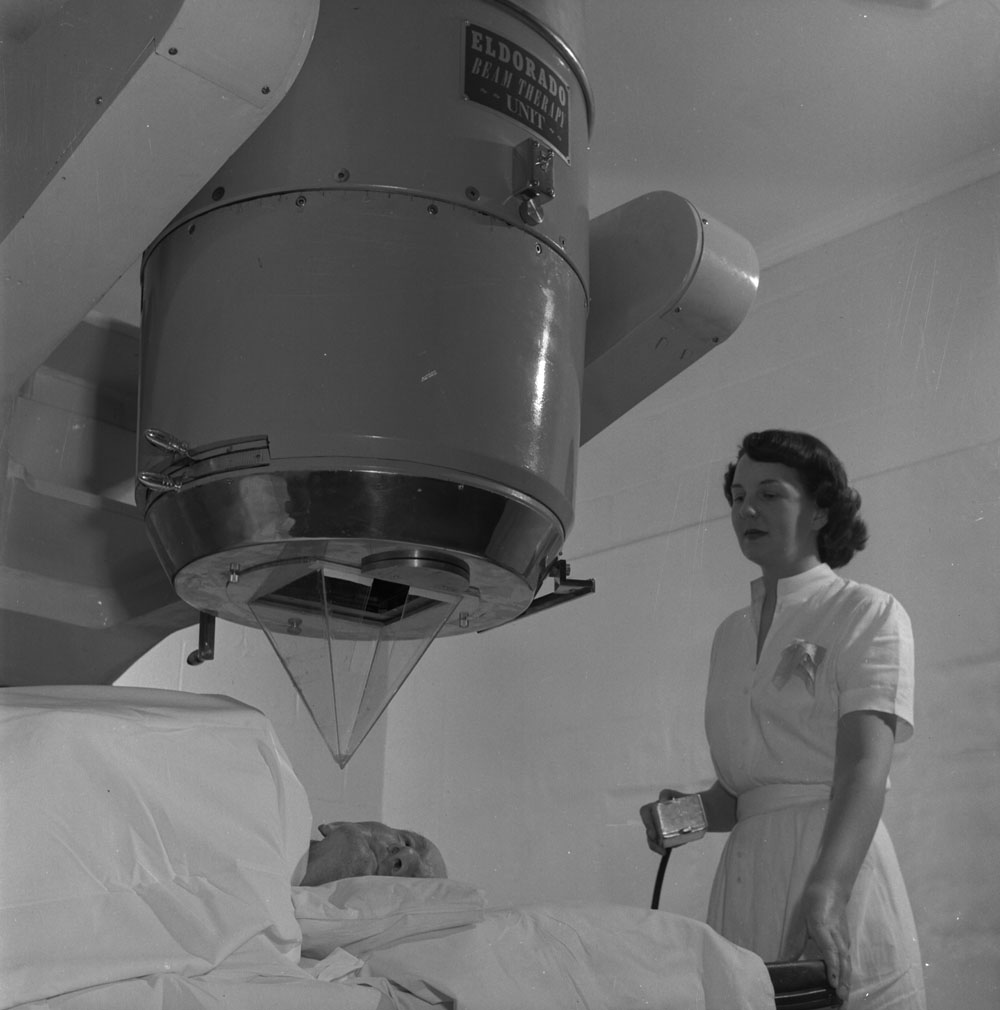
Chalk River Laboratories played a pioneering role in the development of nuclear isotopes necessary for nuclear medicine, including cobalt-60 and molybdenum-99, both of which are used in the treatment of cancer and medical diagnoses.
Incidents
There have been several incidents at Chalk River Laboratories over the course of its long history, two of which were fairly serious.
The first incident occurred on 12 December 1952 at the NRX reactor and resulted in a core meltdown. The incident was due to a combination of mechanical failures and human error and resulted in serious damage, though no deaths or immediate injuries. Future United States President Jimmy Carter, then a lieutenant in the US Navy (which was building nuclear-powered submarines at the time), was part of an American team dispatched to Chalk River to assist in the clean-up and study the effects of the meltdown. This incident has the distinction of being the world’s first major nuclear accident.
The second major incident occurred on 24 May 1958 in the NRU reactor and featured a combination of mechanical failures and human error. In this incident there was both a fire and a subsequent contamination of the reactor building and the area around it, requiring an extensive clean-up operation. This incident did not result in any deaths or immediate injuries, though it was later determined that not all of the military personnel who were dispatched to assist in the operation received adequate compensation for their efforts and had been denied disability pensions. The government of Canada reversed this and offered compensation beginning in 2021.