
Women in the Second World War
Video- Women
- Military History
View the transcript
Long before the Second World War, Canadian women had already proven their dedication in uniform — first as nursing sisters during the North-West Resistance in 1885, and later by the thousands in the First World War.
Then came 1939. The Second World War broke out, and Canadians were changed forever. Not just on battlefields overseas, but in the heart of every town and city. With so many men serving abroad, Canadian women stepped into roles that used to be considered “men’s work.” And the war effort roared forward — powered by women.
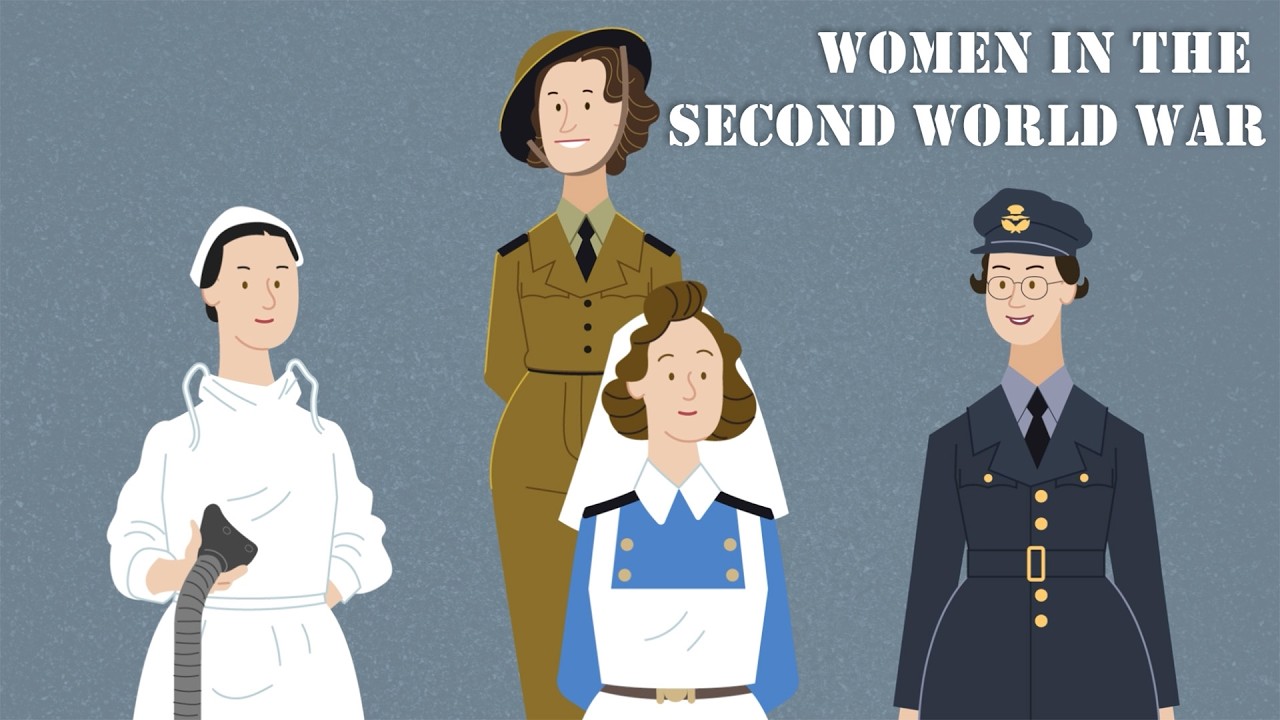
During the Second World War, 4,480 nursing sisters served across all branches of Canada’s military medical services. These women provided medical care in extremely challenging conditions — often in field hospitals, converted buildings, general hospitals filled with injured and convalescent servicemen, prisoners of war and civilians, or aboard hospital ships — caring for wounded soldiers far from home.
For the first time in Canadian history, women’s medical roles in the armed forces expanded beyond nursing. One of the trailblazers was Jean Flatt Davey, who became the first female doctor to receive an officer’s commission. In total, approximately 60 female physicians served as anaesthetists, radiologists and bacteriologists during the war, some of them overseas.
Outside of the medical realm, some 45,000 Canadian women enlisted in the air force, army and navy. As more men were needed for combat, women, initially trained for clerical and administrative roles, instead filled roles in trades, communication and intelligence work. Mi’kmaw Elder Margaret Pictou LaBillois, for example, became a photo-reconnaissance technician with the RCAF Women’s Division, hanging out of airplanes to take photographs of roads and bridges while her brothers and future husband served overseas.
On the home front as well, women stepped into roles that had previously been reserved for men. With so many men overseas, Canadian factories were short of labour, and women answered the call. By 1943, approximately 261,000 women were involved in the production of war goods. They made up over 30 per cent of aircraft industry workers and nearly 50 per cent of workers in gun plants, including roles in munitions inspection.
One of the most famous was Veronica Foster, nicknamed “Ronnie the Bren Gun Girl.” She became the face on posters and ads showing that building weapons wasn’t just tough — it was patriotic, important and even glamorous. Her image helped shift public ideas about women’s roles.
These factory jobs were critical — without them, Canada wouldn’t have been able to keep up in providing supplies for its military and allies. Beyond the factories, women preserved the domestic economy and morale — they grew victory gardens, raised funds for hospitals, ambulances and hostels, and volunteered for organizations like the Red Cross and Federated Women’s Institutes.
Another group of women were shaping the war from the shadows. At a top-secret training and communications centre near Whitby, Ontario, called Camp X, women like Evelyn Davis and Winnifred Davidson, members of the Canadian Women’s Army Corps, decoded encrypted messages and transmitted intelligence to and from Bletchley Park, London, New York and Washington. They worked around the clock — 365 days a year — handling high-speed Morse code and punch-tape systems. Their work was so secret even they didn’t know the full extent of their own mission until years later.
The Second World War transformed the role of Canadian women in uniform and at home. From field hospitals to shipyards, from decoding messages at Camp X to serving on the front lines of medicine, from factory work to relief work, they showed courage, resilience and skill. Though many women returned to traditional roles when the war ended, the impact of their service set the stage for later changes — about equality, opportunity and what women could do in Canadian society. Their contributions were indispensable to victory, and their legacy continues to inspire.