
Browse "Things"
-
Article
The Lost Villages
The Lost Villages are nine Canadian communities that were destroyed through the unprecedented land expropriation and construction of the St. Lawrence Seaway and Power Project in the 1950s.
"https://d3d0lqu00lnqvz.cloudfront.net/media/media/1c940fd1-3163-44f3-b0d8-4320c8b71fb7.jpg" // resources/views/front/categories/view.blade.php
https://d3d0lqu00lnqvz.cloudfront.net/media/media/1c940fd1-3163-44f3-b0d8-4320c8b71fb7.jpg
-
Article
"The Maple Leaf Forever"
“The Maple Leaf Forever” is a patriotic song composed by Alexander Muir (words and music) in October 1867, the year of Confederation. Next to "O Canada," which it predates by 13 years, “The Maple Leaf Forever” has been the most popular patriotic song composed in Canada. For generations, it and “God Save the King” were the de facto national anthems in English Canada. However, due to its British colonial perspective, the song did not become popular among French Canadians. As “O Canada” emerged as the official national anthem in the latter half of the 20th century, the popularity of “The Maple Leaf Forever” waned among English Canadians, although it was somewhat reinvigorated by a new version performed by Anne Murray in 1999 and Michael Bublé in 2010.
"https://d3d0lqu00lnqvz.cloudfront.net/Portrait_of_Alexander_Muir-_1830-1906_OHQ-PICTURES-S-R-723.jpg" // resources/views/front/categories/view.blade.php
https://d3d0lqu00lnqvz.cloudfront.net/Portrait_of_Alexander_Muir-_1830-1906_OHQ-PICTURES-S-R-723.jpg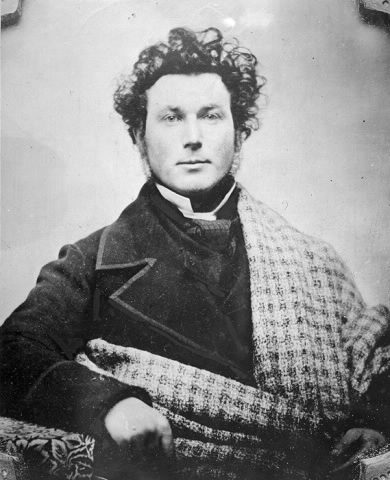
-
Editorial
The Life and Meaning of Everett Klippert
The following article is an editorial written by The Canadian Encyclopedia staff. Editorials are not usually updated. Everett George Klippert (1926–1996) was a popular Calgary bus driver who was jailed for homosexuality from 1960 to 1964, and from 1965 to 1971. An unlikely martyr, he shunned the spotlight. Klippert was once described as “Canada’s most famous homosexual” due to his unjust prison sentences, which ultimately led to the decriminalization of homosexuality in Canada.
"https://d3d0lqu00lnqvz.cloudfront.net/media/media/d5d0ce81-9f5e-4938-8c53-1fdaee0b6c39.jpg" // resources/views/front/categories/view.blade.php
https://d3d0lqu00lnqvz.cloudfront.net/media/media/d5d0ce81-9f5e-4938-8c53-1fdaee0b6c39.jpg
-
Article
The Memory Project
The Memory Project is a bilingual program whose mandate is to record and share the stories of veterans and currently serving Canadian Forces members. The Memory Project has two branches: a speakers bureau and an archive. The program aims to preserve Canada’s military history through the voices of those who serve. In addition to the speakers bureau and archive, the Memory Project creates free, bilingual educational materials, including videos, podcasts, and learning tools for classroom use, using oral testimony. The Memory Project is an initiative of the not-for-profit organization Historica Canada (publisher of The Canadian Encyclopedia and maker of the Heritage Minutes) and made possible with funding from the Government of Canada through the departments of Canadian Heritage and Veterans Affairs.
"https://d3d0lqu00lnqvz.cloudfront.net/media/media/b5d10d9d-bc08-4d55-969d-32c81691fbeb.jpg" // resources/views/front/categories/view.blade.php
https://d3d0lqu00lnqvz.cloudfront.net/media/media/b5d10d9d-bc08-4d55-969d-32c81691fbeb.jpg
-
Article
Montréal Biodôme
Opened in 1992 and located in the former Olympic velodrome, the Montréal Biodôme is part of the “Space for Life” network, which includes Montréal’s Insectarium, Planetarium and Botanical Garden.
"https://d3d0lqu00lnqvz.cloudfront.net/media/media/602331f5-435c-42b0-848e-0be2945dce57.jpg" // resources/views/front/categories/view.blade.php
https://d3d0lqu00lnqvz.cloudfront.net/media/media/602331f5-435c-42b0-848e-0be2945dce57.jpg
-
Article
Montréal Insectarium
Opened on 7 February 1990, the Montréal Insectarium is part of the “Space for Life” network, which includes Montréal’s Biodome, Planetarium and Botanical Garden.
"https://d3d0lqu00lnqvz.cloudfront.net/media/media/34dcd770-a882-419d-91b2-c4ca29f2fbdd.jpg" // resources/views/front/categories/view.blade.php
https://d3d0lqu00lnqvz.cloudfront.net/media/media/34dcd770-a882-419d-91b2-c4ca29f2fbdd.jpg
-
Article
Montreal Olympics
In 1976, Montreal became the first Canadian city to host the Olympic Games. The XXIst Olympiad, held from 17 July to 1 August 1976, included memorable performances from many athletes, including Romanian gymnast Nadia Comaneci and American decathlete Caitlyn Jenner. Although Canada did not win a gold medal at the Games, the Canadian team won 11 medals in total —more than double the number of medals won at each of the previous two Olympic Games. The Olympic facilities, while costly, became Montreal landmarks and many are still used for training and competition.
"https://d3d0lqu00lnqvz.cloudfront.net/media/media/e4a2fa0e-506a-404c-a765-b1bb950e2ba3.jpg" // resources/views/front/categories/view.blade.php
https://d3d0lqu00lnqvz.cloudfront.net/media/media/e4a2fa0e-506a-404c-a765-b1bb950e2ba3.jpg
-
Article
The Mynah Birds
The Mynah Birds were a short-lived Canadian rhythm and blues (R&B) band active in Toronto in the mid-1960s. It featured several musicians who went on to have successful careers, most notably Canadian rock icon Neil Young, Nick St. Nicholas and Goldy McJohn of Steppenwolf, Bruce Palmer of Buffalo Springfield, and American R&B pop star Rick James. The Mynah Birds were signed to Motown Records and recorded under the direction of Smokey Robinson. They were not commercially successful or widely known while they were active, but they are a prime example of the eclecticism of Toronto’s Yorkville music scene in the 1960s.
"https://d3d0lqu00lnqvz.cloudfront.net/media/media/f89fba9f-6a12-4134-bc15-7f43d9eb080b.jpg" // resources/views/front/categories/view.blade.php
https://d3d0lqu00lnqvz.cloudfront.net/media/media/f89fba9f-6a12-4134-bc15-7f43d9eb080b.jpg
-
Article
The Nancy and the War of 1812
The Nancy was a schooner built in 1789 at the then-British port of Detroit, by a Montréal shipbuilding company under the supervision of John Richardson (whose daughter's and wife's names were Nancy).
"https://thecanadianencyclopedia.ca/images/tce_placeholder.jpg?v=e9dca980c9bdb3aa11e832e7ea94f5d9" // resources/views/front/categories/view.blade.php
https://thecanadianencyclopedia.ca/images/tce_placeholder.jpg?v=e9dca980c9bdb3aa11e832e7ea94f5d9
-
Article
The Nature of Things
The Nature of Things is television’s longest-running science series. It debuted on CBC on 6 November 1960. Originally a half-hour program that demonstrated scientific concepts, it evolved into an hour-long documentary during renowned scientist David Suzuki’s tenure as host (1979–2023). The groundbreaking program was among the first to present scientific findings on subjects such as HIV/AIDS and climate change. Over the course of more than 60 seasons and over 900 episodes, The Nature of Things has been seen in more than 80 countries. It has received 17 Gemini Awards and seven Canadian Screen Awards.
"https://d3d0lqu00lnqvz.cloudfront.net/media/media/d020d683-5c80-4b9d-9cd1-fa1f47cca874.jpg" // resources/views/front/categories/view.blade.php
https://d3d0lqu00lnqvz.cloudfront.net/media/media/d020d683-5c80-4b9d-9cd1-fa1f47cca874.jpg
-
Article
The New Canadian
The New Canadian (1938–2001) was an English-language newspaper published by and for the Japanese Canadian community. Initially, the newspaper was founded as a forum for second-generation Japanese Canadians to express and foster their identity as English-speaking Canadians and to support a mission of “cultural, economic, and political assimilation.” (See also Canadian English; Languages in use in Canada.) The newspaper became the primary source of both English- and Japanese-language news for Japanese Canadians during their forced uprooting from the west coast in the 1940s (see Internment of Japanese Canadians). It continued to be published in the postwar years, with its English-language content shifting towards social and community news while its Japanese-language section grew in importance for pre-war and postwar Japanese immigrants. The newspaper was sold to Japan Communications in 1990 and its final edition was published in 2001.
"https://d3d0lqu00lnqvz.cloudfront.net/thenewcanadian/thenewcanadian.jpg" // resources/views/front/categories/view.blade.php
https://d3d0lqu00lnqvz.cloudfront.net/thenewcanadian/thenewcanadian.jpg
-
Interview
No. 2 Construction Battalion and the Fight to Fight
No. 2 Construction Battalion, Canadian Expeditionary Force (CEF) — also known as the Black Battalion — was a segregated non-combatant unit during the First World War. It was the largest Black unit in Canadian military history. This is their story.
"https://d3d0lqu00lnqvz.cloudfront.net/media/media/d2114b98-ef0d-4e98-aa49-892b095d77cc.jpg" // resources/views/front/categories/view.blade.php
https://d3d0lqu00lnqvz.cloudfront.net/media/media/d2114b98-ef0d-4e98-aa49-892b095d77cc.jpg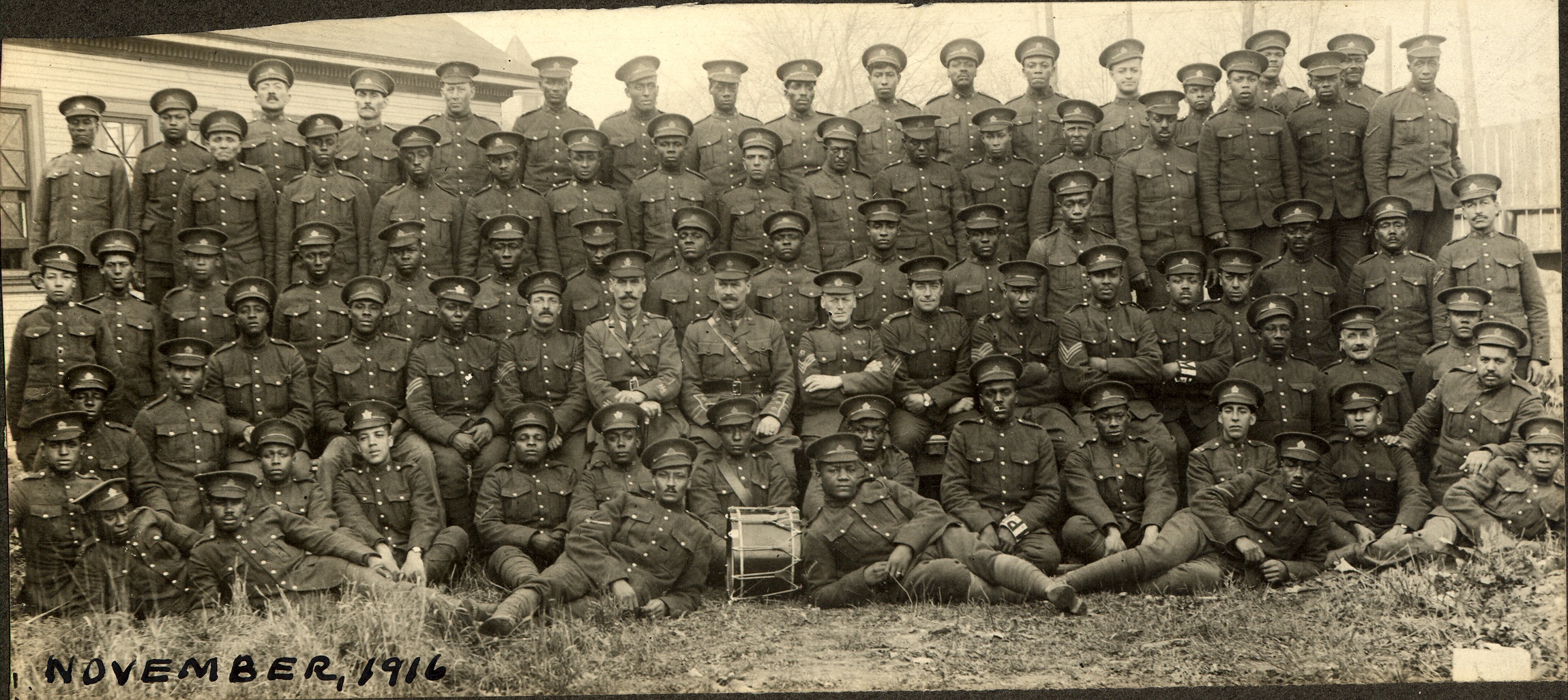
-
Editorial
The North West Company, 1779–1821
The following article is an editorial written by The Canadian Encyclopedia staff. Editorials are not usually updated.
"https://d3d0lqu00lnqvz.cloudfront.net/media/media/d98defdb-a170-4723-bafb-23ba5d5bf8dd.jpg" // resources/views/front/categories/view.blade.php
https://d3d0lqu00lnqvz.cloudfront.net/media/media/d98defdb-a170-4723-bafb-23ba5d5bf8dd.jpg
-
Editorial
The "Other" Last Spike
The following article is an editorial written by The Canadian Encyclopedia staff. Editorials are not usually updated. The driving of the last spike may have been the great symbolic act of Canada’s first century, but it was actually a gloomy spectacle. The cash-starved Canadian Pacific Railway (CPR) couldn’t afford a splashy celebration, and so only a handful of dignitaries and company men convened on the dull, grey morning of 7 November 1885 to celebrate the completion of the transcontinental railway.
"https://d3d0lqu00lnqvz.cloudfront.net/media/media/52ae3947-5fce-48d2-804e-e6a5a6a7efc9.jpg" // resources/views/front/categories/view.blade.php
https://d3d0lqu00lnqvz.cloudfront.net/media/media/52ae3947-5fce-48d2-804e-e6a5a6a7efc9.jpg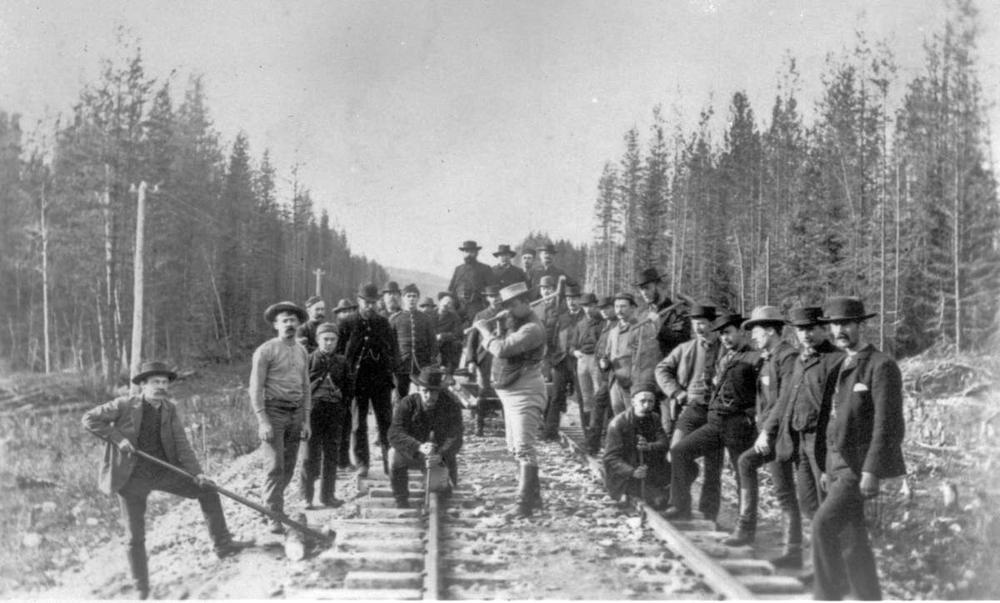
-
Editorial
The "Other" Métis
In the interest of promoting a better understanding of the complex issue of Métis identity and how it is defined, The Canadian Encyclopedia has commissioned two opinion pieces exploring different perspectives on the topic. This article explores Métis identity from the perspective of Métis who do not have ancestral ties to the Red River Settlement. For another perspective on Métis identity, see Métis Are a People, Not a Historical Process.
"https://d3d0lqu00lnqvz.cloudfront.net/media/media/d5acb8a6-e170-4297-9cbf-a570c7237db3.jpg" // resources/views/front/categories/view.blade.php
https://d3d0lqu00lnqvz.cloudfront.net/media/media/d5acb8a6-e170-4297-9cbf-a570c7237db3.jpg