
Browse "Things"
-
Article
Ragweed
Ragweed is an annual or perennial plant of the genus Ambrosia, family Compositae or Asteraceae. Fifteen species are native to North America; 3 occur across Canada: common ragweed (A. artemisiifolia), perennial ragweed (A. coronopifolia) and giant ragweed (A. trifida).
"https://thecanadianencyclopedia.ca/images/tce_placeholder.jpg?v=e9dca980c9bdb3aa11e832e7ea94f5d9" // resources/views/front/categories/view.blade.php
https://thecanadianencyclopedia.ca/images/tce_placeholder.jpg?v=e9dca980c9bdb3aa11e832e7ea94f5d9
-
Article
Battle of Sackets Harbor
During the WAR OF 1812, British troops led by Lieutenant General Sir George PREVOST conducted a raid on Sackets Harbor, NY, having learned that the American naval squadron was at the western end of Lake Ontario supporting an American army in the NIAGARA PENINSULA.
"https://thecanadianencyclopedia.ca/images/tce_placeholder.jpg?v=e9dca980c9bdb3aa11e832e7ea94f5d9" // resources/views/front/categories/view.blade.php
https://thecanadianencyclopedia.ca/images/tce_placeholder.jpg?v=e9dca980c9bdb3aa11e832e7ea94f5d9
-
"https://thecanadianencyclopedia.ca/images/tce_placeholder.jpg?v=e9dca980c9bdb3aa11e832e7ea94f5d9" // resources/views/front/categories/view.blade.php
https://thecanadianencyclopedia.ca/images/tce_placeholder.jpg?v=e9dca980c9bdb3aa11e832e7ea94f5d9
-
Article
Railway Disasters
Railway accidents may result from a number of situations, including improper track beds, metal fatigue, fire, flawed rails, human error and frail bridges.
"https://d3d0lqu00lnqvz.cloudfront.net/media/new_article_images/Lac-Mégantic_Rail_Disaster/Aerial view.jpg" // resources/views/front/categories/view.blade.php
https://d3d0lqu00lnqvz.cloudfront.net/media/new_article_images/Lac-Mégantic_Rail_Disaster/Aerial view.jpg
-
Article
Railway History in Canada
The development of steam-powered railways in the 19th century revolutionized transportation in Canada and was integral to the very act of nation building. Railways played an integral role in the process of industrialization, opening up new markets and tying regions together, while at the same time creating a demand for resources and technology. The construction of transcontinental railways such as the Canadian Pacific Railway opened up settlement in the West, and played an important role in the expansion of Confederation. However, railways had a divisive effect as well, as the public alternately praised and criticized the involvement of governments in railway construction and the extent of government subsidies to railway companies. This is the full-length entry about Railway History in Canada. For a plain-language summary, please see Railway History in Canada (Plain-Language Summary).
"https://d3d0lqu00lnqvz.cloudfront.net/media/media/8823201a-ab8c-4c8a-b5d2-496170adfe05.jpg" // resources/views/front/categories/view.blade.php
https://d3d0lqu00lnqvz.cloudfront.net/media/media/8823201a-ab8c-4c8a-b5d2-496170adfe05.jpg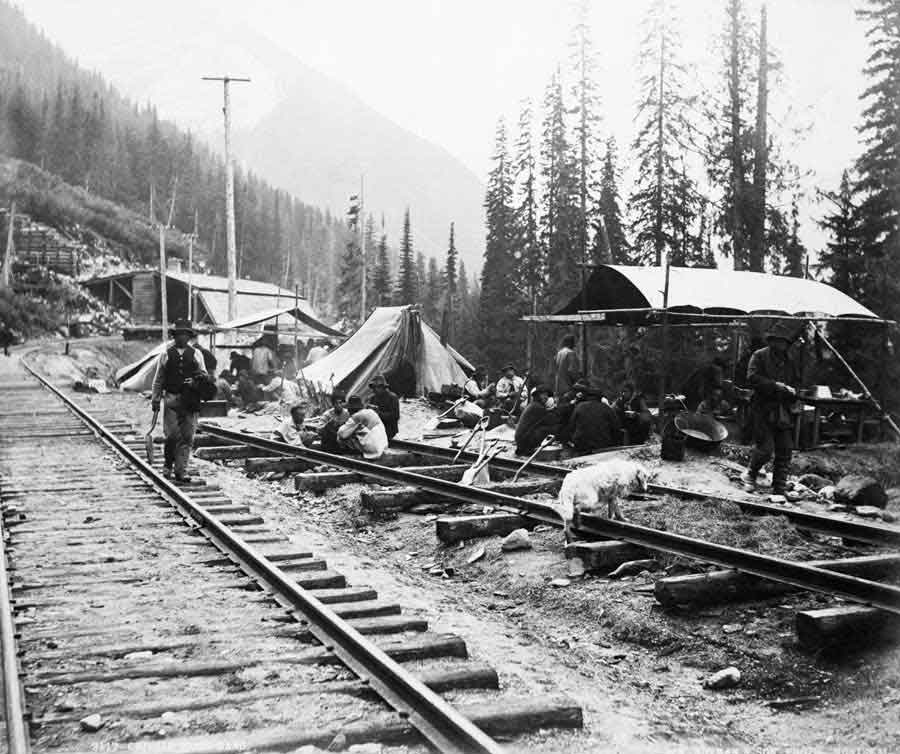
-
Timelines
Railway History
The development of steam-powered railways in the 19th century revolutionized transportation in Canada.
"https://d3d0lqu00lnqvz.cloudfront.net/media/media/f32f216b-3d5d-46b2-a874-2ddb553ff378.jpg" // resources/views/front/categories/view.blade.php
https://d3d0lqu00lnqvz.cloudfront.net/media/media/f32f216b-3d5d-46b2-a874-2ddb553ff378.jpg
-
Article
Railway History in Canada (Plain-Language Summary)
Railways are one of the most important inventions in history. They are one of the most important innovations in Canadian history. Railways connect Canada from coast to coast and from north to south. They are vital to the Canadian economy and society. The first railways in Canada were built in the early 19th century. In 1885, the Canadian Pacific Railway (CPR) completed Canada’s first transcontinental railroad. (See Canadian Pacific Railway (Plain-Language Summary).) Other large railways lines were to follow. By the beginning of the 20th century thousands of kilometres of railway linked Canada. (This article is a plain-language summary of railway history in Canada. If you are interested in reading about this topic in more depth, please see our full-length entry, Railway History in Canada.)
"https://d3d0lqu00lnqvz.cloudfront.net/media/media/d2b77d1e-1c32-438b-94cb-2761961ea891.jpg" // resources/views/front/categories/view.blade.php
https://d3d0lqu00lnqvz.cloudfront.net/media/media/d2b77d1e-1c32-438b-94cb-2761961ea891.jpg
-
Article
Railway Safety
One of the most famous railway accidents in recent years was the 1979 "Mississauga Derailment". There were no injuries, but the accident involved leaking chlorine cars and forced the evacuation of 250 000 nearby residents.
"https://d3d0lqu00lnqvz.cloudfront.net/media/media/b70a9bd3-5b56-4fc6-8a47-568e3ca145ca.jpg" // resources/views/front/categories/view.blade.php
https://d3d0lqu00lnqvz.cloudfront.net/media/media/b70a9bd3-5b56-4fc6-8a47-568e3ca145ca.jpg
-
Article
Rain
Central US lows, entering Canada somewhere between Manitoba and Québec, are of major environmental significance because they pass through the industrial heartland of the US and frequently bring ACID RAIN.
"https://d3d0lqu00lnqvz.cloudfront.net/media/media/d32eb943-b421-42f4-bb17-0d8dbdeb99d9.jpg" // resources/views/front/categories/view.blade.php
https://d3d0lqu00lnqvz.cloudfront.net/media/media/d32eb943-b421-42f4-bb17-0d8dbdeb99d9.jpg
-
Article
Rainbow
A rainbow is a coloured arc that forms when sunlight shines onto falling raindrops, is refracted, and then reflected back towards the observer. In this process, each drop acts as a tiny prism, splitting the sun's rays (according to wavelength) into their component colours.
"https://d3d0lqu00lnqvz.cloudfront.net/media/media/de807858-670f-48f2-986d-ea5cea2fc44e.jpg" // resources/views/front/categories/view.blade.php
https://d3d0lqu00lnqvz.cloudfront.net/media/media/de807858-670f-48f2-986d-ea5cea2fc44e.jpg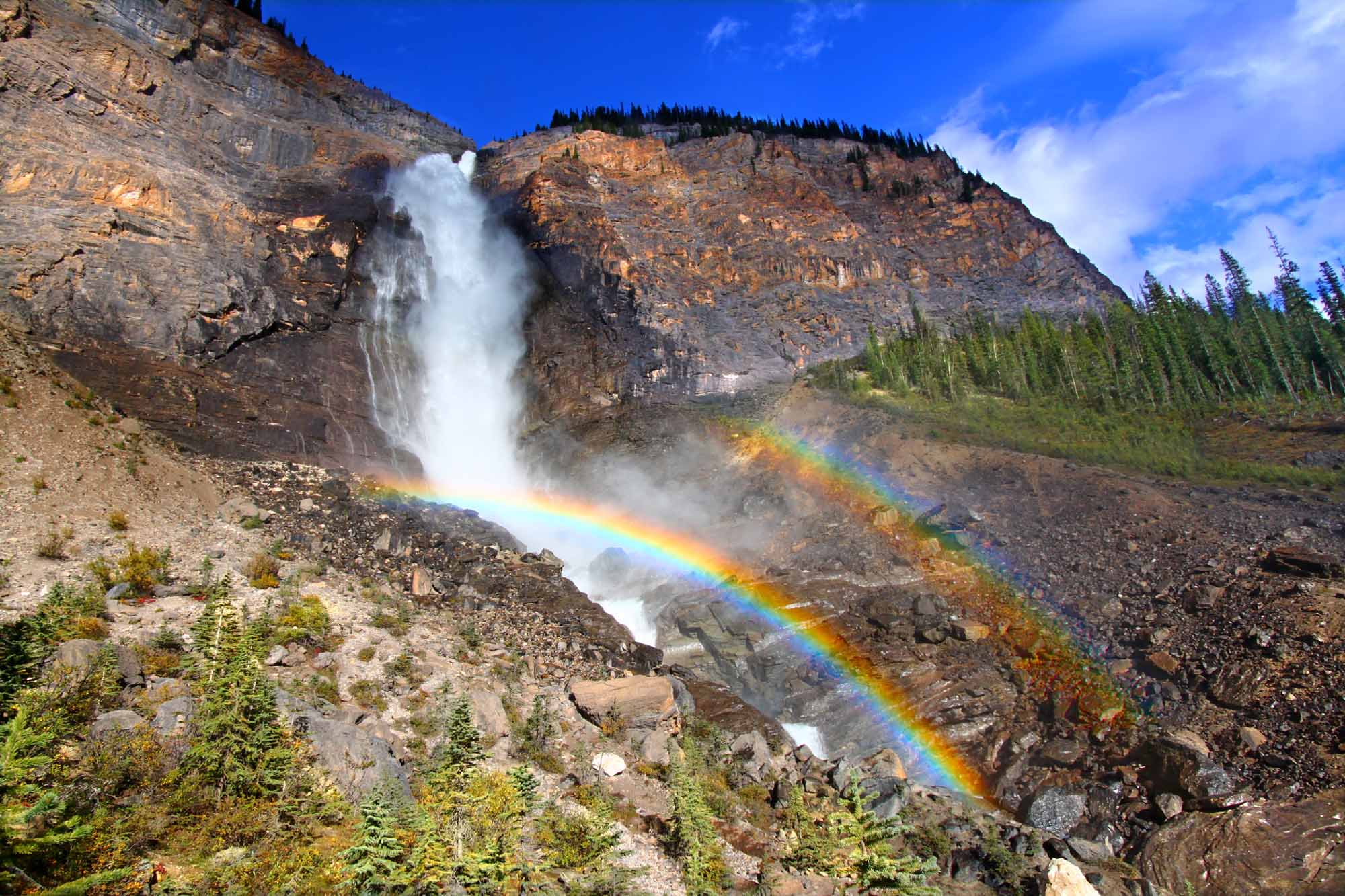
-
Article
HMCS Rainbow
His Majesty’s Canadian Ship (HMCS) Rainbow was an Apollo-class cruiser that was commissioned into Britain’s Royal Navy in 1893. In 1910, Britain sold the vessel to Canada, where it became one of the first two warships of the newly formed Naval Service of Canada. Rainbow served 10 years in the Canadian navy, including throughout the First World War. It was sold for scrap in 1920.
"https://d3d0lqu00lnqvz.cloudfront.net/HMS-Shearwater_HMCS-Rainbow.jpg" // resources/views/front/categories/view.blade.php
https://d3d0lqu00lnqvz.cloudfront.net/HMS-Shearwater_HMCS-Rainbow.jpg
-
Article
Rainfall Extremes
The amount of rain or snow that reaches the ground can vary dramatically on any particular given day, even over short distances. Many people have experienced a near-deluge of rain in their backyard, while at the same time their front yard or their neighbour's home remains quite dry.
"https://d3d0lqu00lnqvz.cloudfront.net/media/media/619882aa-a3f1-43cc-8453-b40c8eb53187.jpg" // resources/views/front/categories/view.blade.php
https://d3d0lqu00lnqvz.cloudfront.net/media/media/619882aa-a3f1-43cc-8453-b40c8eb53187.jpg
-
Article
Ram Tank
The Ram was a Canadian cruiser tank produced during the Second World War (WWII) to overcome the lack of tanks in Canada. This Canadian tank used a modified version of the US M3 tank chassis, with the addition of a turret that could accommodate a 40 mm anti-tank gun in the initial design and a 57 mm gun from 1942 on. From 1941 to 1943, the Montreal Locomotive Works produced about 1,949 Ram tanks. Because of the availability of other, more modern tanks, the Ram never saw combat, but its design served as the basis for variants such as the Kangaroo armoured personnel carrier and the Sexton self-propelled gun. The Ram and its variants are the only tanks ever designed and built in Canada. (See also Armaments.)
"https://d3d0lqu00lnqvz.cloudfront.net/media/media/a206528-v6.jpg" // resources/views/front/categories/view.blade.php
https://d3d0lqu00lnqvz.cloudfront.net/media/media/a206528-v6.jpg
-
Article
Ranching History
Fort Macleod was the first cattle town in the Canadian West. Early ranching was centered around the headquarters of the North West Mounted Police (courtesy Glenbow Archives).A round-up in Alberta's ranching country (photo by Angus McNee, courtesy Take Stock Photography Inc.).Photo by Notman & Son (courtesy Library and Archives Canada/C-8812).Fall roundup: lead man John Thompson herding cattle back to ranches, Alberta, October 1975 (photo by Ted Grant/courtesy Library and Archives Canada/PA-142584).PreviousNext Ranching History Ranching developed...
"https://d3d0lqu00lnqvz.cloudfront.net/media/media/b19803e4-0d66-4fe8-a70c-4cc10b995793.jpg" // resources/views/front/categories/view.blade.php
https://d3d0lqu00lnqvz.cloudfront.net/media/media/b19803e4-0d66-4fe8-a70c-4cc10b995793.jpg
-
Article
Rand Formula
The Rand Formula is a feature of Canadian labour law requiring workers covered by collective bargaining contracts to pay union dues — whether or not those workers are union members. The Formula was a victory for unions struggling for recognition and security after the Second World War, and became a standard part of labour contracts, and union power, in the decades that followed.
"https://thecanadianencyclopedia.ca/images/tce_placeholder.jpg?v=e9dca980c9bdb3aa11e832e7ea94f5d9" // resources/views/front/categories/view.blade.php
https://thecanadianencyclopedia.ca/images/tce_placeholder.jpg?v=e9dca980c9bdb3aa11e832e7ea94f5d9