
Browse "Things"
-
Article
NOVA Corporation
NOVA Corporation was a Canadian energy company based in Calgary. Originally known as the Alberta Gas Trunk Line Company Ltd., it was established in 1954 to build, own and operate Alberta’s natural gas gathering and transmission facilities. In 1998, NOVA merged with TransCanada (now TC Energy), creating the fourth largest gas pipeline company in North America.
"https://thecanadianencyclopedia.ca/images/tce_placeholder.jpg?v=e9dca980c9bdb3aa11e832e7ea94f5d9" // resources/views/front/categories/view.blade.php
https://thecanadianencyclopedia.ca/images/tce_placeholder.jpg?v=e9dca980c9bdb3aa11e832e7ea94f5d9
-
Article
Nova Scotia Duck Tolling Retriever
The Nova Scotia duck tolling retriever (or toller) is one of five dog breeds recognized by the Canadian Kennel Club as uniquely Canadian (see also Dogs in Canada). Originally bred for tolling and retrieving waterfowl, the toller is a highly intelligent dog. It loves the outdoors and is easy to train. The Nova Scotia duck tolling retriever is the provincial dog of Nova Scotia — one of two Canadian dogs declared a provincial or territorial symbol (the other, the Canadian Inuit dog, is Nunavut’s official animal).
"https://d3d0lqu00lnqvz.cloudfront.net/media/new_article_images/NovaScotiaDuckTollingRetriever/TollerPortrait.jpg" // resources/views/front/categories/view.blade.php
https://d3d0lqu00lnqvz.cloudfront.net/media/new_article_images/NovaScotiaDuckTollingRetriever/TollerPortrait.jpg
-
Article
Nova Scotia 1714-84
Confirmed as British by the Treaty of Utrecht in 1713, the peninsula of Nova Scotia was neglected until 1749 - a period of "phantom rule" and "counterfeit suzerainty.
"https://d3d0lqu00lnqvz.cloudfront.net/media/media/12f25a44-2508-4e64-9dd1-8eb4b212345d.jpg" // resources/views/front/categories/view.blade.php
https://d3d0lqu00lnqvz.cloudfront.net/media/media/12f25a44-2508-4e64-9dd1-8eb4b212345d.jpg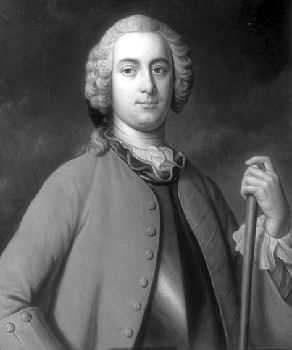
-
Article
Nova Scotia Agricultural College
In 2012, the Nova Scotia Agricultural College merged with Dalhousie University, becoming the University’s Faculty of Agriculture.
"https://thecanadianencyclopedia.ca/images/tce_placeholder.jpg?v=e9dca980c9bdb3aa11e832e7ea94f5d9" // resources/views/front/categories/view.blade.php
https://thecanadianencyclopedia.ca/images/tce_placeholder.jpg?v=e9dca980c9bdb3aa11e832e7ea94f5d9
-
Article
Nova Scotia and Confederation
Nova Scotia was one of the four founding provinces of Canada. It joined New Brunswick, Ontario and Quebec in Confederation on 1 July 1867. However, this was mainly because Confederation delivered the Intercolonial Railway to the Maritimes, and because of the efforts of Sir Charles Tupper. His government passed approval for Confederation in the colonial legislature despite popular opposition. (See Confederation’s Opponents.) Confederation was met with mass protests in the colony. Joseph Howe led a two-year effort to repeal the union. (See Repeal Movement.) But Howe finally decided he could do more to help his province by working inside the federal government. He joined the federal Cabinet in 1869.
"https://d3d0lqu00lnqvz.cloudfront.net/media/media/7b457631-bb6e-40ee-bf61-fab12a06fb6d.jpg" // resources/views/front/categories/view.blade.php
https://d3d0lqu00lnqvz.cloudfront.net/media/media/7b457631-bb6e-40ee-bf61-fab12a06fb6d.jpg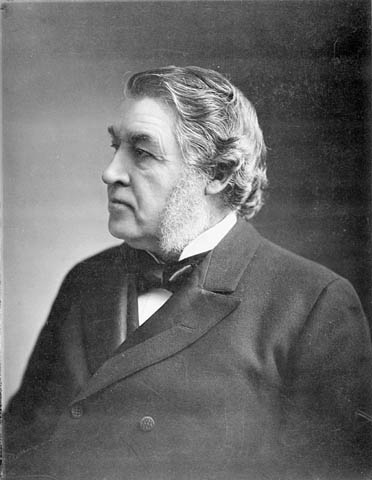
-
Article
Nova Scotia College of Art and Design University
Founded in 1887 in Halifax, Nova Scotia, what has come to be called the Nova Scotia College of Art and Design University evolved, over its first century and more, from a conservative provincial art college focused on traditional landscape painting to one of the premier institutions in North America, well known for its promotion of conceptual art and the avant-garde.
"https://d3d0lqu00lnqvz.cloudfront.net/media/media/ad75e706-01dd-441e-92d5-7b3212b981ab.jpg" // resources/views/front/categories/view.blade.php
https://d3d0lqu00lnqvz.cloudfront.net/media/media/ad75e706-01dd-441e-92d5-7b3212b981ab.jpg
-
Macleans
Nova Scotia Government Falls
For days, Nova Scotia Tory Leader John Hamm withstood the pressure.This article was originally published in Maclean's Magazine on July 1, 1999
"https://thecanadianencyclopedia.ca/images/tce_placeholder.jpg?v=e9dca980c9bdb3aa11e832e7ea94f5d9" // resources/views/front/categories/view.blade.php
https://thecanadianencyclopedia.ca/images/tce_placeholder.jpg?v=e9dca980c9bdb3aa11e832e7ea94f5d9
-
Article
Nova Scotia Nautical Institute
The Nova Scotia Nautical Institute was an institute for seamanship training founded in 1872. It was common in England and Canada, which followed England in marine matters, to have people called "crammers" to assist mariners to pass their examinations, following apprenticeship on board ship.
"https://thecanadianencyclopedia.ca/images/tce_placeholder.jpg?v=e9dca980c9bdb3aa11e832e7ea94f5d9" // resources/views/front/categories/view.blade.php
https://thecanadianencyclopedia.ca/images/tce_placeholder.jpg?v=e9dca980c9bdb3aa11e832e7ea94f5d9
-
Article
Nova Scotia Pharmaceutical Society Case
In the Nova Scotia Pharmaceutical Society case (1992), the Supreme Court took into account the doctrine of vagueness.
"https://thecanadianencyclopedia.ca/images/tce_placeholder.jpg?v=e9dca980c9bdb3aa11e832e7ea94f5d9" // resources/views/front/categories/view.blade.php
https://thecanadianencyclopedia.ca/images/tce_placeholder.jpg?v=e9dca980c9bdb3aa11e832e7ea94f5d9
-
Article
Nova Scotia Research Foundation Corporation
The Nova Scotia Research Foundation Corporation (NSRFC) was a research organization established by the province as the Nova Scotia Research Foundation in 1946 in response to Henry M.
"https://thecanadianencyclopedia.ca/images/tce_placeholder.jpg?v=e9dca980c9bdb3aa11e832e7ea94f5d9" // resources/views/front/categories/view.blade.php
https://thecanadianencyclopedia.ca/images/tce_placeholder.jpg?v=e9dca980c9bdb3aa11e832e7ea94f5d9
-
Editorial
Nova Scotia: The Cradle of Canadian Parliamentary Democracy
The following article is an editorial written by The Canadian Encyclopedia staff. Editorials are not usually updated.
"https://d3d0lqu00lnqvz.cloudfront.net/media/media/2756e679-0a69-460f-a9df-a12d63bd1a22.png" // resources/views/front/categories/view.blade.php
https://d3d0lqu00lnqvz.cloudfront.net/media/media/2756e679-0a69-460f-a9df-a12d63bd1a22.png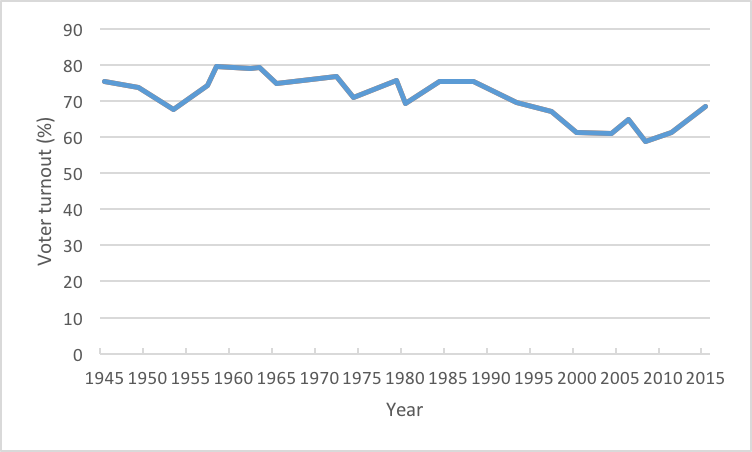
-
Article
Nowruz
Newroz (Kurdish: نەورۆز) or Nowruz (Persian: نوروز) means “new day.” It is a cultural festival which comes from Southwest Asia and Central Asia. Nowruz marks the start of the new year and the beginning of spring, usually on 20 or 21 March. The festival symbolizes renewal, rebirth and the strength of community. In Canada, members of Kurdish, Iranian, Baloch, Afghan and other diasporas continue to celebrate Nowruz. The celebrations include traditional food, music, dance and rituals such as bonfires and the Haft-Seen table. Over time, Nowruz has grown from a regional custom into an international event. It brings people together to enjoy cultural performances, community spirit and the joy of new beginnings. The United Nations recognizes Nowruz as the International Day of Nowruz. This highlights its importance as a celebration of peace, resilience and cultural heritage.
"https://d3d0lqu00lnqvz.cloudfront.net/Nowruz/nowruz-PDA-2018-danse.jpg" // resources/views/front/categories/view.blade.php
https://d3d0lqu00lnqvz.cloudfront.net/Nowruz/nowruz-PDA-2018-danse.jpg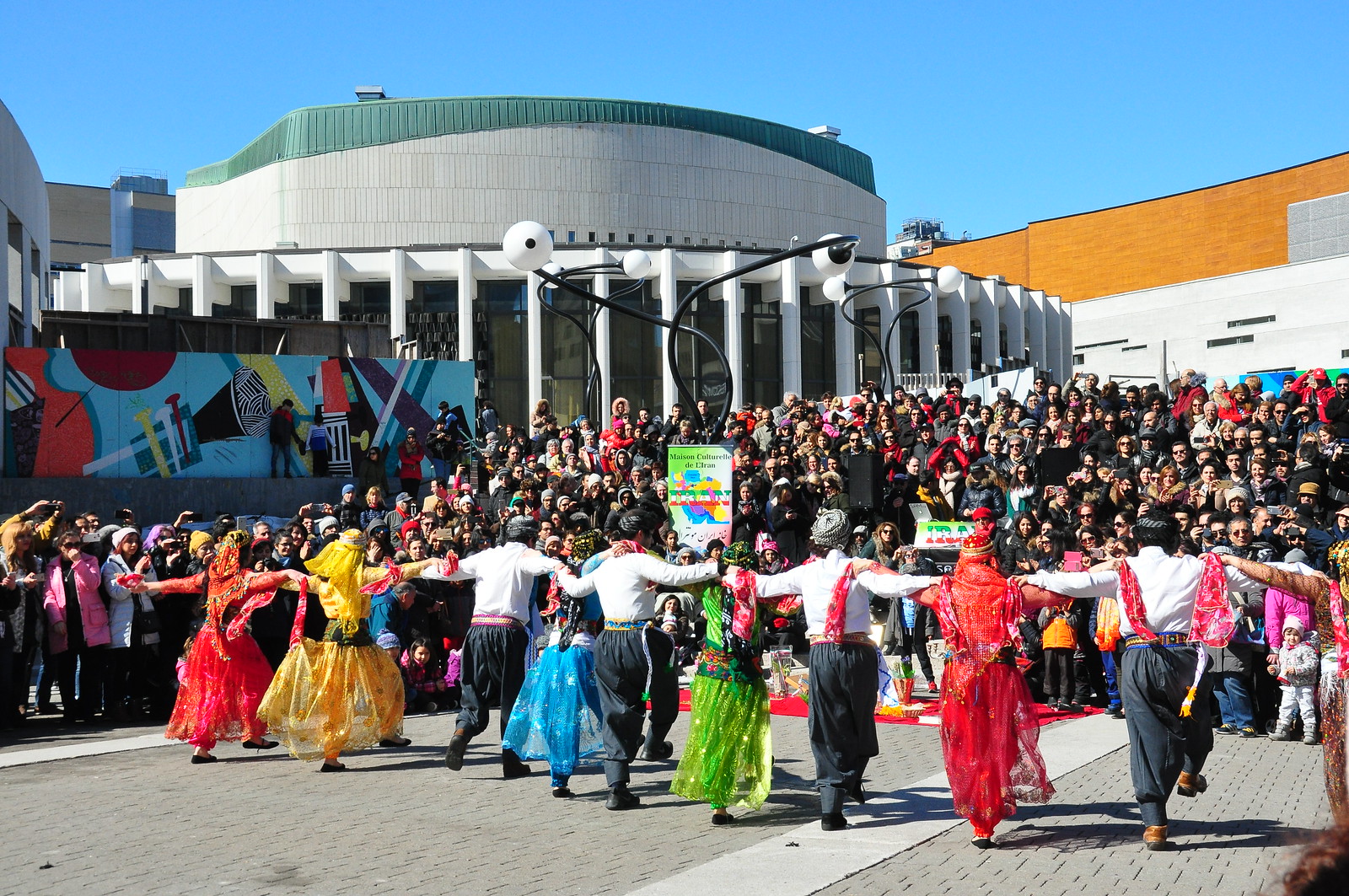
-
Macleans
NS Premier John Savage Resigns
According to his friends and longtime political associates, there are two John Savages. The first is the private man, whom they describe as warm and compassionate, a doting grandfather, an affable golf companion.This article was originally published in Maclean's Magazine on March 31, 1997
"https://thecanadianencyclopedia.ca/images/tce_placeholder.jpg?v=e9dca980c9bdb3aa11e832e7ea94f5d9" // resources/views/front/categories/view.blade.php
https://thecanadianencyclopedia.ca/images/tce_placeholder.jpg?v=e9dca980c9bdb3aa11e832e7ea94f5d9
-
Article
Nuclear Energy
Nuclear Energy is energy from the nucleus of an atom. In stars such as the sun, pairs of light atoms (mostly hydrogen) fuse together and release the radiation received on earth as solar energy.
"https://thecanadianencyclopedia.ca/images/tce_placeholder.jpg?v=e9dca980c9bdb3aa11e832e7ea94f5d9" // resources/views/front/categories/view.blade.php
https://thecanadianencyclopedia.ca/images/tce_placeholder.jpg?v=e9dca980c9bdb3aa11e832e7ea94f5d9
-
Article
Nuclear Fusion
Nuclear fusion is the combination of the nuclei of two light atoms to form a heavier one. The resulting atom has a smaller mass than the original ones; therefore, nuclear fusion is a method of transforming mass into energy.
"https://thecanadianencyclopedia.ca/images/tce_placeholder.jpg?v=e9dca980c9bdb3aa11e832e7ea94f5d9" // resources/views/front/categories/view.blade.php
https://thecanadianencyclopedia.ca/images/tce_placeholder.jpg?v=e9dca980c9bdb3aa11e832e7ea94f5d9