Browse "Things"
-
Article
Lord Strathcona’s Horse (Royal Canadians)
Lord Strathcona’s Horse (Royal Canadians) (LdSH (RC)) is one of three regular armoured regiments in the Canadian Army. The regiment was established in 1900 during the Boer War and has fought in all the country’s wars since then. The Strathconas have also participated in several peace support operations. The regiment has been based in Alberta since 1970 and is part of 1st Canadian Mechanized Brigade Group, 3rd Canadian Division.
"https://d3d0lqu00lnqvz.cloudfront.net/LdSH/Tanks-arr-KAF-btm.jpeg" // resources/views/front/categories/view.blade.php
https://d3d0lqu00lnqvz.cloudfront.net/LdSH/Tanks-arr-KAF-btm.jpeg
-
Macleans
Lord's First 200 Days
His absence was, in reality, due to a bout of flu. But many nights, Lord's tan minivan is the last vehicle in the parking lot behind the government buildings. His heavy workload has even reduced the premier to working out at home, instead of his usual fitness regimen of ball hockey and racquetball.This article was originally published in Maclean's Magazine on January 17, 2000
"https://d3d0lqu00lnqvz.cloudfront.net/media/media/2154bcd0-2e92-4fbf-ae63-3342734f8489.jpg" // resources/views/front/categories/view.blade.php
https://d3d0lqu00lnqvz.cloudfront.net/media/media/2154bcd0-2e92-4fbf-ae63-3342734f8489.jpg
-
Macleans
Lortie Released
Denis Lortie, the former army corporal who murdered three people and injured 13 others after storming the Quebec National Assembly in May, 1984, was released on day parole to a halfway house in Hull, Quebec.This article was originally published in Maclean's Magazine on January 16, 1995
"https://thecanadianencyclopedia.ca/images/tce_placeholder.jpg?v=e9dca980c9bdb3aa11e832e7ea94f5d9" // resources/views/front/categories/view.blade.php
https://thecanadianencyclopedia.ca/images/tce_placeholder.jpg?v=e9dca980c9bdb3aa11e832e7ea94f5d9
-
Article
Lost Lemon Mine
Lost Lemon Mine, a legendary gold deposit reputedly somewhere between the Crowsnest Pass and the Highwood River in southwestern Alberta, discovered about 1870 by prospectors Frank Lemon and "Blackjack."
"https://thecanadianencyclopedia.ca/images/tce_placeholder.jpg?v=e9dca980c9bdb3aa11e832e7ea94f5d9" // resources/views/front/categories/view.blade.php
https://thecanadianencyclopedia.ca/images/tce_placeholder.jpg?v=e9dca980c9bdb3aa11e832e7ea94f5d9
-
Article
Loto-Canada Inc
Loto-Canada Inc, established May 1976 to be responsible for continued operation of the Olympic lottery. It was to turn over 82.
"https://thecanadianencyclopedia.ca/images/tce_placeholder.jpg?v=e9dca980c9bdb3aa11e832e7ea94f5d9" // resources/views/front/categories/view.blade.php
https://thecanadianencyclopedia.ca/images/tce_placeholder.jpg?v=e9dca980c9bdb3aa11e832e7ea94f5d9
-
Article
Lottery
Lottery a centuries-old concept, is an arrangement for distributing prizes by lot, chance or mixed chance and skill.
"https://thecanadianencyclopedia.ca/images/tce_placeholder.jpg?v=e9dca980c9bdb3aa11e832e7ea94f5d9" // resources/views/front/categories/view.blade.php
https://thecanadianencyclopedia.ca/images/tce_placeholder.jpg?v=e9dca980c9bdb3aa11e832e7ea94f5d9
-
Article
Northern Star Award
The Northern Star Award (formerly the Lou Marsh Trophy) is presented annually to Canada’s best athlete. It is decided by a committee of Canadian sports journalists convened by the Toronto Star. First awarded in 1936, the prize was originally named after sports journalist Lou Marsh. Calls to change the name of the award — due to Marsh’s long, documented history of racism and discrimination — led to it being renamed the Northern Star Award in November 2022. The trophy is made of black marble and stands about 75 cm high. It is kept on exhibit at Canada’s Sports Hall of Fame. The most recent winner is basketball player Shai Gilgeous-Alexander.
"https://d3d0lqu00lnqvz.cloudfront.net/1024px-2023-08-09_Deutschland_gegen_Kanada_Basketball-Landerspiel_by_Sandro_Halank-109.jpg" // resources/views/front/categories/view.blade.php
https://d3d0lqu00lnqvz.cloudfront.net/1024px-2023-08-09_Deutschland_gegen_Kanada_Basketball-Landerspiel_by_Sandro_Halank-109.jpg
-
Article
Loup-Garou
Traditional tales about the Loup-Garou are found in French Canadian and European folklore. The Loup-Garou is also called lycanthrope or werewolf. A Loup-Garou is generally believed to a person who can change into animal form, often as a wolf. In French Canadian folklore, the Loup-Garou is often a dog. It may also take the form of a calf or small ox, a pig, a cat or even an owl. See also Oral Literature in French.
"https://thecanadianencyclopedia.ca/images/tce_placeholder.jpg?v=e9dca980c9bdb3aa11e832e7ea94f5d9" // resources/views/front/categories/view.blade.php
https://thecanadianencyclopedia.ca/images/tce_placeholder.jpg?v=e9dca980c9bdb3aa11e832e7ea94f5d9
-
Article
Louse
Louse is the common term broadly used for certain insect pests of mammals, birds, plants (aphids), books (book lice), etc, and for crustaceans (sea lice), living commensally with aquatic mammals and fish.
"https://thecanadianencyclopedia.ca/images/tce_placeholder.jpg?v=e9dca980c9bdb3aa11e832e7ea94f5d9" // resources/views/front/categories/view.blade.php
https://thecanadianencyclopedia.ca/images/tce_placeholder.jpg?v=e9dca980c9bdb3aa11e832e7ea94f5d9
-
"https://thecanadianencyclopedia.ca/images/tce_placeholder.jpg?v=e9dca980c9bdb3aa11e832e7ea94f5d9" // resources/views/front/categories/view.blade.php
https://thecanadianencyclopedia.ca/images/tce_placeholder.jpg?v=e9dca980c9bdb3aa11e832e7ea94f5d9
-
Article
Lower Canada
Lower Canada was a British colony from 1791 to 1840. Its geographical boundaries comprised the southern portion of present-day Quebec. In 1791, Britain divided the Province of Quebec into Upper Canada and Lower Canada. (See: Constitutional Act 1791.) Britain had followed a similar policy of territorial division twice before. Prince Edward Island was detached from Nova Scotia in 1769. The provinces of Cape Breton and New Brunswick were created in 1784 in response to the wave of Loyalist immigration (which also occurred in Quebec). In 1841, Upper Canada and Lower Canada were renamed Canada West and Canada East, respectively. They were united as the single colony of the Province of Canada.
"https://d3d0lqu00lnqvz.cloudfront.net/media/media/0a40188b-4ef4-4e9e-90bb-ec21d39c1c45.jpg" // resources/views/front/categories/view.blade.php
https://d3d0lqu00lnqvz.cloudfront.net/media/media/0a40188b-4ef4-4e9e-90bb-ec21d39c1c45.jpg
-
Article
Newcombe Piano Co., Ltd.
Newcombe Piano Co., Ltd. was founded in Toronto by Octavius Newcombe in 1878. The quality of Newcombe pianos were recognized at several international exhibitions. Following a factory fire in 1926, the Newcombe name was purchased by the Montreal piano retailer and manufacturer Willis & Company Ltd.
"https://thecanadianencyclopedia.ca/images/tce_placeholder.jpg?v=e9dca980c9bdb3aa11e832e7ea94f5d9" // resources/views/front/categories/view.blade.php
https://thecanadianencyclopedia.ca/images/tce_placeholder.jpg?v=e9dca980c9bdb3aa11e832e7ea94f5d9
-
Macleans
Ludwig Farm Shooting
This article was originally published in Maclean’s magazine on July 5, 1999. Partner content is not updated. On a brilliant summer's evening last week, two children's teams played soccer outside the Beaverlodge Community Centre. Another group of youngsters splashed with glee in an adjacent outdoor swimming pool. Inside the town hall, though, the mood was ugly.
"https://thecanadianencyclopedia.ca/images/tce_placeholder.jpg?v=e9dca980c9bdb3aa11e832e7ea94f5d9" // resources/views/front/categories/view.blade.php
https://thecanadianencyclopedia.ca/images/tce_placeholder.jpg?v=e9dca980c9bdb3aa11e832e7ea94f5d9
-
Article
Luge and Skeleton Bobsledding
Tobogganing developed independently in eastern Canada among native tribes who used their transportation sleighs for occasional fun. It was refined by groups such as the Montreal Tobogganing Club, the first such club in Canada, formed in 1881.
"https://d3d0lqu00lnqvz.cloudfront.net/media/media/a60d0cf9-b2c8-4223-a154-72ed9c6ef620.jpg" // resources/views/front/categories/view.blade.php
https://d3d0lqu00lnqvz.cloudfront.net/media/media/a60d0cf9-b2c8-4223-a154-72ed9c6ef620.jpg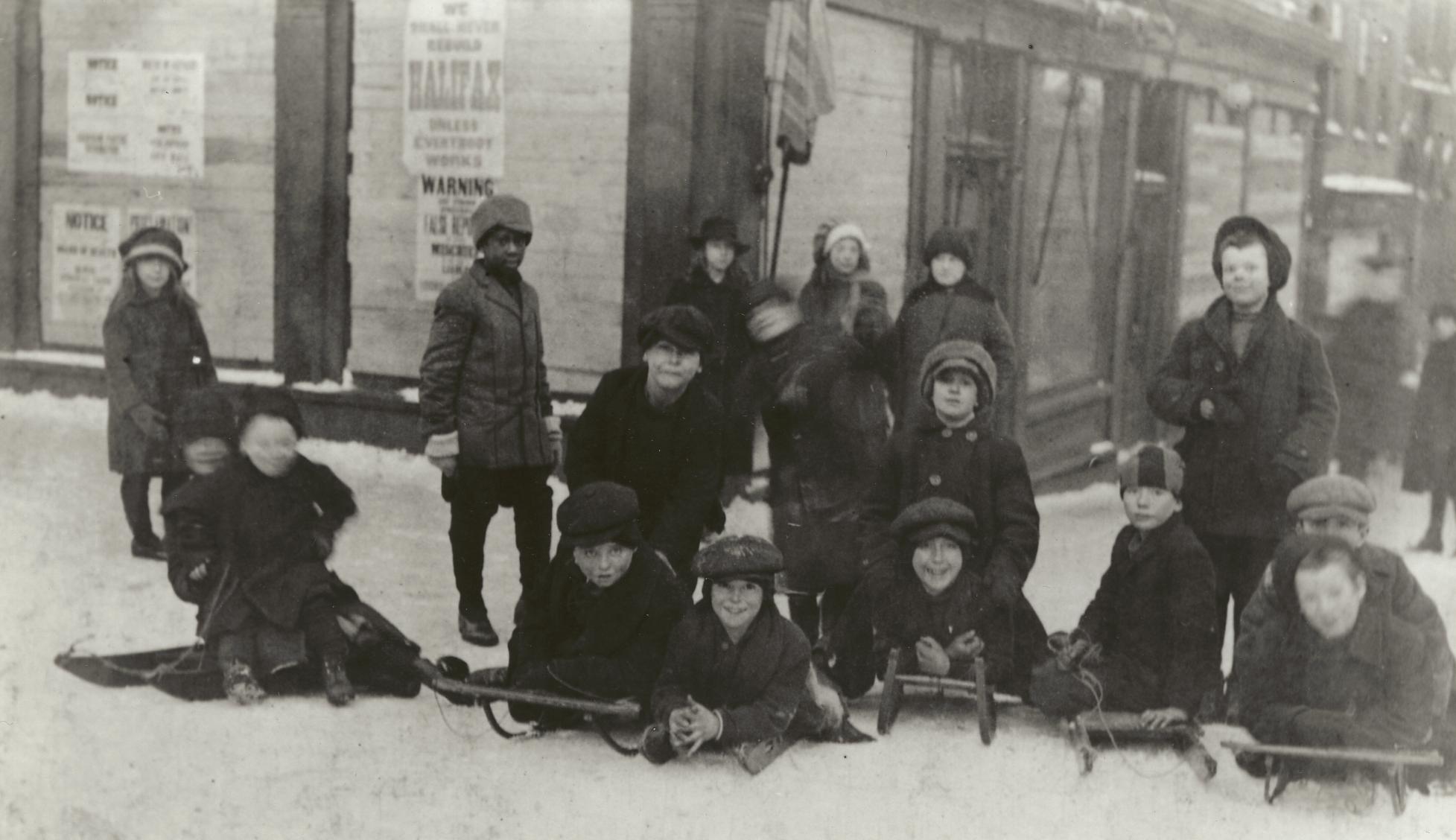
-
Article
Lumber and Wood Industries
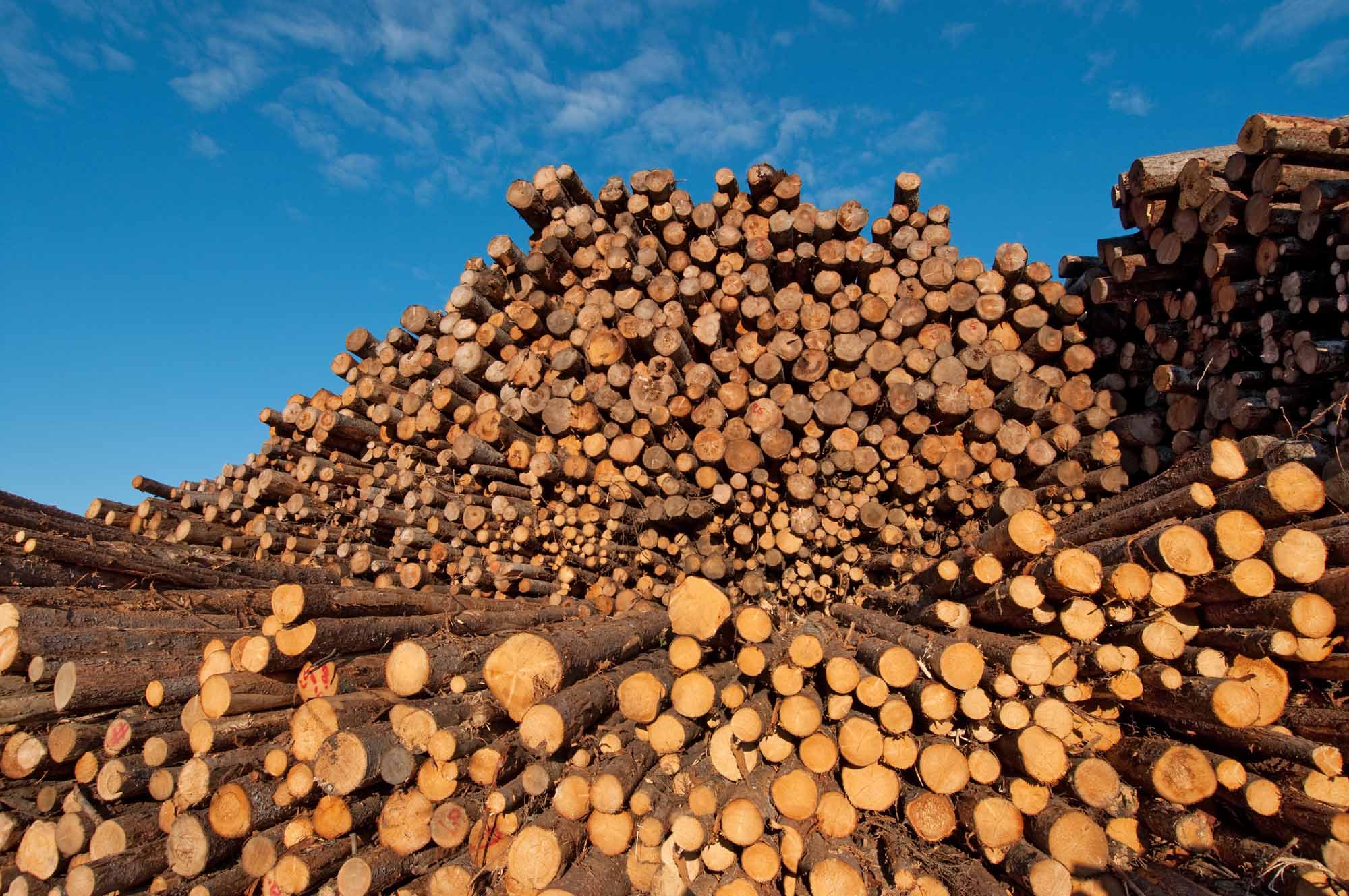
Canada’s lumber and wood industries convert logs into various products, from lumber to wood chips. Softwood, derived from coniferous trees, supplies most of the manufacturers in these industries and is cut primarily in British Columbia. The remainder of the industry is supplied by hardwood (from deciduous trees, e.g., birch, maple, oak) found mainly in southern Ontario and Quebec and the Maritimes. Though technically not hardwood, Alberta produces large volumes of aspen and poplar. According to Natural Resources Canada, the forest sector contributed $33.4 billion to Canada’s nominal gross domestic product and employed 212,660 people in 2022. (See also Pulp and Paper Industry; Forest Harvesting; Timber Trade History; Forestry.)
"https://d3d0lqu00lnqvz.cloudfront.net/media/media/c1513b07-b36d-4c5c-8ff0-1b063bb48745.jpg" // resources/views/front/categories/view.blade.php
https://d3d0lqu00lnqvz.cloudfront.net/media/media/c1513b07-b36d-4c5c-8ff0-1b063bb48745.jpg