
Browse "Things"
-
Article
Architectural Practice
The process will vary in complexity and in the length of time it takes to complete the facility. The project may be divided into a number of subprojects, but each of these will roughly follow the stages outlined above. The knowledge and expertise required at each stage also varies.
"https://d3d0lqu00lnqvz.cloudfront.net/media/media/9b827739-37a4-4141-8f97-535abb924a30.jpg" // resources/views/front/categories/view.blade.php
https://d3d0lqu00lnqvz.cloudfront.net/media/media/9b827739-37a4-4141-8f97-535abb924a30.jpg
-
Article
Architecture
Classic definitions of architecture hold that it is "the mother of the arts." Today architecture is more likely to be defined, not as an art, but in technical terms, or as an expression of a given society's values. What we refer to as architecture can include structures that are modest and ephemeral as well as monumental buildings; often the distinction between architecture as a high art and architecture as a reflection of simple vernacular traditions seems irrelevant to the appreciation and experience of built form. The late American architectural historian Spiro Kostof called for "a more inclusive definition of architecture and, consequently, a more democratic view of architectural history." This democratic approach to defining the term architecture seems to suit the Canadian tradition, where the story of our built environment has been written by artists, craftspeople and builders whose origins, backgrounds and reasons for building have been very different.
"https://d3d0lqu00lnqvz.cloudfront.net/media/media/9b827739-37a4-4141-8f97-535abb924a30.jpg" // resources/views/front/categories/view.blade.php
https://d3d0lqu00lnqvz.cloudfront.net/media/media/9b827739-37a4-4141-8f97-535abb924a30.jpg
-
Article
Architecture of Art Galleries in Canada
While the Canadian Heritage Information Network (CHIN) lists nearly 400 art and leisure museums, Canada's major institutions are relatively few in number and often of relatively recent vintage.
"https://d3d0lqu00lnqvz.cloudfront.net/media/media/07073232-3548-469e-941d-a60b8ebcc4a6.jpg" // resources/views/front/categories/view.blade.php
https://d3d0lqu00lnqvz.cloudfront.net/media/media/07073232-3548-469e-941d-a60b8ebcc4a6.jpg
-
"https://thecanadianencyclopedia.ca/images/tce_placeholder.jpg?v=e9dca980c9bdb3aa11e832e7ea94f5d9" // resources/views/front/categories/view.blade.php
https://thecanadianencyclopedia.ca/images/tce_placeholder.jpg?v=e9dca980c9bdb3aa11e832e7ea94f5d9
-
Article
Archives de folklore
Archives de folklore. The name refers, at one and the same time, to actual archives, where the oral traditions of the French-speaking inhabitants of North America are collected and preserved, and to a collection of works specializing in this field, namely the volumes Archives de folkore.
"https://thecanadianencyclopedia.ca/images/tce_placeholder.jpg?v=e9dca980c9bdb3aa11e832e7ea94f5d9" // resources/views/front/categories/view.blade.php
https://thecanadianencyclopedia.ca/images/tce_placeholder.jpg?v=e9dca980c9bdb3aa11e832e7ea94f5d9
-
Article
Archives
Repositories of documents of historical interest, usually in written, sound-recorded, or pictorial form.
"https://thecanadianencyclopedia.ca/images/tce_placeholder.jpg?v=e9dca980c9bdb3aa11e832e7ea94f5d9" // resources/views/front/categories/view.blade.php
https://thecanadianencyclopedia.ca/images/tce_placeholder.jpg?v=e9dca980c9bdb3aa11e832e7ea94f5d9
-
Article
Arctic Animals
Arctic animals are those that have adapted physically and behaviourally to the particular conditions of life in the most northerly regions on the planet.
"https://d3d0lqu00lnqvz.cloudfront.net/media/media/76466b5d-e9ad-4752-b340-80f9ba594f83.jpg" // resources/views/front/categories/view.blade.php
https://d3d0lqu00lnqvz.cloudfront.net/media/media/76466b5d-e9ad-4752-b340-80f9ba594f83.jpg
-
Article
Arctic Exploration
Humans have been exploring the North American Arctic for centuries, beginning about 5,000 years ago when Palaeo-Inuit were looking for a homeland, followed by the early Inuit (Thule) — ancestors of the Inuit. European exploration of the same region began with the Norse in the 10th century and, after a short pause, was continued by Englishmen during the Elizabethan era (1558–1603). Over the next several hundred years, explorers ventured to the Arctic in search of resources, scientific knowledge, national prestige, personal fame and a navigable Northwest Passage. The most successful of these explorers adapted to the harsh Arctic environment and adopted the tools and practices of northern Indigenous peoples.
"https://d3d0lqu00lnqvz.cloudfront.net/media/media/638a4852-8110-4fa7-96bd-db84e3e1dcaa.jpg" // resources/views/front/categories/view.blade.php
https://d3d0lqu00lnqvz.cloudfront.net/media/media/638a4852-8110-4fa7-96bd-db84e3e1dcaa.jpg
-
Timelines
Arctic Exploration
Humans have been exploring the North American Arctic for centuries, beginning about 5,000 years ago when Palaeoeskimos were looking for a homeland, followed by the Thule — ancestors of the Inuit. Europeans began exploring the Arctic in the Elizabethan era when English seamen sought a shortcut to Asia by the seas north of America — the so-called Northwest Passage.
"https://d3d0lqu00lnqvz.cloudfront.net/media/media/1e629024-f210-4a2b-bb7c-a7ac351ac5bc.jpg" // resources/views/front/categories/view.blade.php
https://d3d0lqu00lnqvz.cloudfront.net/media/media/1e629024-f210-4a2b-bb7c-a7ac351ac5bc.jpg
-
Editorial
Exploring the Arctic through Oral History
Throughout the history of exploration, what one group saw as new territory was often long-established homeland for another. Canada’s Arctic was no exception.
"https://d3d0lqu00lnqvz.cloudfront.net/media/media/e11b417a-da83-452e-b3e4-4d550484f588.jpg" // resources/views/front/categories/view.blade.php
https://d3d0lqu00lnqvz.cloudfront.net/media/media/e11b417a-da83-452e-b3e4-4d550484f588.jpg
-
Article
Arctic Haze
Once thought of as one of the purest and cleanest places on Earth, the Arctic now seasonally experiences a dirty blanket of reddish-brown smog. Coined in the 1950s, the Arctic haze, which arrives each fall and winter, is a totally unexpected phenomenon recorded nowhere else on Earth.
"https://d3d0lqu00lnqvz.cloudfront.net/arctichaze/NASA_P3B_in_flight_in_Arctic_haze.jpg" // resources/views/front/categories/view.blade.php
https://d3d0lqu00lnqvz.cloudfront.net/arctichaze/NASA_P3B_in_flight_in_Arctic_haze.jpg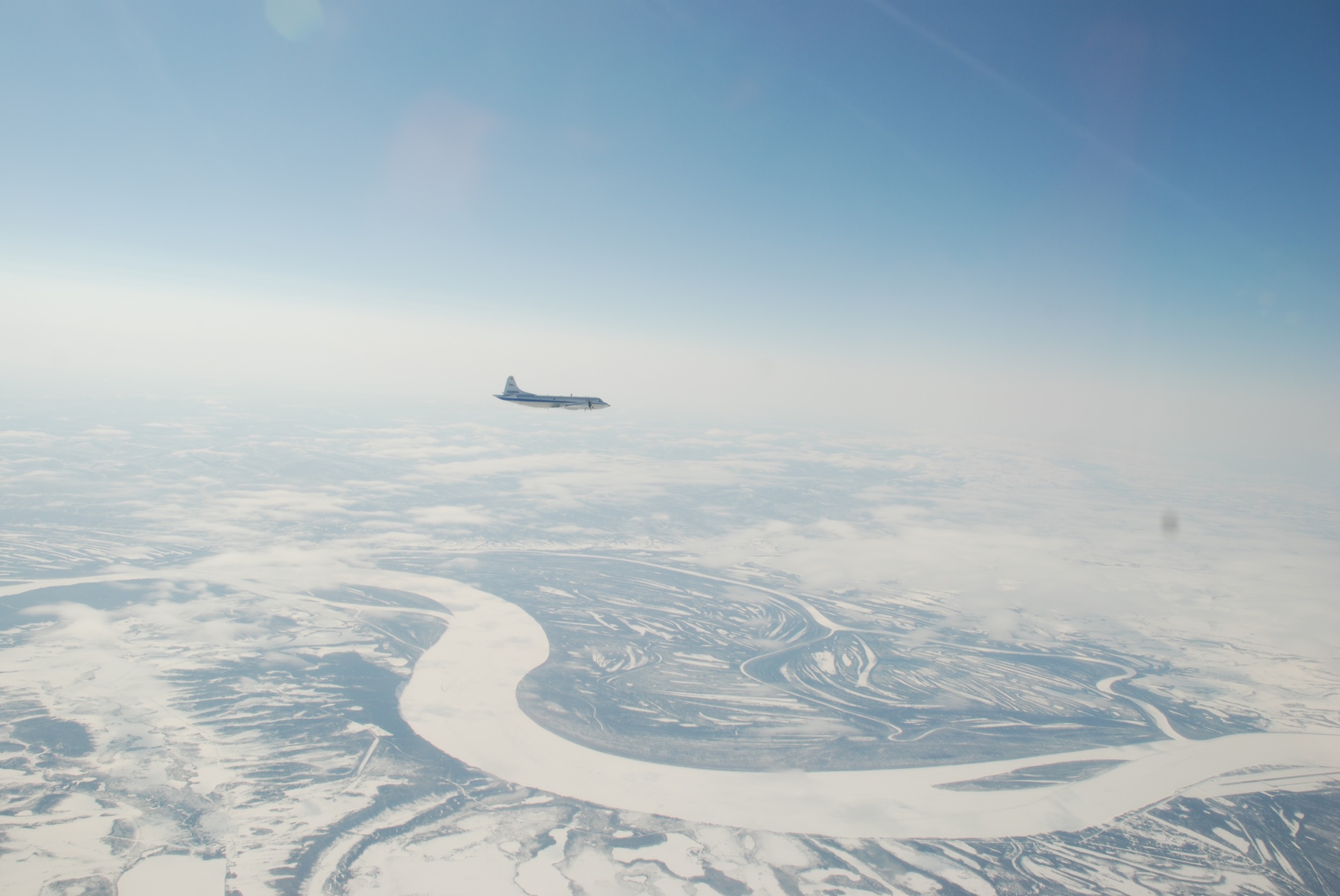
-
Article
Arctic Oceanography
The study of oceanography reveals information about the origin, composition and movements of marine waters; ocean basins; interactions with the atmosphere; and the living organisms of the sea, i.e., the plants and successive levels of animals that feed on them (see Marine Ecology). The seas of the Canadian Arctic (here defined as reaching from the Labrador Sea in the east to the Beaufort Sea in the west) are covered by ice for more than half the year. Cold, Arctic surface water, originating in the upper 200–300 m of the Arctic Ocean, flows out of the Arctic basin through the Canadian Arctic Archipelago and between Canada and Greenland towards the Atlantic Ocean. In Baffin Bay, Davis Strait and neighbouring regions, it mixes with warmer water from the Atlantic to form subarctic water.
"https://d3d0lqu00lnqvz.cloudfront.net/media/media/0b282b25-029b-4fa5-85e1-aef4b1039571.jpg" // resources/views/front/categories/view.blade.php
https://d3d0lqu00lnqvz.cloudfront.net/media/media/0b282b25-029b-4fa5-85e1-aef4b1039571.jpg
-
Article
Canadian Arctic Sovereignty
Arctic sovereignty is a key part of Canada’s history and future. The country has 162,000 km of Arctic coastline. Forty per cent of Canada’s landmass is in its three northern territories. Sovereignty over the area has become a national priority for Canadian governments in the 21st century. There has been growing international interest in the Arctic due to resource development, climate change, control of the Northwest Passage and access to transportation routes. As Prime Minister Stephen Harper said in 2008, “The geopolitical importance of the Arctic and Canada’s interests in it have never been greater.”
"https://d3d0lqu00lnqvz.cloudfront.net/media/media/98ad523f-8b74-429e-864d-27b1e0f18ac9.png" // resources/views/front/categories/view.blade.php
https://d3d0lqu00lnqvz.cloudfront.net/media/media/98ad523f-8b74-429e-864d-27b1e0f18ac9.png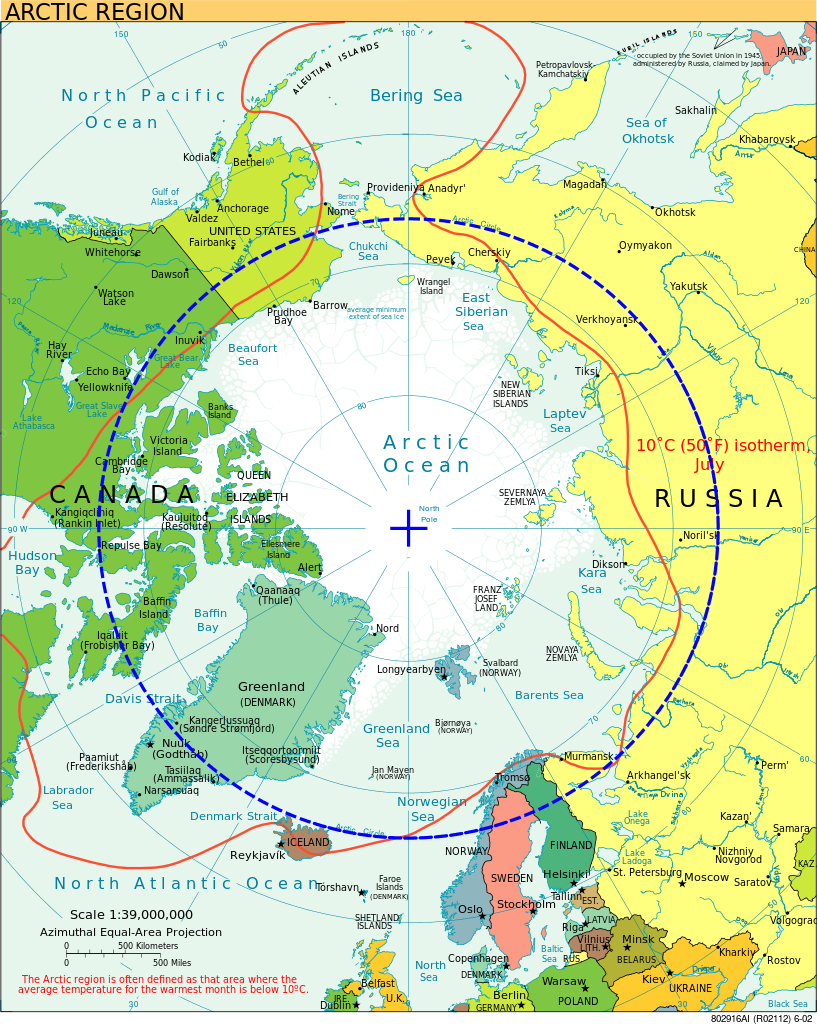
-
Article
Arctic Winter Games
The Arctic Winter Games (AWG) are biennial games initiated in 1970 to provide northern athletes with opportunities for training and competition, and to promote cultural and social interchange among northern peoples. Although the Games originated in North America, they have grown to include athletes from other parts of the world, including Greenland and parts of Russia, including Magadan, Sápmi and Yamal.
"https://d3d0lqu00lnqvz.cloudfront.net/TCEImages/e580abda-7f88-43f4-999c-f29780a47d62.jpg" // resources/views/front/categories/view.blade.php
https://d3d0lqu00lnqvz.cloudfront.net/TCEImages/e580abda-7f88-43f4-999c-f29780a47d62.jpg
-
Article
Argus Corporation Ltd
Argus Corporation Ltd, with head offices in Toronto, is a specialized investment and holding company, incorporated in 1945. Attracting little interest to itself or its activities for much of its history, Argus was thrust into
"https://d3d0lqu00lnqvz.cloudfront.net/media/media/1cdb3a12-3929-4f32-8766-5e39b96f6201.jpg" // resources/views/front/categories/view.blade.php
https://d3d0lqu00lnqvz.cloudfront.net/media/media/1cdb3a12-3929-4f32-8766-5e39b96f6201.jpg