
Browse "Things"
-
Article
Jeunesses Laurentiennes
Jeunesses Laurentiennes (also known as Jeunes Laurentiens; both expressions mean “Laurentian youth”) was a French-Canadian nationalist youth movement founded in 1936. With a traditional vision of society, in which the Catholic religion played a central role, Jeunesses Laurentiennes organized conferences and celebrations, published a magazine, and occasionally acted as a pressure group. Until the organization was disbanded in 1950, it served as a training ground for many young militant French-Canadian nationalists.
"https://d3d0lqu00lnqvz.cloudfront.net/media/media/087e6e29-46c4-42c3-a81d-df5a80a5c519.jpg" // resources/views/front/categories/view.blade.php
https://d3d0lqu00lnqvz.cloudfront.net/media/media/087e6e29-46c4-42c3-a81d-df5a80a5c519.jpg
-
Article
Jeux de la Francophonie
The idea for the Jeux de la Francophonie (Francophone Games) was born at the 1987 Sommet de la Francophonie in Quebec City. (See Francophonie and Canada.) Delegates at the summit discussed organizing an event that would bring French-speaking countries together while providing them with an international showcase. The Games are intended as not only an instrument of sport, but also an opportunity to showcase each nation’s heritage on an international stage. In addition to sporting events, there are artistic competitions.
"https://d3d0lqu00lnqvz.cloudfront.net/Logo_jeuxfrancophonie.svg.png" // resources/views/front/categories/view.blade.php
https://d3d0lqu00lnqvz.cloudfront.net/Logo_jeuxfrancophonie.svg.png
-
Article
Jeux du Québec
Plans for the Jeux du Québec were drawn up in the late sixties. Québec amateur sports stakeholders then proposed holding a competition that would stimulate interest in sports into the farthest reaches of the province.
"https://thecanadianencyclopedia.ca/images/tce_placeholder.jpg?v=e9dca980c9bdb3aa11e832e7ea94f5d9" // resources/views/front/categories/view.blade.php
https://thecanadianencyclopedia.ca/images/tce_placeholder.jpg?v=e9dca980c9bdb3aa11e832e7ea94f5d9
-
Article
Jewellery and Silverware Industry
Jewellery and Silverware IndustryJewellery and Silverware Industry includes establishments that manufacture jewellery (including costume jewellery, emblems, watch bracelets and precious metal cigar and cigarette cases) and silverware (including sterling or plated flatware and hollowware, and trophies), and those which rerefine or roll precious metals and produce precious metal alloys. The jewellery industry in Canada dates back to the 17th century and includes clockmakers and watchmakers as well as silversmiths who emigrated from the British Isles....
"https://thecanadianencyclopedia.ca/images/tce_placeholder.jpg?v=e9dca980c9bdb3aa11e832e7ea94f5d9" // resources/views/front/categories/view.blade.php
https://thecanadianencyclopedia.ca/images/tce_placeholder.jpg?v=e9dca980c9bdb3aa11e832e7ea94f5d9
-
Article
Jewish Canadians
Unlike most immigrants to Canada, Jews did not come from a place where they were the majority cultural group. Jews were internationally dispersed at the time of the ancient Roman Empire and after unsuccessful revolts against it lost their sovereignty in their ancient homeland. Subsequently, Jews lived, sometimes for many centuries, as minorities in the Middle East, North Africa and Europe. Jews have been in what would become Canada as early as the 18th century. Many more immigrated in the 19th and 20th centuries. In the 2021 census, around 335,000 people identified themselves as Jewish in Canada. (See also Judaism.)
"https://d3d0lqu00lnqvz.cloudfront.net/media/media/455197f8-b830-4e6f-8952-4bbaa53ee57d.jpg" // resources/views/front/categories/view.blade.php
https://d3d0lqu00lnqvz.cloudfront.net/media/media/455197f8-b830-4e6f-8952-4bbaa53ee57d.jpg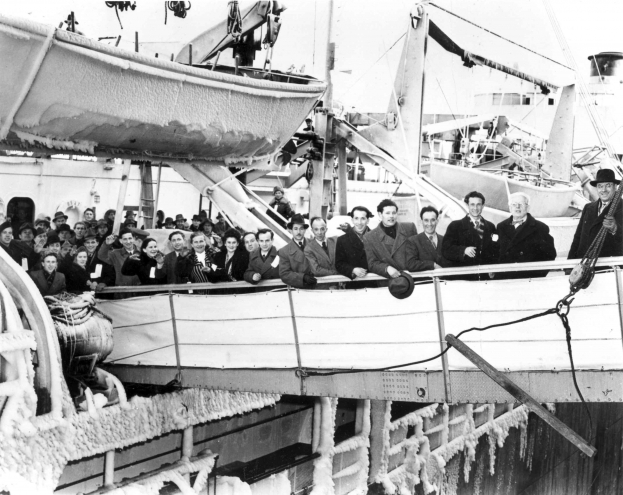
-
Article
Jewish Food in Canada
Jewish food in Canada was in large part shaped by the arrival of Eastern European Ashkenazi Jews in the late 1880s. Later Jewish immigration from North Africa and the Middle East also influenced the cuisine of Jewish Canadians, as they introduced new dishes and ingredients to the culinary landscape. Many foods remain distinctly Jewish, mainly being cooked and eaten by members of the Jewish community. However, some foods brought to Canada by Jews have also become popular foods enjoyed by Canadians of various backgrounds. Jewish food has become central to the culinary identity of Canada. (See Popular Jewish Dishes in Canada.)
"https://d3d0lqu00lnqvz.cloudfront.net/Jewish_dishes/challah.jpg" // resources/views/front/categories/view.blade.php
https://d3d0lqu00lnqvz.cloudfront.net/Jewish_dishes/challah.jpg
-
Article
Jewish Literature in Canada
Jewish Writing in Canada is characterized by linguistic and thematic influences derived from successive waves of immigration, and it appears mainly in Yiddish, Hebrew, English and French. Some Jewish writers work in other languages, such as German and Hungarian, reflecting the countries of their origin. Jewish concerns have also been treated by non-Jewish authors; eg, Gwethalyn Graham's Earth and High Heaven (1944) deals with intermarriage and anti-Semitism, Philip Child's Day of Wrath(1945) is concerned with Jewish persecution in Nazi Germany, and Yves Thériault's Aaron (1954) concentrates on the rejection of orthodoxy and the question of assimilation.
"https://d3d0lqu00lnqvz.cloudfront.net/media/media/b127f3da-c0b7-45d1-be4a-73e9d2103fd9.jpg" // resources/views/front/categories/view.blade.php
https://d3d0lqu00lnqvz.cloudfront.net/media/media/b127f3da-c0b7-45d1-be4a-73e9d2103fd9.jpg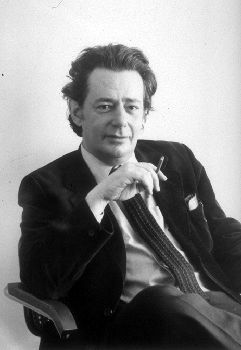
-
Article
J.L. Orme & Sons
J.L. Orme & Sons. Ottawa music, and later furniture, firm, founded in 1861, and one of the oldest surviving names in the Canadian music trade. James Lawrence Orme (d 1893) arrived from Scotland in 1856 and for a few years was partner in a toymaking enterprise in Belleville, Upper Canada (Ontario).
"https://thecanadianencyclopedia.ca/images/tce_placeholder.jpg?v=e9dca980c9bdb3aa11e832e7ea94f5d9" // resources/views/front/categories/view.blade.php
https://thecanadianencyclopedia.ca/images/tce_placeholder.jpg?v=e9dca980c9bdb3aa11e832e7ea94f5d9
-
Macleans
Job Security and Outsourcing
This article was originally published in Maclean’s magazine on September 30, 1996. Partner content is not updated. So the meeting could have gone better. There was Mark Campbell, president of his own printing company, presenting to Kraft Canada Inc., executive level, in suburban Toronto. Initially, the meeting played exactly as Campbell had hoped.
"https://thecanadianencyclopedia.ca/images/tce_placeholder.jpg?v=e9dca980c9bdb3aa11e832e7ea94f5d9" // resources/views/front/categories/view.blade.php
https://thecanadianencyclopedia.ca/images/tce_placeholder.jpg?v=e9dca980c9bdb3aa11e832e7ea94f5d9
-
Macleans
Jobs: Best and Worst
Caroline Armstrong is, in her own words, "an extremely organized person" - some might consider her a bit obsessive. Call it what you will, her attention to detail served her well during a 19-year career in customer service with Canadian Airlines.This article was originally published in Maclean's Magazine on May 31, 1999
"https://thecanadianencyclopedia.ca/images/tce_placeholder.jpg?v=e9dca980c9bdb3aa11e832e7ea94f5d9" // resources/views/front/categories/view.blade.php
https://thecanadianencyclopedia.ca/images/tce_placeholder.jpg?v=e9dca980c9bdb3aa11e832e7ea94f5d9
-
Article
Johanna Hurme and Sasa Radulovic
5468796 is an architecture firm from Winnipeg, Manitoba founded by partners Johanna Hurme and Sasa Radulovic in 2007. The firm’s name is taken from its registration number.
"https://thecanadianencyclopedia.ca/images/tce_placeholder.jpg?v=e9dca980c9bdb3aa11e832e7ea94f5d9" // resources/views/front/categories/view.blade.php
https://thecanadianencyclopedia.ca/images/tce_placeholder.jpg?v=e9dca980c9bdb3aa11e832e7ea94f5d9
-
Article
John Collins' Purchase
John Collins’ Purchase of 1785 is one of the oldest land agreements between Indigenous peoples and British authorities in Upper Canada (later Ontario). It concerned the use of lands extending from the northwestern end of Lake Simcoe to Matchedash Bay, an inlet off Georgian Bay in Lake Huron. The purpose was to provide the British with a protected inland water route between Lake Ontario and Lake Huron, away from potential American interference. This passage was necessary for trade and the resupply of British western outposts. John Collins’ Purchase is one of many agreements made during the late 18th and early 19th centuries, known as the Upper Canada Land Surrenders.
"https://d3d0lqu00lnqvz.cloudfront.net/UCLS/345446e9-d0d1-4626-9702-e214ca87a8a7.jpg" // resources/views/front/categories/view.blade.php
https://d3d0lqu00lnqvz.cloudfront.net/UCLS/345446e9-d0d1-4626-9702-e214ca87a8a7.jpg
-
Article
John Labatt Limited
John Labatt Limited, with head offices in London, Ontario, is a management holding company which was begun as a small family brewery in 1847 by John Kinder LABATT.
"https://thecanadianencyclopedia.ca/images/tce_placeholder.jpg?v=e9dca980c9bdb3aa11e832e7ea94f5d9" // resources/views/front/categories/view.blade.php
https://thecanadianencyclopedia.ca/images/tce_placeholder.jpg?v=e9dca980c9bdb3aa11e832e7ea94f5d9
-
Article
John Norton and the War of 1812
Canada is a country so vast that too often, it seems, its history is lost inside its geography. A striking example is the history of Indigenous peoples, whose long, rich narrative is well-preserved by them, but seldom gets the same attention on a broader scale — even when their stories affect us all.
"https://d3d0lqu00lnqvz.cloudfront.net/media/media/41ca7dbe-20b9-4db4-b6f0-911988594c22.jpg" // resources/views/front/categories/view.blade.php
https://d3d0lqu00lnqvz.cloudfront.net/media/media/41ca7dbe-20b9-4db4-b6f0-911988594c22.jpg
-
Article
Johnson-Butler Purchase
The Johnson-Butler Purchase of 1787–88 (also known as the “Gunshot Treaty,” referring to the distance a person could hear a gunshot from the lake’s edge) is one of the earliest land agreements between representatives of the Crown and the Indigenous peoples of Upper Canada (later Ontario). It resulted in a large tract of territory along the central north shore of Lake Ontario being opened for settlement. These lands became part of the Williams Treaties of 1923. (See also Upper Canada Land Surrenders and Treaties with Indigenous Peoples in Canada.)
"https://d3d0lqu00lnqvz.cloudfront.net/UCLS/345446e9-d0d1-4626-9702-e214ca87a8a7.jpg" // resources/views/front/categories/view.blade.php
https://d3d0lqu00lnqvz.cloudfront.net/UCLS/345446e9-d0d1-4626-9702-e214ca87a8a7.jpg