
Browse "Things"
-
Article
International Trade
International trade is the buying and selling of goods and services between members of different countries. This exchange has been a key part of the Canadian economy since the first settlers came. Canadian settlers depended on exports of resources such as timber and grain (see Timber Trade History; Wheat). In the 20th century, Canada’s exports shifted to services, manufactured goods and commodities such as oil and metals. Since the 1980s, Canada has signed free trade agreements with dozens of countries to increase global trade and investment. Canada’s three biggest trading partners are the United States, the European Union and China. The United States is Canada largest trading partner by far. However, trade with China grew quickly in the 2010s, and this trend will likely continue. Click here for definitions of key terms used in this article.
"https://d3d0lqu00lnqvz.cloudfront.net/International Trade.jpg" // resources/views/front/categories/view.blade.php
https://d3d0lqu00lnqvz.cloudfront.net/International Trade.jpg
-
Article
International Woodworkers of America-Canada
International Woodworkers of America (now IWA Canada), formed in 1937 as part of a drive towards industrial unionization mounted by the Committee for Industrial Organization (later Congress of Industrial Organizations).
"https://thecanadianencyclopedia.ca/images/tce_placeholder.jpg?v=e9dca980c9bdb3aa11e832e7ea94f5d9" // resources/views/front/categories/view.blade.php
https://thecanadianencyclopedia.ca/images/tce_placeholder.jpg?v=e9dca980c9bdb3aa11e832e7ea94f5d9
-
Article
Canadian Open (Tennis)
The first Canadian Open in tennis was held in 1881 for men and in 1892 for women. Since 1968, these championships have been made of two components: the international competition and the national tournament reserved for the best Canadian players. This tournament was only interrupted by two world wars, from 1914 to 1918 and 1941 to 1945. The list of winners is impressive and includes several prestigious names in the history of tennis. The most recent Canadians to claim the open title were Robert Bédard, winning in 1955, 1957 and 1958, and Faye Urban in 1969.
"https://thecanadianencyclopedia.ca/images/tce_placeholder.jpg?v=e9dca980c9bdb3aa11e832e7ea94f5d9" // resources/views/front/categories/view.blade.php
https://thecanadianencyclopedia.ca/images/tce_placeholder.jpg?v=e9dca980c9bdb3aa11e832e7ea94f5d9
-
Article
Internet in Canada
The Internet is a global network of computers that communicate with each other. This exchange happens through a set of rules called protocols. Since Internet use became widespread in the 1990s, the system has affected most aspects of life. It has had both productive and destructive effects. The Internet has changed the way Canadians learn and work, buy products and services, communicate and consume entertainment. Most people think of the Internet as the World Wide Web. However, it takes a number of different forms, including networked physical objects called the Internet of Things. Click here for definitions of key terms used in this article.
"https://d3d0lqu00lnqvz.cloudfront.net/media/new_article_images/Internet/Networking.jpg" // resources/views/front/categories/view.blade.php
https://d3d0lqu00lnqvz.cloudfront.net/media/new_article_images/Internet/Networking.jpg
-
Article
Law and the Internet
The INTERNET is a communications network that interconnects various computer networks by way of telecommunications. The nature of Internet technology makes it difficult for the law to regulate Internet users and information that is transmitted on the Internet.
"https://thecanadianencyclopedia.ca/images/tce_placeholder.jpg?v=e9dca980c9bdb3aa11e832e7ea94f5d9" // resources/views/front/categories/view.blade.php
https://thecanadianencyclopedia.ca/images/tce_placeholder.jpg?v=e9dca980c9bdb3aa11e832e7ea94f5d9
-
Article
Internment in Canada
Internment is the forcible confinement or detention of a person during wartime. Large-scale internment operations were carried out by the Canadian government during the First World War and the Second World War. In both cases, the War Measures Act was invoked. This gave the government the authority to deny people’s civil liberties, notably habeas corpus (the right to a fair trial before detention). People were held in camps across the country. More than 8,500 people were interned during the First World War and as many as 24,000 during the Second World War — including some 21,000–22,000 Japanese Canadians.
"https://d3d0lqu00lnqvz.cloudfront.net/media/media/2913948d-0dc6-4142-807e-5206fce81700.jpg" // resources/views/front/categories/view.blade.php
https://d3d0lqu00lnqvz.cloudfront.net/media/media/2913948d-0dc6-4142-807e-5206fce81700.jpg
-
Article
Internment of Japanese Canadians
The forcible expulsion and confinement of Japanese Canadians during the Second World War is one of the most tragic sets of events in Canada’s history. Some 21,000–22,000 Japanese Canadians were taken from their homes on Canada’s West Coast, without any charge or due process. Beginning 24 February 1942, they were exiled to remote areas of British Columbia and elsewhere. The federal government stripped them of their property and pressured many of them to accept mass deportation after the war. Those who remained were not allowed to return to the West Coast until 1 April 1949. In 1988, the federal government officially apologized for its treatment of Japanese Canadians. A redress payment of $21,000 was made to each survivor, and more than $12 million was allocated to a community fund and human rights projects. This article is the full-length text on Japanese Internment in Canada. For a plain-language summary, see Internment of Japanese Canadians (Plain-Language Summary).
"https://d3d0lqu00lnqvz.cloudfront.net/media/media/0bec6156-0467-4a97-909f-da599383381d.jpg" // resources/views/front/categories/view.blade.php
https://d3d0lqu00lnqvz.cloudfront.net/media/media/0bec6156-0467-4a97-909f-da599383381d.jpg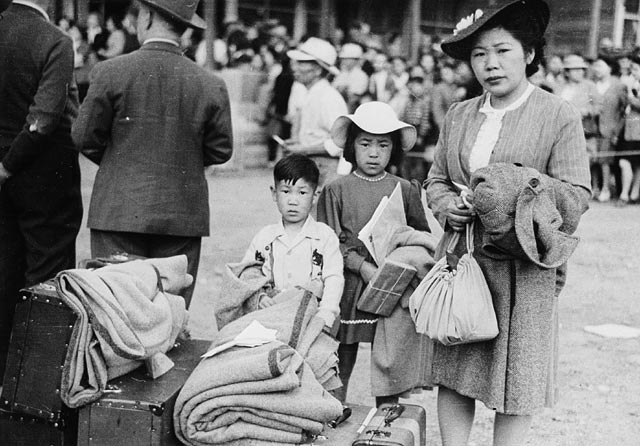
-
Article
Defence of Intoxication
Technically, there is no "intoxication" defence to criminal charges in Canadian law.
"https://thecanadianencyclopedia.ca/images/tce_placeholder.jpg?v=e9dca980c9bdb3aa11e832e7ea94f5d9" // resources/views/front/categories/view.blade.php
https://thecanadianencyclopedia.ca/images/tce_placeholder.jpg?v=e9dca980c9bdb3aa11e832e7ea94f5d9
-
Article
Inuit Art
The history of Inuit cultures and the art of the various regions and times can only be understood if the myth of a homogeneous Inuit culture is discarded altogether. Though it has not been possible to determine the exact origin(s) of the Inuit, nor of the various Inuit cultures, five distinct cultures have been established in the Canadian area: Pre-Dorset , Dorset , Thule, Historic and Contemporary.
"https://d3d0lqu00lnqvz.cloudfront.net/media/media/4d37de3c-41d6-48db-bf9f-070d0882d77d.jpg" // resources/views/front/categories/view.blade.php
https://d3d0lqu00lnqvz.cloudfront.net/media/media/4d37de3c-41d6-48db-bf9f-070d0882d77d.jpg
-
Article
Inuit Co-operatives
Beginning in the mid-1950s, Inuit were encouraged to move into the trading posts to be near schools and medical services.
"https://d3d0lqu00lnqvz.cloudfront.net/media/media/57a518c7-0e95-4505-b0ca-fd75cda6b879.jpg" // resources/views/front/categories/view.blade.php
https://d3d0lqu00lnqvz.cloudfront.net/media/media/57a518c7-0e95-4505-b0ca-fd75cda6b879.jpg
-
Article
Inuit Experiences at Residential School
Residential schools were government-sponsored religious schools created to assimilate Indigenous children into Euro-Canadian culture. Schools in the North were run by missionaries for nearly a century before the federal government began to open new, so-called modern institutions in the 1950s. This was less than a decade after a Special Joint Committee (see Indigenous Suffrage) found that the system was ineffectual. The committee’s recommendations led to the eventual closure of residential schools across the country.
"https://d3d0lqu00lnqvz.cloudfront.net/InuitResidentialSchool/Inuit-Residenital-School (Library and Archives Canada_PA-042133).jpg" // resources/views/front/categories/view.blade.php
https://d3d0lqu00lnqvz.cloudfront.net/InuitResidentialSchool/Inuit-Residenital-School (Library and Archives Canada_PA-042133).jpg.jpg)
-
Article
Inuit High Arctic Relocations in Canada
In 1953 and 1955, the Royal Canadian Mounted Police, acting as representatives of the Department of Resources and Development, moved approximately 92 Inuit from Inukjuak, formerly called Port Harrison, in Northern Quebec, and Mittimatalik (Pond Inlet), in what is now Nunavut, to settle two locations on the High Arctic islands. It has been argued that the Government of Canada ordered the relocations to establish Canadian sovereignty in the Arctic, and proposed to Inuit the move, promising improved living conditions. The Inuit were assured plentiful wildlife, but soon discovered that they had been misled, and endured hardships. The effects have lingered for generations. The Inuit High Arctic relocations are often referred to as a “dark chapter” in Canadian history, and an example of how the federal government forced changes that fundamentally affected (and continue to affect) Inuit lives.
"https://d3d0lqu00lnqvz.cloudfront.net/media/media/72b158ab-21db-4572-9fec-db8a9548c9cf.jpg" // resources/views/front/categories/view.blade.php
https://d3d0lqu00lnqvz.cloudfront.net/media/media/72b158ab-21db-4572-9fec-db8a9548c9cf.jpg
-
Article
Inuit Tapiriit Kanatami (ITK)
Inuit Tapiriit Kanatami (formerly known as the Eskimo Brotherhood of Canada) is a national advocacy organization that promotes awareness about political, social, cultural and environmental issues that impact Inuit communities, from the Inuvialuit Settlement Region in the Northwest Territories, to Nunavut, Nunavik in Northern Québec, Nunatsiavut in Northern Labrador and land claims regions.
"https://d3d0lqu00lnqvz.cloudfront.net/media/media/d3f189ee-7d9b-4e59-8dd8-5840852adf92.jpg" // resources/views/front/categories/view.blade.php
https://d3d0lqu00lnqvz.cloudfront.net/media/media/d3f189ee-7d9b-4e59-8dd8-5840852adf92.jpg
-
Article
Inuksuk (Inukshuk)
Inuksuk (also spelled inukshuk, plural inuksuit) is a figure made of piled stones or boulders constructed to communicate with humans throughout the Arctic. Traditionally constructed by the Inuit, inuksuit are integral to Inuit culture and are often intertwined with representations of Canada and the North. A red inuksuk is found on the flag of Nunavut. In Inuktitut, the term inuksuk means "to act in the capacity of a human." It is an extension of the word inuk meaning "a human being." Inuksuit have been found close to archaeological sites dating from 2400 to 1800 BCE in the Mingo Lake region of southwest Baffin Island. (See also Prehistory.) While stone figures resembling human forms are often referred to as inuksuk, such figures are actually known as inunnguaq.
"https://d3d0lqu00lnqvz.cloudfront.net/media/media/fda0c3a3-c613-4196-ba0a-690925ca6c04.jpg" // resources/views/front/categories/view.blade.php
https://d3d0lqu00lnqvz.cloudfront.net/media/media/fda0c3a3-c613-4196-ba0a-690925ca6c04.jpg
-
Article
Inuktitut
Inuktitut is an Indigenous language in North America, spoken in the Canadian Arctic. The 2021 census reported 40,320 people have knowledge of Inuktitut. Inuktitut is part of a larger Inuit language family, stretching from Alaska to Greenland. Inuktitut uses a writing system called syllabics, created originally for the Cree language, which represent combinations of consonants and vowels. The language is also written in the Roman alphabet, and this is the exclusive writing system used in Labrador and parts of Western Nunavut. Inuktitut is a polysynthetic language, meaning that words tend to be longer and structurally more complex than their English or French counterparts. (See also Indigenous Languages in Canada.)
"https://d3d0lqu00lnqvz.cloudfront.net/media/media/26c8ac6d-be78-4acc-9097-9854b0762516.jpg" // resources/views/front/categories/view.blade.php
https://d3d0lqu00lnqvz.cloudfront.net/media/media/26c8ac6d-be78-4acc-9097-9854b0762516.jpg