Browse "Things"
-
Article
Ginger Group
Ginger Group, an independent group of members of Parliament who in 1924 split from the PROGRESSIVE PARTY because they did not support a party structure that inhibited an MP's ability to act solely as the representative of his constituents.
"https://thecanadianencyclopedia.ca/images/tce_placeholder.jpg?v=e9dca980c9bdb3aa11e832e7ea94f5d9" // resources/views/front/categories/view.blade.php
https://thecanadianencyclopedia.ca/images/tce_placeholder.jpg?v=e9dca980c9bdb3aa11e832e7ea94f5d9
-
Article
Ginseng
Ginseng is a herbaceous perennial plant of genus Panax, ginseng family (Araliaceae), discovered in North America by Joseph-François Lafitau.
"https://thecanadianencyclopedia.ca/images/tce_placeholder.jpg?v=e9dca980c9bdb3aa11e832e7ea94f5d9" // resources/views/front/categories/view.blade.php
https://thecanadianencyclopedia.ca/images/tce_placeholder.jpg?v=e9dca980c9bdb3aa11e832e7ea94f5d9
-
Article
Girl Guides
The branches of the Guiding movement include Sparks, Brownies, Guides, Pathfinders, Rangers, Cadets and Junior Leaders, with groups in most communities in every province and territory, under the leadership of women volunteers and community leaders.
"https://d3d0lqu00lnqvz.cloudfront.net/media/media/42ace98b-c059-4c53-9a75-cfa5b0f0cd90.jpg" // resources/views/front/categories/view.blade.php
https://d3d0lqu00lnqvz.cloudfront.net/media/media/42ace98b-c059-4c53-9a75-cfa5b0f0cd90.jpg
-
Macleans
Girls Kill Teenage Schoolmate
This article was originally published in Maclean’s magazine on December 8, 1997. Partner content is not updated. The waterfront park where Reena Virk was viciously beaten and left to drown looks like a Canadian dream: clumps of trees dot one shore, while attractive middle-class homes line the opposite bank.
"https://thecanadianencyclopedia.ca/images/tce_placeholder.jpg?v=e9dca980c9bdb3aa11e832e7ea94f5d9" // resources/views/front/categories/view.blade.php
https://thecanadianencyclopedia.ca/images/tce_placeholder.jpg?v=e9dca980c9bdb3aa11e832e7ea94f5d9
-
Editorial
Editorial: Newfoundland’s Contribution to the Patriation of the Constitution
The following article is an editorial written by The Canadian Encyclopedia staff. Editorials are not usually updated. In the decades since 1982, politicians and the media have recounted the same story about the patriation of Canada’s constitution and the adoption of the Charter of Rights and Freedoms. Most of the credit in this version goes to Prime Minister Pierre Trudeau. Three others are credited with breaking an impasse in the 1981 negotiations: federal justice minister Jean Chrétien, Saskatchewan attorney general Roy Romanow, and Ontario attorney general Roy McMurtry. But in his memoirs, former Newfoundland Premier Brian Peckford argues that the key intervention in the patriation process came from Peckford and the members of the Newfoundland delegation.
"https://d3d0lqu00lnqvz.cloudfront.net/media/media/0bc62d4c-deea-4509-8390-d8fa47d7c99a.jpg" // resources/views/front/categories/view.blade.php
https://d3d0lqu00lnqvz.cloudfront.net/media/media/0bc62d4c-deea-4509-8390-d8fa47d7c99a.jpg
-
Article
Glaciation
Glaciation is the formation, movement and recession of glaciers. Glaciation was much more extensive in the past, when much of the world was covered in large, continental ice sheets. Currently, glaciers cover about 10 per cent of the world's land area (14.9 million km2). Most of this area is under two ice sheets situated near the Earth’s poles — one near the Antarctic and the other near Greenland. The world’s remaining glaciers only cover about 700,000 km2. Much of Canada’s landscape was molded by glaciers over thousands of years. Valleys were widened, moraines were sculpted, and bedrock was smoothed. Glaciation also left behind many sediments, including gravel, which is important to Canada’s export economy.
"https://d3d0lqu00lnqvz.cloudfront.net/glaciation/Laurentide_ice_sheet_map.jpg" // resources/views/front/categories/view.blade.php
https://d3d0lqu00lnqvz.cloudfront.net/glaciation/Laurentide_ice_sheet_map.jpg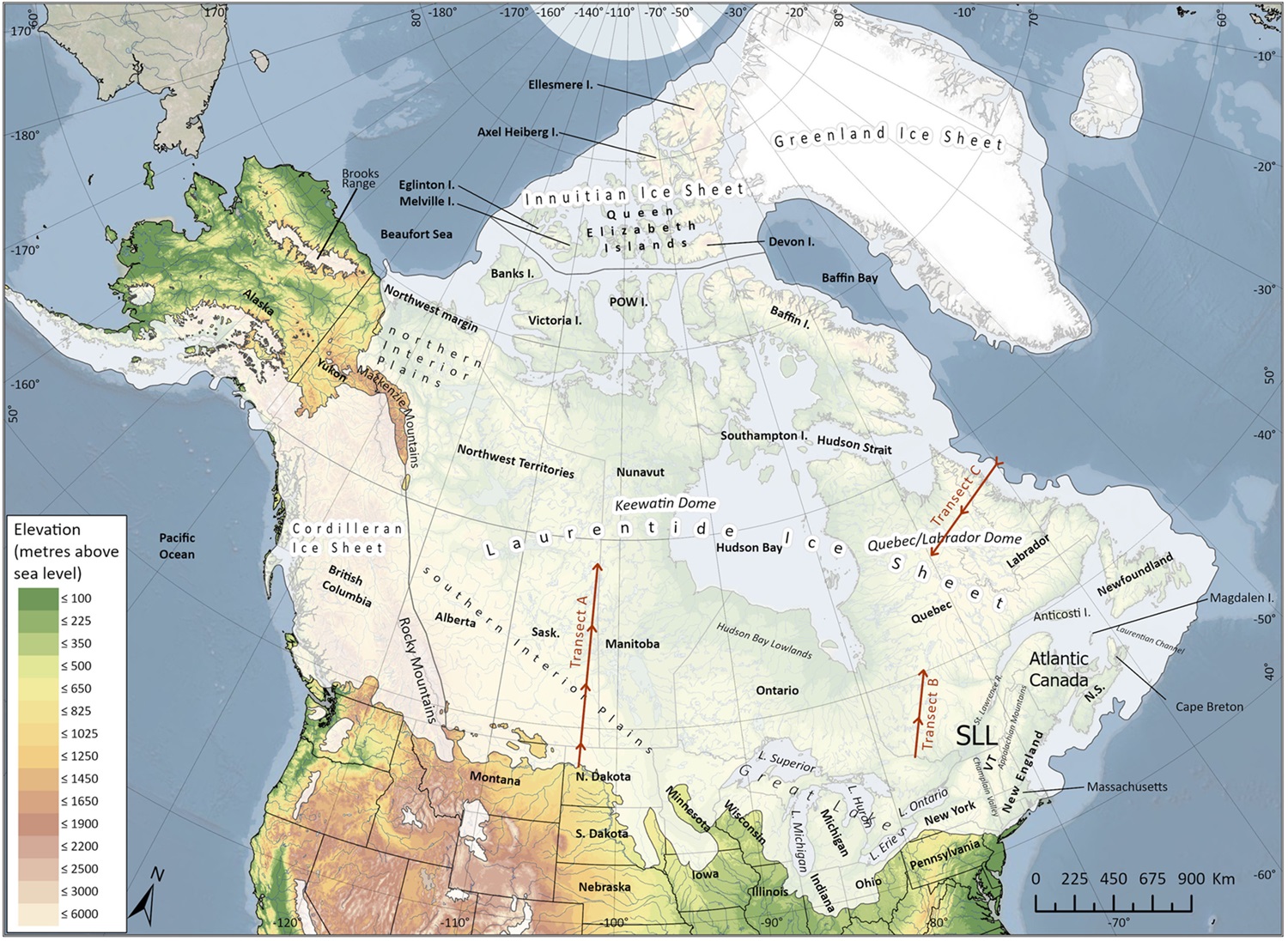
-
Article
Glaciers in Canada
A glacier is a large mass of ice, formed at least in part on land, that shows evidence of present or past movement. It is formed by the compaction and recrystallization of snow into ice crystals and commonly also contains air, water and rock debris. Worldwide, glaciers and ice sheets store about 70 per cent of the world's freshwater. With approximately 200,000 km2 of glacier coverage in the Arctic and western Canada, Canada is home to a significant percentage of the world’s glaciers. By 2100, however, scientists predict that those in Alberta and British Columbia will have lost 70 per cent of their 2005 volume due to climate change.
"https://d3d0lqu00lnqvz.cloudfront.net/media/media/ee830daf-7830-4a20-89bf-0871e3839089.jpg" // resources/views/front/categories/view.blade.php
https://d3d0lqu00lnqvz.cloudfront.net/media/media/ee830daf-7830-4a20-89bf-0871e3839089.jpg
-
Article
Glad Day Bookshop
Glad Day Bookshop is the oldest surviving 2SLGBTQ+ bookstore in the world. The first store of its kind in Canada, it was launched by pioneering gay activist Jearld Moldenhauer in December 1970 to help build Toronto’s fledgling gay rights movement. This was at a time when businesses were averse to selling a rapidly growing range of lesbian- and gay-positive publications. In the words of author Tim McCaskell, “Glad Day was a political project. It aimed to make available the suppressed history, culture, imagery and literature routinely denied to us.”
"https://d3d0lqu00lnqvz.cloudfront.net/Toronto-_November_9-_2023_-_15.jpg" // resources/views/front/categories/view.blade.php
https://d3d0lqu00lnqvz.cloudfront.net/Toronto-_November_9-_2023_-_15.jpg
-
Article
Gladstone Case
In R. v. Gladstone (1996), the Supreme Court of Canada recognized the Heiltsuk Nation’s constitutional right to commercially sell herring spawn on kelp. The Supreme Court overturned Donald and William Gladstone’s convictions related to the sale of herring spawn on kelp without the proper license. Additionally, the Supreme Court ordered a new trial to determine if government infringement of this constitutional right was justified (see also Constitutional Law). This was the first Supreme Court ruling that affirmed commercial harvesting rights under s. 35 of the Constitution Act, 1982. The decision empowered Indigenous economic activity. It also clarified limits on justifiable infringement by the government.
"https://d3d0lqu00lnqvz.cloudfront.net/media/media/a4e59d7a-0581-47a1-a5ff-60757732f349.jpg" // resources/views/front/categories/view.blade.php
https://d3d0lqu00lnqvz.cloudfront.net/media/media/a4e59d7a-0581-47a1-a5ff-60757732f349.jpg
-
Article
Glass
The first known Canadian glass factory or glasshouse, the Mallorytown Glass Works in Upper Canada, began operation in 1839 and closed in 1840. Glassmaking involved a large investment in raw materials, equipment and salaries.
"https://thecanadianencyclopedia.ca/images/tce_placeholder.jpg?v=e9dca980c9bdb3aa11e832e7ea94f5d9" // resources/views/front/categories/view.blade.php
https://thecanadianencyclopedia.ca/images/tce_placeholder.jpg?v=e9dca980c9bdb3aa11e832e7ea94f5d9
-
Article
Global Communications Limited
Global Communications Limited, established 1970, owns and operates Global Television Network and is based in Toronto. The CRTC granted the company a broadcast licence for operations in southern Ontario 21 July 1972.
"https://thecanadianencyclopedia.ca/images/tce_placeholder.jpg?v=e9dca980c9bdb3aa11e832e7ea94f5d9" // resources/views/front/categories/view.blade.php
https://thecanadianencyclopedia.ca/images/tce_placeholder.jpg?v=e9dca980c9bdb3aa11e832e7ea94f5d9
-
Macleans
Global Goes National
It was like a scene from Traders, Global TV's popular drama about life in Bay Street's fast lane. Only this time, the star of the show was Izzy Asper in the role of the shrewd and stubborn chief executive.This article was originally published in Maclean's Magazine on August 31, 1998
"https://thecanadianencyclopedia.ca/images/tce_placeholder.jpg?v=e9dca980c9bdb3aa11e832e7ea94f5d9" // resources/views/front/categories/view.blade.php
https://thecanadianencyclopedia.ca/images/tce_placeholder.jpg?v=e9dca980c9bdb3aa11e832e7ea94f5d9
-
Macleans
Global Warming Crisis
This article was originally published in Maclean’s magazine on February 21, 2000. Partner content is not updated. Across the Arctic, the ominous signs are everywhere. With average temperatures in some parts of the Canadian North rising at the rate of about 1° C each decade, glaciers are in retreat. Scientists report a dramatic thinning of the Polar ice cap.
"https://thecanadianencyclopedia.ca/images/tce_placeholder.jpg?v=e9dca980c9bdb3aa11e832e7ea94f5d9" // resources/views/front/categories/view.blade.php
https://thecanadianencyclopedia.ca/images/tce_placeholder.jpg?v=e9dca980c9bdb3aa11e832e7ea94f5d9
-
Article
Globalization
Globalization is the process of integration, interaction and interdependence of people and countries around the world. Although Canada, like most industrialized nations, is more interconnected globally than ever before, its economy remains overwhelmingly tied to the United States. (See also International Trade.)
"https://thecanadianencyclopedia.ca/images/tce_placeholder.jpg?v=e9dca980c9bdb3aa11e832e7ea94f5d9" // resources/views/front/categories/view.blade.php
https://thecanadianencyclopedia.ca/images/tce_placeholder.jpg?v=e9dca980c9bdb3aa11e832e7ea94f5d9
-
Article
Globe and Mail
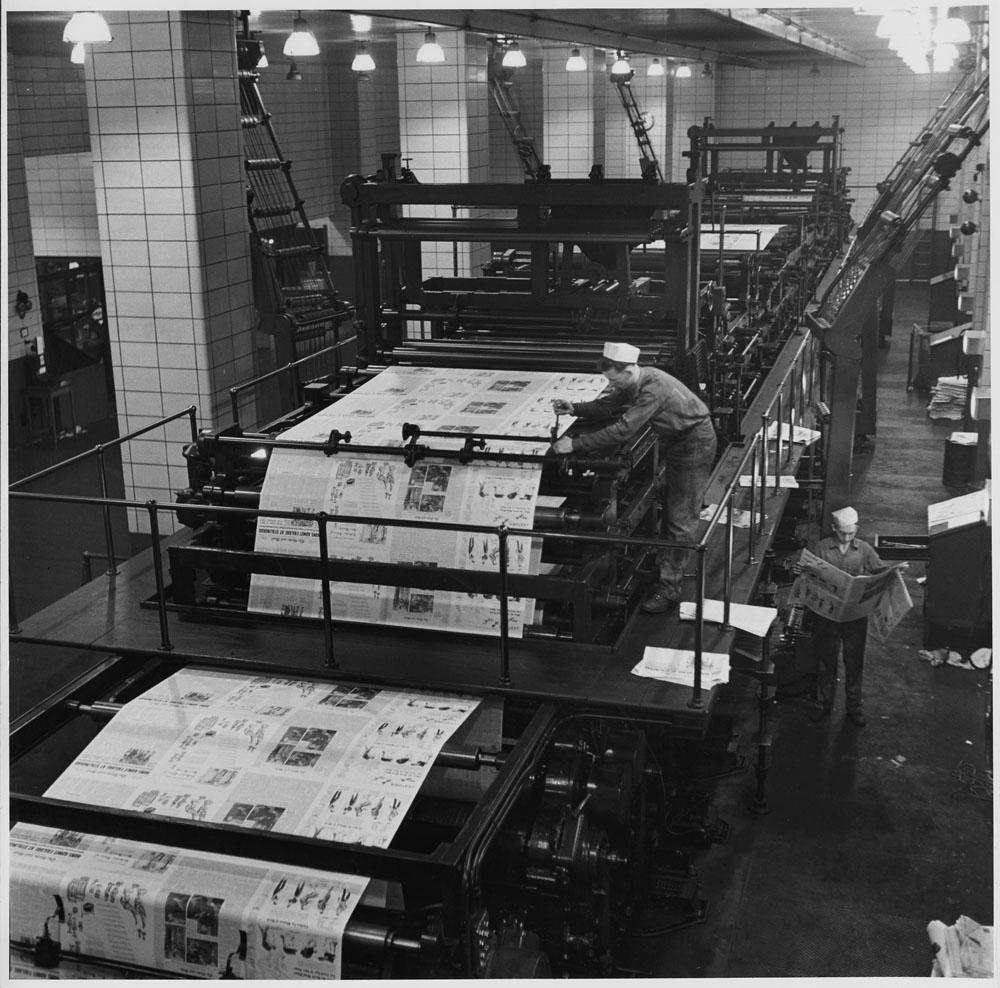
The Globe and Mail is a daily newspaper. It was founded in Toronto in 1936 when two influential and historically important dailies, The Globe and The Mail and Empire were merged. (See also Newspapers in Canada: 1800s-1900s.) As of 2026, the Globe and Mail’s website claims that its digital and print editions reach a combined audience of 6 million readers per week.
"https://d3d0lqu00lnqvz.cloudfront.net/globeandmail/newspaperprinting.jpg" // resources/views/front/categories/view.blade.php
https://d3d0lqu00lnqvz.cloudfront.net/globeandmail/newspaperprinting.jpg