
Browse "Things"
-
Article
Genetic Engineering
Interspecies gene transfer occurs naturally; interspecies hybrids produced by sexual means can lead to new species with genetic components of both pre-existing species. Interspecies hybridization played an important role in the development of domesticated plants.
"https://d3d0lqu00lnqvz.cloudfront.net/media/media/603e45e5-1f43-48a4-acbb-5735f60584ed.jpg" // resources/views/front/categories/view.blade.php
https://d3d0lqu00lnqvz.cloudfront.net/media/media/603e45e5-1f43-48a4-acbb-5735f60584ed.jpg
-
Macleans
Genetically-Altered Foods Debate
With its fictional reconstruction of dinosaurs from prehistoric bits of DNA, the thrilling 1990 best-seller Jurassic Park and the spinoff blockbuster movie popularized the notion of genetic engineering.This article was originally published in Maclean's Magazine on January 20, 1997
"https://thecanadianencyclopedia.ca/images/tce_placeholder.jpg?v=e9dca980c9bdb3aa11e832e7ea94f5d9" // resources/views/front/categories/view.blade.php
https://thecanadianencyclopedia.ca/images/tce_placeholder.jpg?v=e9dca980c9bdb3aa11e832e7ea94f5d9
-
Macleans
Genetically Modified Food Debate
This article was originally published in Maclean’s magazine on October 18, 1999. Partner content is not updated. In keeping with the message, the medium was suitably high-tech: a transatlantic encounter conducted live by television satellite. Up on the giant screen in the London conference hall, Robert Shapiro, chief executive officer of the Monsanto Co.
"https://thecanadianencyclopedia.ca/images/tce_placeholder.jpg?v=e9dca980c9bdb3aa11e832e7ea94f5d9" // resources/views/front/categories/view.blade.php
https://thecanadianencyclopedia.ca/images/tce_placeholder.jpg?v=e9dca980c9bdb3aa11e832e7ea94f5d9
-
Article
Genetically Modified Foods
GM plants were first marketed in the 1990s. The first commercialized GM crop was a TOMATO called Flavr Savr (resistant to rotting), marketed in 1994 by a US-based company, Calgene. Since then, many GM crops have been commercialized.
"https://d3d0lqu00lnqvz.cloudfront.net/media/media/41ed272a-1c7a-435f-ac76-fa18c2f39525.jpg" // resources/views/front/categories/view.blade.php
https://d3d0lqu00lnqvz.cloudfront.net/media/media/41ed272a-1c7a-435f-ac76-fa18c2f39525.jpg
-
Article
Genetics
Genetics is that subdiscipline of biology devoted to the study of heredity, the phenomenon by which organisms pass on their characteristics to their offspring. Although humankind has always shown an interest in heredity, the practice of the science is usually considered to have begun in 1865 with Gregor Mendel, an Austrian monk. Through a study of pea plants, Mendel worked out the simple patterns of inheritance that apply to most inheritable characteristics of living things (e.g., size, shape, colour, hairiness, smell, behaviour, disease resistance). Mendel formulated the concept of the gene to define the fundamental units of heredity that determine such properties. Today the molecular structure and function of genes is quite well understood.
"https://d3d0lqu00lnqvz.cloudfront.net/media/media/f63df3f0-e94b-4a1b-90fd-92d59e2cc76a.jpg" // resources/views/front/categories/view.blade.php
https://d3d0lqu00lnqvz.cloudfront.net/media/media/f63df3f0-e94b-4a1b-90fd-92d59e2cc76a.jpg
-
Article
Genetics, Ethics and the Law
The recent rapid advances in the knowledge about human genetics, largely the result of an international research initiative known as the Human Genome Project, have been accompanied by numerous legal and ethical concerns. For instance, because genetic research is so costly, and because there is potential for great commercial gain, one issue has become particularly troublesome: who owns human genetic material?
"https://thecanadianencyclopedia.ca/images/tce_placeholder.jpg?v=e9dca980c9bdb3aa11e832e7ea94f5d9" // resources/views/front/categories/view.blade.php
https://thecanadianencyclopedia.ca/images/tce_placeholder.jpg?v=e9dca980c9bdb3aa11e832e7ea94f5d9
-
Article
Genocide
Genocide is the intentional destruction of a particular group through killing, serious physical or mental harm, preventing births and/or forcibly transferring children to another group. The Canadian government has formally recognized certain instances of genocide abroad, including the Armenian genocide, the Holodomor, the Holocaust, the Rwandan genocide, the ethnic cleansing in Bosnia, the Uyghur genocide and the Rohingya genocide. Within Canada, some historians, legal scholars and activists have claimed that the historical, intergenerational and present treatment of Indigenous peoples are acts of genocide.
"https://d3d0lqu00lnqvz.cloudfront.net/media/media/1f69f381-4d3b-489f-aba6-0a7dd06d3e92.jpg" // resources/views/front/categories/view.blade.php
https://d3d0lqu00lnqvz.cloudfront.net/media/media/1f69f381-4d3b-489f-aba6-0a7dd06d3e92.jpg
-
Article
'Gens du pays'
'Gens du pays'. Song written by Gilles Vigneault and Gaston Rochon for the 1975 St-Jean-Baptiste celebrations on Mount Royal, Montreal. Its popularity has made it almost a national anthem in Quebec, where it is sung frequently by crowds at rallies or on festive occasions.
"https://thecanadianencyclopedia.ca/images/tce_placeholder.jpg?v=e9dca980c9bdb3aa11e832e7ea94f5d9" // resources/views/front/categories/view.blade.php
https://thecanadianencyclopedia.ca/images/tce_placeholder.jpg?v=e9dca980c9bdb3aa11e832e7ea94f5d9
-
Article
Gentian
Several plants of family Gentianaceae, of the genus Gentiana, are commonly known as gentian.
"https://thecanadianencyclopedia.ca/images/tce_placeholder.jpg?v=e9dca980c9bdb3aa11e832e7ea94f5d9" // resources/views/front/categories/view.blade.php
https://thecanadianencyclopedia.ca/images/tce_placeholder.jpg?v=e9dca980c9bdb3aa11e832e7ea94f5d9
-
Collection
Geography
Geography is the study of places, Earth’s physical features and environmental phenomena. Geographers also examine human populations and their impact on the natural world. This collection from The Canadian Encyclopedia covers a wide range of topics in both physical and human geography. These topics include geographic regions, sustainable development, and Indigenous populations.
"https://d3d0lqu00lnqvz.cloudfront.net/media/quiz_images/Geography-2.jpg" // resources/views/front/categories/view.blade.php
https://d3d0lqu00lnqvz.cloudfront.net/media/quiz_images/Geography-2.jpg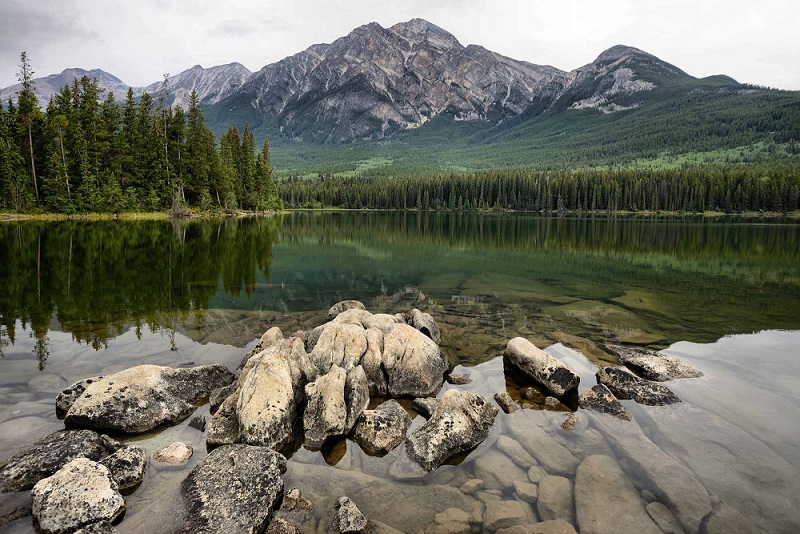
-
Article
Geological Dating
For centuries people have argued about the age of the Earth; only recently has it been possible to come close to achieving reliable estimates.
"https://thecanadianencyclopedia.ca/images/tce_placeholder.jpg?v=e9dca980c9bdb3aa11e832e7ea94f5d9" // resources/views/front/categories/view.blade.php
https://thecanadianencyclopedia.ca/images/tce_placeholder.jpg?v=e9dca980c9bdb3aa11e832e7ea94f5d9
-
Article
Geological History
Fundamental to all ordering of events of the Earth's history is the principle of the positional relationships of rock and mineral bodies. For example, in any stratified rock sequence, younger rocks overlie older ones.
"https://d3d0lqu00lnqvz.cloudfront.net/media/media/e8e23bed-66e7-4173-9e92-b61c0b06e940.jpg" // resources/views/front/categories/view.blade.php
https://d3d0lqu00lnqvz.cloudfront.net/media/media/e8e23bed-66e7-4173-9e92-b61c0b06e940.jpg
-
Timelines
Geological History of Canada
Geological time looks at the history of the Earth on a broad scale. Much of what is known about this history was discovered by looking at rocks and fossils. Modern humans, or Homo sapiens, have only existed for around the past 315,000 years of the over 4.6-billion-year history of the earth. This is less than 0.01 per cent of Earth’s history.
"https://d3d0lqu00lnqvz.cloudfront.net/Borealopelta/RTMPBorealopeltaFront.jpg" // resources/views/front/categories/view.blade.php
https://d3d0lqu00lnqvz.cloudfront.net/Borealopelta/RTMPBorealopeltaFront.jpg
-
Article
Geological Regions
Based on geological history, Canada can be divided into six regions, each characterized by a distinctive landscape: the Canadian Shield, Interior Platform, Appalachian Orogen, Innuitian Orogen, Cordillera and Western Canada Sedimentary Basin, and the Eastern Continental Margin.
"https://d3d0lqu00lnqvz.cloudfront.net/media/media/e6e2df67-a33a-46cb-ab6d-dc659323ec1d.jpg" // resources/views/front/categories/view.blade.php
https://d3d0lqu00lnqvz.cloudfront.net/media/media/e6e2df67-a33a-46cb-ab6d-dc659323ec1d.jpg
-
Article
Geological Survey of Canada
The Geological Survey of Canada (GSC) is Canada's national agency for geoscientific information and research. It studies and reports on Canada’s geology, natural geological hazards, and the development of natural resources. Established in 1842 primarily to promote the mining industry, it is one of the country’s oldest scientific organizations. Throughout its history, the Survey has produced some of the most comprehensive and detailed maps of the Canadian landscape, and published several important reports on its ecology and natural history.
"https://d3d0lqu00lnqvz.cloudfront.net/media/media/2bebe9b8-7dbd-4569-9cc1-fb24d96fa6de.jpg" // resources/views/front/categories/view.blade.php
https://d3d0lqu00lnqvz.cloudfront.net/media/media/2bebe9b8-7dbd-4569-9cc1-fb24d96fa6de.jpg